My Dog’s Eyes Are Red: Causes and What to Do Next
How to tell an urgent red eye from a routine one, nine common causes, the three sight-threatening emergencies, pannus and dry eye in German Shepherds, and why human eye drops must never be used.

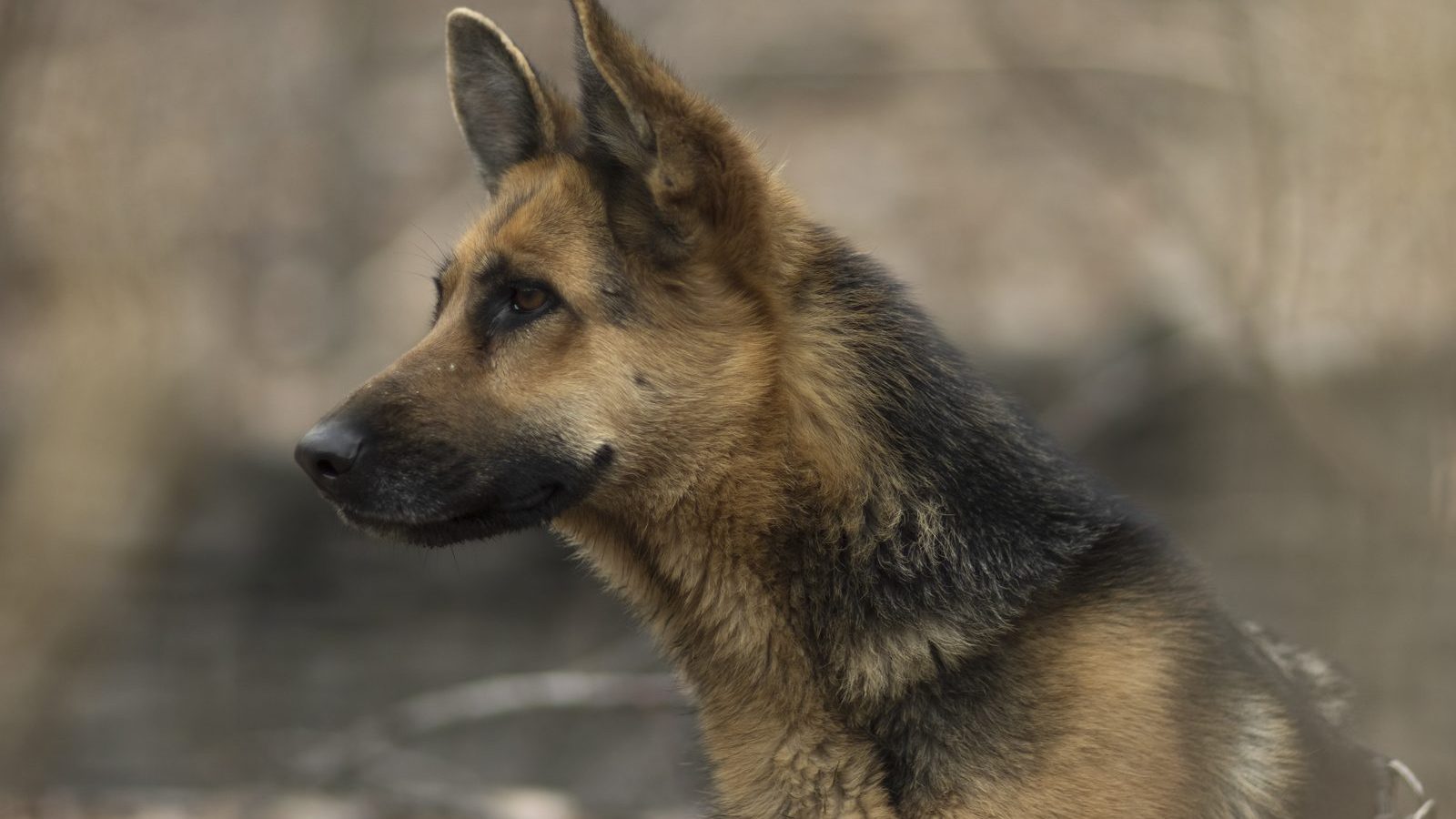
Short answer: red plus pain means today, not tomorrow
A little redness with no other signs can wait for a normal appointment. But redness together with squinting, a held-shut eye, pawing, a cloudy or blue-tinged surface, or a visible change in vision is an emergency — glaucoma and corneal ulcers destroy sight in hours. Never put human eye drops or old prescriptions in a dog’s eye: steroid drops in an ulcerated eye can cost the eye itself.
Squinting or an eye held shut · pawing or rubbing at the face · a cloudy, hazy or blue-tinged surface · a pupil that is much larger than the other and does not respond to light · an eye that looks bulging or enlarged · obvious pain — a dog who will not let you near the head · bumping into things or sudden clumsiness · yellow or green discharge · any visible injury or object in the eye. Do not wait for morning. Glaucoma and deep corneal ulcers can take the sight from an eye within a day, and both are treatable early.
You are scratching your dog’s head and you notice one eye looks pink. Or you come back from a walk in long grass and your German Shepherd is squinting on one side and keeps rubbing their face on the carpet. The internet offers a hundred possibilities ranging from “a bit of dust” to “may lose the eye”, which is not much help at nine o’clock at night.
So this guide is arranged around the only question that matters first: is this urgent? There is a short list of signs that turn a red eye into a same-day emergency, and a much longer list of causes that are irritating but not sight-threatening. Learning to tell them apart takes about five minutes and is genuinely worth doing before you need it.
After that: the nine common causes, what a vet will actually do, the two breed-specific problems German Shepherds get, how to clean and medicate an eye properly, and the single most important rule about eye drops.
Urgent or Not: the Triage Table
| Can wait for a normal appointment | Same day — ring now | |
|---|---|---|
| Pain | None. Eye open normally, dog unbothered | Squinting, holding it shut, rubbing, head-shy |
| Clarity | Surface clear and glossy | Cloudy, hazy or blue-tinged |
| Pupils | Equal, responding to light | Unequal, or one fixed and dilated |
| Shape | Normal | Eye looks larger or bulging |
| Discharge | Clear or slightly watery | Yellow, green or thick |
| Vision | Moving about normally | Bumping into things, hesitant on stairs |
| Onset | Mild, gradual, both eyes, seasonal | Sudden, one eye, after a walk in long grass |
The single most useful signal is pain. Allergic and mild irritant redness does not usually hurt. A dog who is squinting, holding an eye closed or rubbing their face is telling you this is the urgent kind — and pain plus cloudiness is the combination that means today.
What to Look At, in Order
Sixty seconds in good light, with your dog sitting comfortably. You are gathering the information your vet will ask for.
- One eye or both? One eye points towards injury, a foreign body or glaucoma. Both eyes points towards allergy, infection or a systemic cause.
- Where is the redness? The white of the eye, the inner lids, the third eyelid in the inner corner, or the whole eye.
- Is the surface clear? A healthy cornea is glossy and transparent. Haze, cloudiness or a blue tinge is significant.
- Compare the pupils. Same size? Do they both shrink when you shine a phone light across the face?
- Discharge? Clear and watery is usually irritation or allergy; thick yellow or green suggests infection.
- Is your dog in pain? Squinting, blinking hard, rubbing on furniture, turning the head away from your hand.
- Photograph it. Good light, no flash, from the front and the side. Enormously useful if the appearance changes before you are seen.
Nine Common Causes of a Red Eye
| Cause | What it looks like | Urgency |
|---|---|---|
| 1. Conjunctivitis | Pink inner lids, watery or sticky discharge, often both eyes. Mild discomfort | Routine appointment |
| 2. Allergies | Both eyes, watery, itchy, seasonal, often with itchy paws and ears too | Routine |
| 3. Dry eye (KCS) | Thick sticky discharge, dull surface, recurring redness. Often gets misdiagnosed as infection | Soon — needs a tear test |
| 4. Corneal ulcer | One eye, painful, squinting, cloudy. Often after a scratch or a foreign body | Same day |
| 5. Foreign body | Sudden onset, one eye, intense pawing and squinting, watery | Same day |
| 6. Glaucoma | Very painful, cloudy blue haze, dilated pupil, eye may look enlarged | Emergency |
| 7. Uveitis | Deep redness, pain, squinting, small pupil, sensitivity to light | Same day |
| 8. Entropion | Chronic redness and weeping from lids rolling inward; lashes rub the cornea | Soon — usually needs surgery |
| 9. Cherry eye | A pink fleshy lump in the inner corner — the third eyelid gland prolapsed | Soon, not an emergency |
Notice how much of the triage is done by one eye versus two. Bilateral, non-painful, watery redness in spring is overwhelmingly likely to be allergic. Sudden, unilateral, painful redness after a walk through long grass is a foreign body until proven otherwise.
The Three Sight-Threatening Ones
Glaucoma
Pressure inside the eye rises and damages the optic nerve. It is intensely painful — often more so than owners realise, because dogs hide it — and vision can be lost permanently within twenty-four hours. Look for a cloudy blue haze across the surface, a dilated pupil that does not react to light, an eye that appears larger than the other, and a dog who is quiet, off their food and does not want their head touched.
Corneal ulcer
A break in the surface of the cornea, usually from a scratch, a foreign body, or dry eye. Painful, watery, and the dog squints and rubs. Superficial ulcers heal well with prompt treatment; a deep one can perforate the eye. This is the condition that makes steroid eye drops so dangerous — they suppress healing and can turn a treatable ulcer into a lost eye.
Uveitis
Inflammation inside the eye itself. Deep redness, pain, light sensitivity and a pupil that is smaller than the other. It matters for a second reason: uveitis is frequently a sign of disease elsewhere in the body — infection, immune disease or, occasionally, cancer — so it usually prompts a wider investigation rather than just eye treatment.
Dogs are extremely good at hiding eye pain. A quiet dog who has gone off their dinner and does not want their head stroked is telling you something, even if the eye looks only mildly pink.
Two Problems German Shepherds Get
🌤️ Pannus (chronic superficial keratitis)
An immune-mediated condition the breed is strongly predisposed to. A pink, fleshy, creeping film grows across the cornea from the outer corner, usually in both eyes. It is not painful at first, which is why it is often noticed late — and it is progressive and sight-threatening if untreated. UV light makes it worse, so dogs at altitude or in sunny climates are affected more severely.
💧 Dry eye (KCS)
Reduced tear production leaves the surface dry, inflamed and vulnerable to ulcers. The giveaway is thick, sticky, recurring discharge with a dull-looking surface. It is commonly mistaken for repeated infections and treated with antibiotics that do not help. A simple tear test settles it in a minute.
Both are manageable and both are lifelong. Pannus is typically controlled with immune-modulating drops indefinitely, and dogs often do better with UV-protective eyewear on bright days. Dry eye is treated with tear-stimulating drops plus lubricants. In both cases the outcome depends heavily on catching it early, which is a good argument for mentioning any recurring eye change at the annual check.
If your German Shepherd has had repeated “eye infections” that keep coming back, ask specifically about a Schirmer tear test for dry eye and about pannus. Both are common in this breed, both look like conjunctivitis at first glance, and neither responds to the antibiotic drops that a straightforward infection would.
Grass Seeds and Foreign Bodies
If the redness came on suddenly during or just after a walk between May and September, a grass seed is the first thing to think of.
Barbed seed heads are shaped to travel one way. One that gets behind the third eyelid causes immediate, intense irritation — sudden squinting, streaming, frantic pawing — and it will not work its way out on its own. It needs removing, often under sedation because the eye is too painful to examine otherwise.
- Look in good light for anything visible on the surface
- Flush gently with sterile saline if something is loose on the surface
- Stop your dog rubbing — a buster collar if you have one
- Ring the vet the same day, every time
- Photograph it before you set off
- Try to remove anything embedded — you can push it deeper
- Use tweezers, cotton buds or your fingers on the eye surface
- Hold the eye open forcibly to get a better look
- Let your dog rub it on the carpet while you decide
- Wait until morning “in case it settles”
The Rule About Eye Drops
If you take one thing from this article, take this one.
Human redness-relieving drops constrict blood vessels, which masks the very sign the vet needs to see. Worse, many veterinary eye drops contain steroids — and steroid drops in an eye with a corneal ulcer suppress healing and can lead to the eye perforating. That includes the bottle left over from your dog’s last eye problem, or from another dog in the house. What worked for one condition can destroy an eye with another.
The only thing you should ever put in a dog’s eye without instruction is sterile saline, for gentle flushing. Everything else waits for a diagnosis — and the diagnosis usually depends on a fluorescein stain test that takes the vet about ninety seconds.
Safe Things to Do at Home
Stop the rubbing
Self-trauma turns a minor irritation into an ulcer remarkably fast. A buster collar or inflatable collar until you are seen is the single most useful thing you can do.
Clean around, not in
Wipe discharge from the fur around the eye with cotton wool dampened with cooled boiled water or sterile saline. One clean piece per eye, always wiping away from the eye.
Flush gently if appropriate
Sterile saline only, from a height of a couple of centimetres, letting it run across the surface. Only if something is loose and superficial — never to dislodge something embedded.
Dim the lights
Painful eyes are light sensitive. A quiet, shaded room while you wait for an appointment is genuinely kinder.
Write down the timeline
When it started, what changed, where you walked, whether both eyes, any previous episodes. It shapes the diagnosis more than you would expect.
How to give eye drops properly
Once you have a prescription: approach from behind or beside the head rather than looming from the front, tilt the muzzle gently upward, rest your hand on the skull so the dropper moves with any head movement, and let the drop fall from just above without touching the eye. Pay generously afterwards, every single time — a dog who thinks eye drops predict cheese is far easier to treat on day ten than one who has learned to duck.
If several medications are prescribed, leave five minutes between drops so the second does not wash out the first, and apply ointments last.
What Your Vet Will Do
- Fluorescein stain — an orange dye that glows under blue light wherever the corneal surface is broken. This is how ulcers are found, and it is quick and painless.
- Schirmer tear test — a paper strip measuring tear production for a minute. Diagnoses dry eye.
- Tonometry — measuring the pressure inside the eye. This is what rules glaucoma in or out.
- Examination of the whole eye, including under the third eyelid, sometimes with local anaesthetic drops or sedation.
- Treatment — antibiotic drops, lubricants, tear stimulants, immune-modulating drops for pannus, pressure-lowering drops for glaucoma, or referral to a veterinary ophthalmologist.
The whole assessment usually takes ten minutes and is not distressing for most dogs. It is worth knowing that, because the reason people delay is often a vague sense that eye examinations are a big undertaking. They are not.
Preventing Eye Problems
- Check after every summer walk in long grass — face, ears and between the toes.
- No heads out of car windows. Grit and insects at forty miles an hour cause a lot of corneal injuries.
- Keep the face trimmed and clean, particularly on long-coated Shepherds.
- Consider UV-protective goggles for a dog with pannus, or one who spends long days in bright sun at altitude.
- Rinse after swimming — salt and chlorine both irritate.
- Mention any recurring redness at the annual check, even if it settled on its own.
Kit Worth Having
Sterile eye wash and a recovery collar
Two cheap items cover almost everything you can safely do at home. Sterile saline eye wash is the only thing that should ever go into a dog’s eye without a prescription — it flushes dust, pollen and loose debris off the surface without masking anything the vet needs to see. A recovery collar stops the rubbing, and rubbing is what turns a mildly irritated eye into a corneal ulcer overnight. Buy both now; they cost very little and you will not want to be looking for them at eleven at night.
- Saline flushes surface irritants without hiding the diagnosis
- Collar prevents the self-trauma that creates ulcers
- Both useful for ears, paws and wounds as well
- Cheap enough to keep one of each in the car
Critical: sterile saline is the only thing to use without veterinary instruction. Never human redness-relieving drops, never leftover prescriptions, never anything containing steroids — in an ulcerated eye those can lead to perforation.
| Item | Why it earns its place | What to look for | Find it |
|---|---|---|---|
| Sterile eye wash | The only safe home flush | Sterile saline, preservative-free | See options → |
| Recovery collar | Stops the rubbing that creates ulcers | Inflatable or soft, large breed | See options → |
| Dog goggles | UV protection for pannus; debris protection in cars | UV-rated, adjustable strap | See options → |
| Eye wipes | Daily cleaning around the eye and tear staining | Unscented, alcohol-free | See options → |
| Pet first aid kit | Gauze, saline and a thermometer in one box | Large breed, thermometer included | See options → |
7 Mistakes (and the Fix for Each)
The fix: sterile saline only. Redness-relievers mask the sign the vet needs, and steroid drops in an ulcerated eye can lead to perforation.
The fix: get a diagnosis first. The bottle that fixed conjunctivitis last year can cost an eye if this time it is an ulcer.
The fix: ring the same day. Glaucoma and deep ulcers work in hours, and both have far better outcomes when caught early.
The fix: collar on immediately. Self-trauma is what converts an irritation into an ulcer, often within a single evening.
The fix: flush gently if it is loose, otherwise leave it entirely. Tweezers and cotton buds push things deeper and scratch the cornea.
The fix: ask for a Schirmer tear test and about pannus. Both are common in this breed and neither responds to antibiotic drops.
The fix: finish the course and attend the recheck. An ulcer that looks healed on the surface may not be, and a relapse is worse than the original.
Frequently Asked Questions
My dog’s eye is red — is it an emergency?
It is if there is pain or a change in the eye itself: squinting, an eye held shut, pawing at the face, a cloudy or blue-tinged surface, unequal pupils, an eye that looks enlarged, thick coloured discharge, or any sign of reduced vision. Mild redness with no pain and no discharge can usually wait for a routine appointment.
Can I use human eye drops on my dog?
No. Redness-relieving drops constrict blood vessels and mask the sign your vet needs to assess. More seriously, steroid-containing drops — including old veterinary prescriptions — suppress healing in an eye with a corneal ulcer and can lead to perforation. Sterile saline is the only thing safe to use without instruction.
What causes red eyes in dogs?
Common causes include conjunctivitis, allergies, dry eye, corneal ulcers, foreign bodies such as grass seeds, glaucoma, uveitis, entropion and cherry eye. Both eyes affected without pain usually points to allergy or infection; one painful eye with sudden onset points to injury, a foreign body or glaucoma.
What eye problems do German Shepherds get?
The breed is strongly predisposed to pannus, an immune-mediated condition where a pink film creeps across the cornea from the outer corner, made worse by UV light and sight-threatening if untreated. Dry eye is also common and often mistaken for recurring infections. Both need lifelong treatment and both do far better caught early.
Can I flush my dog’s eye at home?
Yes, with sterile saline, if something loose is on the surface — let it run gently across the eye from a couple of centimetres above. Never try to remove anything embedded, never use tweezers or cotton buds on the eye, and always follow up with a vet the same day if there is any pain or squinting.
How do I know if my dog’s eye hurts?
Squinting or holding the eye shut, blinking hard, rubbing the face on furniture or with a paw, turning the head away from your hand, and light sensitivity. Less obvious signs matter too: a quiet dog who has gone off their food and does not want their head touched may be in significant eye pain.
✅ Your Red Eye Checklist
- Checked: one eye or both?
- Checked: is there pain, squinting or rubbing?
- Checked: is the surface clear or cloudy?
- Checked: are the pupils equal and reacting?
- Checked: discharge — clear, or thick and coloured?
- Checked: any sign of reduced vision?
- Photographed in good light, no flash
- Recovery collar on to stop rubbing
- Sterile saline only — no human drops, no old prescriptions
- Nothing embedded removed at home
- Vet rung the same day if any urgent sign is present
- Timeline written down, including where you walked
- Grass seed check done after summer walks
- Recurring redness raised at the annual check
- Tear test and pannus asked about if infections keep returning
The Bottom Line
Most red eyes are conjunctivitis or allergy, and they resolve with a routine appointment and the right drops. But a handful are glaucoma, a corneal ulcer or uveitis, and those take sight in hours rather than days.
The line between them is easier to see than you would expect. Pain, cloudiness, unequal pupils, an enlarged eye, or a sudden change in one eye — any of those means today. Comfortable, watery redness in both eyes in April does not.
Whatever you do, keep saline in the cupboard and put the old drops in the bin. There is no eye problem in a dog that human eye drops improve, and there is at least one where they cost the eye.
- Healthcare for your German Shepherd — routine care and warning signs
- Why is my dog eating grass? — including the grass seed problem
- SARDS in dogs — sudden blindness explained
- Senior care — changing eyes in an older dog
Recommended German Shepherd gear for this guide
Orthopedic large dog bed (memory foam)
Best for: Joint comfort and stretch-out sleep
- Pressure relief
- Washable cover
- Non-slip base
Affiliate link — we may earn a commission, at no cost to you.
Folding dog ramp for SUVs
Best for: Senior or post-injury vehicle access
- Folds flat
- Non-slip surface
Affiliate link — we may earn a commission, at no cost to you.
Quiet nail grinder
Best for: Smooth nail maintenance
- Quiet motor
- Multiple speeds
Affiliate link — we may earn a commission, at no cost to you.

Keep reading
More in Health & Senior Care →
Dog Shaker Syndrome: Why a Dog Trembles and What It Means
What generalised tremor syndrome is and how it is treated, ten other causes of trembling, the emergencies that…
Yeast Infections in Dogs: Ears, Paws and Skin Explained
What Malassezia overgrowth is and why it recurs, the signs by location, conditions that look identical, treating ears,…
How to Massage a Senior Dog: A Gentle At Home Routine
What massage genuinely does for an older dog, when not to do it at all, a consent-based ten-minute…