The Dog Breeds Closest to Wolves (What the DNA Actually Shows)
What genetic closeness to wolves really measures, the eight breeds in the ancient cluster, why the wolf-like German Shepherd is not among them, what these breeds are like to live with, and an honest look at wolfdogs.

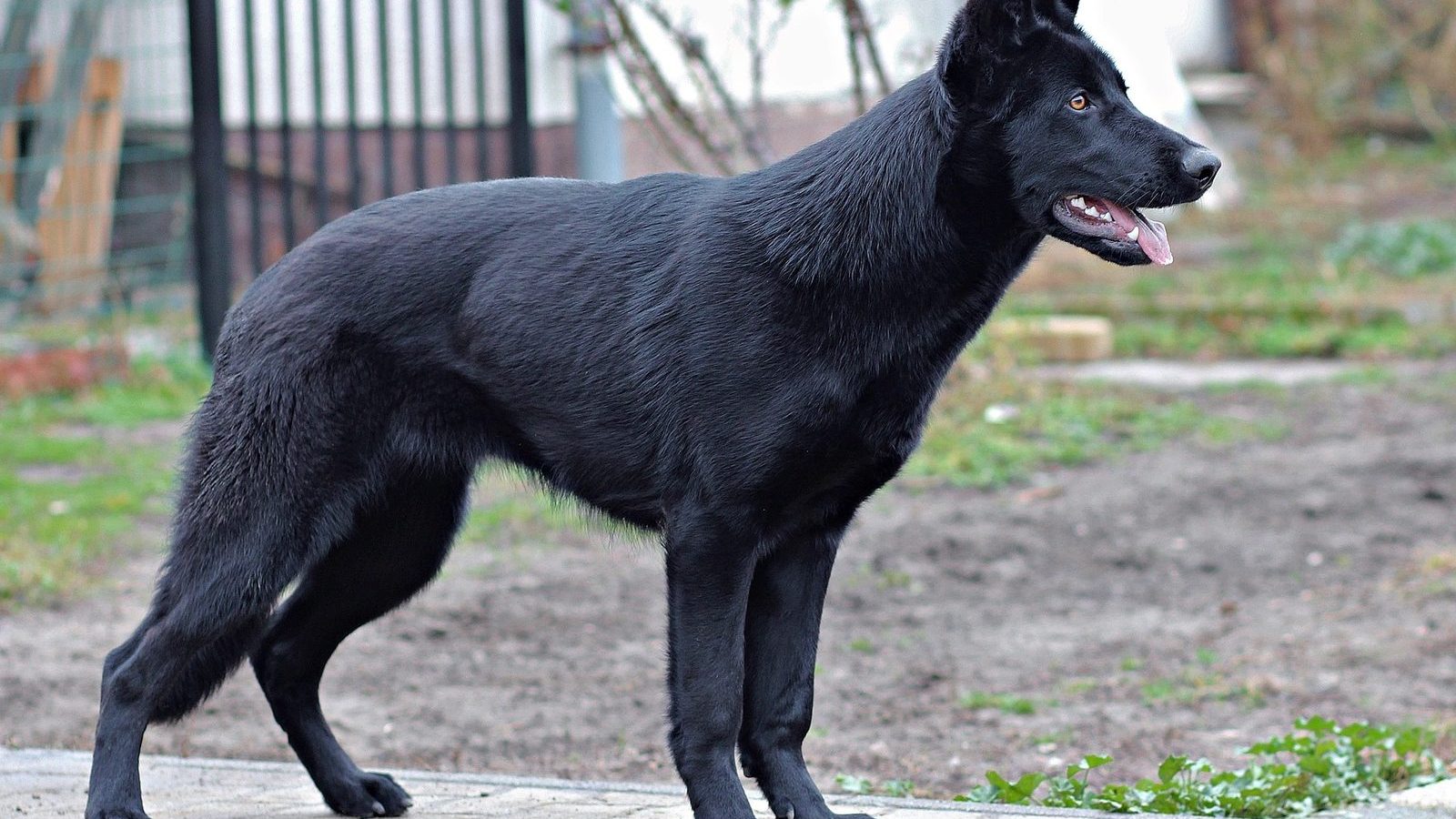
Short answer: it is about which breeds are oldest, not which ones have wolf in them
Every dog alive descends from the same ancient wolf population, so no modern breed is “part wolf”. When scientists rank breeds as closest to wolves, they mean the ones that stayed genetically isolated from the 19th-century breed-making boom — Shiba Inu, Chow Chow, Akita, Alaskan Malamute, Basenji, Siberian Husky, Afghan Hound and Saluki. And the wolfiest-looking breed of all, the German Shepherd, is not among them.
It is one of the most repeated facts on the internet, and one of the most widely misunderstood: a list of eight or so breeds, headed by something small and curly-tailed like a Shiba Inu, described as being “closest to wolves”. People look at the list, see no German Shepherd anywhere on it, and reasonably conclude that somebody has made a mistake.
Nobody has. The list is real and it comes from a genuine piece of genetics research. But the phrase “closest to wolves” is doing something quite different from what most people assume — and once you understand what it actually measures, both the list and the absence of the German Shepherd make complete sense.
This guide explains what the research actually found, works through the breeds one by one, explains why the wolfiest-looking dogs are frequently the least “ancient”, covers what these breeds are genuinely like to live with, and deals honestly with wolfdogs — which are an entirely separate and far more serious subject.
“Closest to wolves” does not mean “has wolf ancestry”. Every domestic dog split from wolves at the same moment in history. These breeds simply avoided being reshuffled during the Victorian breed-creation era, so their genetic signature stayed closer to the ancestral dog population. It is a measure of isolation, not of wildness.
What “Closest to Wolves” Actually Means
Picture the family tree differently and the whole thing clicks. Dogs and wolves separated from a common ancestor somewhere in the region of fifteen thousand years ago — the estimates vary, but the point is that it happened once, a very long time ago, and every dog on earth is on the far side of that split.
Your German Shepherd, a Chihuahua, a Basenji and a Labrador are all exactly the same number of generations from that ancestral population. In the sense most people mean, no breed is closer to wolves than any other.
So what is being measured?
What varies is how much a breed’s genome has been reshuffled since. Most modern breeds were created in a remarkably short window — roughly 1850 to 1900 — when Victorian enthusiasts took regional working types, crossed them, standardised them, closed the studbooks and invented the pedigree system we still use.
A handful of breeds sat that period out. They were in Japan, Siberia, Tibet, central Africa or the Middle East, doing the same job they had done for centuries, largely untouched by European breed-making. Their DNA therefore retains a pattern closer to the ancestral dog population — which is, in turn, closer to wolves. That is the entire finding.
These breeds are not more wolf. They are less Victorian. The distance being measured runs from each breed back to the ancient dog population, and the ancient breeds simply took a shorter, straighter route.
The Research Behind the List
The list traces back to a 2004 study published in Science by Parker and colleagues, which genotyped hundreds of dogs across dozens of breeds and looked at how they clustered. Most breeds fell into one large, tangled group — the expected result for populations created recently from shared stock.
A small number separated out cleanly into what the researchers called an ancient cluster, distinct from everything else and closer to the wolf reference samples. That cluster is where the internet list comes from, and its members are consistently: Shiba Inu, Chow Chow, Akita, Alaskan Malamute, Basenji, Siberian Husky, Afghan Hound, Saluki, Samoyed, Chinese Shar-Pei, Tibetan Terrier, Lhasa Apso and Pekingese.
More recent work using far larger datasets has shown the “ancient breed” label is softer than it first appeared. Several of these breeds show substantial recent crossing with European stock, and some of the apparent antiquity reflects geographic isolation rather than an unbroken ancient lineage. The Pekingese and Lhasa Apso in particular sit awkwardly in the group. Treat the list as a useful signal, not a settled ranking.
The Eight Breeds
| Breed | Origin | Original job | What makes it “ancient” |
|---|---|---|---|
| 1. Shiba Inu | Japan | Hunting small game in mountain terrain | Island isolation; nearly lost after WWII and rebuilt from surviving regional lines |
| 2. Chow Chow | Northern China | Guarding, hauling, hunting | Depicted in Han dynasty artefacts; isolated from European breeding until the 1800s |
| 3. Akita | Japan | Hunting bear and boar; guarding | Regional Japanese type with centuries of documented history and no European input |
| 4. Alaskan Malamute | Alaska | Heavy freight hauling over long distances | Developed by the Mahlemut people; geographic isolation kept the line intact |
| 5. Basenji | Central Africa | Flushing game into hunters’ nets | Genetically distinct African lineage; still bred close to village dog populations |
| 6. Siberian Husky | Siberia | Fast, light sled work over distance | Bred by the Chukchi people for millennia before reaching the West around 1900 |
| 7. Afghan Hound | Afghanistan | Coursing game over mountains | Mountain isolation; a sighthound lineage of great antiquity |
| 8. Saluki | Middle East | Coursing gazelle and hare | Among the oldest documented dog types anywhere; depicted in ancient Egyptian art |
Look at what that list has in common and something interesting emerges. Almost every one of them comes from a place that is hard to get to — an island, a mountain range, the Arctic, a desert. Antiquity in dog breeds is largely a story about geography.
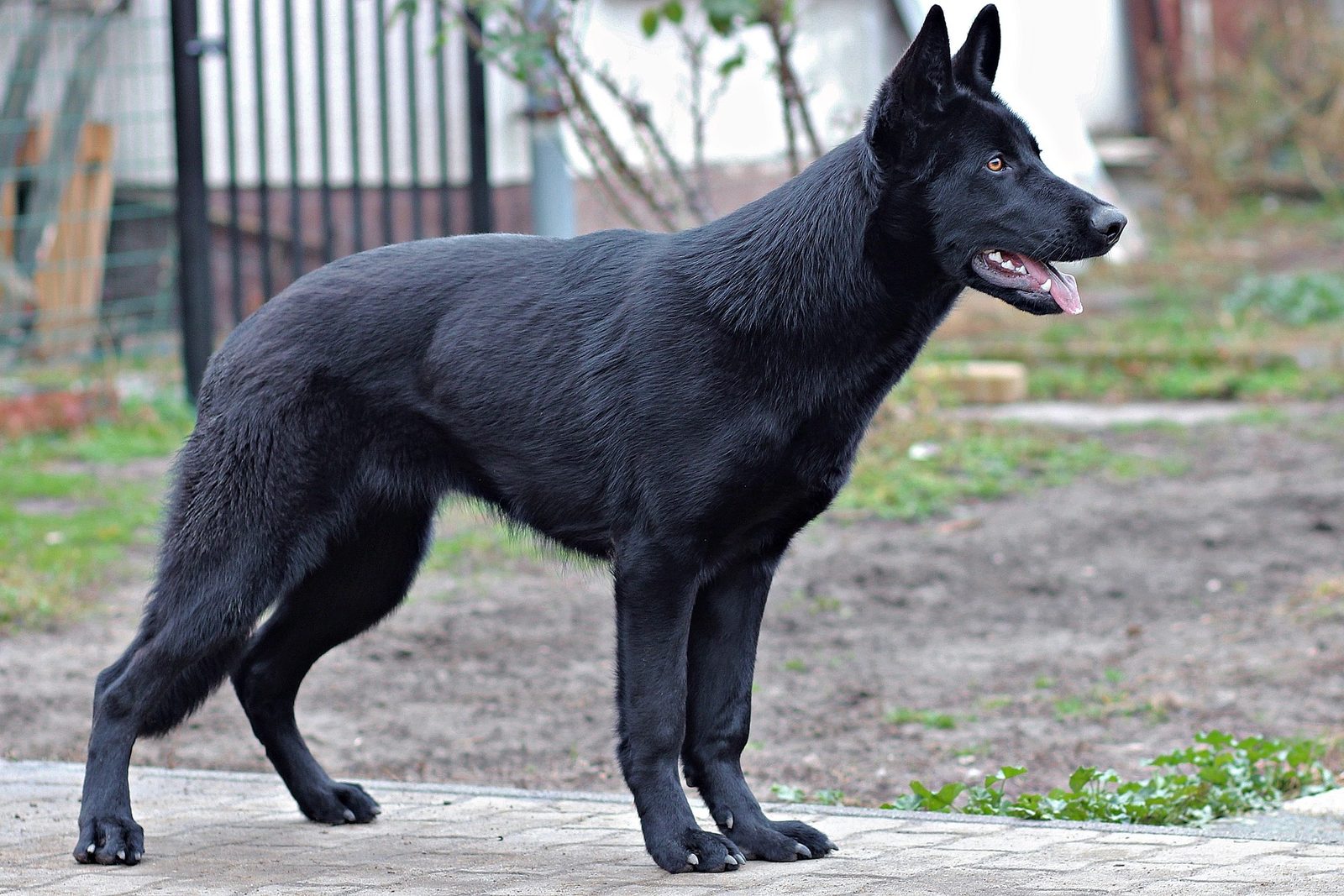
Why the German Shepherd Is Not on the List
This is the question that brings most people to the topic, and the answer is refreshingly simple: the German Shepherd is a very new breed.
Max von Stephanitz founded the breed in 1899, registering a dog called Horand von Grafrath as the first German Shepherd. He assembled it from existing regional German herding dogs with the explicit aim of creating a standardised, versatile working animal. That is roughly a hundred and twenty-five years of history — against several thousand for a Saluki.
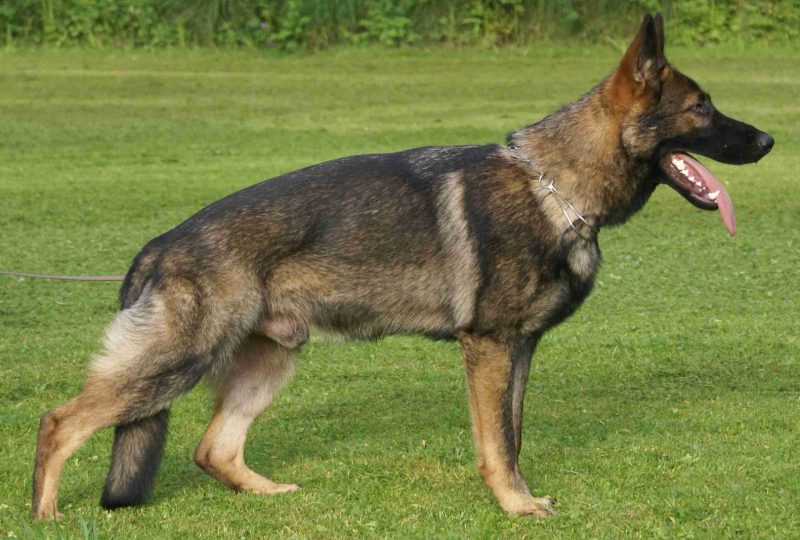
Von Stephanitz did admire wolf-like appearance, and the breed’s upright ears, sable colouring and long muzzle reflect that aesthetic preference. But preference is not ancestry. There is no meaningful wolf content in the modern German Shepherd, and the breed sits firmly in the modern European cluster alongside other recent working breeds.
The German Shepherd looks like a wolf for the same reason a sports car looks fast. Somebody designed it that way, recently, on purpose.
Why Looks Tell You Nothing
The disconnect between appearance and genetics runs both ways, and it is genuinely striking once you see it.
| Breed | Looks wolf-like? | In the ancient cluster? |
|---|---|---|
| Pekingese | Not remotely | Yes |
| Lhasa Apso | No | Yes |
| Afghan Hound | No | Yes |
| Basenji | Not particularly | Yes |
| German Shepherd | Strongly | No |
| Belgian Malinois | Yes | No |
| Northern Inuit / “Dire Wolf” types | Very strongly | No — modern crossbreeds, some created for television |
A Pekingese is in the ancient cluster and a German Shepherd is not. If that seems absurd, it is only because we instinctively read “wolf-like” as “primitive” — and coat, ear carriage and muzzle shape are among the easiest traits in the entire genome for breeders to select for in a few generations.
What Ancient Breeds Share Behaviourally
Here is where the genetics does translate into something practical. Breeds that avoided the Victorian reshuffle also avoided a great deal of selection for biddability — the willingness to take direction from a human that defines gundogs and herding breeds.
🧭 Independent decision-making
These dogs were bred to work at a distance and solve problems alone. A Basenji hunting or a Malamute hauling made their own choices. “Ignoring you” is often the job description, not disobedience.
🎯 High prey drive
Most were hunting or working breeds where chasing was the point. Recall around wildlife is genuinely difficult and, for several of these breeds, never fully reliable off-lead.
🚪 Escape artistry
Huskies and Malamutes are famous for it — digging, climbing, opening gates. Containment for these breeds is a serious engineering problem rather than an afterthought.
🗣️ Unusual vocalisation
Basenjis do not bark and yodel instead. Huskies howl and talk. Several of these breeds communicate in ways that surprise owners expecting a standard dog.
This is the genuinely useful takeaway from the whole topic. The ancient cluster does not predict wolfiness — but it does, loosely, predict a dog who will negotiate rather than comply, and who needs an owner who finds that entertaining rather than infuriating.
Living With a Primitive Breed
- Reward-based training with genuinely high-value payment — these breeds negotiate
- A long line as standard equipment, often permanently
- Serious fencing: six feet, dig-proofed at the base, secure latches
- Outlets for the original job — scentwork, canicross, sledding, lure coursing
- Accepting a degree of independence rather than fighting it
- Grooming plans that respect a heavy northern double coat
- Expecting German Shepherd or Border Collie levels of biddability
- Off-lead freedom near livestock, wildlife or roads
- Punishment-based methods — these breeds shut down or dig in
- Assuming a tired dog is a contained dog; they escape when bored
- Shaving a northern double coat for summer
- Buying one because of how it looks on screen
Wolfdogs: An Honest Warning
Wolfdogs — deliberate crosses between domestic dogs and wolves — are a genuinely different animal from anything discussed above, and the search that brings people to this page often ends up there. It deserves a straight answer.
- They are frequently illegal. Many countries, states and local authorities restrict or ban wolfdog ownership outright, and enforcement can mean seizure.
- Content is routinely misrepresented. A large proportion of animals sold as high-content wolfdogs are, on testing, mostly or entirely domestic dog. Buyers are frequently deceived.
- Rabies vaccination is not legally recognised for wolf hybrids in many jurisdictions, which can mean mandatory euthanasia after a bite incident regardless of circumstances.
- Behaviour is unpredictable across generations. Even within one litter, individuals vary enormously, and adolescent behavioural change can be dramatic.
- Containment requirements are extreme — typically multi-metre fencing with dig barriers and overhangs, closer to a zoo enclosure than a garden.
- Rescues are overwhelmed with them. The number of wolfdogs surrendered between one and three years old, when the novelty ends and the behaviour arrives, is the clearest evidence of how this usually goes.
If what appeals is a large, wolf-like, intelligent dog, that animal already exists and is bred to live in a house with people — a German Shepherd, a Malamute, a Husky, or a Northern Inuit type. Every one of them gives you the appearance without the legal exposure, the containment problem or the welfare risk. There is no version of the wolfdog route that is simply a more impressive dog.
Kit for a High-Drive Northern Breed
15 m biothane long line with a padded Y-front harness
Ancient and northern breeds were selected to work away from the handler and make their own decisions, which is precisely the trait that makes off-lead freedom risky around wildlife and roads. A long line is the honest answer: your dog gets to run, sniff and range properly, and you keep the ability to end it. Biothane matters here because it does not soak up water, hold mud or pick up burrs the way rope and webbing do, and it can be wiped clean in seconds after a muddy walk.
- Gives genuine freedom to a breed you cannot safely let off
- Lets recall be practised in real environments with no gamble
- Biothane does not absorb water or hold grass seeds and burrs
- A Y-front harness spreads the load safely across the chest
Safety note: always attach a long line to a well-fitted harness rather than a collar — a large dog hitting the end of fifteen metres at speed generates enough force to injure the neck. Let the line trail rather than holding it taut, and wear gloves if your dog is a serious puller.
| Item | Why it matters for these breeds | What to look for | Find it |
|---|---|---|---|
| Long line | Freedom without the recall gamble | 10–15 m biothane, light clip | See options → |
| Y-front harness | Spreads load; essential with a long line | Padded, two attachment points | See options → |
| Undercoat rake | Northern coats shed spectacularly | Long pins, rotating teeth | See options → |
| Puzzle feeder | Independent problem-solvers need problems | Adjustable difficulty, large breed | See options → |
| GPS tracker | These breeds are genuine escape artists | Collar-mounted, live tracking | See options → |
Seven Myths, Answered
The truth: none of them do, beyond what every dog shares. They are ancient by isolation, not by recent crossing.
The truth: a persistent myth, and false. The breed was assembled from German herding dogs in 1899. The wolfish look is deliberate aesthetics.
The truth: no such link exists. Several list members — the Saluki and Afghan Hound especially — are notably gentle. Independence is not aggression.
The truth: the alpha model came from captive wolves and was retracted by the scientist who popularised it. Wild packs are families.
The truth: the 2004 clustering was real, but later work with larger datasets softened it considerably. Treat it as a signal, not a ranking.
The truth: legally restricted in many places, frequently misrepresented at sale, with rabies vaccination often not recognised. Rescues are full of them.
The truth: sometimes, from wider gene pools — but each carries its own problems, from Chow Chow eye and hip issues to Basenji Fanconi syndrome.
Frequently Asked Questions
Which dog breed is genetically closest to the wolf?
In the 2004 Science clustering study, the ancient group included the Shiba Inu, Chow Chow, Akita, Alaskan Malamute, Basenji, Siberian Husky, Afghan Hound and Saluki. These are the breeds whose DNA diverged least from the ancestral dog population — because they avoided the 19th-century European breed-creation era, not because they carry wolf ancestry.
Are German Shepherds part wolf?
No. The German Shepherd was created in 1899 by Max von Stephanitz from existing German herding dogs, making it one of the newer registered breeds. Its wolf-like appearance reflects deliberate aesthetic selection for upright ears, sable colouring and a long muzzle — not wolf ancestry.
Does being close to wolves make a dog dangerous?
No. There is no established link between the ancient-cluster breeds and aggression. What these breeds do tend to share is independence, high prey drive and a talent for escaping — traits that make training and containment harder, which is a very different thing from being dangerous.
Why is the Pekingese on a list of ancient breeds?
Because the list measures genetic distance from the ancestral dog population, not appearance. The Pekingese was developed in China in isolation from European breeding programmes, so its genome kept an older signature. It is a good illustration of why looks tell you nothing about a breed’s age.
Can you own a wolfdog legally?
It depends entirely on where you live — many countries, states and local authorities restrict or ban them. There are further problems: content is frequently misrepresented at sale, rabies vaccination is often not legally recognised for hybrids, and containment requirements are extreme. Check your local law before considering it at all.
What dog looks most like a wolf but is easy to own?
A German Shepherd, an Alaskan Malamute, a Siberian Husky, a Tamaskan or a Northern Inuit gives you the appearance in an animal bred to live alongside people. Of those, the German Shepherd is generally the most biddable and the most straightforward for a first-time owner with time.
✅ What to Take Away
- All dogs split from wolves at the same point in history
- “Ancient” means isolated from Victorian breed-making
- The cluster: Shiba, Chow, Akita, Malamute, Basenji, Husky, Afghan, Saluki
- Later research softened the original finding
- German Shepherds date from 1899 — genuinely modern
- Wolf-like looks are unrelated to genetic antiquity
- Ancient breeds tend to be independent, not aggressive
- Expect high prey drive and unreliable recall
- Plan serious fencing and long-line use
- Wolfdogs: legally restricted, often misrepresented, frequently surrendered
- If you want the look, buy a breed built to live with people
The Bottom Line
The “closest to wolves” list is real, but it answers a much narrower question than people think. It tells you which breeds sat out the nineteenth century, not which ones have something wild in them. Every dog on earth — the Saluki, the Shiba Inu, the German Shepherd and the Pekingese alike — descends from the same ancient split, and none of them is closer to a wolf in any way that affects your Tuesday afternoon.
What the list does offer is a loose but useful hint about temperament. These breeds were shaped to work independently, and they largely still do. If that appeals, they are wonderful. If you want a dog who checks in every thirty seconds, look elsewhere — and a German Shepherd, that thoroughly modern, thoroughly wolf-looking animal, is probably exactly what you had in mind all along.
- Dog breeds history — where modern breeds actually came from
- History of the German Shepherd — von Stephanitz and 1899
- Sled dog breeds — Malamutes, Huskies and the northern group
- The pack leader myth — where the wolf comparison went wrong
Recommended German Shepherd gear for this guide
Waterproof car seat cover (hammock)
Best for: Protecting back seats on trips
- Waterproof
- Side flaps
Affiliate link — we may earn a commission, at no cost to you.
Heavy-duty puzzle feeder
Best for: Mental stimulation and slow feeding
- Builds focus
- Slows fast eaters
Affiliate link — we may earn a commission, at no cost to you.
Padded training leash 6ft
Best for: Daily walking and city control
- Padded handle
- Strong hardware
Affiliate link — we may earn a commission, at no cost to you.

Keep reading
More in Lifestyle & Travel →
Best Dog Jokes and Funny Dog Stories
Eighty dog jokes and puns, German Shepherd humour only owners get, the funny stories every household recognises, jokes…
The White Shepherd: Breed, Colour Genetics and How They Differ
What causes the white coat, why white shepherds are not albino and not prone to deafness, the 1933…
Sled Dog Breeds: The Dogs Built to Pull and How They Compare
Every traditional sled breed and what they are like to live with, why the Alaskan Husky is not…