Where to Get a German Shepherd: Breeder, Rescue or Rehome
The four sourcing routes compared, the health tests you must see, how to find a good breeder, the red flags that end a conversation, what breed rescue is really like, and what you should expect to pay.

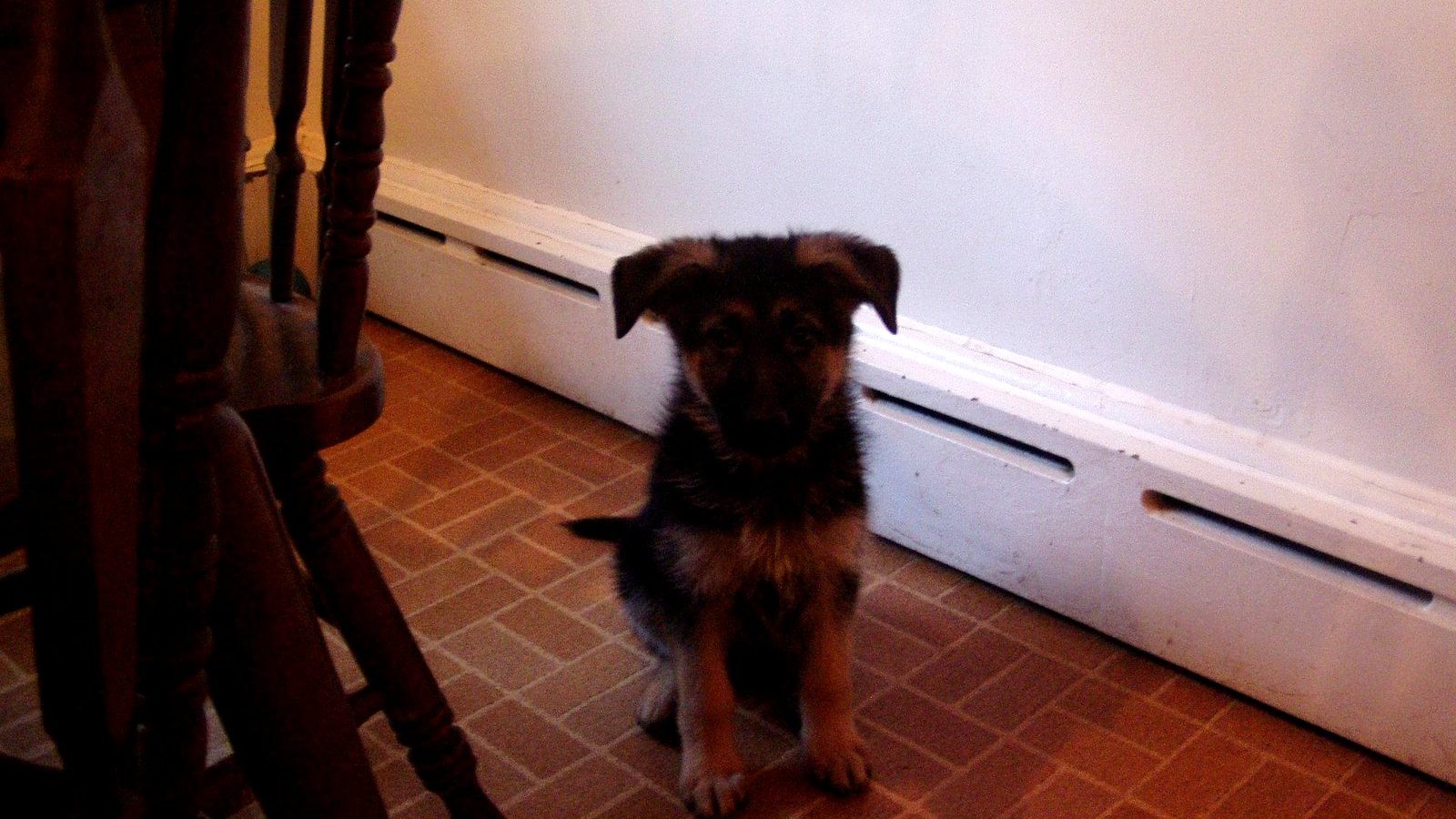
Short answer: a health-testing breeder or a breed rescue — and be prepared to wait
There are only two routes that reliably end well: a breeder who shows you hip scores, elbow scores and DM testing for both parents with the mother present, or a rescue that assesses honestly and supports you afterwards. Everything else — online marketplaces, pet shops, brokers who deliver, “meeting halfway” — carries real risk. A good litter is worth waiting six months for; a bad one costs you years.
Somewhere on a marketplace site right now there is an advert for German Shepherd puppies, ready to leave, vaccinated, “parents can be seen”, eight hundred dollars, message for details. It will have good photographs. The person answering will be friendly and will have another family interested, so you would need to decide quickly.
That advert is the single most expensive thing in this article. Not because of what it costs to buy, but because of what it costs over the following decade — in hip surgery, in behavioural work with a puppy who was never properly socialised, and occasionally in a dog who does not make it to five.
This guide covers where German Shepherds genuinely come from, how to identify a breeder worth buying from, what rescue is actually like, the red flags that should end a conversation immediately, and how to tell a nervous first-time breeder from an operation designed to look like one.
A good source slows you down. Waiting lists, questions about your life, a home visit, a contract, an insistence you come and see the mother. A bad source speeds you up — available now, another family interested, deposit today, can meet you at a service station. If you notice nothing else, notice which direction you are being pushed.
The Four Routes Compared
| Health-testing breeder | Breed rescue | General shelter | Private rehome | |
|---|---|---|---|---|
| Typical cost | $1,200–$3,000+ | $200–$500 | $100–$400 | Free to a few hundred |
| Health history | Parents tested; genetics known | Assessed, often vetted thoroughly | Basic health check; history often unknown | Whatever the owner tells you |
| Temperament known | Predictable from lines, not guaranteed | Yes — usually fostered and assessed | Partially; kennel behaviour misleads | Variable and frequently understated |
| Wait | Months, often a year | Weeks to months | Days to weeks | Immediate — which is the problem |
| Support afterwards | Good breeders support for life | Usually excellent, often lifelong | Variable | None |
| Best for | Wanting a puppy and known genetics | Most people, honestly | Experienced owners who can assess | Almost nobody |
Breed-specific rescue is the most consistently underrated option. The dogs are usually in foster homes rather than kennels, the people assessing them know the breed intimately, and they will tell you plainly what a dog needs — because their goal is a placement that lasts, not a placement that happens.
The Health Tests You Must See
This is the non-negotiable section. If a breeder cannot produce these, for both parents, with certificates you can read, the conversation is over regardless of how nice they seem.
| Test | What it screens for | What good looks like |
|---|---|---|
| Hip scoring | Hip dysplasia — the breed’s headline problem | Certificates for both parents, scores at or better than the breed average |
| Elbow scoring | Elbow dysplasia | Grade 0 for both parents is the target |
| DM genetic test | Degenerative myelopathy, a progressive spinal disease | Both parents clear, or one clear paired with a carrier — never two carriers |
| Veterinary health check | General fitness to breed | Recent, documented, from a named practice |
| Puppy vet check | Heart, hernias, general condition | Done before you collect, with paperwork |
Ask to see the actual certificates, not a verbal assurance, and check that the names and registration numbers match the dogs in front of you. A breeder who does this properly will be pleased you asked — it is the question that separates you from the buyers they would rather not sell to.
Adverts frequently say “vet checked and health tested” when they mean a routine examination. A vet check confirms the dog is not currently ill. Health testing means specific screening for heritable conditions — hip and elbow scores, and a DM result. They are entirely different things, and the wording is often blurred on purpose.
Finding a Good Breeder
Where to look
- National breed clubs — most maintain breeder directories with membership requirements attached.
- Kennel club assured or accredited schemes — not a guarantee, but a meaningful filter.
- Breed sport and working communities — people doing IGP, herding, agility or scentwork know exactly who breeds sound dogs.
- Your vet, who sees the results of local breeding and often has a view worth hearing.
- Owners of dogs you admire. Ask where they got them. Most people are delighted to tell you.
What a good visit looks like
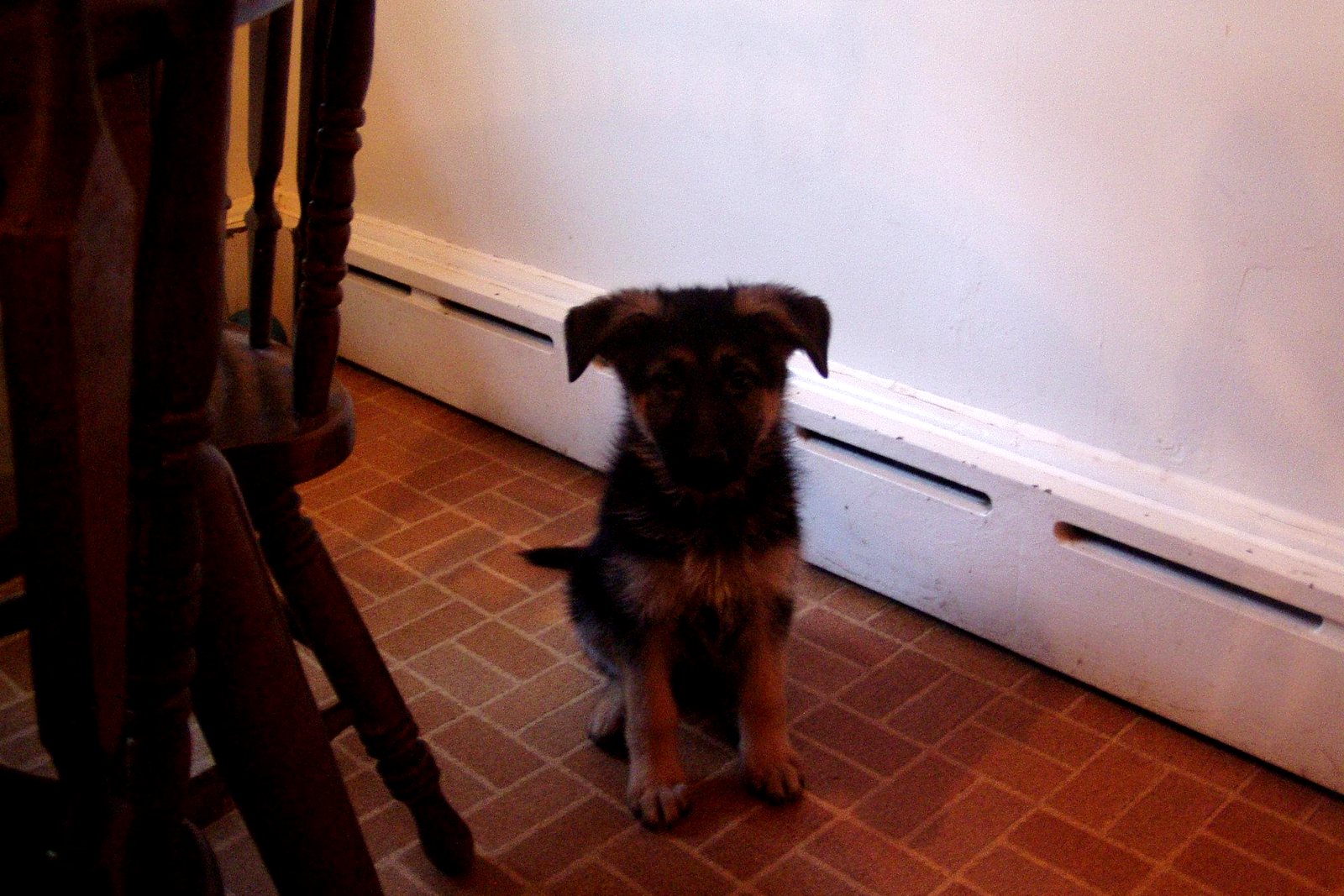
You should be invited to the place the puppies were born and raised. You should see the mother with the litter, interacting normally — not brought in separately, not “at the vet today”, not a different dog explained away as an aunt. The environment should be part of a household rather than an outbuilding, because socialisation in the first eight weeks means exposure to normal domestic noise and handling.
Puppies should be confident, clean, well-covered and interested in you. A good breeder will have started early handling and habituation, will tell you which puppy they think suits your household, and will happily push back if you have chosen the boldest one and described a quiet flat.
Questions to Ask — and to Be Asked
- May I see the hip, elbow and DM certificates for both parents?
- Why did you choose this pairing?
- How many litters has the mother had, and how old is she?
- What socialisation have the puppies had so far?
- Are these working lines, show lines or a mix?
- What will you take back if it does not work out?
- Can I contact you with questions in six months?
- May I speak to someone who bought a puppy from your last litter?
- Have you owned this breed before?
- How long will the dog be alone each day?
- What are your working hours and who else lives there?
- Do you have children, and how old are they?
- Is your garden secure, and how high is the fence?
- What are your plans for training and exercise?
- Have you thought about the cost over ten years?
- Are you prepared for adolescence?
The right-hand column matters as much as the left. A breeder who asks you nothing is a breeder who does not mind where their puppies go — and that tells you everything about how the litter was planned and raised.
Red Flags That End the Conversation
Why it matters: the single most reliable indicator of a puppy farm or an imported litter. Every excuse — at the vet, being bathed, nervous of visitors — means the same thing. Walk away.
Why it matters: car parks and service stations exist so you never see where the dog was raised. There is no legitimate reason for it.
Why it matters: a classic advance-fee scam, and also a way to commit you emotionally before you see anything. No deposit before you have met the puppy.
Why it matters: a serious breeder produces a small number of carefully planned litters. Volume and variety mean commercial production.
Why it matters: too early is a welfare problem and a behaviour problem. It also often means the seller wants them gone before health issues appear.
Why it matters: “another family is coming tonight” is a sales tactic. A good breeder would rather hold a puppy for the right home.
Why it matters: “rare white”, “exotic blue”, “isabella”, “panda”. Colour marketing signals a breeder selecting for novelty rather than for health and temperament.
The puppy in the car park is always available today. The puppy worth having is on a waiting list, and you will be asked what your fence is like.
Rescue: What It Is Really Like
Rescue carries a reputation for damaged dogs with hidden histories. The reality in German Shepherd rescue is quite different and considerably more mundane.
Most dogs in breed rescue are there because of human circumstances: a relationship ending, a move to housing that does not allow dogs, a change of job, a bereavement, or — most commonly of all — an owner who took on an adolescent Shepherd and discovered what that involves.
🏠 Fostered, not kennelled
Breed rescues typically place dogs in foster homes, so you get a genuine report on how the dog is with visitors, other dogs, being alone and stairs — rather than kennel behaviour, which misleads badly.
🎯 You skip the hardest year
No toilet training at 3am, no needle teeth, no adolescence to come. An adult Shepherd who is already through it is an enormous head start.
💬 They tell you the truth
A good rescue is direct about what a dog cannot cope with, because a failed placement costs them more than a slow one. That honesty is worth a great deal.
🤝 Support afterwards
Most breed rescues offer ongoing advice and will always take the dog back. That safety net is better than almost any breeder contract.
What to ask a rescue
- What is known about the dog’s history, and what is guesswork?
- How are they with other dogs, with strangers, with children, with cats?
- How long can they be left alone, and has that been tested?
- Have they shown any resource guarding or handling sensitivity?
- What veterinary work has been done, and what is outstanding?
- What support do you offer after adoption, and what is your return policy?
The common pattern is roughly three days of shutdown, three weeks of settling, and three months before you meet the actual dog. Behaviour in week one — good or bad — tells you very little. Keep the world small, the routine predictable and the expectations low for the first month.
Private Rehoming
Taking a dog directly from its current owner sits somewhere between rescue and gamble. It can be excellent — a genuine family in genuine difficulty, handing over a well-adjusted dog with full veterinary records. It can also be a way to offload a serious behaviour problem without the scrutiny a rescue would apply.
| Reassuring | Concerning |
|---|---|
| You visit the dog in their current home | They want to meet you elsewhere, or deliver |
| Full veterinary records handed over | Vague about vaccinations, or “we lost the paperwork” |
| A clear, consistent reason for rehoming | The story changes between conversations |
| They ask about your home and experience | They ask nothing at all |
| Happy for you to visit twice before deciding | Needs the dog gone this week |
| Honest about what the dog struggles with | “Good with everything” — no dog is good with everything |
If you do go this route, visit at least twice, take someone experienced with you, get the veterinary records and check the microchip is transferred properly. And be honest with yourself about whether you could manage the thing they are being vague about, because you will inherit it.
Where Never to Buy
- Pet shops and puppy windows. Reputable breeders do not sell through third parties, so the supply chain behind them is by definition not reputable.
- General online marketplaces. Some legitimate breeders do advertise there, but the proportion of puppy farms and scams is high enough that the risk rarely justifies it.
- Anyone who delivers. A puppy arriving in a van has been transported away from a place you were not allowed to see.
- Imported puppies with paperwork you cannot verify. Long-distance transport at a young age is a welfare problem and a disease risk.
- Anyone asking for payment by bank transfer or gift card before you visit. This is a scam pattern, not a breeding practice.
Puppy or Adult?
| Puppy | Adult | |
|---|---|---|
| You control | Socialisation, training and habits from the start | Very little — you inherit what exists |
| You know | Very little about adult temperament | Size, temperament, health status and quirks |
| Time needed | 3–4 hours a day of fragmented attention | 2–2.5 hours, in predictable blocks |
| Hard part | The first year, then adolescence | The first three months of settling |
| Suits | People at home with time and patience | Most working households, honestly |
An unglamorous truth worth stating plainly: for the majority of households, a settled adult from breed rescue is a better match than a puppy. The romance is in the puppy; the good outcome is frequently in the two-year-old whose previous owner ran out of time.
What You Should Expect to Pay
A well-bred German Shepherd puppy from health-tested parents typically costs $1,200 to $3,000, with imported and proven working lines higher. That price reflects real costs: health testing on both parents, veterinary care through pregnancy and whelping, quality feeding, early vaccination, microchipping and eight weeks of full-time socialisation work.
A $600 puppy is not a bargain — it is a puppy whose breeder skipped those costs. Hip dysplasia surgery alone runs into thousands, and a poorly socialised puppy costs years of behavioural work you cannot buy back. This is one of the few purchases where the cheap option is reliably the expensive one.
Kit to Have Ready Before Collection
42-inch dog crate with a divider panel
Whether you bring home an eight-week-old puppy or a four-year-old rescue, a crate does the same essential job: it gives the dog a defined, safe place that is theirs, which is exactly what a newly arrived animal needs while everything else is unfamiliar. Buy the adult 42-inch size straight away and use the divider to shrink it for a puppy — a German Shepherd outgrows a medium crate inside four months, and buying twice is money thrown away.
- Gives a new arrival somewhere that is unambiguously theirs
- Makes housetraining dramatically faster with a puppy
- Divider means one purchase covers eight weeks to adulthood
- Invaluable later for vet-ordered rest and safe car travel
See large dog crates on Amazon →
Good to know: introduce it as a good place — feed meals in it, never use it as punishment, and leave the door open at first. With a rescue dog especially, let them choose to go in rather than shutting them in on day one; some arrive with a bad history around confinement.
| Item | Why you need it on day one | Buy in this size | Find it |
|---|---|---|---|
| Crate | A defined safe space from the first night | 42 inch with divider | See options → |
| Y-front harness | Safer than a collar for a dog who does not yet walk well | Adjustable, padded | See options → |
| Long line | Recall practice from week one, with no risk | 10–15 m biothane | See options → |
| Enzyme cleaner | Accidents happen with puppies and with stressed rescues | Large bottle, pet-specific | See options → |
| Stuffable rubber chew | Settles a nervous new arrival; saves your furniture | Large or extra large | Check price → |

7 Mistakes (and the Fix for Each)
The fix: decide you are willing to wait six months before you start looking. Urgency is the single biggest cause of bad decisions here.
The fix: assume that if you visit, you will buy. Do your vetting by phone and email first, and only visit breeders who have already passed.
The fix: ask for hip scores, elbow scores and a DM result, for both parents, on paper. Anything less is not health testing.
The fix: choose the dog that fits your household. Compassion is the reason to adopt; it is not a substitute for a realistic match.
The fix: never send money before you have seen the puppy with its mother, at the address where it lives.
The fix: ask directly. A high-drive working-line puppy in an average household is the origin of a great many rehoming stories.
The fix: a good breeder and a good rescue will both take the dog back, for life. If neither will, ask yourself why not.
Frequently Asked Questions
How do I find a reputable German Shepherd breeder?
Start with national breed club directories, kennel club accreditation schemes, and the working and sport communities, who know who breeds sound dogs. Then insist on seeing hip scores, elbow scores and DM test results for both parents, and on visiting the mother with the litter at the breeder’s home. Expect a waiting list.
How much should a German Shepherd puppy cost?
Typically $1,200 to $3,000 from a health-testing breeder, higher for imported or proven working lines. That covers health testing on both parents, veterinary care through whelping, vaccination, microchipping and eight weeks of socialisation. A much cheaper puppy usually means those costs were skipped, and you pay them later.
Is it better to adopt or buy a German Shepherd?
For most households, breed rescue is the better option: you skip the hardest year, you know the adult temperament, the dogs are usually fostered and honestly assessed, and support afterwards is excellent. Buy a puppy if you specifically want control over socialisation from eight weeks and have the time that requires.
What are the biggest red flags when buying a puppy?
Not being able to see the mother with the litter, being offered a meeting point rather than a home visit, a deposit requested before you visit, several breeds or litters available at once, puppies ready before eight weeks, pressure and urgency, and rare colours sold at a premium. Any one of these is enough to walk away.
Are rescue German Shepherds damaged or difficult?
Usually not. Most are surrendered because of human circumstances — a house move, a job change, a relationship ending, or an owner who underestimated adolescence. Breed rescues typically foster their dogs, so you get a genuine assessment of how they behave in a home rather than misleading kennel behaviour.
Should I get a working line or show line German Shepherd?
For a first-time owner with a normal job, a well-bred show or pet line dog from stable temperament lines is considerably easier, and still plenty of dog. Working lines have high drive that needs a genuine daily outlet — scentwork, sport, serious training — and struggle badly in under-stimulated homes.
✅ Your Sourcing Checklist
- Willing to wait months for the right dog
- Breed rescue considered seriously, not just as a fallback
- Hip scores seen for both parents
- Elbow scores seen for both parents
- DM test results seen for both parents
- Certificates match the dogs by name and registration number
- Mother seen with the litter, in the home
- Puppies raised in a household, not an outbuilding
- Puppy not leaving before eight weeks
- Working line versus show line established
- The breeder asked you questions
- Return policy confirmed — for life
- No deposit paid before visiting
- No meeting points, no delivery, no bank transfers to strangers
- Veterinary records and microchip transfer arranged
- Crate, harness, long line and cleaner bought before collection
The Bottom Line
Where your German Shepherd comes from shapes the next twelve years more than almost any decision you make afterwards. Health testing determines whether you spend your forties at the orthopaedic vet. The first eight weeks determine how your dog handles the world. Neither can be fixed later by being a good owner.
So take the slow route. Ask for the certificates and read them. Insist on seeing the mother. Let a rescue tell you honestly what a dog needs. And notice which direction you are being pushed — because the source worth using is the one making it harder for you, not easier.
The advert on the marketplace will still be there next month, with different photographs and the same friendly seller. The litter worth waiting for will have a list, a contract, and somebody asking how high your fence is.
- Planning for a German Shepherd — costs, time and honest questions
- The new puppy checklist — the first 30 days, week by week
- Introducing the German Shepherd — temperament and suitability
- The White Shepherd — why “rare colour” pricing is a red flag
Recommended German Shepherd gear for this guide
Heavy-duty German Shepherd crate (42")
Best for: Crate training and safe rest
- Sturdy build
- Double-door access
- Removable tray
Affiliate link — we may earn a commission, at no cost to you.
Low-calorie training treats
Best for: High-frequency reward training
- Soft, easy to break
- Quick consumption
Affiliate link — we may earn a commission, at no cost to you.
Durable rubber chew toy
Best for: Power chewers and chew redirection
- Long lifespan
- Treat-stuffable
Affiliate link — we may earn a commission, at no cost to you.

Keep reading
More in Puppy Care →
Planning for a German Shepherd: Costs, Time and Honest Questions to Ask First
The real setup, annual and lifetime cost of a German Shepherd, the daily time commitment hour by hour,…

Potty Bells for Dogs: How to Train Them (Wall Mounted vs Hanging)
How potty bells work, hanging versus wall-mounted, a two-week training plan, the golden rule that stops your dog…

Housetraining a German Shepherd: The Complete Toilet Training Guide
How long housetraining really takes, the five rules that do the work, the schedule by age, night-time training,…