Traveling With a German Shepherd: Car Setup, Stops, Gear
Plan a calm, safe road trip with a German Shepherd — restraint vs hammock, ramp use, stop cadence, and what to pack.

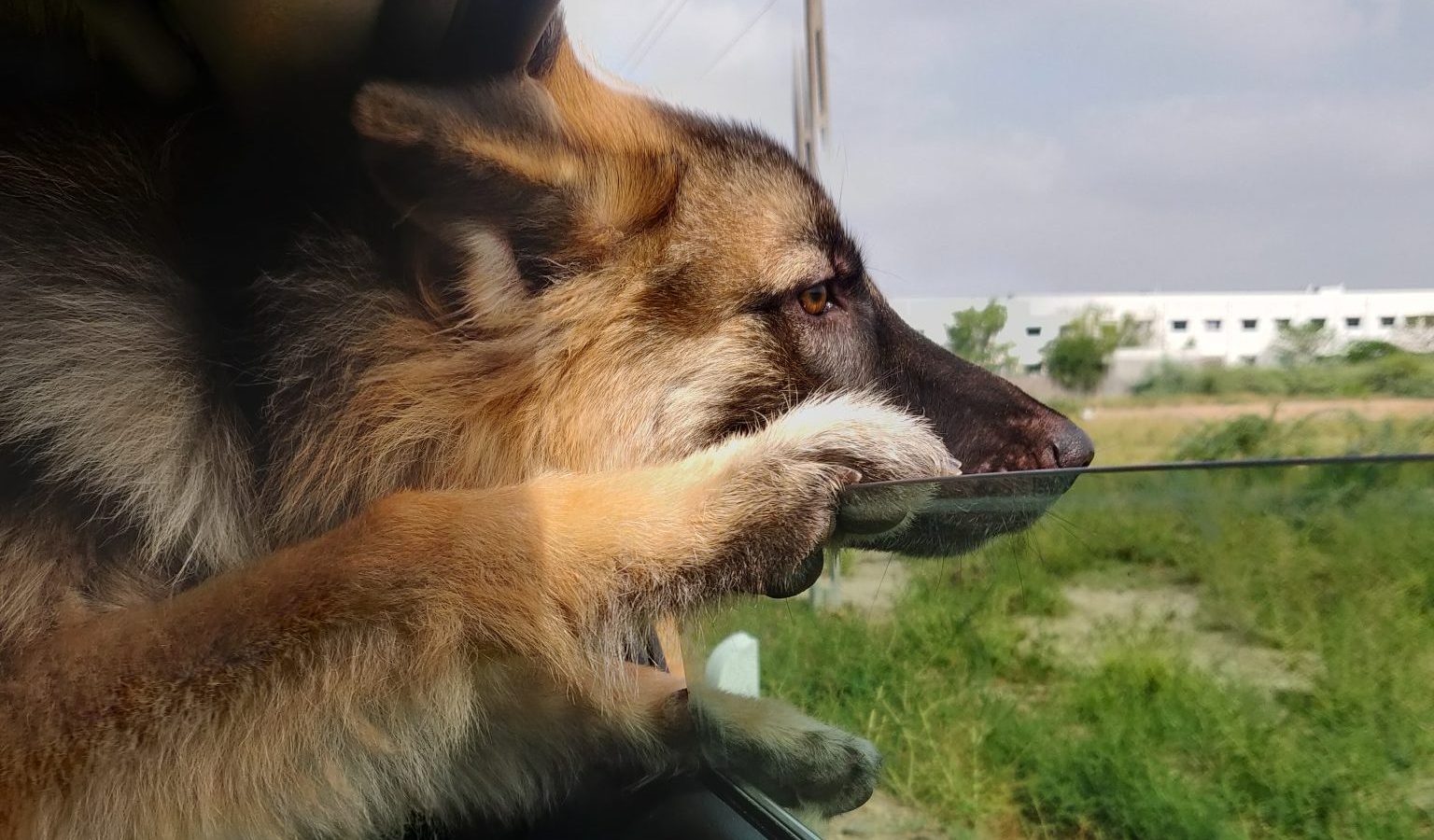
Short answer: secure the dog, break the journey, never leave them in the car
Travelling with a German Shepherd comes down to three things. Restrain them properly — a crash-tested harness or a secured crate, never loose on the back seat. Stop every two to three hours for water, a toilet break and a leg stretch. And never leave a dog in a parked car in warm weather, not even with the windows cracked, not even for five minutes.
The first long trip with a German Shepherd is a lesson in logistics. Forty kilos of dog, a boot full of luggage, a service station that turns out to have nowhere safe to walk, and a passenger who has decided that motorway bridges are terrifying. By hour three you are wondering whether the dog should simply have stayed at home.
It gets far easier. Most travel problems are set-up problems, not dog problems — the wrong restraint, no plan for stops, an anxious dog who was never taught that cars are boring. Fix those and this breed travels beautifully. They are adaptable, they like being with you, and most of them fall asleep within ten minutes of setting off.
This guide covers how to secure a big dog safely, how to build one who actually likes the car, what to do about travel sickness, planning stops on a long drive, the real danger of parked cars, what to pack, and how to settle a Shepherd in unfamiliar accommodation.
Anyone driving anywhere with a German Shepherd — the twenty-minute vet run, the weekend away, or a full day on the motorway. Rules on transporting dogs, and the law around leaving them in vehicles, vary by country. Check your local requirements; the safety principles here apply everywhere.
How to Secure a Big Dog Safely
An unrestrained 35kg dog in a collision becomes a projectile — dangerous to themselves and to everyone in the car. A loose dog also distracts the driver, can bolt out of an opened door after a crash, and can prevent emergency services from reaching people. In several countries an unrestrained dog is also a driving offence.
| Option | Verdict | What matters |
|---|---|---|
| Crate secured in the boot | ✅ Gold standard | Properly sized, strapped or bolted down. A crash-tested car crate is the safest option available for a large dog |
| Crash-tested car harness | ✅ Excellent | Must be a harness specifically crash tested, attached to a seatbelt point with a short tether — not a walking harness on a long strap |
| Boot with a dog guard | ⚠️ Better than nothing | Stops the dog entering the cabin, but does not restrain them in a crash. Fine for short trips in an estate car |
| Back seat, loose | ❌ No | Unsafe for the dog and everyone else, and often illegal |
| Collar clipped to a seatbelt | ❌ Dangerous | A collar concentrates all the force on the neck. Never restrain by the collar |
| Front seat / lap | ❌ Never | Airbags are designed for adult humans and can be fatal to a dog |
Whatever you choose, the rule is the same: attach to a harness or a crate, never to a collar, and keep the tether short enough that your dog cannot reach the driver or be thrown forward.
Building a Dog Who Likes the Car
Plenty of German Shepherds decide early that the car is bad news — usually because their first several journeys ended at a vet, and their fourth ended in vomit. The fix is the same as everything else with this breed: small steps, good food, and never pushing past what the dog can handle.
Feed near the car, engine off
Boot open, dog on the ground, meals eaten beside the car for a few days. No lifting, no journeys.
Why it works: you are separating “the car” from “going somewhere”, which is the part most dogs have learned to dread.
Get in, get a chew, get out
Let them jump in (or use a ramp), hand over a stuffed chew, sit with them for two minutes, then out again. Repeat for a few days. Engine still off.
Why it works: the car becomes a place where good things happen and nothing else does.
Engine on, then off again
Start the engine, feed a few treats, turn it off, get out. Two or three sessions like this before you move an inch.
Why it works: the noise and vibration are separate scary things. Deal with them on their own before adding motion.
Drive to the end of the road and home
Ninety seconds. Then two minutes. Build up over a fortnight. Make some of the trips end somewhere brilliant — a park, a friend’s house — not at the vet.
Why it works: short trips end before nausea or worry can build. Positive destinations rewrite what the car predicts.
Keep the routine identical
Same spot, same restraint, same chew, same calm tone. Boring and predictable is what you are aiming for.
Why it works: predictability lowers arousal. A dog who knows exactly what happens in the car has nothing to worry about.
Travel Sickness
Very common in puppies and often outgrown by around a year, because the inner ear is still developing. It can also be pure anxiety, and the two feed each other — a dog who feels sick becomes worried, and a worried dog feels sicker.
- Travel on an empty-ish stomach — leave around two hours after a meal, though a very small snack sometimes helps.
- Face them forwards if you can, and give them a view of the horizon rather than a blank seat back.
- Cool, fresh air — crack a window a little (not enough for a head to fit out) and keep the car cool.
- Drive smoothly. Gentle braking and slow corners genuinely help.
- Short, frequent trips to build tolerance rather than one long ordeal.
- Ask your vet. There are effective prescription anti-sickness medications for dogs — far better than guessing with human remedies, which can be dangerous.
Never give human travel sickness tablets, sedatives or painkillers to a dog. Several are toxic, and sedation without veterinary advice can be genuinely dangerous in a moving vehicle — a sedated dog may be unable to regulate their temperature or protect themselves. If your dog needs help travelling, your vet has proper options.
Planning the Journey and the Stops
Check the harness or crate fits and is secure. Pack the dog bag. Make sure the ID tag has your mobile number on it and the microchip details are up to date — that matters far more away from home.
Last proper meal. A hungry-ish dog travels better than a full one.
A decent walk and a toilet trip. A dog who has stretched their legs settles far quicker than one who has just been let out of the house.
Stop. Water, toilet, five to ten minutes on the lead. Keep them on lead at every service station — unfamiliar places and car parks are where dogs get lost.
Walk before you unpack. Twenty minutes of sniffing lets your dog work out where they are, and makes the evening indoors far calmer.
Two practical notes. Plan stops that actually have somewhere to walk — many motorway services have a small dog area, and a quick search beforehand saves a miserable ten minutes in a lorry park. And keep the lead on before the door opens: the moment of opening a boot in an unfamiliar car park is exactly when a startled dog bolts.
Parked Cars and Heat
This is the section that matters most, so it is short and blunt.
The inside of a car heats up dramatically within minutes, even in the shade, even with the windows open, even when it does not feel especially hot outside. Dogs cool themselves mainly by panting, which stops working in hot, humid, still air — and a thick double-coated German Shepherd is at higher risk than most.
Signs of heatstroke: heavy frantic panting · bright red gums · thick drool · wobbling, confusion or collapse · vomiting. Act immediately: get them out and into shade, pour cool (not ice-cold) water over them, offer small drinks, and ring an emergency vet on the way. Heatstroke can be fatal within a short time.
In hot weather, travel early or late, use sunshades on the windows, keep the air conditioning aimed towards the back, carry more water than you think you need, and plan stops that are in shade. If you cannot take your dog out of the car with you at the destination, that is a trip to make without them.
What to Pack
Keep a permanent “dog bag” in the boot and top it up. It means a spontaneous trip never turns into a supermarket stop.
| Category | What to bring |
|---|---|
| Every journey | Water + travel bowl · lead + spare lead · poo bags · a towel · ID tag with your mobile number |
| Longer trips | Measured food in a sealed tub · usual bowl · bed or blanket that smells of home · two or three chews · a long line |
| Health | Any medication · your vet’s number · pet insurance details · vaccination records if you are boarding or crossing a border |
| Comfort | Familiar toy · sunshade for the windows · a cooling mat in summer · wipes and spare towels |
| Just in case | Basic pet first aid kit · tick remover · a recent photo of your dog on your phone |
Away from home, your address is useless — nobody is going to drive your dog two hundred miles. Make sure the tag has a mobile number on it, and check your microchip details are current before you travel. It takes five minutes and it is the single most useful thing you can do before a trip.
Staying Somewhere New
German Shepherds are watchful, and an unfamiliar building full of unfamiliar noises is a lot to process. A few small things make an enormous difference to how the first night goes.
- Walk before you go in. Twenty minutes of sniffing around the area first, so the place has context.
- Set up their spot immediately — the bed or blanket from home, in a quiet corner away from the door. Familiar smells do a lot of work.
- Bring the crate if your dog uses one. A dog with their own bedroom settles in a strange house far quicker — one of the underrated benefits of crate training.
- Feed the normal food at normal times. Travel plus a new diet is how holidays produce upset stomachs.
- Do not leave them alone in the room on the first day, and never for long in accommodation where barking will be a problem. Check the rules before you book.
- Keep the routine. Same walk times, same meal times, same bedtime. Familiar rhythm in an unfamiliar place is what settles a dog.
Ferries, Trains and Flights
Rules here are set by the operator and the country, and they change — so treat this as a prompt to check rather than a set of answers.
Ferries usually offer either kennels on board or dogs remaining in the vehicle deck, with some routes offering pet-friendly cabins. Ask specifically whether you can visit your dog during the crossing.
Trains and coaches vary enormously — some allow dogs free of charge, others not at all. Check before you buy the ticket, and expect a muzzle requirement on some networks.
Flying is a bigger decision. A dog the size of a German Shepherd travels in the hold in an airline-approved crate, and it is stressful and carries real risk, particularly in hot weather. Speak to your vet first, use a reputable pet travel specialist, and be honest about whether the journey is necessary. For international travel there is also paperwork — microchips, vaccinations, health certificates, and sometimes tapeworm treatment within a fixed window before entry — and requirements differ by destination and change over time. Start that process months ahead, not weeks.
Gear Worth Buying
We recommend product types and the features that matter rather than sponsored placements, and we link to live Amazon results instead of quoting prices that go stale. As an Amazon Associate we may earn from qualifying purchases — at no extra cost to you.
A crash-tested car harness (or a secured car crate)
An ordinary walking harness clipped to a seatbelt is not a restraint — it is a tether. What you want is a harness specifically crash tested for a dog of your dog’s weight, with a short seatbelt tether, or a properly secured crate in the boot. This is the piece of gear that matters when something goes wrong.
- Spreads force across the chest, never the neck
- Keeps the dog out of the footwell and away from the driver
- Stops a frightened dog bolting when a door opens after a stop
- Doubles as a walking harness at the other end for many models
Good to know: look for a manufacturer that states independent crash testing and a weight rating that covers your dog. Measure the chest girth before ordering, and check the tether length — it should not allow your dog to reach the front seats.
| Item | What to look for | Find it |
|---|---|---|
| Car crate | Sized for your boot, strapped down, ideally crash tested | See options → |
| Boot liner / hammock | Waterproof, non-slip, quick to shake out | See options → |
| Car ramp | Non-slip, side rails — essential for seniors and big dogs | See options → |
| Travel water bottle | Bottle and bowl combined, one-handed use | See options → |
| Window sunshades | Full coverage mesh shades for rear windows | See options → |
Our German Shepherd car gear guide compares crates, harnesses and boot setups in more detail.
7 Mistakes (and the Fix for Each)
❌ 1. An unrestrained dog on the back seat
Dangerous in a crash, distracting while driving, and often illegal.
✅ Fix: secured crate in the boot, or a crash-tested harness with a short seatbelt tether.❌ 2. Clipping the seatbelt to a collar
All the force of a sudden stop concentrated on the neck.
✅ Fix: harness only — always. Collars are for ID tags, not restraint.❌ 3. “Five minutes” in a parked car
The temperature inside a car rises fast, and heatstroke can be fatal.
✅ Fix: if the dog cannot come with you, they do not come on the trip. No exceptions in warm weather.❌ 4. Head out of the window
It looks joyful and it causes eye injuries from grit and insects, plus ear damage — and a dog can fall or jump out.
✅ Fix: windows open a few centimetres for airflow only, with the dog properly secured.❌ 5. Only ever driving to the vet
The car becomes a reliable predictor of something unpleasant.
✅ Fix: lots of short trips to good places — the park, a friend’s, a nice walk — for every clinical one.❌ 6. Driving straight through
Four hours without a break is uncomfortable for a big dog and often ends in an accident in the boot.
✅ Fix: stop every two to three hours for water, a toilet break and ten minutes on the lead.❌ 7. Opening the boot without a lead on
Strange car park, tired dog, sudden noise — this is exactly how dogs get lost away from home.
✅ Fix: lead attached before the door opens, every single time, plus an ID tag with your mobile number.🎒 Permanent boot bag
Water, bowl, spare lead, poo bags, towel — restocked, never unpacked. Spontaneous trips become easy.
📷 Photo on your phone
A recent, clear photo of your dog is the first thing you need if they ever go missing away from home.
🥶 Freeze a chew for the trip
A frozen stuffed toy in the crate turns the first twenty minutes of the drive into a licking session.
🗺️ Plan the stops
Two minutes on a map beforehand to find services with a proper dog area saves a miserable lorry-park walk.
Frequently Asked Questions
What is the safest way for a German Shepherd to travel in a car?
A properly sized crate secured in the boot, or a crash-tested harness attached to a seatbelt point with a short tether. Both are far safer than a dog guard alone, and infinitely safer than a loose dog. Never attach a restraint to a collar.
How often should I stop on a long drive?
Every two to three hours for water, a toilet break and five to ten minutes on the lead. Puppies and seniors need stops more often. Keep the lead on before you open the door at every stop.
How do I stop my dog being car sick?
Travel roughly two hours after a meal, keep the car cool with a little fresh air, face them forwards, drive smoothly, and build tolerance with lots of very short trips. Many puppies grow out of it. If it persists, your vet can prescribe effective anti-sickness medication — never use human tablets.
Can I leave my dog in the car with the windows open?
No. Open windows make very little difference to how quickly a car heats up, and a thick-coated German Shepherd overheats faster than most breeds. If you cannot take the dog with you, do not take the dog on that trip.
Should my dog travel in the boot or on the back seat?
The boot with a secured crate is generally the safest arrangement for a large dog, provided it is well ventilated and the crate is properly fixed. A back seat is fine with a crash-tested harness. Never the front seat — airbags are dangerous to dogs.
How do I settle my German Shepherd in a hotel or rental?
Walk before you go in, set up their own bed or crate in a quiet corner straight away, keep meals and routine identical to home, and do not leave them alone in the room on the first day. Familiar bedding and a familiar rhythm do most of the work.
✅ Your Travel Checklist
- Crash-tested harness or secured crate — never a collar, never loose
- ID tag with your mobile number; microchip details up to date
- Last meal about two hours before you leave
- Proper walk and toilet trip 30 minutes before setting off
- Stops every 2–3 hours — water, toilet, leg stretch
- Lead attached before the door or boot opens
- Never left alone in a parked car in warm weather
- Windows open a few centimetres only — no heads out
- Permanent boot bag: water, bowl, leads, bags, towel
- Bed or blanket from home for the destination
- Normal food, normal times, normal routine away from home
- Vet number, insurance details and a recent photo on your phone
The Bottom Line
German Shepherds are excellent travelling companions once the basics are right. Secure them properly, break the journey every couple of hours, keep the routine boring and predictable, and never take the risk with a parked car on a warm day.
Do the short-trip groundwork before you need it — a dozen two-minute drives ending somewhere good — and the long journeys look after themselves. Most of these dogs end up asleep before you reach the end of the road.
- Best German Shepherd car gear — crates, harnesses, ramps and liners
- Crate training a German Shepherd puppy — why a crate makes travel easier
- Can a German Shepherd live in an apartment? — settling in small and unfamiliar spaces
- Senior German Shepherd care — ramps and comfort for older travellers
Recommended German Shepherd gear for this guide
Waterproof car seat cover (hammock)
Best for: Protecting back seats on trips
- Waterproof
- Side flaps
Affiliate link — we may earn a commission, at no cost to you.
Folding dog ramp for SUVs
Best for: Senior or post-injury vehicle access
- Folds flat
- Non-slip surface
Affiliate link — we may earn a commission, at no cost to you.
Padded training leash 6ft
Best for: Daily walking and city control
- Padded handle
- Strong hardware
Affiliate link — we may earn a commission, at no cost to you.
Go deeper
Related articles
Try a tool

Keep reading
More in Lifestyle & Travel →
Senior German Shepherd Care: Comfort, Mobility, Daily Setup
Practical changes that keep a senior German Shepherd comfortable — bedding, traction, routine adjustments, and when to call…
Best Dog Jokes and Funny Dog Stories
Eighty dog jokes and puns, German Shepherd humour only owners get, the funny stories every household recognises, jokes…
The White Shepherd: Breed, Colour Genetics and How They Differ
What causes the white coat, why white shepherds are not albino and not prone to deafness, the 1933…