German Shepherd Feeding Guide (Puppy, Adult, Senior)
How owners think about feeding a German Shepherd at every life stage — without prescribing calories or pushing supplements.

Short answer: feed for a lean body, not for a number on a bag
Feed a complete food suitable for large breeds, split into 4 meals as a young puppy, 3 from 3–6 months, and 2 from six months onwards. Then ignore the bag and adjust by feel: you should be able to feel the ribs easily and see a waist from above. Lean dogs live longer — and for a breed prone to hip and elbow problems, staying slim is the single most useful thing you control.
Ask five German Shepherd owners what to feed and you will get five confident, contradictory answers, at least one of which involves a spreadsheet. Meanwhile you are standing in the pet aisle holding two bags, both covered in words like “premium” and “ancestral”, trying to work out which one will not wreck your dog’s stomach.
Here is the calming truth: the exact brand matters far less than the amount. A good complete food fed to keep your dog lean beats an expensive food fed to a chubby dog every single time. Portion control, not marketing, is where the health outcomes come from.
This guide covers how much to feed at each age, how to read a label without a chemistry degree, the specific reason large-breed puppy food exists, the ten-second body check that replaces guesswork, mealtime habits worth adopting, and what to do about the fussy eater, the gulper and the dog with permanently loose stools.
This is general owner information, not veterinary advice. Diet is one of the areas where individual dogs genuinely differ — growth rate, allergies, gut sensitivity, medical conditions. Your vet knows your dog; use this guide to have a better conversation with them, not to replace one. Any sudden change in appetite, weight or stools is a call to the practice, not a change of brand.
How Much to Feed, by Age
Start with the feeding guide on the bag for your dog’s ideal weight — not their current weight if they are overweight — then adjust up or down based on what you can feel. Bag guidelines are averages, and an average German Shepherd does not exist: a calm apartment dog and a working dog on a farm can differ by 40% in daily calories.
| Age | Meals per day | Food type | What to watch |
|---|---|---|---|
| 8–12 weeks | 4 | Large-breed puppy | Small stomach, fast metabolism. Keep the breeder’s food for the first two weeks |
| 3–6 months | 3 | Large-breed puppy | Fastest growth phase. Weigh weekly; keep them slim, not roly-poly |
| 6–12 months | 2 | Large-breed puppy | Appetite can drop around teething and adolescence — normal if weight is steady |
| 12–24 months | 2 | Transition to adult | Ask your vet when to switch — commonly 12–18 months for this breed |
| Adult (2–7 yrs) | 2 | Adult, large breed | Adjust with activity and season. Working dogs need noticeably more |
| Senior (7+ yrs) | 2 | Adult or senior formula | Slower metabolism, same appetite. Weight creeps up quietly |
Weigh the food. Every time. A scoop is not a measurement — the difference between a level and a generous scoop, twice a day, is easily a spare tyre by Christmas. Kitchen scales cost very little and are the cheapest health intervention you will ever buy.
What a Good Food Looks Like
You do not need to decode every ingredient. Four checks cover almost everything that matters.
- It says “complete”. Complete foods are formulated to provide everything a dog needs. “Complementary” foods (many toppers and wet pouches) are not, and cannot be the whole diet.
- It states a life stage. Puppy, adult, senior, or “all life stages”. For a growing German Shepherd it should also say suitable for large breed growth.
- A named protein is high on the list. “Chicken” or “lamb” rather than “meat derivatives”. Ingredients are listed by weight before cooking, so this is a rough guide rather than a verdict.
- The company can answer questions. Do they employ a qualified nutritionist? Do they run feeding trials? A brand that cannot tell you is telling you something.
Dry, wet, raw and home-cooked can all work when they are properly balanced — and all of them can go wrong when they are not. Raw and home-cooked diets in particular need professional formulation: the risk is not the raw meat itself so much as the calcium-to-phosphorus balance in a growing large-breed dog, which is very easy to get wrong and hard to undo.
Grain-free became popular as a marketing position rather than a nutritional one. Very few dogs are actually allergic to grains — the more common culprits are proteins like beef, dairy and chicken. There has also been ongoing veterinary investigation into a possible link between some grain-free diets and heart disease in dogs. If your dog does well on a food with grains in it, there is no reason to switch. Discuss it with your vet rather than the internet.
Puppy Feeding and Controlled Growth
This is the section that matters most, because the mistakes here are the ones you cannot take back.
A German Shepherd goes from around 4kg at eight weeks to 30kg-plus in under a year. Growing too fast is a genuine risk factor for developmental joint problems in large breeds. That is why large-breed puppy foods exist: they are formulated with controlled calcium levels and energy density to encourage steady growth rather than maximum growth.
- Feed a food formulated for large-breed puppies
- Keep your puppy lean — you should feel ribs easily
- Weigh the food and weigh the puppy weekly
- Keep the breeder’s food for the first 1–2 weeks
- Change foods over 7–10 days, never overnight
- Ask your vet at every check whether growth looks right
- Add calcium or “growth” supplements — it can do real harm
- Free-feed (leaving a full bowl down all day)
- Aim for a big, chunky puppy — size comes anyway
- Feed adult food to a growing large-breed puppy
- Switch brands every time stools are slightly soft
- Use unbalanced homemade diets during growth
Puppies also go off their food at predictable moments — teething at around four months, and again during adolescence. If your puppy is bright, playing normally and maintaining weight, a missed meal is usually nothing. If they are flat, vomiting, or losing weight, that is a vet call the same day. The first 30 days checklist covers the rest of the routine.
Adult Feeding
From around 12–18 months your dog moves onto adult food and two meals a day. This is the easy phase — the only real job is noticing that your dog’s needs change with the seasons and their activity, and adjusting before the waistline disappears.
Practical guidance: a dog doing two proper walks and some training needs meaningfully more than a dog who potters for twenty minutes; winter usually means slightly more, a hot August usually means slightly less; and a neutered dog typically needs around 10–20% fewer calories than they did before, which is the single most common reason dogs quietly gain weight in their second year.
Working and sport dogs
Genuinely active dogs — search work, herding, long daily runs — may need considerably more food and often benefit from a higher-fat performance formula. “My dog does an hour’s walk” is not that category. If in doubt, feed to condition and let the ribs decide.
Senior Feeding
German Shepherds are usually considered senior from around seven years. Metabolism slows, muscle mass declines, and joints appreciate every kilo you keep off. Appetite, unhelpfully, does not slow down at the same rate.
- Keep protein up unless your vet advises otherwise — older dogs need protein to hold onto muscle. The old advice to cut protein in seniors has largely been overtaken.
- Watch weight monthly. A kilo on a nine-year-old with stiff hips is a bigger deal than a kilo on a three-year-old.
- Consider softer or soaked food if teeth are sore — and get the teeth checked while you are at it.
- Split into smaller, more frequent meals if digestion has become sensitive.
- Any weight loss in a senior is a vet visit, even if they seem well. It is one of the earliest signs of several treatable conditions.
Joint supplements are a common question at this age. Some have reasonable evidence behind them, many do not, and quality varies enormously — so it is worth asking your vet which specific product they recommend rather than picking one from an advert. Our senior care guide covers comfort, mobility and daily setup in full.
The Ten-Second Body Check
Forget charts. Do this once a fortnight and you will always know whether to adjust the food.
Run flat hands along the ribcage with light pressure. You should feel each rib easily — like the back of your hand — without pressing. If you have to dig, there is too much covering. If they feel like your knuckles, the dog is too thin.
Stand over your dog. You should see a clear waist behind the ribs. A straight line from ribs to hips means overweight; an exaggerated hourglass means underweight.
The belly should tuck up from the ribcage towards the back legs. A belly parallel to the floor is a sign to reduce portions by around 10%.
Change the amount by about 10%, then leave it for three to four weeks before judging. Weight moves slowly on a big dog and constant tinkering makes it impossible to see what worked.
Mealtime Habits and Bloat Awareness
Deep-chested breeds, including German Shepherds, have a higher risk of gastric dilatation-volvulus (GDV, or “bloat”) — a sudden, life-threatening emergency where the stomach fills with gas and can twist. It is uncommon, but it is fast, and knowing the signs matters more than any feeding trick.
A swollen, hard, drum-like belly · repeated retching that brings nothing up · restlessness and pacing, unable to settle · drooling heavily · looking round at their own flank · collapse or pale gums. This is a same-hour emergency — do not wait to see if it improves, do not drive to a practice that is closed, and do not try home remedies. Survival depends on how fast a dog reaches surgery.
Commonly advised habits — sensible, low cost, and worth doing even though the evidence on how much each helps is mixed: split the daily food into two or more meals rather than one large one; avoid hard exercise for around an hour either side of eating; slow down a fast eater with a slow-feeder bowl or a snuffle mat; and keep mealtimes calm. If you have a family history of GDV in your dog’s line, ask your vet about preventive gastropexy, which is sometimes done at the same time as neutering.
Treats, Chews and the 10% Rule
Treats should make up no more than about 10% of daily calories. This is where most “but I hardly feed him anything” mysteries are solved — the meals are measured and the six dental chews, four biscuits and half a slice of toast are not.
The simplest fix is to train from the daily ration. Weigh out the day’s food in the morning, take a handful for training, and feed the rest in meals. Your dog gets the same calories and you get a training budget for free.
| Food | Safe? | Notes |
|---|---|---|
| Carrot, cucumber, green beans | ✅ Yes | Great low-calorie training treats. Raw carrot batons are also good for chewing |
| Plain cooked chicken, white fish | ✅ Yes | No bones, no seasoning, no sauces. Excellent high-value recall treats |
| Plain natural yoghurt | ✅ In moderation | Small amounts; useful for stuffing chew toys. Skip if it upsets their stomach |
| Apple, banana, blueberries | ✅ In moderation | No apple pips. Fruit is sugary — treat as a treat, not a snack bowl |
| Chocolate, grapes, raisins, sultanas | ❌ Toxic | Vet immediately if eaten — grapes and raisins can cause kidney failure at small doses |
| Onion, garlic, leek, chives | ❌ Toxic | Damages red blood cells; also present in many leftovers and gravies |
| Xylitol (in sugar-free gum, some peanut butters) | ❌ Highly toxic | Always check peanut butter labels before stuffing a chew toy |
| Cooked bones, hard antlers, nylon bones | ❌ Avoid | Cooked bones splinter; very hard chews are a common cause of fractured teeth |
Fussy Eaters, Gulpers and Loose Stools
The fussy eater
Almost always created by us. A dog refuses a meal, the owner worries and adds chicken, and the dog learns that waiting produces a better offer. Assuming your vet has ruled out anything medical: put the food down for fifteen minutes, then lift it, and offer nothing until the next meal. A healthy adult dog will not starve themselves — most settle within two or three days.
The gulper
Some Shepherds inhale a meal in under a minute. Slow feeder bowls, snuffle mats, scattering kibble on the lawn, or feeding from a stuffed toy all help — and all of them add a bit of mental work to a dog’s day, which is a bonus. Feeding fast is uncomfortable and is one of the habits associated with bloat risk, so it is worth fixing.
Permanently loose stools
Extremely common in this breed, which is known for sensitive digestion. The usual causes are rushed food changes, too many different treats, too much food, or a genuine intolerance. Try one food, fed consistently, for at least six weeks before judging it — constant switching is itself a cause. If loose stools persist, come with weight loss, or contain blood, that needs a vet: German Shepherds are over-represented for certain digestive conditions and it is worth investigating properly rather than cycling through brands.
Bowls and Feeding Gear
We recommend product types and the features that matter rather than sponsored placements, and we link to live Amazon results instead of quoting prices that go stale. As an Amazon Associate we may earn from qualifying purchases — at no extra cost to you.
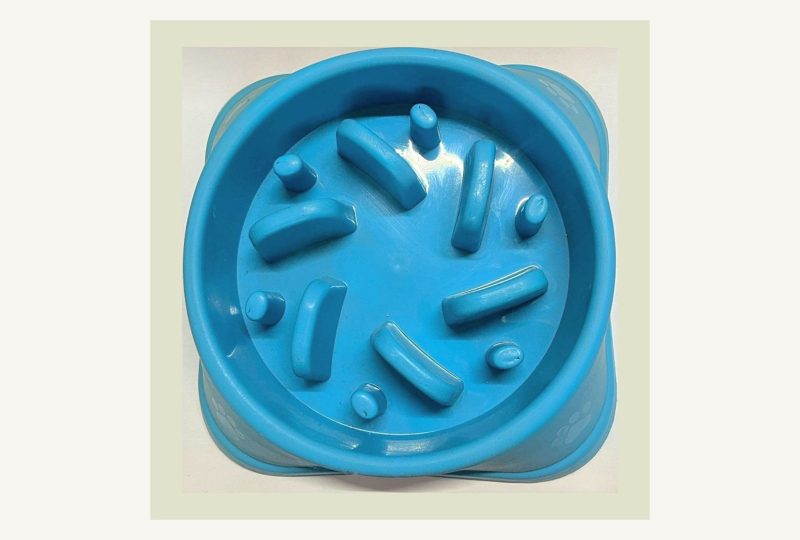
A slow-feeder bowl
A bowl moulded with ridges and channels so your dog has to work the food out instead of swallowing it in forty seconds. It turns a one-minute meal into a five to ten minute activity, which is better for digestion and gives a busy brain something to do twice a day.
- Slows a fast eater by five to ten times
- Adds daily mental work at no extra cost
- Reduces the gulping habit linked with bloat risk
- Alternate with a snuffle mat and scatter feeding for variety
See slow feeder bowls on Amazon →
Good to know: buy the large size — small mazes hold half a German Shepherd’s meal and get pushed around the kitchen. If your dog finds it frustrating rather than interesting, start with a shallow design and build up.
| Item | What to look for | Find it |
|---|---|---|
| Stainless steel bowls | Heavy base or rubber ring, dishwasher safe | See options → |
| Slow feeder | Large size, deep maze, non-slip base | See options → |
| Snuffle mat | Machine washable, dense fleece strips | See options → |
| Airtight food container | Holds a full sack, wheels help, seals properly | See options → |
| Digital kitchen scales | Any cheap set — this is the important one | See options → |
Want the monthly number? The free feeding cost calculator works out what your dog actually costs to feed, and our gear guides cover bowls and storage in more detail.
7 Mistakes (and the Fix for Each)
❌ 1. Feeding by scoop instead of scales
A “cup” varies wildly. Over twelve months, a consistently generous scoop is several kilos of extra dog.
✅ Fix: weigh every meal for a fortnight. Most owners are startled by the difference.❌ 2. Changing food the day the puppy arrives
New home, new water, new routine and a new diet is the recipe for a very messy week two.
✅ Fix: keep the breeder’s food for 1–2 weeks, then transition over 7–10 days.❌ 3. Adding calcium to a growing puppy
Well-meant and genuinely risky — excess calcium during growth is associated with skeletal problems in large breeds.
✅ Fix: a complete large-breed puppy food already has the right balance. Add nothing without veterinary advice.❌ 4. Not counting treats
Meals measured to the gram, then a day’s worth of chews, biscuits and crusts on top.
✅ Fix: the 10% rule, and train from the daily ration rather than in addition to it.❌ 5. Switching brands every few weeks
Chasing perfect stools by changing food constantly is one of the main causes of unsettled stools.
✅ Fix: pick one decent food and give it six weeks. Change only for a reason, and change slowly.❌ 6. Letting a “big boy” get big
Extra weight on a breed prone to hip and elbow problems is the least kind thing we do to our dogs.
✅ Fix: ribs test fortnightly, adjust by 10%, and let your vet nurse weigh them for free every couple of months.❌ 7. Ignoring a change in appetite
A German Shepherd who suddenly loses interest in food, or becomes ravenous, is telling you something.
✅ Fix: two skipped meals, ongoing vomiting, weight loss or a big change in thirst = phone the vet, not the internet.⚖️ Weigh the week, not the meal
Portion the whole week into containers on a Sunday. Nobody over-feeds when the day’s food is already in a tub.
🥶 Freeze the leftovers
Wet food and toppers freeze beautifully in ice cube trays — perfect for stuffing chew toys.
🐕 Use meals as training
A handful from the daily ration turns breakfast into ten minutes of recall practice for free.
📉 Book free weigh-ins
Most practices let you use the scales any time. Once a month gives you a trend rather than a guess.
Frequently Asked Questions
How much food does an adult German Shepherd need per day?
It depends on weight, age, activity level and the food’s calorie density, so the honest answer is: start with the bag’s guidance for your dog’s ideal weight, split into two meals, then adjust by 10% at a time based on the ribs-and-waist check every fortnight. Two dogs of identical size can differ by a third.
When should I switch from puppy to adult food?
Commonly between 12 and 18 months for this breed, but ask your vet — it depends on your individual dog’s growth and body condition. Switch over 7–10 days like any other food change.
Are raised bowls better for German Shepherds?
They are often recommended for comfort in tall or arthritic dogs, but they are not the automatic win the internet suggests, and some studies have associated raised feeding with increased bloat risk in large breeds. Worth discussing with your vet for your specific dog rather than buying by default.
Can I feed my German Shepherd once a day?
It is generally advised against for deep-chested breeds. Two meals is the standard recommendation, and splitting the food is one of the low-cost habits associated with reduced bloat risk. Puppies need more meals than that.
Is raw feeding good for German Shepherds?
It can be done well and it is often done badly. A raw diet must be properly balanced — particularly the calcium-to-phosphorus ratio for a growing dog — and handled hygienically because of the bacterial risk to your household. If you want to raw feed, work with a qualified veterinary nutritionist rather than a social media recipe.
My dog has loose stools all the time. What should I try?
First, a vet visit to rule out parasites and underlying conditions — this breed is over-represented for some digestive problems. Then one consistent food for six weeks, no extra treats or table scraps during that time, and measured portions. Stability fixes more sensitive stomachs than any specific brand.
✅ Your Feeding Checklist
- A complete food, right life stage, suitable for large breeds
- Meals weighed on kitchen scales, not scooped
- 4 meals as a young puppy → 3 → 2 from six months
- Ribs-and-waist check every fortnight; adjust by 10% and wait a month
- Treats kept under 10% of daily calories
- Training done from the daily ration
- Food changes made over 7–10 days
- No calcium or growth supplements for puppies
- Calm mealtimes, no hard exercise for an hour either side
- Slow feeder or snuffle mat for a fast eater
- Toxic list on the fridge: chocolate, grapes, raisins, onion, xylitol
- Bloat signs memorised — and the emergency vet number saved
The Bottom Line
Feeding a German Shepherd well is unglamorous. Pick a decent complete food, weigh it, split it into two meals, count the treats, and check the ribs every couple of weeks. That is genuinely the whole system, and it beats any premium bag fed carelessly.
Keep them lean, keep the routine boring, and let changes in appetite tell you when something needs a vet’s opinion. A slim German Shepherd moves better, ages better and — the evidence is unusually clear on this — tends to live longer.
- The new German Shepherd puppy checklist — routines for the first 30 days
- Senior German Shepherd care — weight, mobility and comfort
- German Shepherd enrichment ideas — turn meals into brain work
- Free feeding cost calculator — your real monthly food budget
Recommended German Shepherd gear for this guide
Slow feeder bowl
Best for: Slowing fast eaters and enrichment
- Slows gulping
- Dishwasher safe options
Affiliate link — we may earn a commission, at no cost to you.
Airtight food storage container
Best for: Keeping kibble fresh
- Airtight seal
- Wheels on large sizes
Affiliate link — we may earn a commission, at no cost to you.
Low-calorie training treats
Best for: High-frequency reward training
- Soft, easy to break
- Quick consumption
Affiliate link — we may earn a commission, at no cost to you.
Go deeper

Keep reading
More in Feeding & Nutrition →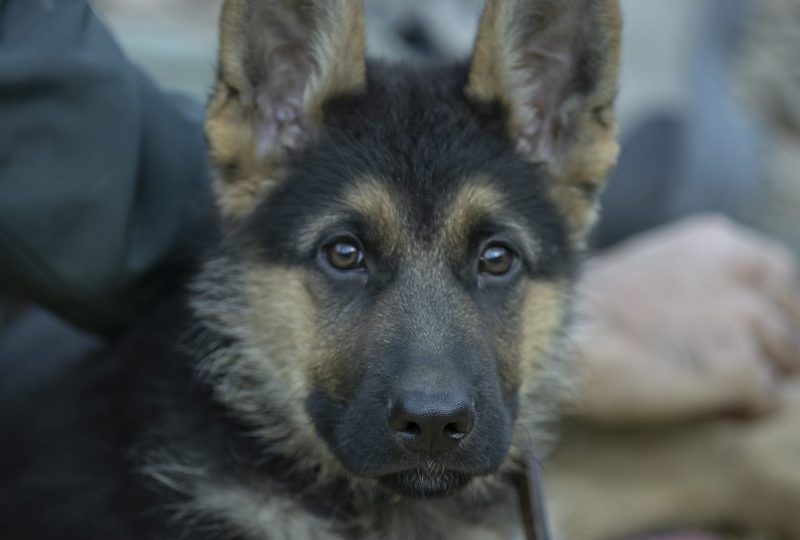
The New German Shepherd Puppy Checklist (First 30 Days)
Exactly what to buy, what to skip, and what to do day-by-day with a new German Shepherd puppy…
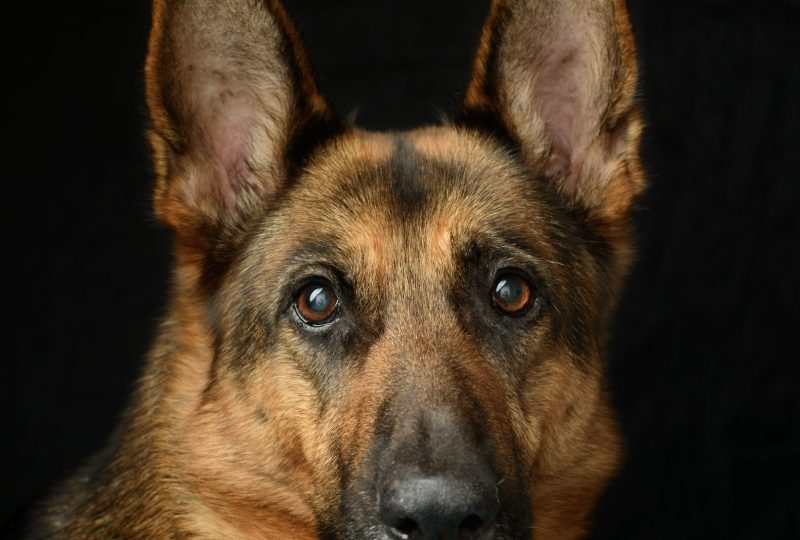
Senior German Shepherd Care: Comfort, Mobility, Daily Setup
Practical changes that keep a senior German Shepherd comfortable — bedding, traction, routine adjustments, and when to call…
Freeze Dried Raw Dog Food: Gimmick or Genuinely Useful?
What freeze-drying actually does, how it compares with frozen raw and kibble, the safety picture stated plainly, what…