How to Stop a German Shepherd From Pulling on the Leash
A calm, repeatable loose-leash walking plan for German Shepherds — no prong collars, no yanking, no shutting the dog down.

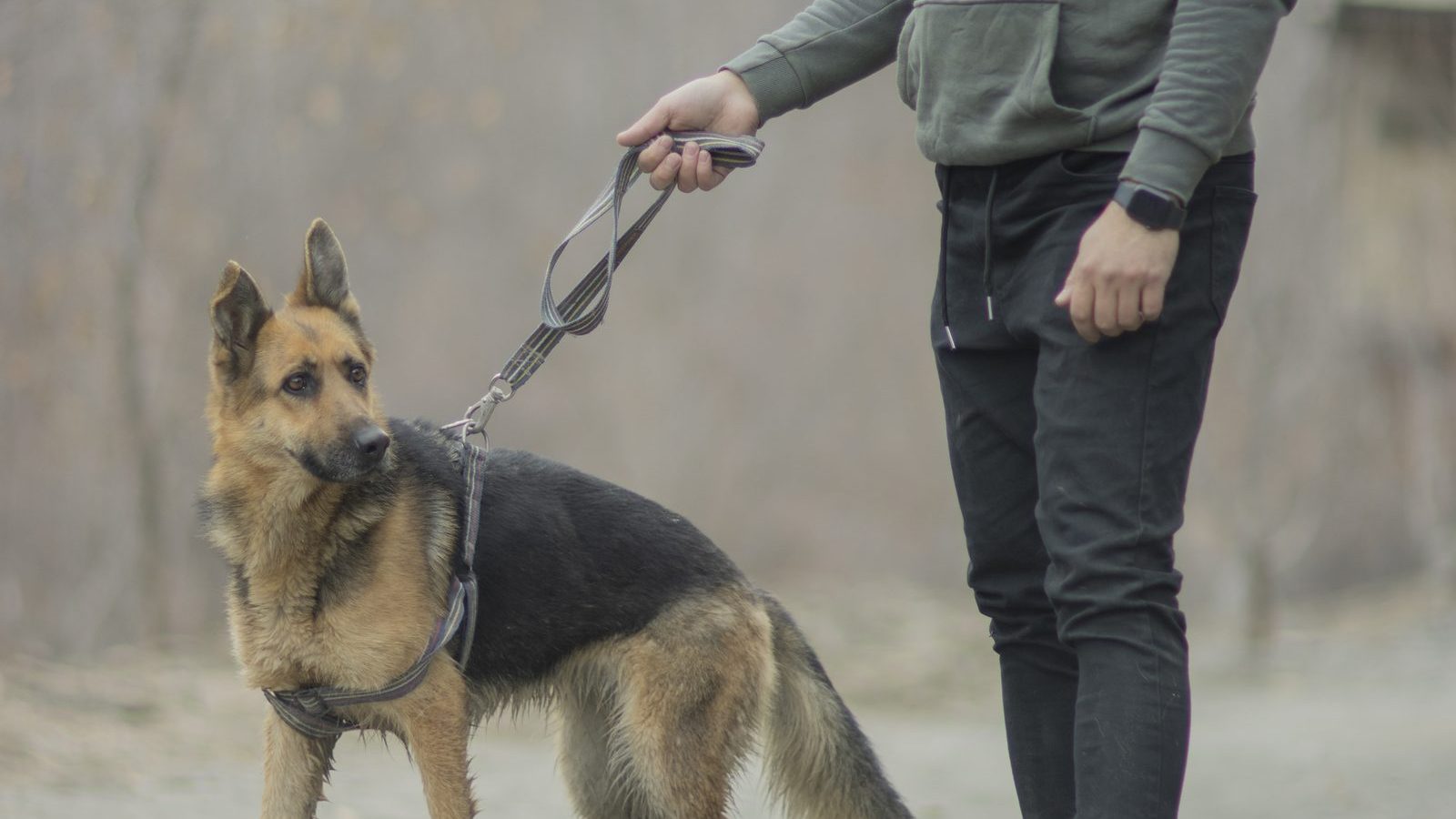
Short answer: stop rewarding the pull
A German Shepherd pulls because pulling works — it moves them towards the interesting thing. Fix it by making a tight lead stop the walk every single time, paying heavily for the position you want, and swapping the collar for a well-fitted Y-shaped harness. Most owners see a real change in two to four weeks of short, boring practice.
You know the walk. Shoulder aching, arm out straight, a 35kg dog towing you down the pavement like a sled, and someone in a passing car actually laughing. You have tried stopping. You have tried treats. You have tried that thing your neighbour swore by. And every walk still starts with a lurch.
Here is the uncomfortable truth that makes it all click: your dog is not being dominant, stubborn or badly behaved. Pulling is simply the strategy that has worked, every single day, since they were twelve weeks old. Dogs repeat what pays. Change what pays and the behaviour changes with it.
This guide gives you the gear that makes loose lead walking physically possible, a five-step method you can start in your hallway today, the drills that build it, what to do at doorways and past other dogs, and a realistic week-by-week timeline. No prong collars, no choke chains, no shock collars — none of it is needed, and all of it risks making a nervous dog worse.
Owners of German Shepherds of any age — puppies who are just starting out, adolescents who have suddenly become impossible at eight months, and adults with years of pulling behind them. The method is the same for all three; only the patience required changes.
Why German Shepherds Pull So Hard
Understanding the cause changes what you do about it. There are five reasons, and most dogs are running two or three of them at once.
1. It has always worked
This is the big one. Your dog pulls, the lamppost gets closer, the smell arrives. Every walk since puppyhood has quietly taught them that a tight lead is how you make the world come to you. Nothing else on this list matters as much.
2. We walk unbelievably slowly
A German Shepherd’s natural trot is far quicker than a human stroll. Being asked to match our pace is genuinely uncomfortable for them, in the way that walking behind a very slow person in a corridor is for us. That is why the first hundred metres are always the worst.
3. The opposition reflex
Dogs, like people, instinctively push back against steady pressure. Pull on the lead and your dog leans into it — not out of defiance, but reflex. This is why hauling backwards on a tight lead makes pulling worse rather than better, and why a constant tug never teaches anything.
4. Under-stimulation before the walk
A dog who has been in the house for six hours comes out of the door like a champagne cork. Five minutes of sniffing games or a short training session before the lead goes on takes the edge off and makes the first stretch of pavement possible.
5. Nobody ever paid for the alternative
Most dogs get plenty of feedback for pulling and almost none for walking nicely. If you have never deliberately rewarded the exact position you want, your dog has no reason to think you care about it.
You are not teaching your dog to stop pulling. You are teaching them that a loose lead is what makes the world happen — and a tight one is what makes it stop.
The Gear That Makes This Possible
Gear does not train a dog, but the wrong gear makes training impossible. A flat collar on a lunging 35kg dog is uncomfortable for them and unmanageable for you. The right setup is simple and cheap.
| Equipment | Verdict | Why |
|---|---|---|
| Y-shaped harness, front + back clip | ✅ Best choice | No pressure on the throat, doesn’t restrict the shoulder, front clip gently turns the dog rather than punishing them |
| Flat collar + lead | ⚠️ Fine for a trained dog | Fine once loose lead walking is solid; not for a dog who lunges — pressure lands on the windpipe |
| Head halter | ⚠️ Sometimes, with care | Useful for a strong dog while you retrain, but needs slow, careful introduction. Never jerk it |
| Retractable lead | ❌ Avoid for training | Teaches constant tension. The dog is literally rewarded for pulling by getting more lead |
| Prong, choke or shock collars | ❌ No | They suppress the behaviour through discomfort, risk injury, and are linked to increased fear and aggression. There is no version of this guide that needs them |
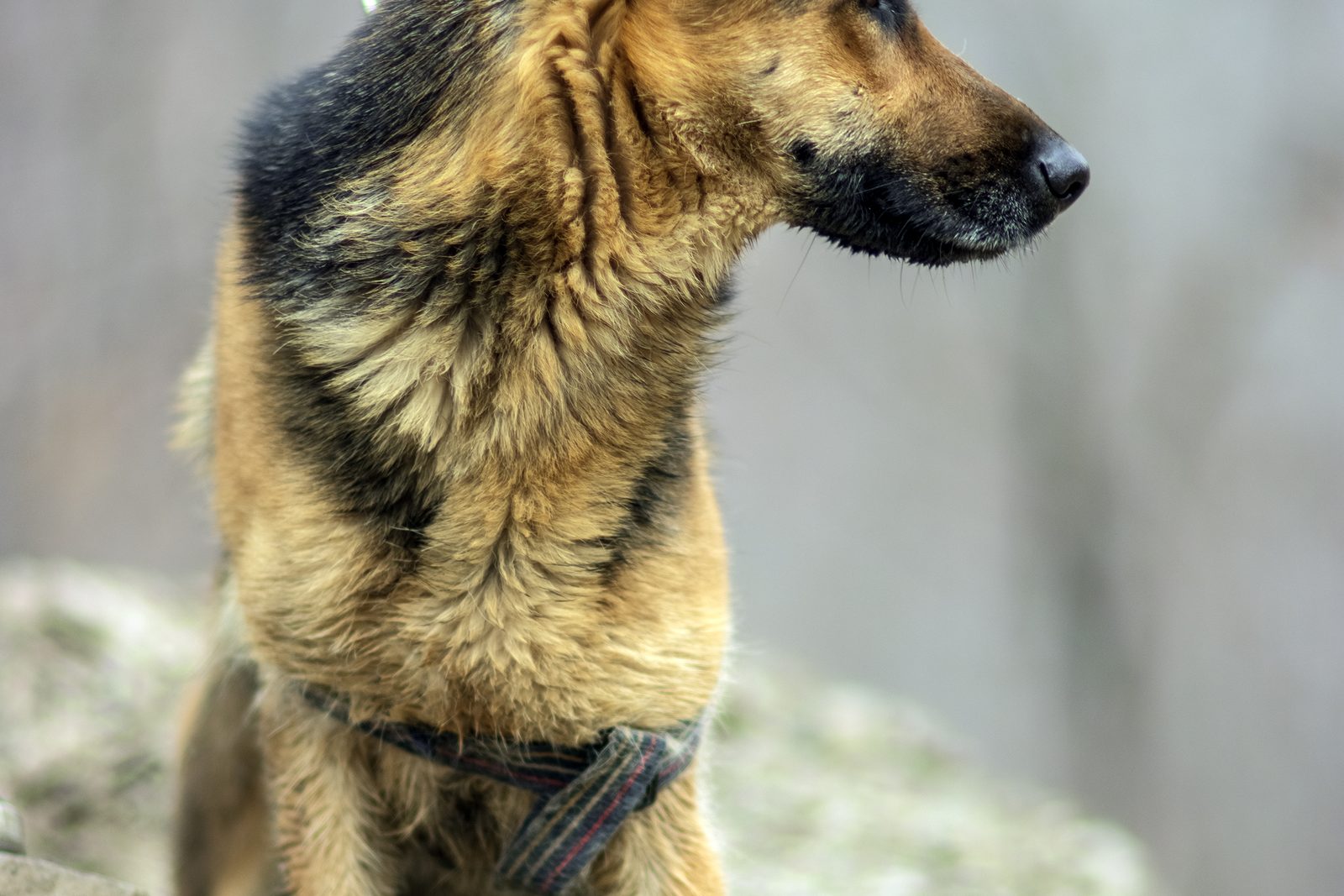
The straps should form a Y over the chest, sitting well clear of the shoulder blades — not a straight bar across the front of the shoulders, which restricts the stride. You should fit two flat fingers under every strap, and the dog should be able to trot without the harness sliding sideways.
We recommend product types and the features that matter, not sponsored placements, and we link to live Amazon results rather than quoting prices that go stale. As an Amazon Associate we may earn from qualifying purchases — at no extra cost to you.
A no-pull Y-harness with front and back attachment
The combination that does the heavy lifting: a Y-shaped chest piece that leaves the shoulders free, a front ring that turns your dog gently towards you when they surge ahead, and a back ring for relaxed walks once the training is solid.
- Takes all pressure off the neck and windpipe
- Front clip redirects instead of punishing — no yanking needed
- Padded chest plate stops rubbing on longer walks
- Pair it with a plain 1.8m lead, never a retractable one
See harness options on Amazon →
Good to know: measure your dog’s chest girth behind the front legs before ordering, and check the return policy — harness sizing varies wildly between brands. A double-ended lead clipped to both rings gives you the most control while you train.
| What you need | What to look for | Find it |
|---|---|---|
| Plain 1.8m lead | Soft webbing or leather, strong clip, no bungee | See options → |
| Double-ended training lead | Two clips, adjustable length, for front + back rings | See options → |
| Treat pouch | Opens one-handed, clips to a belt, washable | See options → |
| Soft training treats | Pea-sized, smelly, swallowed instantly — not crunchy biscuits | See options → |
| Long line (5–10m) | For sniffy decompression walks in open space | See options → |
Our German Shepherd harness guide covers fit and sizing in detail, and the leash guide explains why length matters more than material.
The 5-Step Method
Start indoors where nothing is exciting, then move outside. Sessions are five minutes long. You are not trying to get anywhere — in fact, going nowhere is the point for the first week.
Decide on your side and pay it generously
Pick a side — left or right, it does not matter, but stick to it. Stand still and drop a treat by your leg every time your dog is in that spot. Twenty repetitions, no walking yet.
Why it works: most dogs have never been told where “correct” is. Before you can ask for it on a walk, the position itself has to be worth something.
Walk three steps, pay, repeat
Three steps with a loose lead, then a treat delivered at your leg — not held out in front. Build to five steps, then ten, then twenty. If the lead tightens at any point, you have gone too far too fast.
Why it works: feeding at your leg keeps the dog’s default position beside you rather than out in front, which is where the treat hand usually sends them.
A tight lead means the world stops
The instant the lead goes tight, stop dead. Say nothing. Do not pull back. Wait — and the moment there is slack, or your dog looks at you, walk on again. This is the whole rule, and it must be true every single time.
Why it works: you are removing the reward for pulling rather than adding a punishment. Dogs work this out surprisingly fast once it is consistent.
Turn instead of tugging
If stopping is not enough — for example when a squirrel is involved — turn calmly and walk five paces the other way, then carry on. No jerk, no telling off, just a change of direction.
Why it works: the dog learns that surging ahead loses ground, and it keeps your hands soft rather than getting into a tug of war you cannot win.
Give the sniffing back — on cue
Sniffing is not the enemy; it is the best thing about a walk for your dog. Use a release word — “go sniff” — and let them out to the end of the lead in safe spots. Then call them back and continue.
Why it works: if walking politely means never sniffing anything, polite walking is a punishment. Making sniffing the reward for a loose lead flips the entire economy of the walk.
For the first fortnight, stop thinking of it as a walk. It is a five-minute training session that happens to take place outdoors — and the dog gets their exercise some other way.
Three Drills That Build the Habit
Do these in the garden, the hallway or a quiet car park. Three minutes each, a few times a week. They build the mechanics far faster than “practising” on a real walk full of distractions.
Count out loud — “one, two, three” — and deliver a treat at your leg on “three”. Keep walking. Your dog quickly learns to track you and stay close to catch the pay-off, and the counting keeps your own rhythm steady.
Walk a figure of eight around two objects a few metres apart. Turns are where dogs learn to watch you. Pay every time they follow the turn without the lead tightening. Two minutes is plenty.
Lead on, hand on the door handle. If your dog surges, the handle goes back down. Only when they are still does the door open. Repeat until they sit at the door out of habit — this alone fixes the first frantic minute of most walks.
Real Walks: Doors, Pavements and Other Dogs
Training in the hallway is easy. The street is where it falls apart — so plan for the three moments that break most dogs.
The front door
The first ninety seconds set the tone for the whole walk. Harness on calmly, sit at the door, open it slowly, close it again if the dog surges. Step outside, stand still for ten seconds, and only then start walking. It feels ridiculous the first few times and then it becomes the routine that saves your shoulder.
Pavements and lamp posts
Decide before you leave which stretches are training and which are sniffing. A useful pattern: polite walking between lamp posts, free sniffing at each one. Your dog gets a predictable rhythm, and you get a clear rule to apply rather than a running negotiation.
Passing other dogs
Do not aim to walk straight past at close range while your dog is still learning. Create distance — cross the road, step behind a parked car, turn into a driveway — and feed steadily while the other dog passes. You are teaching “other dogs mean chicken appears near my person”, which is a far better long-term association than “other dogs mean my owner goes tense and shouts”.
If your dog barks and lunges at other dogs rather than simply pulling, that is reactivity rather than a lead-manners problem, and it deserves its own plan — ideally with a certified, reward-based trainer who can watch your dog in person.
What To Do When They Pull Anyway
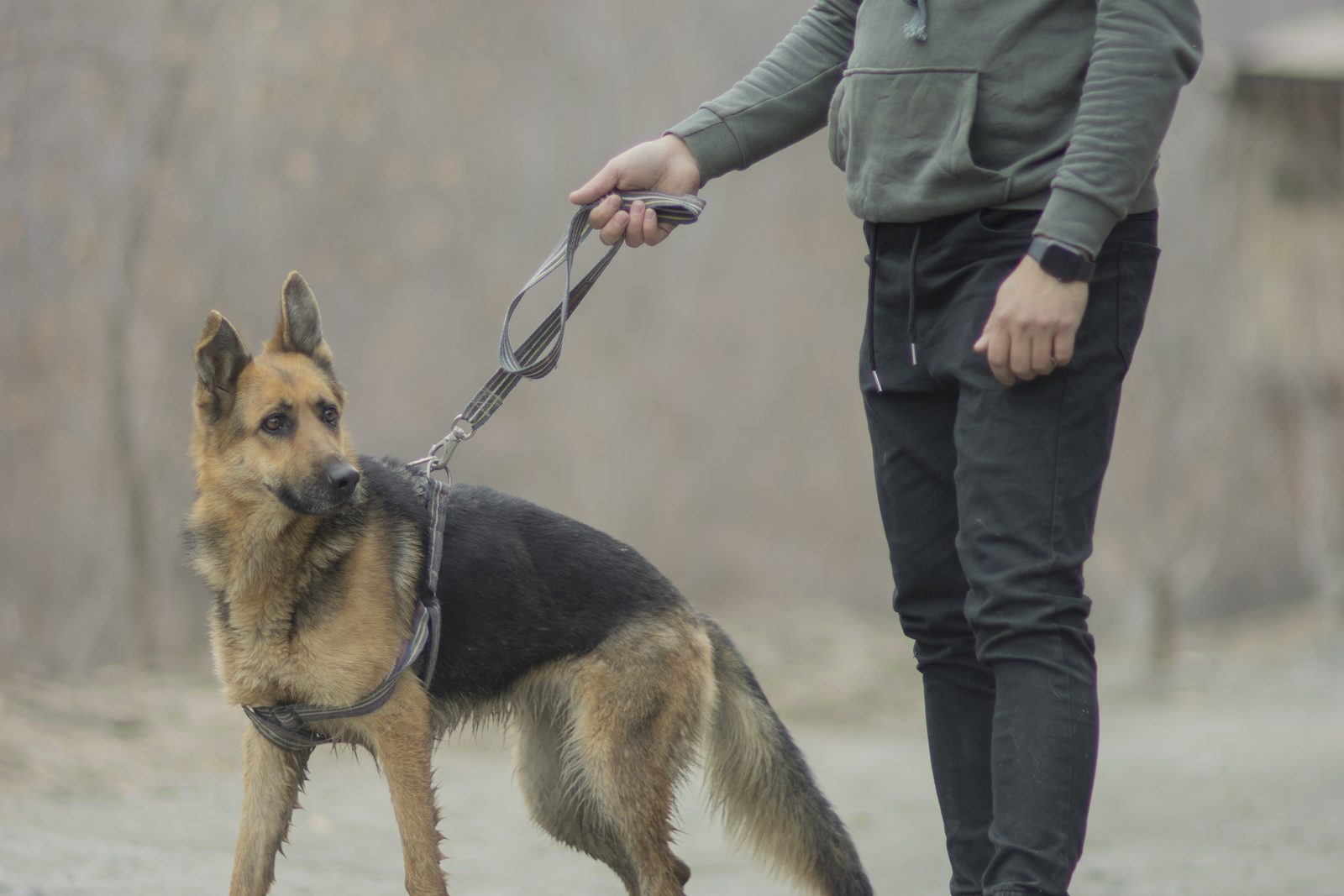
They will. Something will move, and 35kg of Shepherd will go with it. Here is the order to work through in the moment — and none of it involves yanking.
- Stop and anchor. Both hands on the lead, arms in against your body, feet apart. Do not pull back — just stop being a moving object.
- Wait for slack. Two seconds, five seconds, twenty. Say nothing. The instant the lead softens or your dog glances back, mark it and move.
- Increase distance. If waiting is not working, turn and walk away from whatever they are fixed on until they can think again.
- Feed the alternative. Scatter a few treats on the ground. Sniffing lowers arousal fast and gives their brain something to do.
- Shorten the session. Two good minutes and home is a better outcome than twenty minutes of tug of war.
Split walks in two. 80% decompression — long line in a field, sniffing, no rules — and 20% training — five minutes of loose lead work on the pavement. Dogs who get enough sniffing find polite walking far easier, because they are not desperate.
What To Expect, Week by Week
| When | What you do | What “working” looks like |
|---|---|---|
| Days 1–3 | Indoors only. Position game, three-step walking, doorway pause. | Dog chooses your side without the lead being involved. |
| Days 4–7 | Garden and the quietest street you can find. Five-minute sessions. | Ten to twenty steps of loose lead between stops. |
| Week 2 | Add the release cue for sniffing. Start the lamp-post rhythm. | Dog begins glancing back at you unprompted. |
| Week 3 | Busier routes, distance from other dogs, more real-world turns. | Pulling still happens but recovers in seconds, not minutes. |
| Week 4+ | Normal walks with the rules still applied. Fade treats gradually. | Loose lead is the default; the odd surge is the exception. |
Two honest caveats. Adolescence — roughly 7 to 18 months — will undo some of this temporarily; that is normal and it comes back. And an adult dog with years of practice takes longer than a puppy, though usually not as long as owners fear.
7 Mistakes (and the Fix for Each)
❌ 1. Training on the daily walk
You have somewhere to be, so you let the pulling slide “just this once” — and every one of those exceptions teaches your dog that the rule is optional.
✅ Fix: separate the two. Short training walks with the rules; exercise walks on a long line in open space where pulling does not matter.❌ 2. Holding the treat out in front
Luring with the hand ahead of the dog drags them forward into exactly the position you are trying to eliminate.
✅ Fix: deliver every treat down at your trouser seam, so the pay zone is the correct position.❌ 3. Using a retractable lead
It rewards tension by design: pull harder, get more lead. It also gives you no control at the moment you need it.
✅ Fix: plain 1.8m lead for streets, a proper long line for open spaces.❌ 4. Never letting the dog sniff
A walk with no sniffing is a walk with no pay-off. Dogs who are never allowed to investigate pull towards everything.
✅ Fix: a release cue and generous sniffing breaks, used as the reward for polite walking.❌ 5. Reeling the dog in
Hauling on a tight lead triggers the opposition reflex, so your dog leans in harder — and both of you get more frustrated.
✅ Fix: anchor and wait, or turn and walk away. Never a running tug of war.❌ 6. Reaching for aversive collars
Prong and shock collars can suppress pulling quickly, but they work through discomfort and are associated with increased fear and aggression — a serious risk with a large, sensitive breed.
✅ Fix: a properly fitted Y-harness plus consistent rules. Slower for a fortnight, better for a decade.❌ 7. Expecting a competition heel
Asking a dog to hold a precise heel position for a whole hour is exhausting for both of you and nobody actually needs it.
✅ Fix: aim for a J-shaped lead and a dog in your general vicinity. That is loose lead walking, and it is enough.Pro Tips From Experienced Owners
🍗 Upgrade the payment
Dry biscuits do not compete with a fox scent. Use chicken, cheese or sausage for street work — this is the hardest job your dog does all day.
🚶 Warm up first
Five minutes of sniffing games in the garden before the lead goes on takes the fizz off the first hundred metres.
🕐 Walk at quiet times
For the first fortnight, choose the least busy hour you can. You are training, not proving a point.
🧍 Keep your hands still
Lead hand anchored at your waist. Waving arms make the lead jerk, and every jerk triggers the reflex to pull.
👨👩👧 Everyone or nobody
If one family member lets the dog tow them to the park, progress stalls. Same rules from every handler.
📍 Pick a marker
Practise between two lamp posts on the same street. Familiar ground means fewer distractions and clearer progress.
Real-Life Examples
You think your dog is the exception. These four turn up in owner groups constantly — and all four have the same handful of fixes.
“He is perfect until he sees another dog”
That is not a lead problem, it is an arousal problem. Work at a distance where your dog can still eat, feed steadily as the other dog passes, and gradually close the gap over weeks. Trying to hold him at two metres while he screams teaches nothing except that other dogs make his person tense.
“She was fine, then hit nine months and forgot everything”
Textbook adolescence. Hormones, a bigger world and a brain that is rewiring. Drop back to shorter sessions and easier locations for a few weeks rather than escalating the pressure. Owners who stay patient through this stage end up with the nicest walkers at two years old.
“My husband can walk him, I can’t”
Almost always a difference in consistency rather than strength. Whoever stops every single time the lead tightens gets the polite walks. Agree the rule out loud, and have the lighter handler do the short training sessions rather than the long walks for a fortnight.
“We tried a no-pull harness and it did nothing”
Harnesses do not train. They make training possible by taking pressure off the throat and giving you a steering point. Any piece of gear used without the stop-and-wait rule is just a different handle on the same problem.
Frequently Asked Questions
How long does it take to stop a German Shepherd pulling?
Most owners see a clear improvement in two to four weeks of short daily sessions, and a genuinely reliable loose lead within a couple of months. Adult dogs with years of pulling take longer than puppies, but the method does not change.
Does a harness make pulling worse?
A badly designed one can. Harnesses with a straight strap across the front of the shoulders give the dog something to lean into, like a sled harness. A Y-shaped chest piece with a front attachment ring does the opposite.
Are head halters cruel?
Not inherently, but they must be introduced slowly with lots of food, and they should never be jerked. For a very strong dog they can be a useful safety net while training happens. Many owners find a well-fitted front-clip harness does the job without the fuss.
Should I use a prong or shock collar for a strong puller?
No. They can stop pulling quickly because they are uncomfortable, but the research links them to increased fear and aggression, and there is a real risk of physical injury to the neck. With a breed as sensitive and as powerful as this one, the trade is not worth it — and the harness-plus-rules approach works.
Can I let my dog sniff on walks or does it encourage pulling?
Let them sniff — it is the single most enriching thing about a walk, and it lowers arousal. Just put it on a cue so you release them to it rather than them dragging you there.
What if my dog pulls because they are scared, not excited?
A dog pulling to get away from something needs distance and reassurance, not lead training. Shorten the route, avoid the trigger for a while, and speak to a certified, reward-based behaviourist. Fear-based pulling gets worse with pressure of any kind.
✅ Your Loose Lead Checklist
- Well-fitted Y-shaped harness — two fingers under every strap
- Plain 1.8m lead, no retractable, long line for open spaces
- High-value treats in a pouch you can open one-handed
- Treats delivered at your leg, never held out in front
- Tight lead = you stop, every single time, no exceptions
- Turn and walk away instead of tugging back
- A release cue — “go sniff” — used generously
- Doorway routine practised until it is automatic
- Five-minute training walks kept separate from exercise walks
- Distance created from other dogs while you train
- Same rules from every family member
- Zero prong, choke or shock collars
The Bottom Line
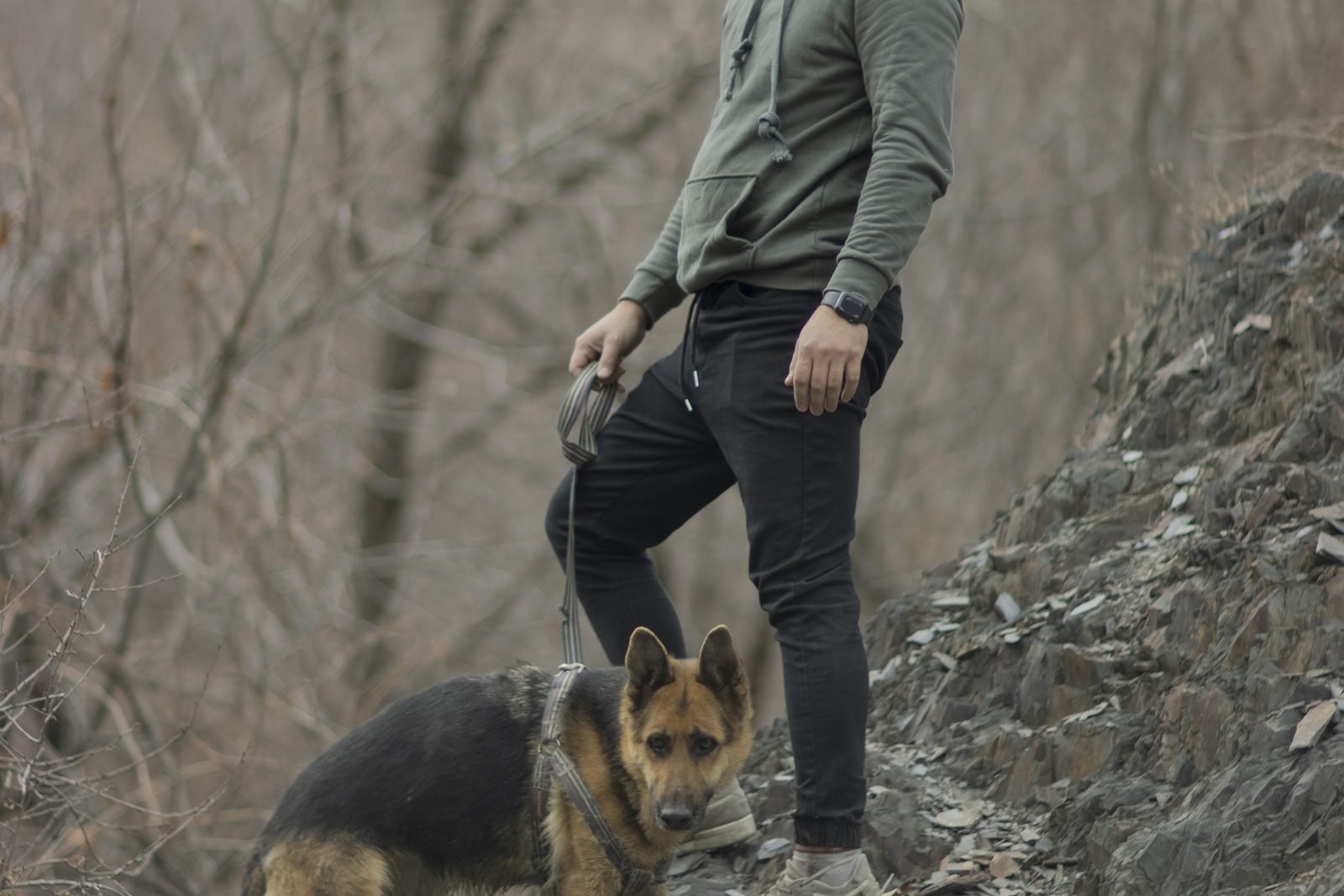
Loose lead walking is not about being firm, being the boss, or finding a magic piece of equipment. It is about making one rule absolutely reliable — a tight lead stops the walk, a loose one keeps it going — and paying well for the position you want while your dog works it out.
Give it two weeks of five-minute sessions and honest consistency from everyone in the house. The shoulder ache goes, the walks get shorter and better, and one day you will realise you have been chatting on the phone for ten minutes without noticing where the lead was.
- German Shepherd recall training — a reliable “come” from scratch
- How much exercise does a German Shepherd need? — by age, with joint-safe limits
- Best German Shepherd harnesses — fit, sizing and what to avoid
- Free training plan generator — build a week of short sessions
Recommended German Shepherd gear for this guide
No-pull German Shepherd harness
Best for: Calm leash walks for strong adult GSDs
- Front + back clip
- Padded chest plate
- Reflective trim
Affiliate link — we may earn a commission, at no cost to you.
Padded training leash 6ft
Best for: Daily walking and city control
- Padded handle
- Strong hardware
Affiliate link — we may earn a commission, at no cost to you.
Training treat pouch with clip
Best for: Hands-free training sessions
- Magnetic close
- Clip-on belt
Affiliate link — we may earn a commission, at no cost to you.
Go deeper
Related articles
Shop the picks

Keep reading
More in Training →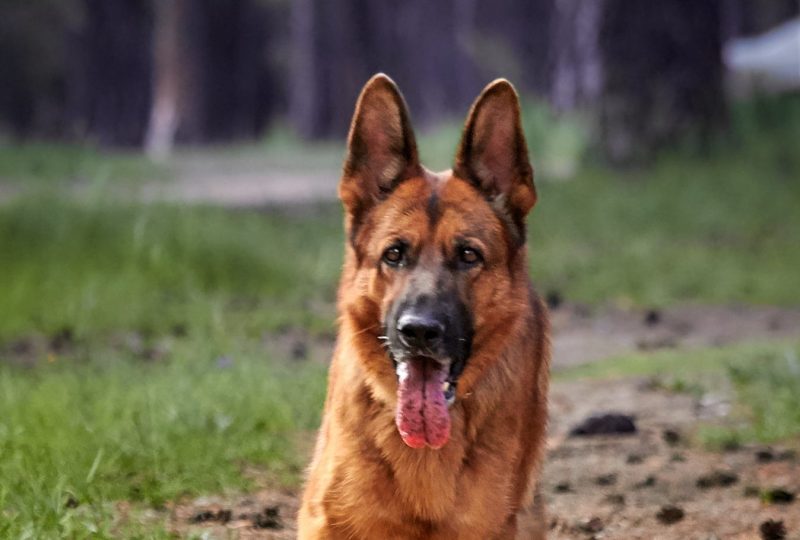
German Shepherd Recall Training: A Reliable “Come” From Scratch
Build a recall your German Shepherd actually responds to — on a long line first, then in real…
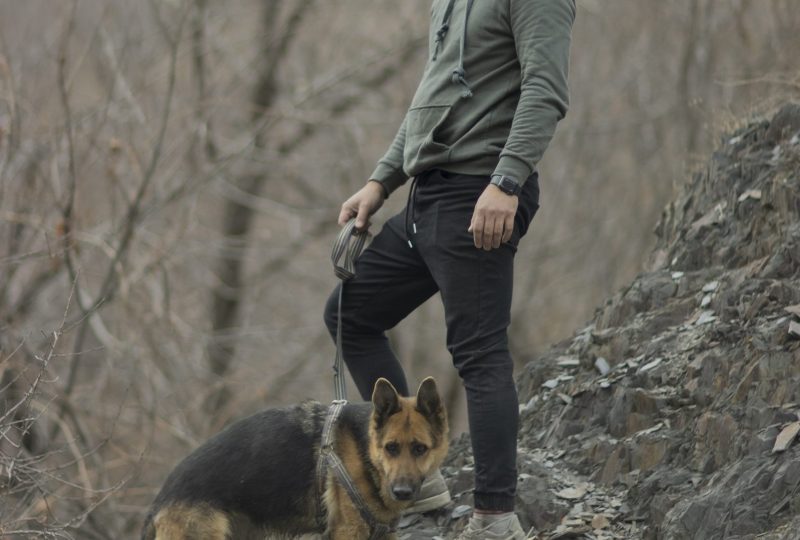
How Much Exercise Does a German Shepherd Need? (By Age)
A realistic look at how much exercise a German Shepherd needs at each life stage — and why…
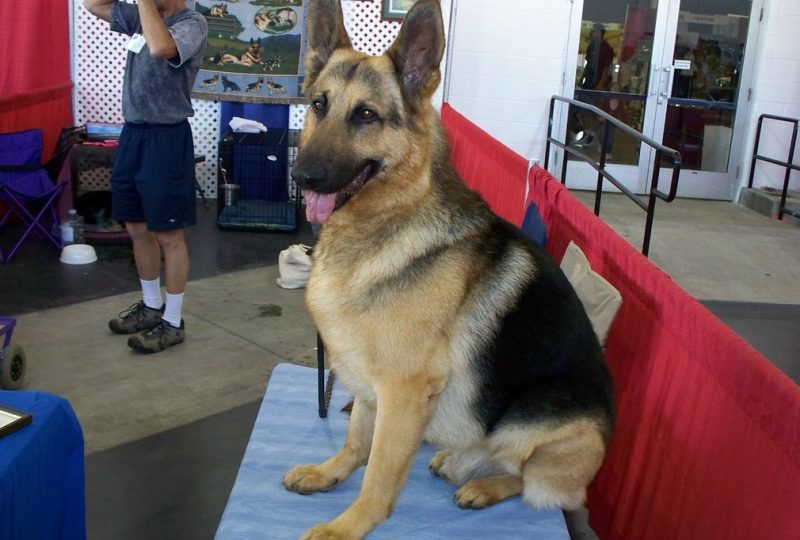
How to Crate Train a German Shepherd Puppy (Step-by-Step)
A calm, positive crate-training plan that turns the crate into a den your German Shepherd actually likes.