How Much Exercise Does a German Shepherd Need? (By Age)
A realistic look at how much exercise a German Shepherd needs at each life stage — and why brain work matters more than mileage.

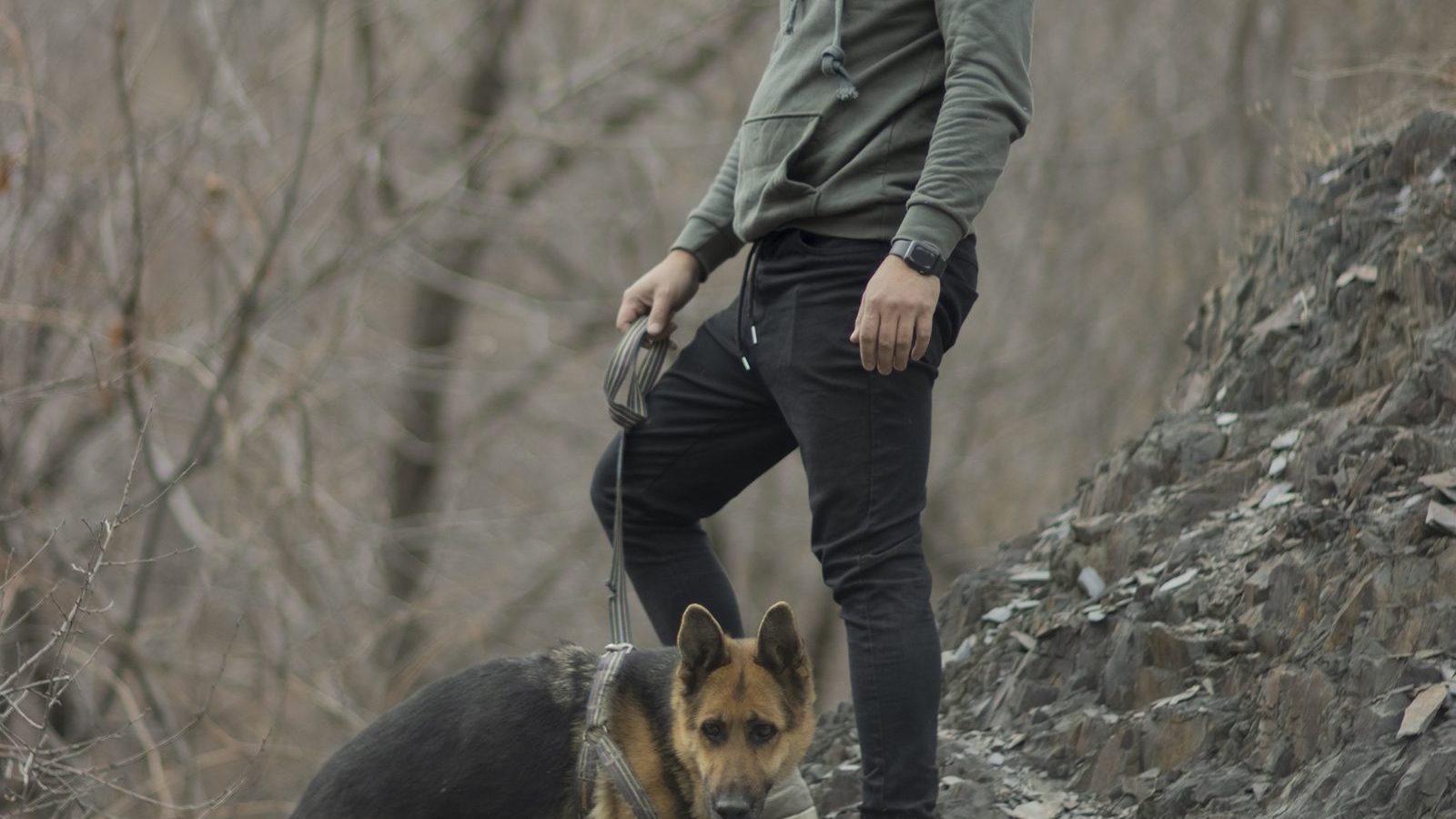
Short answer: about 1–2 hours a day for a healthy adult — and far less for a puppy
A grown German Shepherd needs roughly 60–120 minutes of activity a day, split into two or more sessions and mixed with sniffing and brain work. Puppies need much less: a widely used guide is about 5 minutes of formal walking per month of age, once or twice a day. More is not better for a growing large breed — and a tired dog is not the same as a satisfied one.
There are two kinds of exhausted German Shepherd owner. The first has a puppy and is being told by a stranger in the park that this dog needs “at least two hours a day, they’re a working breed”. The second has an adult who gets two hours a day, runs beside a bike, chases a ball until they drop — and is still pacing the kitchen at nine in the evening.
Both are stuck on the same misunderstanding. You cannot solve a German Shepherd with distance. This is a thinking breed built for a working day of problem-solving, not a marathon. Physical exercise is only half the job, and for a puppy, doing too much of it carries real risk.
This guide gives you realistic amounts by age, explains the five-minute rule and why it exists, shows what an adult’s two hours should actually contain, covers the adolescent phase where everything falls apart, and lists the signs that you are doing too much rather than too little.
These are general guidelines for healthy dogs. Individual needs vary with line, build, temperament and health — and any dog with diagnosed hip or elbow problems, heart disease or arthritis needs a plan from your vet, not from a blog. If your dog is limping, stiff after rest, or slowing down, that is a veterinary conversation before it is an exercise one.
How Much Exercise, by Age
Treat these as starting points, not prescriptions. Watch your individual dog: a satisfied Shepherd settles at home, sleeps well, and is not manic at 8pm.
| Age | Formal walking | Plus | Notes |
|---|---|---|---|
| 8–12 weeks | 5–10 min, 1–2× daily | Free pottering in the garden, carried outings | Sleep matters far more than exercise. 18–20 hrs a day |
| 3–4 months | 15–20 min, 1–2× daily | Short training games, sniffing, gentle play | First proper walks once your vet is happy after vaccinations |
| 5–6 months | 25–30 min, 1–2× daily | Long-line sniffing walks on soft ground | Avoid stairs, repeated ball chasing, jumping down from heights |
| 7–12 months | 35–60 min, 2× daily | Training, scent games, calm socialising | Adolescence. Energy is huge, joints are still growing |
| 12–18 months | 45–75 min, 2× daily | Build stamina gradually | Growth plates typically close around 12–18 months. Ask your vet before running or agility jumps |
| Adult 2–7 yrs | 60–120 min total | Sniffing, training, play, one bigger outing weekly | Quality over distance. Two shorter, richer walks beat one long march |
| Senior 7+ yrs | 30–60 min, split up | Gentle, frequent, low impact | Little and often. Watch for stiffness the day after |
A German Shepherd who gets two hours of running and no thinking will simply become a fitter dog with the same problem. Aim for roughly as much brain work as body work.
Puppies and the Five-Minute Rule
The rule of thumb — five minutes of formal walking per month of age, once or twice a day — is not a scientific law, and you will find vets who use it and vets who think it is too rigid. What everyone agrees on is the principle behind it: a growing large-breed dog should not be doing long, repetitive, high-impact exercise.
German Shepherd puppies have soft growth plates at the ends of their long bones that do not close until somewhere around 12–18 months. Repeated concussive loading during that window — long pavement walks, jogging beside a bike, jumping in and out of cars, endless ball throwing, stairs — is the kind of thing orthopaedic vets ask about when a young dog turns up lame.
- Free play on grass, at their own pace
- Sniffing walks on a long line, stopping whenever they want
- Short training sessions — two minutes at a time
- Snuffle mats, scatter feeding, cardboard box games
- Gentle swimming once vaccinated (excellent low-impact work)
- Meeting the world calmly from a safe distance
- Jogging or cycling alongside you
- Repeated ball or frisbee chasing with hard turns
- Agility jumps and weaves
- Long hill walks and full-day hikes
- Repeated stairs, and jumping down from the car
- Rough play with much larger dogs
One more thing that surprises new owners: an over-exercised puppy behaves worse, not better. Too much activity produces an over-tired, over-aroused dog who bites more, settles less and cannot sleep — exactly the pattern described in our puppy biting guide.
Adolescents: The Difficult Middle
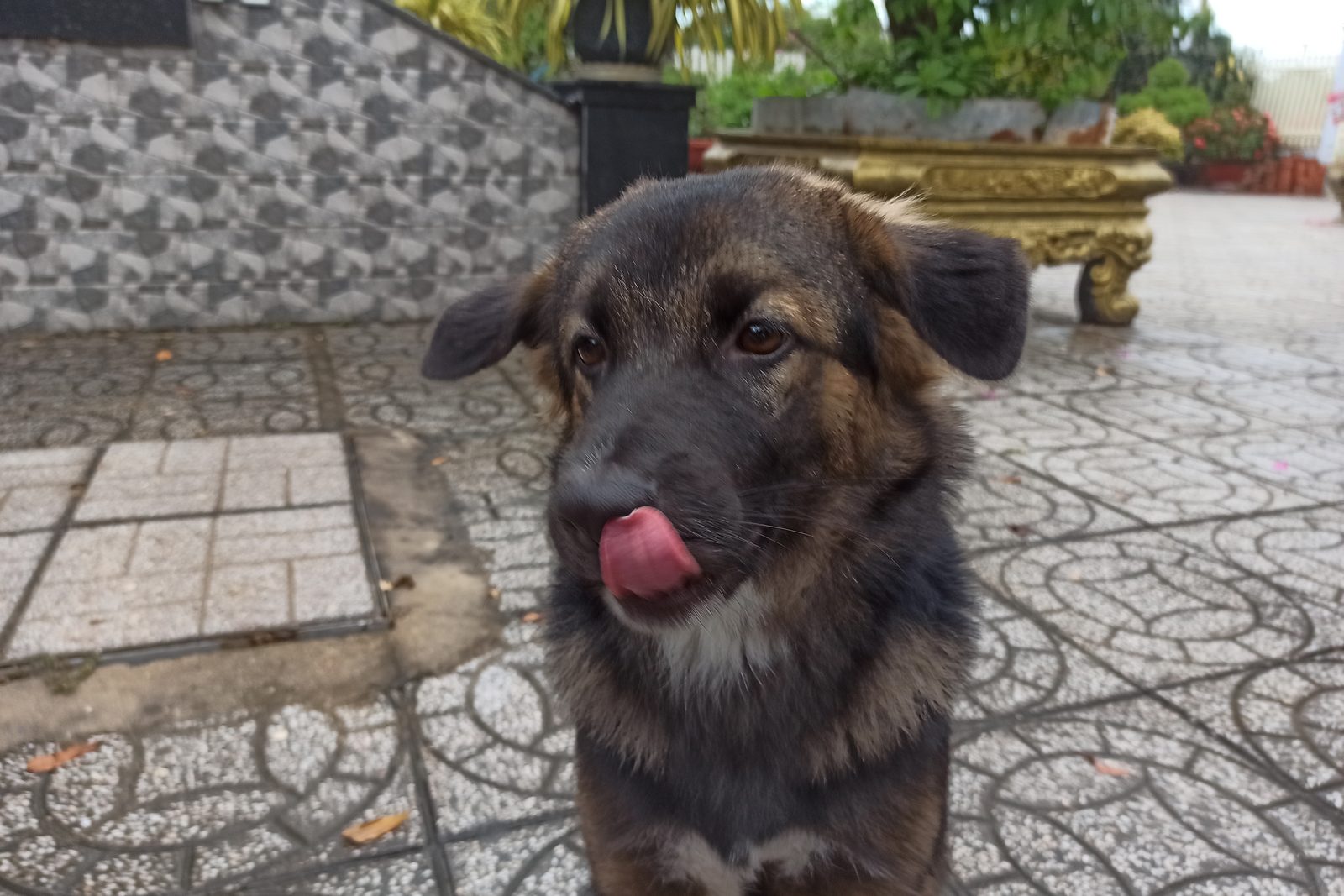
Between roughly seven and eighteen months you have a dog with an adult body, adolescent judgement and a puppy’s joints. This is the stage where owners burn out, and where most of the “he needs more exercise” advice does the most damage.
The trap works like this: the dog is wild, so you walk further; the dog gets fitter, so they need more; six months later you have a supremely fit teenager who needs three hours to feel anything and is still bouncing off the walls. Meanwhile their joints have taken a year of loading you cannot undo.
The way out is to change the type of exercise rather than the amount. Swap twenty minutes of walking for: a scatter feed in long grass, five minutes of training, a decent chew, a puzzle feeder, or a long-line sniffari where the dog picks the route. Owners consistently report a calmer dog on less walking and more thinking.
You cannot out-walk a German Shepherd. You can, however, out-think one — and it takes about a third of the time.
Adults: What Two Hours Should Contain
“An hour or two a day” is a useless instruction on its own — an hour of heeling on a pavement and an hour of exploring a wood are completely different experiences for a dog. Here is a mix that satisfies most adult German Shepherds.
Long line or safe off-lead, dog chooses the pace and the route. Sniffing is genuinely tiring — the part of a dog’s brain devoted to smell is enormous, and twenty minutes of scent work settles a dog more than an hour of trotting.
Loose lead walking, a short jog for a fit adult, hills, uneven ground. This is where fitness comes from, and where you practise the manners from our loose lead guide.
Tug with rules, recall games, a few minutes of tricks. Short bursts of arousal followed by calm are how a dog learns to switch off — which is the real skill.
Chew, puzzle, or simply lying in the garden watching the world. Rest is part of the plan, not the absence of one.
A weekly highlight helps too — a beach, a forest, a friend’s field. Novelty does a lot of work for a breed that thrives on having something to investigate.
Seniors: Less Impact, Same Routine
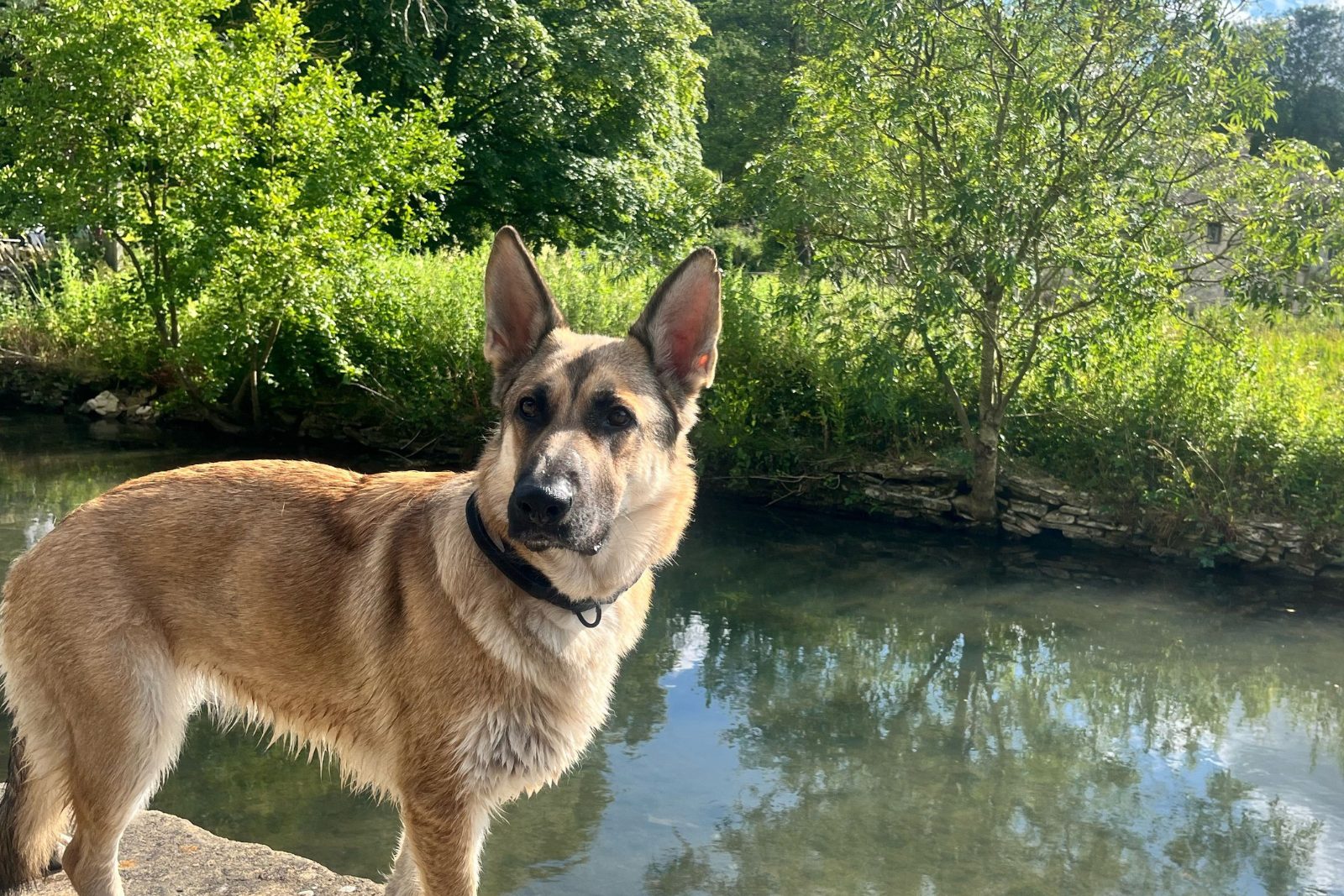
From around seven years, most German Shepherds start to need shorter, gentler sessions — but they still need to go out. Muscle loss and stiffness accelerate quickly in dogs who stop moving, and a senior who potters daily stays mobile far longer than one who does one big walk at the weekend.
- Three short walks beat one long one. Twenty minutes, three times a day, is an excellent senior pattern.
- Soft ground where possible — grass and woodland trails rather than pavement.
- Watch the day after. Stiffness the following morning means yesterday was too much. Adjust down, and mention it to your vet.
- Swimming and hydrotherapy are excellent for arthritic dogs — ask your vet for a referral rather than improvising.
- Keep the brain busy. Scent games and puzzle feeders keep an older dog engaged when the body has slowed down.
Our senior care guide covers mobility, home setup and comfort in much more detail.
Why Brain Work Counts Double
German Shepherds were developed to work all day making decisions — herding, patrolling, searching. A dog bred for that job is not satisfied by movement alone. This is why the “he has a huge garden” argument never holds: a garden is a room your dog has already read.
Ten minutes of nose work often does more than half an hour of walking. Scatter a handful of food in long grass and let them find it. Hide a toy in another room and send them to look. Teach a silly trick. Feed dinner from a puzzle instead of a bowl. All of it costs nothing and all of it produces a dog who lies down afterwards.
Our enrichment ideas guide has thirty of these, indoor and outdoor, and the free exercise planner will build a balanced week for your dog’s age.
Signs You Are Doing Too Much
Over-exercise looks a lot like under-exercise from the outside, which is why owners so often respond by doing even more. Watch for these.
- Wired rather than tired after a walk — pacing, barking, unable to settle for an hour afterwards
- Stiffness or a limp the morning after a big day out
- Lagging behind or lying down mid-walk in a young dog
- Sore or cracked pads, or reluctance to walk on hard surfaces
- Obsessive ball behaviour — a dog who cannot stop and stares at your hands is not relaxing, they are stuck
- Sleeping badly or being unable to switch off in the evening
Repetitive high-speed chasing with hard stops and turns is one of the most joint-punishing things a dog does — and for many Shepherds it becomes compulsive rather than fun. If you use a ball, keep it to a few throws, roll it along the ground rather than firing it into the distance, and finish with sniffing so the dog comes down properly.
Heat, Cold and Safety
A double coat is superb insulation, which means German Shepherds handle cold well and heat badly. In warm weather, walk early morning and late evening, take water, and use the seven-second pavement test: if you cannot hold the back of your hand on the ground for seven seconds, it is too hot for paws.
Heavy frantic panting · bright red gums · drooling thick saliva · wobbling, confusion or collapse · vomiting. Move to shade, wet them with cool (not ice-cold) water, offer small drinks and ring an emergency vet immediately. Dogs can develop heatstroke on an ordinary walk on a warm day, not only in cars — and a thick-coated, dark-coloured Shepherd is at higher risk than most.
Cold is rarely an issue for a healthy adult in a full coat, but ice, road salt and frozen ground are. Rinse paws after winter walks, check between the toes, and shorten sessions for seniors when it is icy — falls are what damage older dogs, not the temperature.
A Week That Actually Works
This is a template for a healthy adult. Scale the minutes down for puppies and seniors — the shape of the week stays the same.
| Day | Morning | Evening | Extra |
|---|---|---|---|
| Mon | 30 min sniffy long-line walk | 30 min loose lead + 5 min training | Puzzle feeder at dinner |
| Tue | 20 min street walk | 40 min field, recall games | Chew after the evening meal |
| Wed | 30 min woods, dog chooses route | 20 min gentle walk | 10 min scent game indoors |
| Thu | Rest-ish: 15 min potter | 30 min training walk | Scatter feed in the garden |
| Fri | 30 min long line, hills | 30 min sniffing | New trick, 5 minutes |
| Sat | Big outing — beach, forest, new place (60–90 min) | Short leg stretch | Early night, big chew |
| Sun | 30 min easy walk | 30 min play + tug with rules | Grooming session doubles as handling practice |
One deliberately low-key day a week is not laziness — it teaches a dog that not every day contains a two-hour adventure, which makes them far easier to live with when you are ill, busy or away. Dogs who expect a fixed daily dose get frantic when it is missed.
Gear Worth Having
We recommend product types and the features that matter rather than sponsored placements, and we link to live Amazon results instead of quoting prices that go stale. As an Amazon Associate we may earn from qualifying purchases — at no extra cost to you.
A 10-metre long line
The cheapest way to transform your dog’s exercise. Ten metres of line on a harness in a safe field lets a Shepherd choose their own route, sniff properly and move at their own pace — the “decompression walk” that settles dogs far more effectively than a controlled lead walk.
- Turns a boring route into genuine mental exercise
- Safe freedom while recall is still a work in progress
- Low-impact — the dog sets the pace, which suits growing joints
- Biothane wipes clean instead of holding mud like rope
Good to know: use it in open space away from other dogs, wear gloves at first, and never wrap it around your hand. Let it trail on safe ground so your dog forgets it is attached.
| Item | What to look for | Find it |
|---|---|---|
| Y-shaped harness | Shoulders free, back ring for the long line | See options → |
| Collapsible water bottle | Bottle and bowl in one, one-handed operation | See options → |
| Snuffle mat | Washable, dense strips — turns dinner into a hunt | See options → |
| Cooling mat or coat | For hot months — evaporative coats work best in dry heat | See options → |
| Reflective gear / light | Clip-on light and reflective harness for winter walks | See options → |
7 Mistakes (and the Fix for Each)
❌ 1. Treating exercise as the answer to everything
Barking, chewing, digging and pacing are more often boredom or stress than a lack of miles — and more walking can make an over-aroused dog worse.
✅ Fix: swap twenty minutes of walking for ten minutes of scent work and a chew, and watch what happens over a week.❌ 2. Jogging with a young dog
Road running beside a bike or a jogger is repetitive, high-impact, and the dog cannot tell you when it hurts.
✅ Fix: wait until growth plates have closed — usually 12–18 months — and ask your vet first. Then build up slowly.❌ 3. The endless ball thrower
Hard stops, twisting turns and a compulsive stare. It is the fastest way to a joint injury and an obsessive dog.
✅ Fix: a handful of low rolls, then switch to sniffing or tug. Never a full session of high-speed retrieves.❌ 4. Same route, every single day
Your dog memorised that pavement months ago. Familiar routes provide almost no mental work.
✅ Fix: vary the route, walk it backwards, or drive ten minutes to somewhere new once a week.❌ 5. Escalating with fitness
More exercise creates a fitter dog who needs more exercise. Some owners end up trapped in three-hour days.
✅ Fix: cap the physical hours and add enrichment instead. Fitness plateaus; curiosity does not.❌ 6. No rest days
A dog who expects two hours every day becomes unbearable on the day you have flu.
✅ Fix: one deliberately quiet day a week, with a chew and a puzzle instead of a big walk.❌ 7. Walking in the heat of the day
Double-coated dogs overheat quickly, and hot pavements burn pads within minutes.
✅ Fix: early and late in summer, seven-second pavement test, water in the bag, and an indoor scent game instead if in doubt.🌿 Sniffari once a week
A walk with no destination where the dog chooses every turn. Twenty minutes of this settles most dogs for the evening.
🎾 Roll, don’t launch
Rolling a ball along the ground keeps the fun and removes the skidding stops that damage joints.
🌧️ Have a bad-weather plan
Three indoor games you can run in ten minutes means storms and illness never derail the routine.
🏊 Try water
Swimming is the best low-impact exercise there is — brilliant for teenagers and seniors alike.
Frequently Asked Questions
How much exercise does an adult German Shepherd need per day?
Roughly 60 to 120 minutes of activity daily, split across two or more sessions, with a good portion of it spent sniffing and exploring rather than marching. Highly active or working dogs need more; many pet Shepherds do very well at the lower end when their brains are properly occupied.
Can I over-exercise my German Shepherd puppy?
Yes, and it is one of the more common mistakes. Long walks, jogging, stairs and repetitive ball chasing put real strain on growing joints. Stick to short walks, plenty of free play on soft ground, and use enrichment to fill the gap.
When can my German Shepherd start running with me?
Usually not before 12–18 months, once the growth plates have closed — and it is worth asking your vet to check your individual dog first. Then build distance gradually over months, on soft surfaces where you can.
Is a big garden enough exercise?
No. A garden is familiar territory with nothing new to investigate, and most dogs left in one simply patrol or bark. Twenty minutes exploring somewhere new does far more than three hours in a familiar space.
My dog is still hyper after a two-hour walk. What now?
Almost always a thinking problem, not a distance problem — and sometimes over-arousal from the walk itself. Try replacing part of the walk with scent work, chewing and short training sessions for a week. Also check they are actually sleeping: adult dogs need a lot of rest, and an under-slept dog looks hyperactive.
How much exercise does a senior German Shepherd need?
Little and often: two or three short walks a day totalling around 30–60 minutes, on soft ground, plus brain games. Watch for stiffness the next morning and adjust. Any new reluctance to walk deserves a vet check rather than a reduced routine alone.
✅ Your Exercise Checklist
- Puppies: about 5 minutes per month of age, once or twice a day
- Adults: 60–120 minutes split into two or more sessions
- Seniors: short and frequent, on soft ground
- Roughly as much brain work as body work
- Long line for sniffing walks — attached to a harness
- No jogging, agility jumps or stairs until 12–18 months
- Ball throwing limited and rolled, never a full session
- One new location a week
- One deliberately quiet day a week
- Seven-second pavement test in summer; walk early and late
- Water on every warm-weather walk
- Stiffness the day after = do less, and tell your vet
The Bottom Line
German Shepherds do not need punishing amounts of exercise. They need enough movement, plenty of sniffing, something to think about, and genuine rest — in roughly that order. Puppies need far less than strangers in the park will tell you, adolescents need variety rather than distance, and adults need quality far more than mileage.
Get the mix right and you end up with the version of this breed everyone hopes for: a dog who is up for anything when you are, and who sleeps happily on the kitchen floor when you are not.
- German Shepherd enrichment ideas — thirty ways to tire the brain
- Stop a German Shepherd pulling on the lead — make the walk enjoyable again
- Senior German Shepherd care — keeping an older dog moving
- Free exercise planner — a balanced week built for your dog’s age
Recommended German Shepherd gear for this guide
Heavy-duty puzzle feeder
Best for: Mental stimulation and slow feeding
- Builds focus
- Slows fast eaters
Affiliate link — we may earn a commission, at no cost to you.
Long training line (30ft)
Best for: Recall practice in safe open areas
- Builds recall
- Lightweight options
Affiliate link — we may earn a commission, at no cost to you.
Interactive flirt pole
Best for: High-energy outlet for adult GSDs
- Burns energy fast
- Builds impulse control
Affiliate link — we may earn a commission, at no cost to you.
Go deeper

Keep reading
More in Exercise & Enrichment →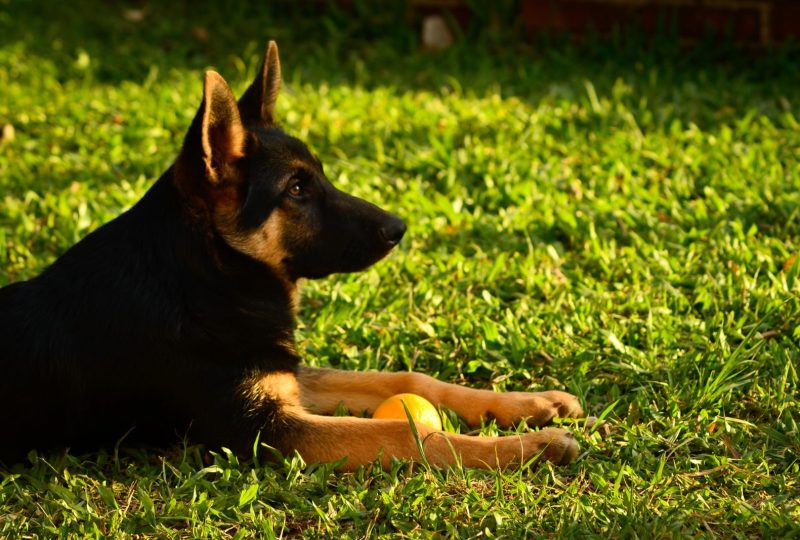
German Shepherd Enrichment Ideas (Indoor + Outdoor)
Brain games, scent work, and calm chew rituals that give a German Shepherd real work — not just…
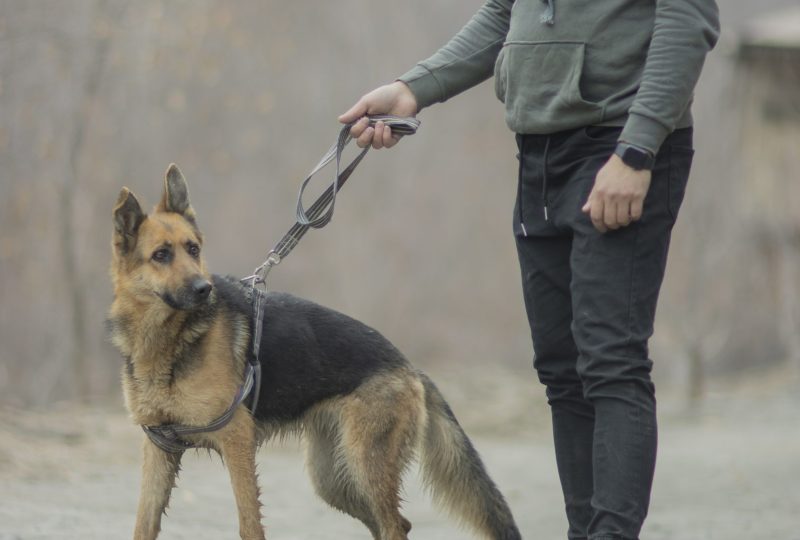
How to Stop a German Shepherd From Pulling on the Leash
A calm, repeatable loose-leash walking plan for German Shepherds — no prong collars, no yanking, no shutting the…
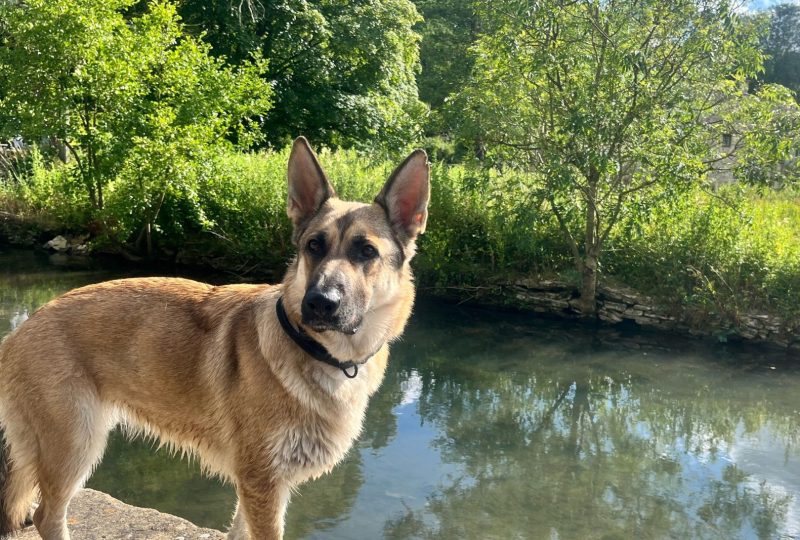
Dog Swimming: Teaching a German Shepherd to Love Water Safely
Whether German Shepherds can swim, the right age to start, a five-step introduction that does not frighten them,…