The White Shepherd: Breed, Colour Genetics and How They Differ
What causes the white coat, why white shepherds are not albino and not prone to deafness, the 1933 disqualification, the difference between White Shepherds and White Swiss Shepherds, and what owning one is really like.

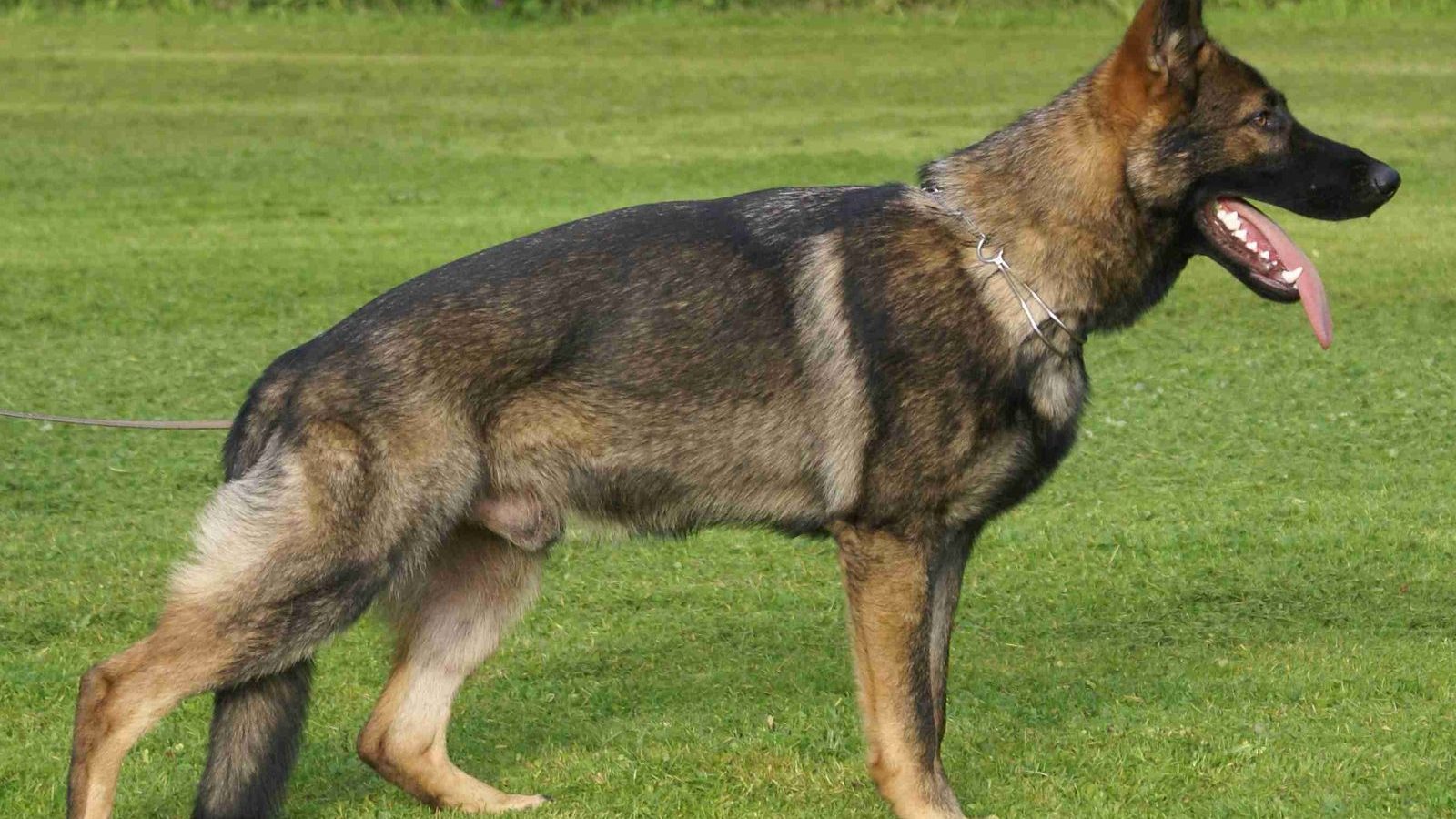
Short answer: a White Shepherd is a German Shepherd wearing a mask
White Shepherds are not albino, not rare mutants and not a health problem. The colour comes from a recessive masking gene that hides whatever pattern the dog genetically is — the same mechanism that makes a yellow Labrador yellow. White was in the founding stock of the breed, was disqualified from the show ring in 1933 for appearance reasons rather than health ones, and the resulting split eventually produced two separate recognised breeds.
Post a photograph of a white German Shepherd anywhere online and you will collect the same three replies within an hour: that it must be an albino, that white shepherds are all deaf, and that it is not a real German Shepherd at all. All three are wrong, and the truth is considerably more interesting than any of them.
The white coat is one of the best-documented pieces of colour genetics in any breed, the history behind its exclusion is a matter of public record, and the health claims attached to it come from confusing one genetic mechanism with an entirely different one.
This guide covers what the gene actually does, why white was banned from the ring, the three different white shepherd breeds people mix up constantly, whether temperament genuinely differs, the deafness question answered properly, and what owning one is actually like — including the grooming, which is the one area where they really are more work.
A white German Shepherd, a White Shepherd and a White Swiss Shepherd are related but not interchangeable — they are registered differently, judged differently, and in two cases are formally separate breeds. The section below untangles them, because almost every argument about white shepherds online is really two people talking about different animals.
What a White Shepherd Actually Is
Structurally, a white German Shepherd is a German Shepherd. Same size, same build, same working history, same breed standard in every respect except colour. If you shaved a patch and looked at the skin you would find normal dark pigment underneath.
The white is not a pattern laid over the dog. It is a mask — the dog still carries a full colour genotype underneath, whether that is sable, black and tan, bicolour or solid black, and it simply is not being expressed in the coat.
This has a practical consequence breeders know well: two white shepherds bred together produce only white puppies, because both parents can only pass on the masking version of the gene. But a white shepherd bred to a coloured one can produce coloured puppies who carry white — and two ordinary-looking black-and-tan Shepherds can produce a white puppy if both happen to carry it.
White is recessive. It takes two copies to show, which is why a white puppy can appear unexpectedly in a litter of coloured dogs whose parents both carried it quietly for generations — and why it has never been possible to breed it out of the population entirely.
The Genetics, Explained Simply
Coat colour in dogs is controlled by several genes at different locations. The one that matters here is the E locus, which governs the gene MC1R — and its job is to switch pigment production between dark (eumelanin, the black-brown family) and light (phaeomelanin, the red-cream-yellow family).
| Genotype | What happens | Result in a German Shepherd |
|---|---|---|
| E/E | Dark pigment produced normally | Whatever the dog’s underlying pattern is — sable, black and tan, bicolour, black |
| E/e | One masking copy, but the dark version dominates | Normal colour — but the dog is a carrier and can produce white puppies |
| e/e | Dark pigment blocked in the coat only | White or cream coat, with completely normal dark skin, nose and eyes |
The critical detail is in that last row: the block applies to the hair only. Pigment production everywhere else in the body carries on entirely normally, which is why a white shepherd has a black nose, dark eyes, dark lips and dark paw pads. Nothing is missing — one instruction has simply been switched off in one tissue.
If this mechanism sounds familiar, it should. The same e/e genotype is what makes a yellow Labrador yellow, a Golden Retriever golden and an Irish Setter red. It is one of the most common and best-understood colour genes in dogs — and in none of those breeds does anyone suggest it causes health problems.
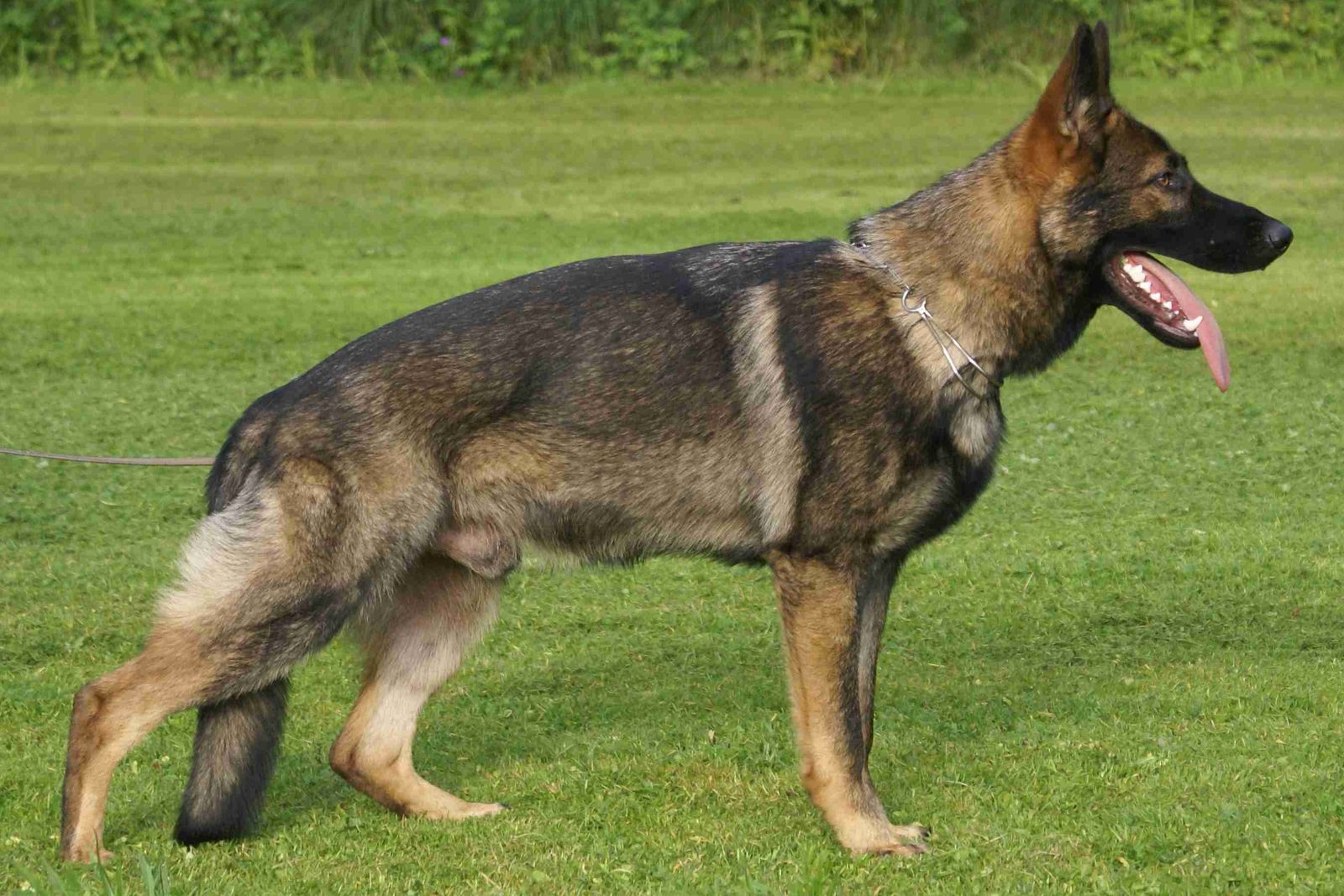
Why They Are Not Albino
This is the most persistent myth and the easiest to settle, because albinism has visible signs that white shepherds simply do not have.
| Feature | White Shepherd | True albino |
|---|---|---|
| Eyes | Brown or dark amber | Pink, pale blue or red-tinged |
| Nose | Black | Pink or unpigmented |
| Lips and eye rims | Black | Pink |
| Paw pads | Dark | Pink |
| Skin | Normally pigmented; often greyish | Pink, highly sun-sensitive |
| Vision | Normal | Frequently impaired; light sensitivity common |
| Mechanism | Pigment redirected in the coat (E locus) | Pigment cannot be produced at all (tyrosinase pathway) |
True albinism is genuinely rare in dogs and essentially unrecorded in German Shepherds. If a white shepherd in front of you has a black nose and brown eyes — and they all do — the albino question is answered on sight.
The History: From Founding Stock to Disqualified
The history is the part that surprises people, because white was not a later contamination of the breed. It was there at the beginning.
White in the founding pedigree
Max von Stephanitz founded the breed in 1899 with a dog called Horand von Grafrath, registered as the first German Shepherd. Horand’s pedigree includes a white herding dog named Greif, which places the white gene squarely in the breed’s foundation stock. Every white German Shepherd alive today traces back to that original population — the colour has been present continuously since the beginning.
The 1933 disqualification
In 1933 the German breed club moved to disqualify white from the show ring, and other national clubs followed over subsequent decades. The reasoning given at the time centred on appearance and on a belief — not supported by evidence then or since — that the colour was associated with weakness or degeneration.
It is worth being clear about what that decision was and was not. It was a cosmetic and ideological judgement made by a breed club, not a finding about health. No study established a link between the E locus and any disease, and none has since.
What happened next
Excluded from the ring in Europe, white shepherds found a home in North America, where enthusiasts continued breeding them through the twentieth century. From there, exported dogs seeded a Swiss population, which eventually became a formally recognised breed in its own right — closing a circle that had started with a disqualification sixty years earlier.
The colour was not bred into the German Shepherd. It was bred out of the show ring — and the dogs simply carried on somewhere else.
The Three White Shepherd Breeds
Here is where most online confusion comes from. Three different registrations exist, and people use the names interchangeably when they should not.
| White German Shepherd | White Shepherd | White Swiss Shepherd | |
|---|---|---|---|
| Also called | White GSD | American White Shepherd | Berger Blanc Suisse |
| Status | A German Shepherd that happens to be white | Recognised as a separate breed by the UKC | Recognised as a separate breed by the FCI |
| Can it be registered? | Yes with the AKC as a German Shepherd | Yes, as its own breed | Yes, as its own breed |
| Show eligibility | Disqualified from GSD conformation | Fully eligible in its own breed classes | Fully eligible in its own breed classes |
| Typical build | Whatever its GSD lines are | Often straighter-backed than show GSDs | Straighter back, sometimes a longer coat |
| Temperament note | As its lines dictate | Often bred for a softer, companionable temperament | Generally softer and more sensitive than working GSDs |
The practical upshot: a white puppy born in a litter of German Shepherds is a German Shepherd, and can be registered and can compete in obedience, agility, scentwork and every other discipline. The only door closed to it is the conformation ring. A White Swiss Shepherd, by contrast, is now a genuinely separate breed with its own standard, its own studbook and decades of independent breeding behind it.
The Deafness Question, Answered
This claim comes up constantly and it is a genuine case of mistaken identity — the person repeating it is thinking about a real phenomenon, just in the wrong breeds.
Congenital deafness in dogs is associated with white coats — but specifically with white produced by the piebald and merle genes, which work by preventing pigment cells from migrating to parts of the body during development. Those same pigment cells are required for the inner ear to function. No pigment cells in the ear, no hearing. This is why deafness rates are elevated in Dalmatians, white Boxers, double merles and white Bull Terriers.
The E locus does something completely different. Pigment cells are present and working everywhere in the body — including the inner ear — they are simply producing light pigment instead of dark in the coat. The mechanism that causes deafness is not involved at all, and white shepherds show no elevated rate of congenital deafness.
🧬 Two different kinds of white
Pigment redirected (E locus, as in white shepherds and yellow Labradors) versus pigment cells absent (piebald and merle). Only the second is linked to deafness.
👁️ The tell is on the face
Deafness-linked white usually comes with unpigmented patches — pink nose sections, blue eyes, white patterning. A black nose and brown eyes point to the harmless mechanism.
🩺 BAER testing exists
If you ever want certainty about any puppy’s hearing, a BAER test measures it objectively. It is routine in high-risk breeds and available for any dog.
📋 The real risks are elsewhere
Hips, elbows, degenerative myelopathy, bloat and EPI. Those are the German Shepherd health list, and they apply to a white one exactly as much as a black-and-tan one.
Does Temperament Differ?
The colour gene has no effect on behaviour whatsoever. But the answer is still not quite “no”, for a reason worth understanding.
Because white shepherds were excluded from the show ring, they were bred for the best part of a century by people whose goals were companionship and working ability rather than conformation success. Separately, White Swiss Shepherd breeders have selected deliberately for a softer, more sensitive temperament as part of the breed’s development.
So the common observation that white shepherds are gentler and more sensitive is often accurate — but it is a product of seventy years of different breeding priorities, not of the coat colour. An individual white puppy from strong working lines will be exactly as driven as any other Shepherd from those lines.
Ask about the parents’ temperaments, what they were bred for, and what the breeder is selecting toward. That tells you far more about the puppy in front of you than the colour of its coat ever will — and the same applies whether the dog is white, sable, bicolour or solid black.
Health: The Same List as Any Shepherd
White shepherds inherit the German Shepherd health profile in full, with nothing added and nothing removed by the colour.
- Hip and elbow dysplasia — insist on published scores for both parents.
- Degenerative myelopathy — there is a genetic test; ask for the parents’ results.
- Bloat and gastric torsion — the deep-chested emergency. Learn the signs before you need them.
- Exocrine pancreatic insufficiency — the breed is heavily over-represented; a TLI test diagnoses it.
- Allergies and skin sensitivity — arguably more visible on a white coat, which stains where a dog licks.
There is one genuinely colour-related consideration, and it is minor: the skin under a white coat still burns, and thin-coated areas such as the belly and the bridge of the nose need shade on very bright days — the same as for any pale dog. It is a sunny-afternoon issue, not a health condition.
Grooming a White Double Coat
This is the one area where white shepherds genuinely are more work — not more fragile, just more visible.
| Issue | Why it shows on white | What to do |
|---|---|---|
| Mud and grass stains | Obvious against a pale coat; grass stains genuinely dye it | Let mud dry fully, then brush out. Water first sets it in |
| Tear staining | Rusty marks below the eyes from normal tear enzymes | Wipe daily with a damp cloth. Persistent staining warrants a vet check |
| Saliva staining on paws | Pink-brown marks where a dog licks | Treat the itch, not the stain — this often signals an allergy |
| Yellowing on the trousers | Urine splash is invisible on a sable, obvious here | Trim the feathering slightly; rinse the area after walks |
| Shedding | Identical volume, but white hair shows on dark furniture | Undercoat rake daily during a coat blow — no different from any Shepherd |
It is the commonest mistake white shepherd owners make. Frequent shampooing strips the oils that keep a double coat water-repellent and self-cleaning, so you end up with a duller, drier coat that gets dirty faster. Stick to every six to twelve weeks, brush more instead, and let dried mud fall out on its own.
Buying One: What to Ask
- Hip and elbow scores published for both parents
- DM genetic testing done, results shown
- Clear about which registry the puppies fall under
- Talks about temperament and what they select for
- Mother on the premises with the litter
- Happy to explain the colour genetics accurately
- The colour is marketed as “rare” and priced accordingly
- Words like “albino” or “exotic” appear in the advert
- No health testing, or vague answers about it
- They cannot say whether these are GSDs, White Shepherds or Swiss
- Several breeds are available from the same seller
- You cannot see the mother
The “rare colour” premium deserves particular scepticism. White is a straightforward recessive that has existed in the breed since 1899 — there is nothing rare about it genetically, and a seller charging extra for it is either uninformed or counting on you being so.
Kit for a White Coat
Whitening shampoo for white and light-coated dogs
A brightening shampoo lifts the yellowing and dullness that builds up on a white double coat without the harshness of bleaching products. The important thing is how rarely you use it, not how strong it is — every six to twelve weeks, worked properly down to the skin and rinsed thoroughly. Look for a gentle formulation that names double coats or sensitive skin, since German Shepherds are prone to skin reactions and a stripped coat gets dirty faster than a healthy one.
- Lifts yellowing without stripping the protective coat oils
- Gentle enough for a breed prone to skin sensitivity
- Works on the trousers and feathering where staining shows
- Pairs with an undercoat rake, which does most of the real work
See whitening shampoos on Amazon →
Good to know: the biggest improvement to a white coat is not shampoo at all — it is brushing. A well-raked coat reflects light evenly and looks dramatically brighter than a bathed but matted one. Reach for the rake first and the bottle second.
| Item | Why it earns its place | What to look for | Find it |
|---|---|---|---|
| Undercoat rake | Does more for coat brightness than any shampoo | Long pins, rotating teeth | See options → |
| Whitening shampoo | Lifts yellowing on the trousers and feathering | Brightening, gentle, soap-free | See options → |
| Eye wipes | Daily control of tear staining below the eyes | Unscented, dog-safe, no alcohol | See options → |
| Slicker brush | Finishes the topcoat and lifts loose hair | Large, flexible pins | See options → |
| Microfibre towels | Muddy walks are more visible on white | Large, absorbent, buy two | See options → |
Seven Myths, Answered
The truth: they have black noses, dark eyes and pigmented skin. Albinism blocks pigment production entirely; the E locus merely redirects it in the coat.
The truth: deafness is linked to piebald and merle white, where pigment cells are absent from the inner ear. The E locus does not do that, and rates are not elevated.
The truth: the colour was in the founding stock in 1899 and is registrable with the AKC. It is disqualified from conformation showing only.
The truth: it is a straightforward recessive present in the breed for over a century. Any “rare colour” premium is marketing, not genetics.
The truth: the 1933 exclusion was cosmetic and never supported by evidence. They carry the same health profile as any German Shepherd.
The truth: they compete fully in obedience, agility, scentwork, herding and tracking, and work in assistance and search roles. Only the show ring excludes them.
The truth: they began there, but decades of separate breeding and FCI recognition make them a distinct breed with their own standard and studbook.
Frequently Asked Questions
Are white German Shepherds purebred?
Yes. White is a recessive colour that has been in the breed since its foundation in 1899 — a white dog named Greif appears in the pedigree behind the first registered German Shepherd. White dogs can be registered with the AKC as German Shepherds; they are simply disqualified from conformation showing.
Are white German Shepherds albino?
No. They have black noses, dark brown eyes, black lips and dark paw pads — all impossible in a true albino. The white comes from a recessive gene at the E locus that redirects pigment in the coat only, leaving pigment production everywhere else in the body entirely normal.
Are white German Shepherds more likely to be deaf?
No. Congenital deafness is associated with white produced by the piebald and merle genes, which prevent pigment cells from reaching the inner ear. The E locus works by a different mechanism and leaves those cells intact, so white shepherds show no elevated rate of deafness.
What is the difference between a White Shepherd and a White Swiss Shepherd?
The White Shepherd is recognised by the UKC as a separate breed developed from American white German Shepherd lines. The White Swiss Shepherd, or Berger Blanc Suisse, descends from American dogs exported to Switzerland and is recognised by the FCI as its own breed, with a straighter back and often a softer temperament.
Why were white German Shepherds banned from showing?
The German breed club disqualified the colour in 1933 on cosmetic grounds, alongside an unevidenced belief that white indicated weakness. Other national clubs followed. No study has ever linked the colour gene to any health problem, and the exclusion has never been revisited on scientific grounds.
Do white German Shepherds shed more?
No — they shed exactly as much as any German Shepherd, which is a great deal. It simply shows up more on dark furniture and clothing. The management is identical: an undercoat rake used daily through the spring and autumn coat blows, and two or three times a week the rest of the year.
✅ What to Take Away
- White is a recessive masking gene at the E locus
- The dog still carries a full colour genotype underneath
- Not albino — black nose, dark eyes, pigmented skin
- No extra deafness risk; that comes from piebald and merle
- Present in the breed’s founding stock in 1899
- Disqualified in 1933 for cosmetic, not health, reasons
- Registrable with the AKC; barred only from conformation
- Fully eligible for obedience, agility, scentwork and herding
- White Shepherd (UKC) and White Swiss Shepherd (FCI) are separate breeds
- Temperament differences come from breeding history, not colour
- Same health list: hips, elbows, DM, bloat, EPI
- Grooming is the same, but staining shows more
- Never pay a “rare colour” premium
The Bottom Line
A white German Shepherd is a German Shepherd with one recessive gene switching the coat pigment from dark to light. It is the same gene that makes Labradors yellow, it has been in the breed since 1899, and it carries no health consequence whatsoever.
What the colour did carry was a political history. A breed club decided in 1933 that white looked wrong, and ninety years of myths about albinism, deafness and weakness grew up around that decision without any evidence ever supporting it. Meanwhile the dogs went to America, kept working, and eventually came back as two recognised breeds.
So if you are considering one: ask about hips, elbows and DM testing, meet the mother, judge the lines and buy an undercoat rake. Then enjoy a perfectly ordinary German Shepherd who happens to show up beautifully in photographs and appallingly on a black jumper.
- History of the German Shepherd — von Stephanitz, Horand and 1899
- Introducing the German Shepherd — temperament, size and suitability
- Should you shave a Shepherd? — double coat care, whatever the colour
- Where to get a German Shepherd — breeder, rescue or rehome
Recommended German Shepherd gear for this guide
Waterproof car seat cover (hammock)
Best for: Protecting back seats on trips
- Waterproof
- Side flaps
Affiliate link — we may earn a commission, at no cost to you.
Heavy-duty puzzle feeder
Best for: Mental stimulation and slow feeding
- Builds focus
- Slows fast eaters
Affiliate link — we may earn a commission, at no cost to you.
Padded training leash 6ft
Best for: Daily walking and city control
- Padded handle
- Strong hardware
Affiliate link — we may earn a commission, at no cost to you.

Keep reading
More in Lifestyle & Travel →
Best Dog Jokes and Funny Dog Stories
Eighty dog jokes and puns, German Shepherd humour only owners get, the funny stories every household recognises, jokes…
The Dog Breeds Closest to Wolves (What the DNA Actually Shows)
What genetic closeness to wolves really measures, the eight breeds in the ancient cluster, why the wolf-like German…
Sled Dog Breeds: The Dogs Built to Pull and How They Compare
Every traditional sled breed and what they are like to live with, why the Alaskan Husky is not…