Planning for a German Shepherd: Costs, Time and Honest Questions to Ask First
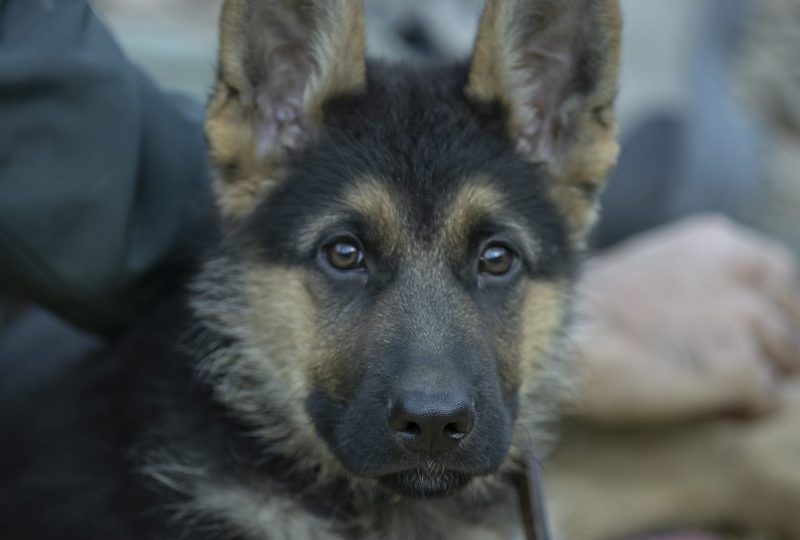
The real setup, annual and lifetime cost of a German Shepherd, the daily time commitment hour by hour, working versus show lines, health risks and insurance, adolescence, and when the honest answer is not yet.

Short answer: budget $2,000–$3,500 for year one and two hours a day, every day, for a decade
A German Shepherd is one of the most rewarding dogs you can own and one of the least forgiving of a half-hearted plan. The honest requirements are 2+ hours a day of exercise, training and mental work, $1,500–$2,500 a year ongoing, insurance from day one because of the breed’s joint and gut risks, and a household that will still want this dog in twelve years. If those four are genuinely there, almost everything else is solvable.
Almost nobody regrets getting a German Shepherd. A significant number of people regret when they got one — in the middle of a house move, three months before a baby, during a job that had just turned into sixty-hour weeks, or at a point in life where two hours a day genuinely did not exist.
That is what this article is for. Not to talk you out of it, and certainly not to romanticise it, but to lay out what the next decade actually looks like in hours and money so you can make the decision with the real numbers in front of you.
Rescue centres are full of eighteen-month-old Shepherds. Almost none of them are there because they were bad dogs. They are there because somebody underestimated the adolescence, the shedding, the intensity, or the sheer relentlessness of a working breed with nothing to do.
Costs are in US dollars and reflect typical ranges rather than a quote — vet fees, insurance and food prices vary enormously by region and by dog. Use them to sanity-check your budget, then get local numbers before you commit. Everywhere a range appears, plan for the upper end.
Eight Honest Questions to Ask First
Answer these before you look at a single puppy photograph, because once you have seen the photographs the answers change.
- What does my life look like in five years? Not next month. Career, relationship, children, housing, country. A Shepherd will still be here for all of it.
- Who does this dog belong to when things get hard? If the honest answer is “the person who wanted it”, make sure that person has the time, not just the enthusiasm.
- How long is the dog alone on a normal weekday? Four hours is workable with planning. Eight is not, without paid help.
- Could I absorb a $4,000 vet bill next year? Either from savings or from insurance. This breed makes that question concrete.
- Does everyone in the household want this? Not tolerate — want. A resentful partner is a genuine welfare risk for the dog.
- How do I feel about hair? On the sofa, in the butter, woven into your work clothes. Permanently, and twice a year spectacularly.
- What is my plan for holidays? Boarding a large, sometimes wary breed is harder and more expensive than boarding a spaniel.
- Am I prepared to train for two years, not two months? This is the one that separates the happy owners from the rehoming statistics.
A German Shepherd does not need a perfect owner. They need a consistent one with genuinely spare time. Enthusiasm is easy to find in week one and worth very little in month nine — the households that succeed are the ones where the dog fits the life that already exists, rather than the life somebody hopes to have.
The Time Commitment, Hour by Hour
“Two hours a day” sounds abstract until you break it into what actually has to happen.
| Activity | Puppy (under 6 months) | Adult |
|---|---|---|
| Walks | 5 min per month of age, 2–3× daily | 60–90 min, split across the day |
| Training | 4–6 sessions of 5 min | 15–20 min, most days |
| Mental work (sniffing, puzzles, scentwork) | 15–20 min | 30 min — this is not optional for this breed |
| Grooming | 5 min daily to build tolerance | 10 min daily; 30+ min during a coat blow |
| Toilet trips and supervision | Every 1–2 hours, all day | Minimal once settled |
| Play and downtime with you | Constant, in short bursts | 20–30 min |
| Realistic daily total | 3–4 hours of active involvement | 2–2.5 hours |
The number that surprises people is the puppy column. A German Shepherd puppy is not a smaller version of the adult commitment — for the first four months they are considerably more work, because the time is fragmented across the whole day rather than concentrated into two walks.
Thirty minutes of scentwork or a sniffy decompression walk tires a Shepherd far more thoroughly than an hour of ball throwing — and unlike ball throwing, it does not build a dog with the cardiovascular fitness of an athlete and the impulse control of a toddler. If your time is limited, cut the running, not the thinking.
What It Costs to Get Started
The purchase price is rarely the biggest number, and it is often the one people focus on exclusively.
| Item | Typical range | Notes |
|---|---|---|
| Puppy from a health-testing breeder | $1,200–$3,000+ | Working and imported lines sit at the top. Cheap puppies usually cost more later |
| Rescue or rehome fee | $100–$500 | Often includes neutering, vaccination and microchipping |
| Crate (large, 42″) | $70–$180 | Buy adult size with a divider — you only want to buy one |
| Bed, bowls, harness, lead, long line | $120–$250 | Expect to replace puppy sizes once |
| Initial vaccinations and health check | $150–$350 | Sometimes partly covered by the breeder |
| Microchip and registration | $25–$60 | Legally required in many places |
| Neutering, if and when advised | $250–$700 | Discuss timing — early neutering is now questioned for large breeds |
| Puppy classes | $150–$350 | The best money you will spend in year one |
| Toys, chews, grooming tools | $100–$200 | An undercoat rake is non-negotiable |
| Setup total | $2,000–$5,000 | Depending mainly on where the dog comes from |
A $600 German Shepherd from a seller who cannot show you hip and elbow scores, a DM genetic test and the mother on the premises is not a bargain — it is a deferred payment. Hip dysplasia surgery runs into thousands, and poorly socialised puppies from volume breeders cost years of behavioural work. Pay for the health testing, or budget for the consequences.
What It Costs Every Year
This is the number that matters most, because it repeats for a decade.
| Ongoing cost | Per year | What moves the number |
|---|---|---|
| Food | $500–$1,200 | A 35 kg dog eats a lot. Raw and premium kibble sit at the top of the range |
| Insurance | $400–$900 | Rises steeply with age. Lifetime cover costs more and is worth it for this breed |
| Routine vet care | $200–$400 | Annual check, boosters, dental monitoring |
| Parasite prevention | $150–$300 | Flea, tick, worming — year-round in most climates |
| Grooming supplies or salon | $50–$400 | Most owners do it at home; a salon deshed twice a year is the middle option |
| Toys, chews, replacements | $150–$350 | This breed is hard on kit. Budget for destruction in year one |
| Training and classes | $100–$500 | Higher if you do a sport or need behavioural help |
| Boarding or daycare | $0–$1,500 | Entirely dependent on your work and travel |
| Annual total | $1,500–$2,500 | Excluding emergencies |
The Lifetime Figure
Take an eleven-year-old dog, a mid-range annual cost, a setup cost and a realistic allowance for the things that go wrong, and you land somewhere around $20,000 to $30,000 across the dog’s life. That is not a scare figure — it is roughly what a modest second-hand car costs to run over the same period, and most owners consider it excellent value.
What matters is not the total but the shape of it. The costs are not evenly distributed. Year one is expensive because of setup. Years two to eight are steady and predictable. Years nine onwards climb sharply — insurance premiums rise, arthritis management begins, and the dogs who need the most veterinary attention are almost always the old ones.
💰 Build a buffer, not just a budget
A separate account with $1,000–$2,000 in it covers the excess on a big claim and the things insurance never pays for. It is the single most useful thing you can do before the dog arrives.
📈 Insure from day one
Anything that appears before cover starts becomes a pre-existing condition and is excluded for life. With a breed prone to hips, elbows and gut problems, that exclusion list can end up covering most of what you would claim for.
🦷 Do not forget dental
A dental under general anaesthetic runs to several hundred dollars and many policies exclude it. Daily toothbrushing from puppyhood genuinely saves money.
🏖️ Cost your holidays honestly
Two weeks of boarding for a large dog can exceed the flights. Work out who has your dog before you book anything, not after.
The Temperament You Are Actually Signing Up For
The German Shepherd of the films is noble, obedient and telepathic. The German Shepherd of real life is that, eventually, and also a great deal more complicated.
They are intensely people-focused
This breed does not do detachment. They will follow you between rooms, sit outside the bathroom door and monitor your movements with a level of interest most people find flattering for about six months. The flip side is a genuine predisposition to separation-related distress if independence is not deliberately taught early.
They are naturally wary, not naturally friendly
A correct German Shepherd is aloof with strangers — interested, watchful, not rushing over for a fuss. That is the breed standard, not a fault. But it means socialisation is not optional, because the gap between “appropriately reserved” and “reactive to every visitor” is filled entirely by what you do in the first six months.
They need a job or they will invent one
This is the single most reliable predictor of whether an owner will struggle. A Shepherd with insufficient work does not become a lazy dog. They become a dog who patrols, barks at the window, digs, chews the skirting boards and herds the children. None of that is naughtiness — it is an employed brain with no employment.
You do not get to choose whether your German Shepherd has a job. You only get to choose whether you assign it or they do.
Working Line or Show Line?
This choice affects your daily life more than colour, sex or coat length, and most first-time buyers do not know it exists.
| Working lines | Show lines | |
|---|---|---|
| Drive | High to very high; needs a real outlet daily | Moderate; more settled indoors |
| Build | Straighter back, often lighter, sable common | More angulation, heavier bone, black-and-tan common |
| Best for | Sport, scentwork, very active owners, experienced handlers | Active family homes, first-time owners with time |
| Struggles when | Under-stimulated — this is where the destructive stories come from | Over-exercised as a puppy; joint issues if poorly bred |
| Honest advice | Do not take one because it sounds impressive | Still a working breed — “calmer” is relative, not absolute |
If you are a first-time owner with a normal job and a normal amount of energy, a well-bred show or “pet line” Shepherd from a breeder who prioritises stable temperament will make your life considerably easier — and will still be plenty of dog.
Health Risks and Why Insurance Matters Here
Every breed has a list. This one has a specific and well-documented set that should shape your budgeting and your choice of breeder.
- Hip and elbow dysplasia — the headline risk. Only buy from parents with published scores, and keep your dog lean for life.
- Degenerative myelopathy — a progressive spinal cord disease. There is a genetic test; ask for the parents’ results.
- Bloat and gastric torsion — a deep-chested breed emergency that kills within hours. Know the signs before you need them.
- Exocrine pancreatic insufficiency (EPI) — the breed is heavily over-represented. Chronic weight loss with a big appetite needs a TLI blood test, not another food change.
- Chronic digestive sensitivity and food intolerances — common enough that many owners settle on one food and never move.
- Allergies and skin conditions, particularly ear and paw involvement.
Unproductive retching, a swollen or drum-tight abdomen, restlessness and pacing, drooling, an inability to settle. Gastric dilatation-volvulus is fatal within hours without surgery. Know your nearest 24-hour veterinary hospital and how long it takes to reach at night. Do this in week one, not on the night you need it.
Space, Garden and Living Situation
Less decisive than people assume, but with real constraints.
- An apartment, if the daily exercise and mental work genuinely happen
- A small garden — it is a toilet and a sniffing space, not an exercise substitute
- A busy family home, with rules about children and the dog’s resting place
- Rented housing where the landlord has agreed in writing
- Working from home, or a job with a lunchtime gap
- Eight to ten hours alone daily with no dog walker or daycare
- Nobody in the household who actually wants the dog
- A garden that cannot be made secure — this breed can clear a low fence
- Shared accommodation where the rules could change at short notice
- Frequent travel with no reliable, dog-experienced backup
Fencing deserves a specific mention: a motivated adult German Shepherd can clear or scramble a four-foot fence without much difficulty. Six feet, with no climbable furniture stacked against it and gates that latch properly, is the standard to aim for.
42-inch dog crate with a divider panel
The crate is the one piece of setup kit that shapes the whole first year — it makes housetraining straightforward, gives your puppy somewhere to actually sleep, and gives you a way to leave the room without supervising a small carnivore. Buy the adult size immediately and use the divider to shrink the usable space while they are small; a Shepherd will outgrow a medium crate within four months, and buying twice is simply wasted money.
- Makes housetraining dramatically faster and less messy
- Gives an over-tired puppy a place to switch off properly
- Divider means one purchase covers eight weeks to adulthood
- Invaluable later for vet rest, recovery and safe travel
See large dog crates on Amazon →
Good to know: a crate only works if it is introduced as a good place — fed in, never used as punishment, and built up gradually. A crate used as a cupboard to store a dog in is a welfare problem; a crate used properly is the most useful thing in the house.
| Setup item | Why you need it | Buy in this size | Find it |
|---|---|---|---|
| Crate | Housetraining, safe downtime, vet rest later | 42 inch with divider | See options → |
| Y-front harness | Walking a puppy who will become 35 kg | Adjustable, padded, sized up | See options → |
| Long line | Recall practice through adolescence | 10–15 m biothane | See options → |
| Undercoat rake | The shedding is real and starts early | Long pins, rotating teeth | See options → |
| Slow feeder bowl | Slows a fast eater; adds mental work | Large breed maze | See options → |
Nobody Warns You About Adolescence
Between roughly six and eighteen months, a German Shepherd who was polite and biddable will frequently become something else entirely. Recall stops working. Barking starts. They become suspicious of the wheelie bin that has been there their whole life. Training you were sure was solid appears to evaporate.
This is normal, it is developmental, and it is the point at which most Shepherds are given up. Knowing it is coming is genuinely protective — owners who expect it manage it; owners who think their dog has turned on them panic.
Go back to the long line rather than losing recall permanently. Keep training sessions short and generously paid. Lower your criteria temporarily instead of escalating pressure. Protect sleep — an over-tired adolescent is a nightmare. And remember the timeline: this is a phase with an end date, not a personality.
When the Answer Should Be “Not Yet”
Waiting a year is not a failure. These are the situations where waiting is genuinely the better decision — for you and for the dog.
- A major life change within twelve months — a move, a baby, a new job with unknown hours, a relationship in flux.
- Nobody home for most of the working day, and no budget for a walker or daycare.
- No financial buffer at all. A dog you cannot afford to treat is a dog you may have to make an impossible decision about.
- You want a guard dog. Get a security system. A Shepherd bought for protection and raised without socialisation becomes a liability, not an asset.
- You want this dog because of a film, a series or an influencer. The dog on screen has a professional trainer and is doing a job.
- Somebody in the house has said no. That will not resolve itself once the puppy arrives.
Preparing Before They Arrive
Register with a vet and take out insurance
Do both before collection day. Cover should be active from the moment the dog is legally yours, so nothing can be classed as pre-existing.
Puppy-proof properly
Cables lifted, chemicals locked away, shoes gone, houseplants checked for toxicity, and a secure gate on the stairs. Assume everything at nose height is a chew toy.
Agree the house rules with everyone
Sofa or not. Which room is the dog’s. Who does the morning walk. What word means “sit”. Write it down — inconsistency between family members is the most common training failure.
Book classes before the dog arrives
Good puppy classes fill up. Find a reward-based, accredited trainer and book a place for the week after the second vaccination.
Take time off, and plan the first fortnight
A week minimum, two if you can. Then plan the gradual increase in alone-time from day three — leaving your dog for short periods early is how you prevent separation problems, not a betrayal of them.
7 Mistakes (and the Fix for Each)
The fix: work out the annual cost and multiply by eleven before you commit. The purchase price is typically under 10% of the lifetime figure.
The fix: choose on temperament, health testing and line. You will live with the temperament every day and look at the colour approximately never.
The fix: wait for the right litter. A good breeder often has a waiting list, and that list is a feature rather than an obstacle.
The fix: a garden is a toilet and a sniffing space. Novelty, new smells and new places are what actually satisfy this breed.
The fix: insure from day one. Every symptom that appears before cover starts is excluded permanently, and with this breed that list gets expensive fast.
The fix: build alone-time from the first week in small doses. Constant company for a fortnight then a full working day is how separation anxiety gets built.
The fix: expect six to eighteen months to be hard, plan for it, and keep the long line handy. Most rehomed Shepherds are in exactly that age bracket.
Frequently Asked Questions
How much does a German Shepherd cost per year?
Budget $1,500–$2,500 annually for food, insurance, routine veterinary care, parasite prevention, grooming and replacements — more if you use daycare or boarding. Year one is higher because of setup costs, and the final years climb as insurance premiums rise and age-related care begins.
Are German Shepherds good for first-time owners?
They can be, with two conditions: genuinely available time, and a willingness to train for two years rather than two months. A well-bred puppy from stable temperament lines makes it far easier. A working-line dog bought by a busy first-time owner is where most of the horror stories come from.
Can I have a German Shepherd if I work full time?
Only with help. Four hours alone is manageable for a settled adult; eight is not. That means a midday dog walker, daycare a few days a week, a family member, or a job with flexibility. A puppy cannot be left for a full working day at all in the early months.
Should I get a puppy or an adult rescue?
An adult rescue skips the hardest year, and reputable centres will tell you honestly what the dog needs. A puppy gives you control over socialisation but demands far more time. Adolescent Shepherds in rescue — around one to two years old — are often excellent dogs whose previous owners simply ran out of time.
How much space does a German Shepherd need?
Less than people assume. Plenty live happily in apartments where the exercise and mental work genuinely happen, and plenty are miserable on an acre because nobody engages with them. What matters is daily activity and company, not square footage — though your fencing does need to be six feet and secure.
Is pet insurance worth it for this breed?
For a German Shepherd, more than most. The breed’s predisposition to hip and elbow dysplasia, bloat, EPI and chronic digestive problems means claims are both likely and expensive. Take lifetime cover from day one, before anything can be classed as pre-existing.
✅ Your Pre-Puppy Checklist
- Annual cost calculated and multiplied by eleven
- Emergency fund of $1,000–$2,000 set aside
- Lifetime insurance researched, ready to start day one
- Two hours a day genuinely available, seven days a week
- Cover arranged for the working day
- Everyone in the household actively wants this
- Breeder shows hip and elbow scores plus DM testing
- Mother seen with the litter, on the premises
- Working line vs show line decided honestly
- Garden secure to six feet, gates latching
- Vet registered; 24-hour emergency hospital located
- Bloat signs learned before the dog arrives
- Reward-based puppy classes booked
- Crate, bedding and kit bought in adult sizes
- Time off booked for the first fortnight
- House rules agreed and written down
- Holiday and boarding plan thought through
The Bottom Line
A German Shepherd is not a difficult dog. They are a demanding one — and the difference matters. Give them the time, the training and the mental work and they become one of the most capable, loyal and genuinely enjoyable companions available. Skip any of the three and you get a large, clever, frustrated animal making their own entertainment in your house.
So do the arithmetic properly. Two hours a day. Around $2,000 a year. Insurance from day one. A hard year somewhere between six and eighteen months. And a household that will still want this dog when they are twelve, grey around the muzzle and slow on the stairs.
If you read all that and you still want one, you are probably exactly the sort of person who should have one. And if you read it and thought “not this year” — that is not a rejection. That is the single most responsible thing anyone on this page can do.
- Where to get a German Shepherd — breeder, rescue or rehome
- The new puppy checklist — the first 30 days, week by week
- Introducing the German Shepherd — temperament, size and suitability
- Feeding guide — what the food budget actually buys
Recommended German Shepherd gear for this guide
Heavy-duty German Shepherd crate (42")
Best for: Crate training and safe rest
- Sturdy build
- Double-door access
- Removable tray
Affiliate link — we may earn a commission, at no cost to you.
Low-calorie training treats
Best for: High-frequency reward training
- Soft, easy to break
- Quick consumption
Affiliate link — we may earn a commission, at no cost to you.
Durable rubber chew toy
Best for: Power chewers and chew redirection
- Long lifespan
- Treat-stuffable
Affiliate link — we may earn a commission, at no cost to you.

Keep reading
More in Puppy Care →
Where to Get a German Shepherd: Breeder, Rescue or Rehome
The four sourcing routes compared, the health tests you must see, how to find a good breeder, the…
Potty Bells for Dogs: How to Train Them (Wall Mounted vs Hanging)
How potty bells work, hanging versus wall-mounted, a two-week training plan, the golden rule that stops your dog…

Housetraining a German Shepherd: The Complete Toilet Training Guide
How long housetraining really takes, the five rules that do the work, the schedule by age, night-time training,…