How to Massage a Senior Dog: A Gentle At Home Routine
What massage genuinely does for an older dog, when not to do it at all, a consent-based ten-minute routine, the areas that matter for a stiff German Shepherd, how to read your dog, and when to call a professional.

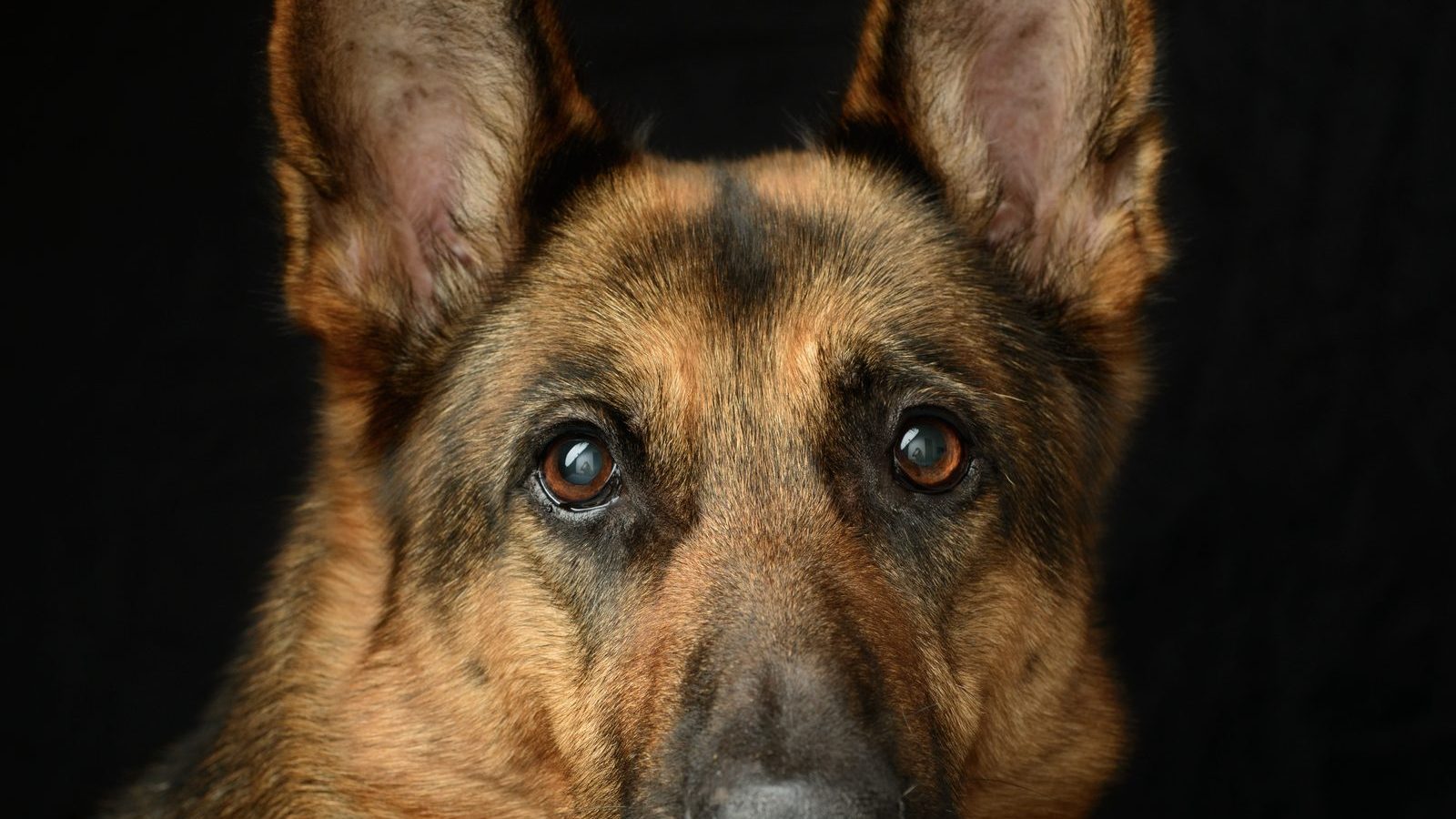
Short answer: light pressure, ten minutes, and stop the moment they ask you to
Gentle massage genuinely helps an older German Shepherd — it eases muscle tension around stiff joints, aids circulation and is a superb way to notice new lumps, sore spots and heat early. The rules are simple: get a vet check first, never work directly on a painful joint, use far less pressure than you think, and treat every session as something your dog can end at any time.
Your German Shepherd is ten. They still want the walk, but they take a moment getting up from the kitchen floor, and on cold mornings the back end looks stiff for the first hundred metres. You find yourself rubbing their hips while they lie next to the sofa, and they groan and stretch out, and you think — is this actually helping, or am I just fussing?
Mostly, it is helping. Gentle massage does real things for an older dog: it eases the secondary muscle tension that builds around a sore joint, encourages circulation, and provides ten minutes of calm contact that a stiff, slowing dog visibly enjoys.
It is also easy to get wrong in ways that hurt. This guide covers what massage can and cannot do, the situations where you must not do it at all, a full step-by-step routine, how to read whether your dog is enjoying it, and when to hand over to a qualified professional.
Massage is not a diagnosis and it is not a treatment for undiagnosed pain. Before you start, have your dog examined — particularly if there is new stiffness, limping, reluctance on stairs, or a change in temperament. Do not massage a dog with a fever, an acute injury or suspected fracture, an undiagnosed lump, a skin infection, a known bleeding disorder, or over the site of a known tumour. If your dog flinches, yelps, tenses or turns towards your hand, stop and book an appointment.
What Massage Genuinely Does
💪 Eases compensatory tension
A dog with sore hips shifts weight forward, and the shoulders, neck and lower back take the strain. That secondary muscle tightness is real, often significant, and responds well to gentle work.
🩸 Encourages circulation
Older dogs move less and lie down more. Light stroking and gentle kneading of the large muscle groups helps blood flow through tissue that is not being used much.
🔍 Finds problems early
Arguably the biggest benefit. Hands on your dog twice a week means you notice a new lump, a hot spot, a thinning muscle or a tender area weeks before you would otherwise.
😌 Calms and connects
Slow, predictable contact settles most dogs, and for a senior who can no longer do the long walks you used to share, it gives you something to do together that they still love.
You are working on muscle, not joints. The hip itself is not what you are treating — the tight, overworked muscle around it is. Keep that distinction and you will naturally avoid the pressure and the places that cause harm.
What It Does Not Do
Being straight about the limits is what keeps this useful rather than harmful.
- It does not treat arthritis. It can ease the muscle tension that accompanies it. The joint disease itself needs veterinary management — weight control, pain relief, and often hydrotherapy or physiotherapy.
- It does not replace pain relief. If your dog needs medication, massage is an addition, not an alternative.
- It does not cure anything. Be cautious with any source claiming otherwise — this area attracts a lot of overstatement.
- It does not detect illness reliably. Finding lumps early is a genuine benefit; concluding anything about them is not your job.
- It is not physiotherapy. Veterinary physiotherapists do targeted rehabilitation with specific goals. What you are doing at home is comfort work.
When Not to Massage at All
| Situation | Why |
|---|---|
| Undiagnosed pain or limping | You may be working over an injury and making it worse. Get it examined first |
| Fever or acute illness | A dog who feels unwell needs rest, not handling |
| Suspected fracture or recent trauma | Movement of the area can cause serious further damage |
| Over a known tumour or undiagnosed lump | Avoid the area entirely and get it assessed |
| Skin infection, hot spots, open wounds | Spreads infection and is painful |
| Bleeding disorders or anticoagulant medication | Risk of bruising. Ask your vet first |
| Immediately after surgery | Only with explicit veterinary clearance and instruction |
| A dog who does not want it | The most important one. Forced handling damages trust, and seniors have less patience than they used to |
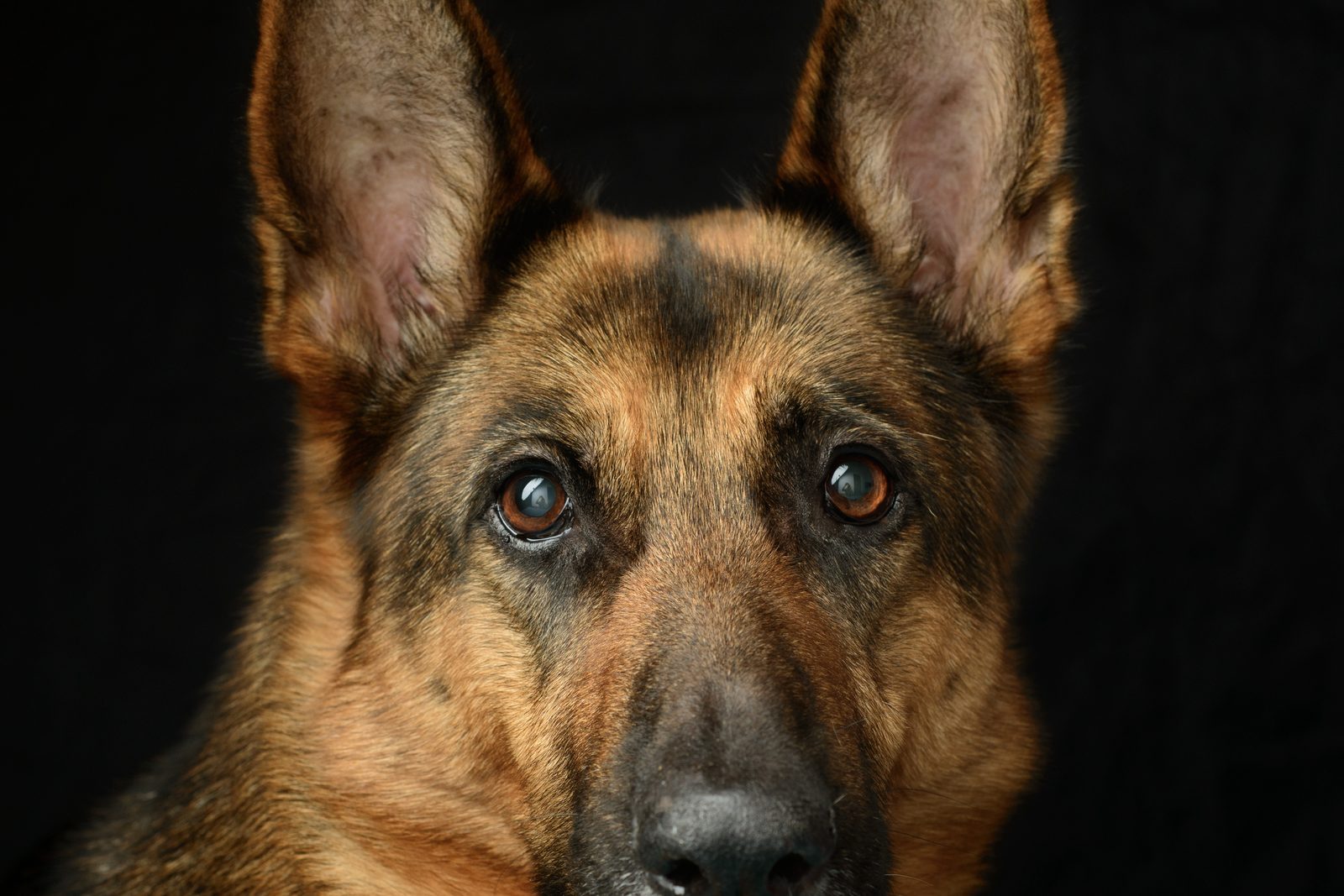
Setting Up a Session
- Pick the right moment. After a gentle walk when muscles are warm, or in the evening when the house is quiet. Never straight after a meal.
- Let your dog choose the position. Lying on their side is ideal, but a comfortable dog standing or lying sternally is better than a repositioned one.
- Get on the floor with them. Never lift a senior onto a table, and do not lean over the top of them.
- Warm hands. Cold hands on an arthritic dog will end the session immediately and fairly.
- Non-slip surface. A rug or mat — an older dog scrabbling on a hard floor is anxious before you begin.
- Quiet. Television off, no children arriving mid-session, phone away.
- Ten minutes maximum. Two or three short sessions a week beats one long one, and seniors tire faster than you expect.
Consent: Letting Your Dog Opt Out
This is the part that separates massage your dog enjoys from handling they endure, and it is worth doing properly.
Start every session with a consent test. Rest a flat hand on your dog’s shoulder and do nothing for three seconds, then take it away. A dog who wants more will lean in, nudge your hand, resettle towards you, or sigh and relax. A dog who moves away, stiffens, licks their lips or gets up has answered — and the answer is no, today.
Repeat that check when you move to a new area. Hips today may be fine; shoulders may not. Asking each time takes three seconds and is the single biggest difference between a dog who comes over when you sit on the floor and one who leaves the room.
A dog who is allowed to leave will keep choosing to stay. A dog who is held in place learns that your hands are something to escape from.
The Ten-Minute Routine
Settle and ask — 1 minute
Sit beside your dog. Flat hand resting on the shoulder, no movement, three seconds. Watch for the lean-in. If it does not come, try again tomorrow.
Long strokes to warm up — 2 minutes
Flat, open palm, from behind the ears down the neck, along the back and out to the tail. Slow — about one stroke every three seconds. Very light pressure, following the direction of the coat.
Why: it warms the tissue, tells your dog what is happening, and lets you feel for heat, tension and anything unfamiliar.
Neck and shoulders — 2 minutes
Small circles with the flat of your fingers along either side of the neck and over the shoulder muscle. Never on the spine itself — work the muscle on either side of it.
Why: dogs with sore back ends carry weight forward, so the shoulders are usually the tightest area on an arthritic senior.
Back, either side of the spine — 2 minutes
Thumbs or flat fingers, gentle circles down the muscle bands running parallel to the spine, from the shoulders to the hips. Light pressure — no more than you would use on your own closed eyelid.
Why: the lumbar area does a great deal of compensating in a dog with hip pain and is frequently tight.
Hindquarters — 2 minutes
Flat palm over the big muscles of the rump and thigh, slow circles or gentle kneading. Work around the hip joint, never directly on it. Stop instantly at any flinch.
Why: this is where a German Shepherd loses muscle first, and where the tension around a dysplastic hip sits.
Finish with long strokes — 1 minute
Back to the slow full-body strokes you started with, then sit quietly for a moment before getting up. Let your dog stay lying down if they want to.
Why: a clear ending settles the session, and many dogs fall asleep in this last minute.
Far less than you think. Press your fingers gently against your own closed eyelid — that is roughly the maximum for a senior dog. You are not trying to reach deep tissue or “release” anything. If your dog’s skin is denting under your fingers, you are pressing too hard.
Areas That Matter for a Stiff Shepherd
| Area | Why it matters in this breed | How to work it |
|---|---|---|
| Hindquarters and thigh | First place a Shepherd loses muscle; carries tension from hip dysplasia | Flat palm, slow circles, around the joint not on it |
| Lumbar back | Does most of the compensating for a painful back end | Gentle circles either side of the spine, never on it |
| Shoulders | Take the extra weight when the rear is sore — often the tightest area | Flat fingers, small circles over the muscle mass |
| Neck | Tightens from carrying the head lower and from lead pressure over the years | Very light, either side of the vertebrae |
| Chest muscle | Overworks in a dog who has shifted weight forward | Flat hand, slow strokes, gently |
| Ears and face | Most dogs love it and it makes a calming finish | Slow, gentle strokes from base to tip of the ear |
Directly on the spine · directly on any joint · the throat and windpipe · the abdomen, unless a professional has shown you how · any lump, hot area or wound · anywhere your dog has flinched. And never stretch or manipulate a limb — passive range-of-motion work looks simple and needs proper instruction from a veterinary physiotherapist.
Reading Your Dog During a Session
- Leaning into your hand
- Body going soft and heavy
- A long sigh, or a groan on settling
- Eyes half closing; falling asleep
- Nudging your hand back when you stop
- Rolling to offer a different area
- Turning the head towards your hand
- Lip licking, yawning, whale eye
- Tensing or holding the breath
- Moving away, or getting up
- Ears going back; a sudden stillness
- Any flinch, twitch or vocalisation
German Shepherds are notably stoic, which means the signals are often subtle. A dog who has gone completely still and quiet is not necessarily relaxed — check whether the body is soft or tight, because that is the difference between a dog enjoying this and a dog waiting for it to end.
Using Massage as a Health Check
This may be the most valuable thing about the whole routine. Regular hands-on contact makes you the person most likely to catch something early.
- New lumps or bumps. Note the size, location and whether it moves. Photograph it with something for scale and get it checked.
- Heat. A warm patch compared with the other side often means inflammation.
- Muscle wastage. Compare left and right hindquarters. Asymmetry is one of the earliest signs of a dog favouring a limb.
- New sensitivity in an area that was fine last month.
- Skin changes — scurf, thinning coat, scabbing, or a smell.
- Weight changes you can feel over the ribs and spine before the scales show them.
Keep a simple note on your phone — date, what you found, where. It turns “I think it’s got bigger” into something a vet can actually act on.
When to Get a Professional
Home massage is comfort work. Several situations call for someone qualified.
- Diagnosed arthritis, hip or elbow dysplasia — ask for a referral to a veterinary physiotherapist. Hydrotherapy is frequently the single most effective option for this breed.
- After surgery — structured rehabilitation genuinely improves outcomes, and the protocol matters.
- Degenerative myelopathy — physiotherapy helps maintain mobility, and needs professional planning.
- Persistent lameness that massage does not settle.
- If you want to do more — a qualified canine massage therapist can show you techniques for your specific dog in one session.
When choosing someone, check they are properly accredited, that they require veterinary consent before treating — in many countries that is a legal requirement — and that they explain what they are doing and why.
Kit That Helps
Orthopaedic memory foam bed, extra large
Ten minutes of massage twice a week is good. Fourteen hours a day on proper support is transformative — and older dogs sleep a great deal. A solid slab of memory foam distributes weight off the pressure points at the hips, elbows and shoulders, which is exactly where an arthritic German Shepherd develops sore spots and callouses. Look for a low entry height so a stiff dog does not have to climb, a genuinely large footprint so they can stretch out fully on their side, and a removable washable cover, because seniors have accidents and a bed you cannot wash gets thrown away.
- Takes pressure off hips, elbows and shoulders for most of the day
- Makes getting up noticeably easier than a flat floor
- Low entry matters enormously for a dog with weak hindquarters
- Waterproof liner handles the accidents that come with age
- Pairs naturally with a massage routine on the same spot
See orthopaedic beds on Amazon →
Good to know: solid foam outlasts shredded filling considerably, and shredded beds flatten into a thin mat within months under a 35 kg dog — which is worse than no bed at all. Put it somewhere warm and draught-free, and add a non-slip runner on any hard floor your dog crosses regularly.
| Item | Why it earns its place | What to look for | Find it |
|---|---|---|---|
| Orthopaedic bed | Support for the 14 hours a day they are lying down | Solid foam, XL, low entry, washable | See options → |
| Non-slip runners | Hard floors are frightening and exhausting for weak hindquarters | Rubber-backed, washable, long | See options → |
| Grooming glove | A gentle way to start sessions on a dog who dislikes hands | Soft rubber nubs, hand-shaped | See options → |
| Support harness | Helps a stiff dog rise and manage steps | Rear support with a handle, padded | See options → |
| Heated pad | Warmth eases stiffness before a session | Low-voltage, chew-resistant cord, thermostat | See options → |
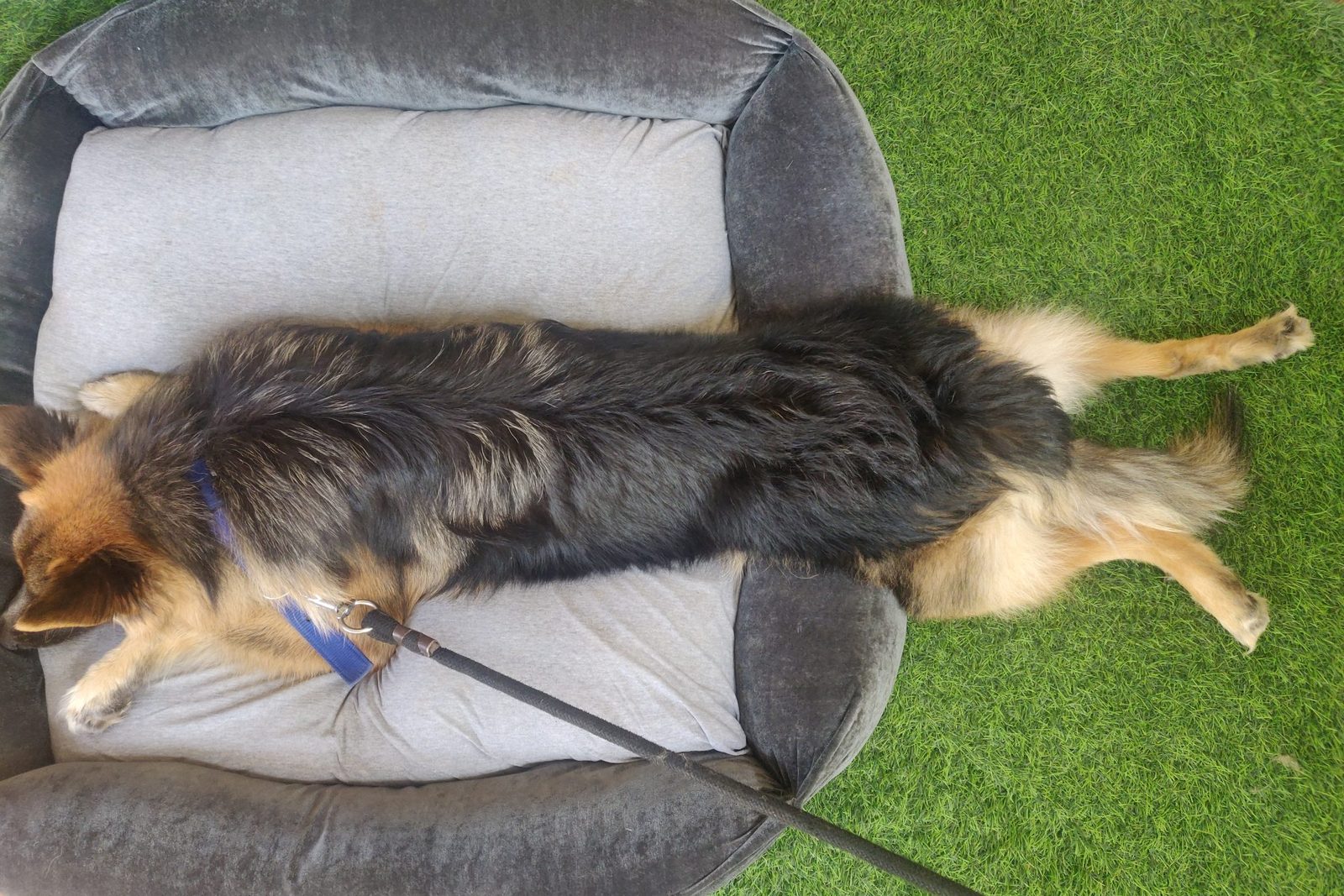
7 Mistakes (and the Fix for Each)
The fix: vet examination first, every time. You may be working over an injury, and a limp is a diagnostic question before it is a comfort one.
The fix: no more than you would use on a closed eyelid. If the skin dents under your fingers, ease off — you are not trying to reach anything deep.
The fix: work the muscle around them. The tissue either side of the spine and around the hip is the target; the bone never is.
The fix: stop at the first lip lick, head turn or stiffening. Shepherds are stoic, and by the time there is a yelp you have gone a long way past the answer.
The fix: ten minutes, two or three times a week. A senior who ends every session tired of it will start avoiding you when you sit on the floor.
The fix: leave range-of-motion work to a veterinary physiotherapist. It looks straightforward on video and is genuinely easy to do harm with.
The fix: massage sits alongside weight management, pain relief and hydrotherapy. It eases muscle tension; it does not treat the joint disease underneath.
Frequently Asked Questions
Is massage good for senior dogs?
Gentle massage can ease the secondary muscle tension that builds around stiff joints, encourage circulation and provide calm contact an older dog enjoys. It is also an excellent way to notice new lumps, heat or muscle wastage early. It is not a treatment for arthritis itself, and it should always follow a veterinary examination.
How do I massage my dog’s hips?
Work the large muscles of the rump and thigh around the joint, never directly on it. Use a flat palm with slow circles and very light pressure — no more than you would apply to a closed eyelid. Stop instantly at any flinch, tensing or head turn towards your hand.
How long should a dog massage last?
About ten minutes, two or three times a week. Older dogs tire faster than owners expect, and short pleasant sessions keep a dog volunteering for the next one. Two brief sessions are considerably better than one long one.
When should I not massage my dog?
Avoid it entirely with undiagnosed pain or limping, fever, acute injury or suspected fracture, over any lump or known tumour, on skin infections or open wounds, with bleeding disorders or anticoagulant medication, straight after surgery without veterinary clearance, and any time your dog does not want it.
How do I know if my dog is enjoying the massage?
Look for leaning into your hand, a body that goes soft and heavy, sighing, eyes half closing, and nudging your hand when you stop. Signs to stop are head turning towards your hand, lip licking, yawning, tensing, stillness with a tight body, or moving away. Shepherds are stoic, so watch for the subtle version.
Should I see a professional canine massage therapist?
Worth it if your dog has diagnosed arthritis, hip or elbow dysplasia, is recovering from surgery, or has degenerative myelopathy — in which case ask your vet about veterinary physiotherapy and hydrotherapy, which are frequently more effective. Check any therapist is properly accredited and requires veterinary consent before treating.
✅ Your Senior Massage Checklist
- Vet examination done before starting
- Contraindications checked — no fever, lumps, wounds or acute pain
- Quiet room, warm hands, non-slip surface
- You on the floor, not leaning over your dog
- Consent test at the start and at each new area
- Pressure no firmer than on a closed eyelid
- Muscle worked, never the spine or a joint
- Session capped at ten minutes
- Stopped at the first small signal
- No limb stretching or manipulation
- Findings noted — lumps, heat, asymmetry, new tenderness
- Anything new reported to the vet
- Orthopaedic bed and non-slip flooring in place
- Weight, pain relief and hydrotherapy managed alongside
The Bottom Line
Massaging an older German Shepherd is genuinely worth doing, and it is simpler than most guides make it sound. Ask permission, use much less pressure than feels natural, work the muscle rather than the joint, stop at the first small signal, and keep it to ten minutes.
Keep the limits honest, though. It does not treat arthritis, it does not replace pain relief, and a dog who is limping needs a vet before they need your hands. What it does do is ease the tension that builds around a sore back end, and put you in contact with your dog often enough to notice the lump in week one rather than month three.
And there is the part that does not show up in any clinical account. Your dog is old, the long walks have got shorter, and this is ten quiet minutes on the floor that they will lean into every single time. That is worth something on its own.
- Senior care — the full picture for an older Shepherd
- Arthritis in dogs — diagnosis, management and pain relief
- Dog swimming — why hydrotherapy is so often recommended
- Healthcare for your German Shepherd — routine checks and warning signs
Recommended German Shepherd gear for this guide
Orthopedic large dog bed (memory foam)
Best for: Joint comfort and stretch-out sleep
- Pressure relief
- Washable cover
- Non-slip base
Affiliate link — we may earn a commission, at no cost to you.
Folding dog ramp for SUVs
Best for: Senior or post-injury vehicle access
- Folds flat
- Non-slip surface
Affiliate link — we may earn a commission, at no cost to you.
Quiet nail grinder
Best for: Smooth nail maintenance
- Quiet motor
- Multiple speeds
Affiliate link — we may earn a commission, at no cost to you.

Keep reading
More in Health & Senior Care →
My Dog’s Eyes Are Red: Causes and What to Do Next
How to tell an urgent red eye from a routine one, nine common causes, the three sight-threatening emergencies,…
Why Is My Dog Eating Grass? The Real Reasons and When to Worry
What the research says about grass eating, six explanations that hold up, why the upset stomach theory is…
My Dog Ate Acorns: Are They Poisonous? What to Do Now
Why acorns are toxic, how many actually matter, the intestinal blockage risk nobody mentions, the signs to watch…