The History of the German Shepherd Dog: From Herding Fields to Family Homes
How the breed was created in 1899 by Max von Stephanitz, its move into police work, the world wars and the Alsatian name, Rin Tin Tin, the working and show line split, and five myths worth retiring.

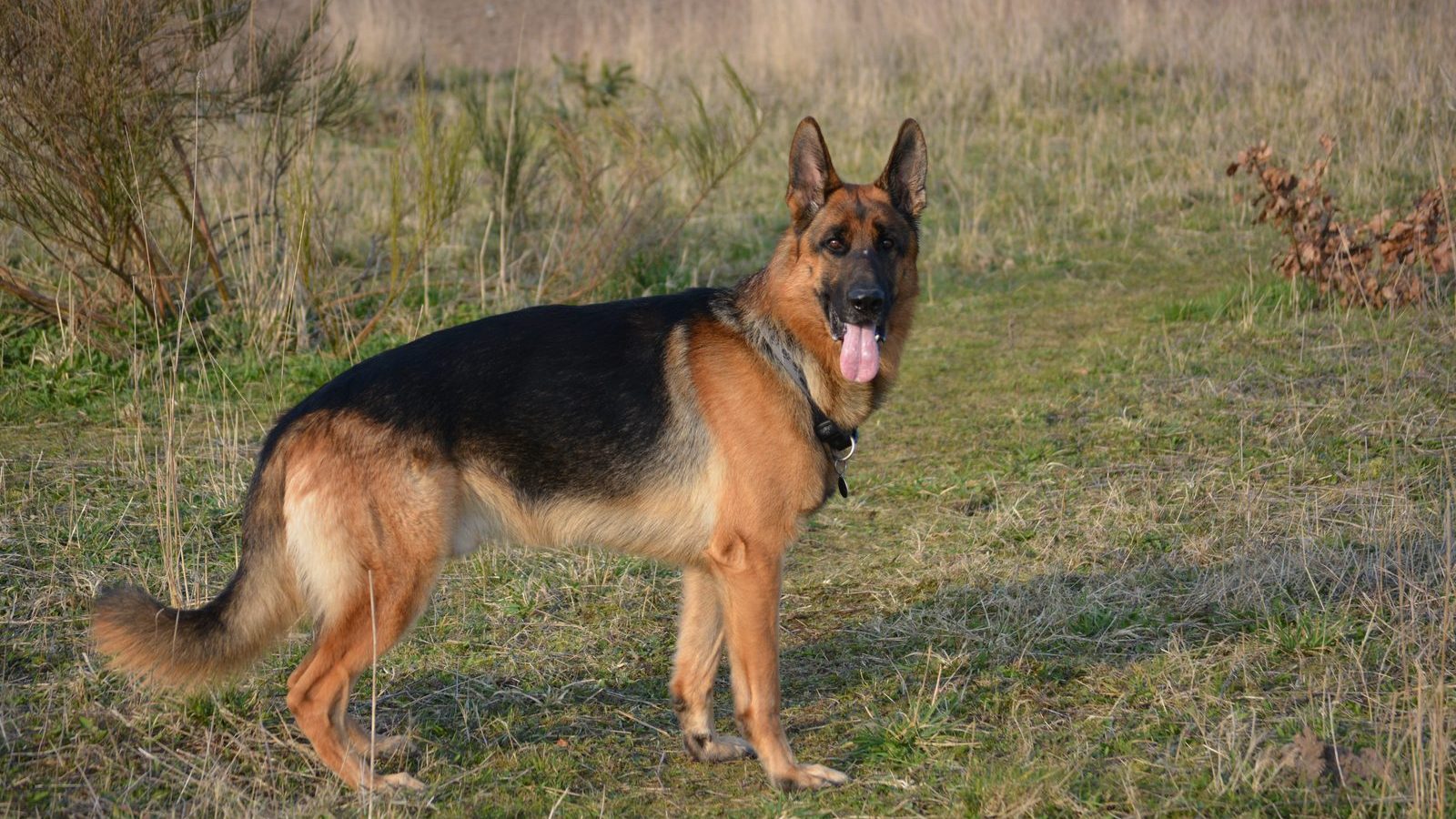
Short answer: one man, one dog, and about 130 years
The German Shepherd was created deliberately in 1899, when a German cavalry officer named Max von Stephanitz bought a working sheepdog called Hektor — renamed Horand von Grafrath — and founded a breed club around him. Everything since has come from that decision: herding to police work, two world wars, Hollywood, and a modern split between working and show lines that owners still argue about today.
Most breeds emerged slowly, over centuries, from whatever dogs happened to be useful in a particular valley. The German Shepherd did not. It was designed — on purpose, by a man with a written plan and strong opinions — and it went from nothing to one of the most recognisable dogs on earth within about fifty years.
Knowing that history is not just trivia. It explains the dog sitting in your kitchen. Why they watch everything. Why they need a job. Why “working lines” and “show lines” produce such different animals. Even why the breed’s back became such a contested subject.
This is the story: the sheepdogs before the breed existed, the officer who standardised them, the leap into police and military work, what the two world wars did to the breed’s name, the Hollywood years, the modern split in type, and where the breed appears to be heading now.
Breed histories collect myths quickly, and this one has more than most. Where accounts genuinely differ — and they do, particularly about wolf ancestry and wartime numbers — this guide says so rather than picking the most dramatic version.
Before the Breed: German Herding Dogs
For centuries, German shepherds — the people — used local herding dogs that varied enormously from region to region. A dog in Württemberg looked and worked differently from one in Thuringia. What they had in common was the job: not driving flocks aggressively, but acting as a living fence, patrolling boundaries to keep sheep out of crops.
That specific job explains a great deal about the modern dog. A boundary dog has to trot for hours without tiring, notice everything, make decisions alone at a distance from the handler, and control livestock with presence rather than force. Endurance, watchfulness, independent thinking and a strong sense of territory — all of it is still in your living room.
By the late 1800s, industrialisation was shrinking the need for herding dogs, and German dog enthusiasts began worrying that these regional working types would disappear. Several attempts were made to organise them into a standardised breed. Most fizzled out. Then a cavalry officer got involved.
The German Shepherd was not bred to guard property or confront intruders. It was bred to patrol a boundary and think for itself all day — which is exactly why a modern one barks at the postman and gets restless without a job.
Max von Stephanitz and Horand
Max von Stephanitz (1864–1936) was a former cavalry captain who had studied at veterinary college and spent years travelling German dog shows looking for the ideal working sheepdog. He was not interested in appearance for its own sake. He wanted a dog that worked.
In April 1899, at a show in Karlsruhe, he saw a dog called Hektor Linksrhein — powerful, athletic, wolf-like in appearance and, by all accounts, superbly behaved. He bought him on the spot, renamed him Horand von Grafrath, and registered him as the first dog in the studbook of a new organisation: the Verein für Deutsche Schäferhunde (SV), the German Shepherd Dog Club.
Horand was bred extensively, and his descendants — particularly through his son Hektor von Schwaben and later the enormously influential Beowulf line — form the foundation of essentially every German Shepherd alive today. The breed’s gene pool was narrow from the start, which is part of why some inherited conditions are so consistent across the breed.
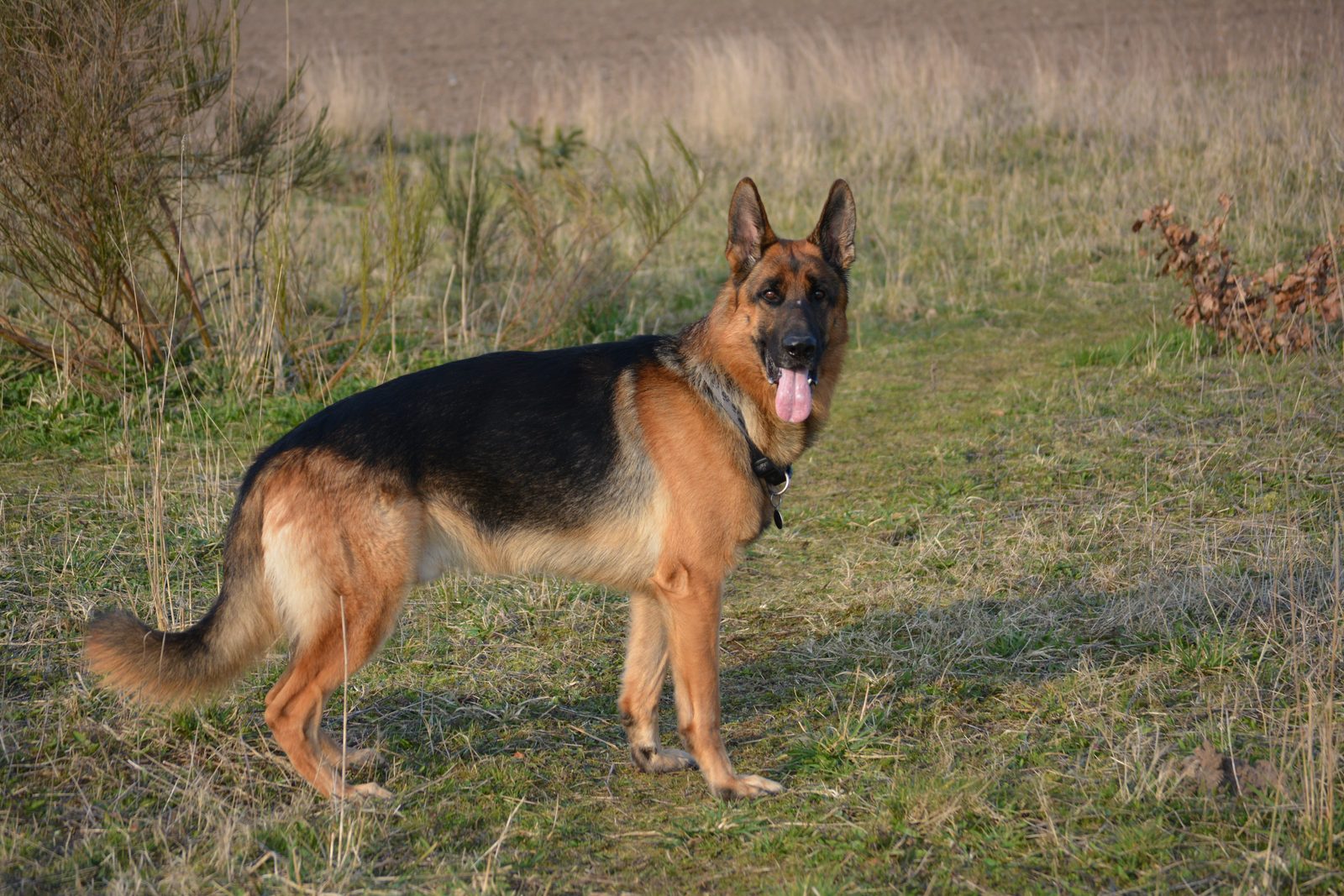
“Utility and Intelligence”: The Founding Idea
Von Stephanitz’s guiding principle is usually translated as “utility and intelligence”, and he is widely quoted as insisting that German Shepherd breeding should be working dog breeding — that a dog bred for looks alone would lose the point of the breed entirely.
He backed it with structure rather than sentiment. The SV introduced breed surveys, working qualifications and requirements that dogs prove ability before being bred from — an unusually rigorous system for the era, and one that shaped how German dog breeding still operates.
| What he selected for | Why | What you see today |
|---|---|---|
| Effortless trot | A boundary dog covers enormous distances daily | The flowing gait that judges still assess in the ring |
| Trainability | Had to take direction at a distance | One of the most trainable breeds on earth |
| Steady nerve | Livestock work is no place for a panicky dog | Confident, aloof temperament in the breed standard |
| Weatherproof coat | Outdoor work in all conditions | The double coat, and the hair all over your house |
| Willingness to work with people | A partnership, not a tool | The velcro loyalty owners either love or find overwhelming |
From Sheep to Police Work
Von Stephanitz saw early that herding work was declining, and he actively promoted the breed to German police forces and the military as an alternative career. It worked — spectacularly.
By the early 1900s German Shepherds were being trained for police duties, and within a few decades the breed had become the default choice for police, military, search and rescue and, later, guide dog work worldwide. The traits that made a good boundary dog — stamina, nose, trainability, steadiness under pressure — turned out to transfer almost perfectly.
That transition is why the breed carries the reputation it does. It also created the modern misconception that German Shepherds are naturally guard dogs. They are alert dogs by breeding and trained dogs by profession — the police work is training, not instinct. Our watchdogs vs guard dogs guide unpacks that difference properly.
The World Wars and the Name Changes
Both world wars shaped the breed twice over — once through what the dogs did, and once through what people called them afterwards.
German Shepherds served as messenger, sentry, casualty-search and supply dogs. Allied soldiers encountered them, were impressed, and took dogs home — which is largely how the breed spread to Britain and America.
Anti-German feeling made the name a problem. In Britain the breed was renamed the “Alsatian Wolf Dog”, after the Alsace region — a name that stuck for decades and left behind the persistent myth of wolf ancestry. American clubs shortened it to “Shepherd Dog” for a time.
Popularity exploded, particularly in America, helped enormously by the film industry. Rapid demand brought the usual consequence: a wave of poor breeding aimed at meeting it.
Dogs served again on all sides in messenger, detection and patrol roles. Von Stephanitz himself had died in 1936, and his relationship with the political direction of German dog breeding in that period is a genuinely uncomfortable and much-debated part of the story.
Numbers in Europe had fallen badly, and the breed rebuilt from a reduced base. The British name only officially returned to German Shepherd Dog in 1977, with “Alsatian” permitted in brackets for a further couple of decades.
Rin Tin Tin, Strongheart and Fame
Two dogs did more for the breed’s popularity than any breeder ever could.
Strongheart, a German-bred former police dog, became one of the earliest canine film stars in the early 1920s. Rin Tin Tin — famously rescued as a puppy from a bombed kennel in France by an American serviceman — became a genuine Hollywood phenomenon, appearing in dozens of films and, by some accounts, keeping Warner Bros. solvent in its early years.
The effect on demand was enormous, and it set a pattern the breed has repeated ever since: a surge in popularity, followed by a surge in careless breeding. Every subsequent wave — police dramas, films, viral videos — has done the same thing. It is one reason why choosing a breeder carefully matters so much in this breed specifically.
The Modern Split: Working vs Show Lines
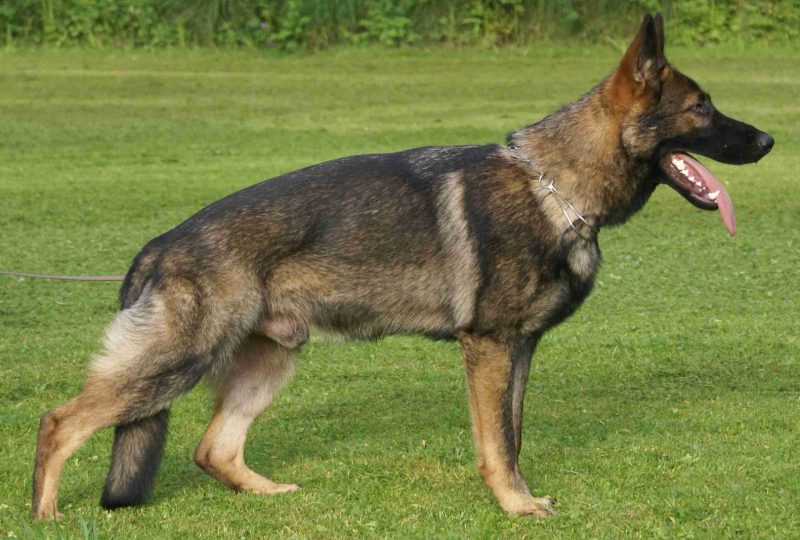
Over the second half of the twentieth century, breeding priorities diverged, and today’s German Shepherds fall into recognisable groups. Understanding which one you have — or are about to get — explains a great deal about daily life with them.
| Type | Bred for | Typically |
|---|---|---|
| German working lines | Sport, police and military work; performance first | Sable or bicolour, athletic, straighter back, high drive, needs a real job |
| German show lines | SV conformation standards plus working qualifications | Rich black-and-red saddle, more angulation, generally calmer at home |
| Czech and DDR lines | Border patrol work in the former Eastern Bloc | Dark sable, heavy bone, serious working temperament |
| American/Canadian show lines | North American conformation showing | Longer, more sloping outline, often calmer, less working drive |
| Pet lines | Often no consistent selection at all | Enormously variable — which is why health testing matters more than looks |
None of these is “the real” German Shepherd. They are the same breed, selected in different directions for a few decades. What matters practically is matching the type to your life — a high-drive working-line dog in a quiet household is the single most common mismatch owners describe. More on that in introducing the German Shepherd.
The Argument About the Back
No history of this breed is honest without it. Over decades, some show lines were bred with increasingly angled hindquarters and a more sloping topline, producing the outline many people now picture when they hear “German Shepherd”.
Critics — including vets, welfare organisations and a good many breeders — argue that the exaggeration has gone too far and is associated with movement problems. Defenders point out that the written standard has always described a functional working dog, that a correctly built dog should have a firm, straight back, and that the worst examples are not what the standard asks for.
Whichever side of the argument you find persuasive, the practical advice is identical: favour soundness over extremes, and buy from parents with hip and elbow scores. A dog who moves easily and comfortably is what von Stephanitz was selecting for in the first place — and it is what your dog needs to still be walking well at ten.
The Breed Today
The German Shepherd remains one of the most popular breeds in the world and one of the most widely used working dogs — police, military, search and rescue, detection, assistance and guide work. It is also, overwhelmingly, a family pet, which is a role von Stephanitz never really wrote about.
Two encouraging trends are worth noting. Health testing has become far more normal among serious breeders, with hip and elbow scoring and DNA testing now standard practice in many countries. And there is a visible move in parts of the breed community back towards moderate, functional dogs — which is, in a rather satisfying way, exactly where the breed started.
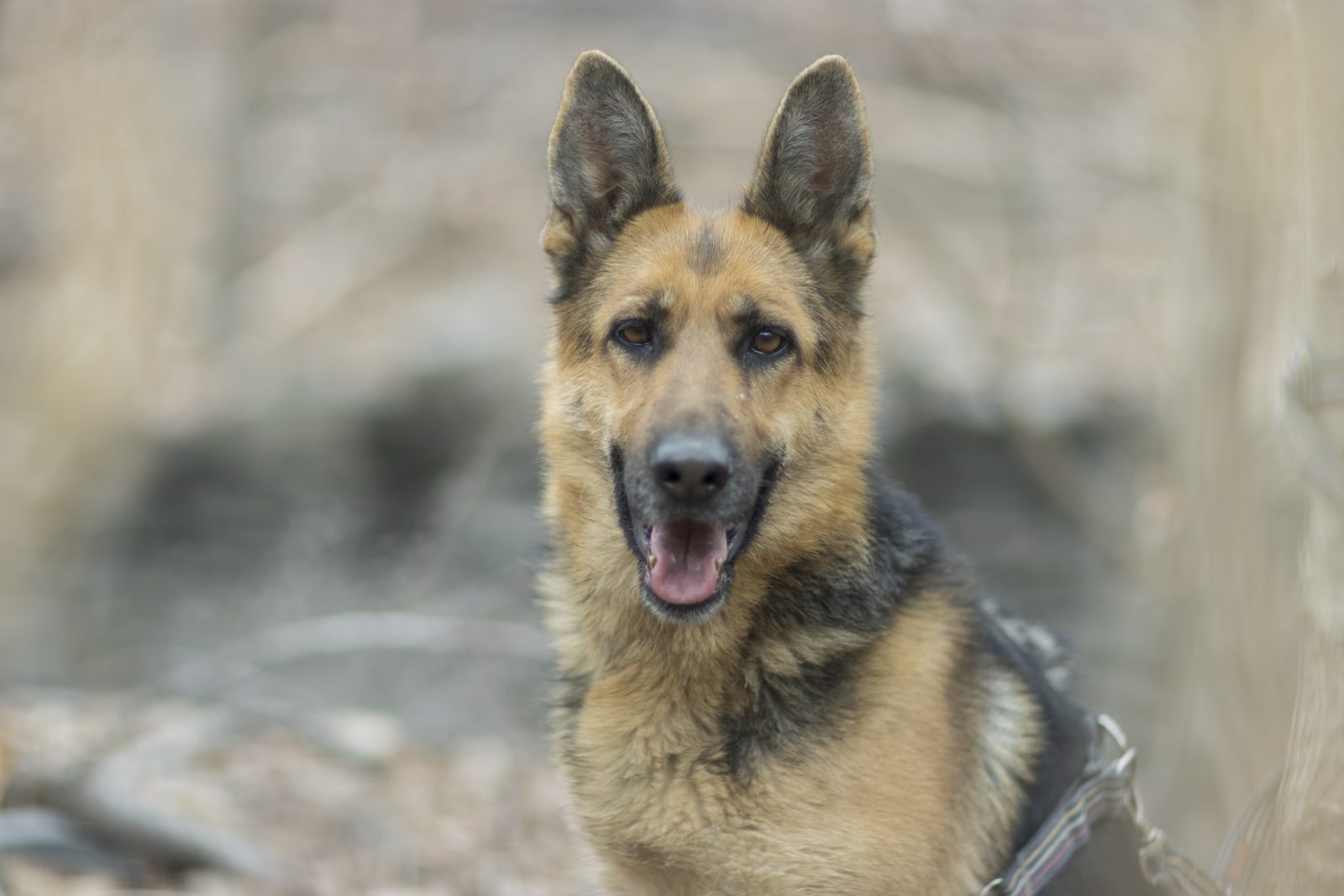
What von Stephanitz Got Right — and Missed
It is worth being even-handed about the founder, because the breed’s problems and its strengths both trace back to decisions made in those first thirty years.
What he got remarkably right was insisting that breeding should follow function. Requiring dogs to demonstrate working ability before being bred from, and building a formal breed survey system around it, was ahead of its time and is still the model many working-dog registries use. He also saw the collapse of herding work coming and found the breed a new career before the old one disappeared — an act of foresight that almost certainly saved it.
What was missed is equally clear with hindsight. The foundation gene pool was very small, and heavy use of a handful of popular sires concentrated inherited conditions that the breed still lives with. Nobody at the time had the tools to see that coming — hip scoring schemes were decades away — but the consequence is a breed where health testing matters more than in many others.
And there is an uncomfortable part of the story that honest breed histories should not skip: the SV, like most German institutions, operated under National Socialist control in the 1930s, and the breed was used politically in that period. Von Stephanitz died in 1936, and accounts of his relationship with that direction differ. Acknowledging it is simply part of telling the history properly.
The founding principle — breed for what the dog can do, not for how it looks — is still the most useful test available to anyone choosing a German Shepherd puppy today.
Reading Further
We recommend product types and the features that matter rather than sponsored placements, and we link to live Amazon results instead of quoting prices that go stale. As an Amazon Associate we may earn from qualifying purchases — at no extra cost to you.
Breed history books, including von Stephanitz’s own
If this history interested you, the founder wrote his own account — usually translated as The German Shepherd Dog in Word and Picture — and it is a genuinely revealing read. He is opinionated, occasionally infuriating, and completely clear about one thing: the breed exists to work.
- The founding philosophy in the founder’s own words
- Explains why the breed standard is written as it is
- Useful context before choosing between working and show lines
- Modern histories fill in what happened after 1936
See breed history books on Amazon →
Good to know: treat the training and health sections of any century-old book as historical interest only. Veterinary medicine and training science have both moved on enormously — use our training guide for the modern version.
| Item | Why it is worth it | Find it |
|---|---|---|
| Von Stephanitz’s book | The founding philosophy from the source | See options → |
| Modern breed histories | What happened to the breed after 1936 | See options → |
| Reward-based training books | The modern replacement for century-old methods | See options → |
| Canine body language guides | Reading the dog in front of you, whatever the pedigree | See options → |
| A good breed-appropriate crate | Because history is lovely but the puppy still arrives | See options → |
Five Myths Worth Retiring
❌ 1. “They are part wolf”
The “Alsatian Wolf Dog” name and the wolf-like appearance created this, and it has never gone away. There is no credible evidence of deliberate recent wolf crossing in the breed’s foundation — all dogs share ancestry with wolves, but German Shepherds are not more wolf than any other breed.
✅ Reality: a purpose-built herding dog that happens to look the part.❌ 2. “Alsatians and German Shepherds are different breeds”
They are the same dog. “Alsatian” was a wartime renaming in Britain that lasted until 1977.
✅ Reality: one breed, two names, a century of confusion.❌ 3. “They were bred to guard”
They were bred to herd and patrol boundaries. Protection work came later, through training, once the breed proved trainable.
✅ Reality: alert by breeding, protective by training — and those are very different things.❌ 4. “All German Shepherds have bad hips”
The breed is predisposed to hip and elbow dysplasia, which is not the same as inevitability. Scoring schemes exist precisely because responsible breeders reduced the risk substantially.
✅ Reality: buy from tested parents, keep your dog lean, and the odds shift dramatically in your favour.❌ 5. “The sloped back is how they were designed”
The founding dogs were straighter-backed working animals. The exaggerated outline is a much later show-ring development.
✅ Reality: the original ideal was a moderate, sound dog built to move efficiently all day.Von Stephanitz’s whole argument was that the breed should be judged by what it can do, not by what it looks like. A hundred and twenty-five years later, that is still the most useful thing anyone has said about German Shepherds.
Frequently Asked Questions
Who created the German Shepherd?
Max von Stephanitz, a former German cavalry officer, who founded the breed club (the SV) in 1899 after buying a working sheepdog he renamed Horand von Grafrath — the first dog registered in the breed’s studbook.
Are German Shepherds and Alsatians the same?
Yes. “Alsatian” was adopted in Britain after the First World War because of anti-German feeling. The official name returned to German Shepherd Dog in 1977, though many people still use the older term.
Are German Shepherds descended from wolves?
No more than any other domestic dog. The wolf-like appearance and the old “Alsatian Wolf Dog” name gave rise to the myth, but there is no credible evidence of deliberate wolf crossing in the breed’s foundation.
What were German Shepherds originally bred for?
Herding and, specifically, boundary patrol — acting as a living fence to keep sheep out of crops. Police, military and assistance work all came afterwards, once the breed’s trainability became obvious.
Why do working and show German Shepherds look so different?
Because breeders selected for different goals over several decades — performance and drive on one side, conformation to a show standard on the other. Both are the same breed; they are simply the product of different priorities.
Was Rin Tin Tin a real dog?
Yes. He was reportedly found as a puppy in a bombed-out kennel in France during the First World War by an American serviceman, taken to the United States, and became one of the biggest film stars of the 1920s — driving a huge surge in the breed’s popularity.
✅ The History in Twelve Lines
- Regional German herding dogs worked as living fences for centuries
- 1899: Max von Stephanitz buys Hektor, renames him Horand von Grafrath
- The SV breed club is founded the same year
- Guiding principle: “utility and intelligence” — working ability first
- Early 1900s: promoted successfully into police and military work
- WWI: messenger and casualty dogs; the breed spreads worldwide
- Britain renames it “Alsatian”; the wolf myth is born
- 1920s: Strongheart and Rin Tin Tin make it a global star
- Popularity surges bring waves of careless breeding
- 1977: the name German Shepherd Dog officially returns in the UK
- Late 20th century: working and show lines diverge
- Today: health testing is standard among good breeders, and moderate dogs are back in favour
The Bottom Line
The German Shepherd is barely older than the motor car, and every one of them traces back to a small group of German herding dogs and one officer who wrote down what a working dog ought to be.
That origin is still visible every day. The dog who patrols your garden fence, notices a car door three streets away and gets restless without something to do is not misbehaving — they are doing the job they were designed for, in a house with no sheep. Give them a modern version of that job and the whole breed makes a great deal more sense.
- Introducing the German Shepherd — what the breed is like to live with today
- Watchdogs vs guard dogs — where the protection reputation really comes from
- Where dog breeds came from — the bigger picture
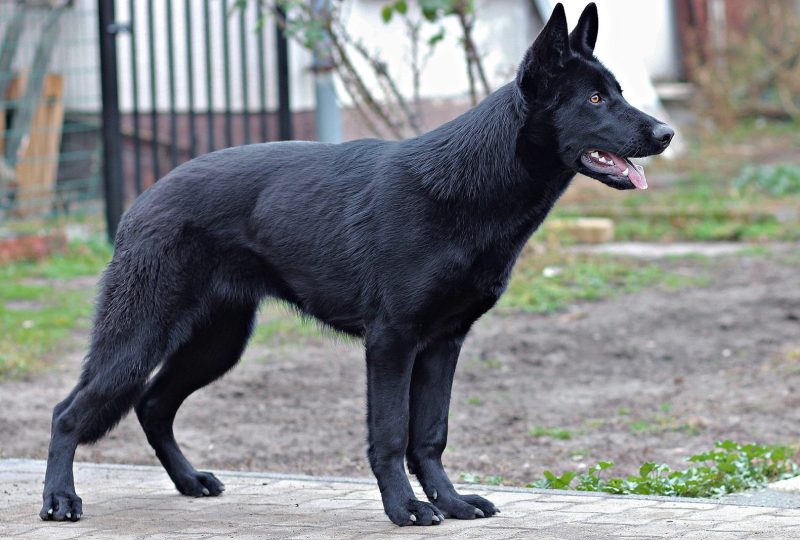
- The White Shepherd — the colour that split a breed
Recommended German Shepherd gear for this guide
Waterproof car seat cover (hammock)
Best for: Protecting back seats on trips
- Waterproof
- Side flaps
Affiliate link — we may earn a commission, at no cost to you.
Heavy-duty puzzle feeder
Best for: Mental stimulation and slow feeding
- Builds focus
- Slows fast eaters
Affiliate link — we may earn a commission, at no cost to you.
Padded training leash 6ft
Best for: Daily walking and city control
- Padded handle
- Strong hardware
Affiliate link — we may earn a commission, at no cost to you.

Keep reading
More in Lifestyle & Travel →
Best Dog Jokes and Funny Dog Stories
Eighty dog jokes and puns, German Shepherd humour only owners get, the funny stories every household recognises, jokes…
The White Shepherd: Breed, Colour Genetics and How They Differ
What causes the white coat, why white shepherds are not albino and not prone to deafness, the 1933…
The Dog Breeds Closest to Wolves (What the DNA Actually Shows)
What genetic closeness to wolves really measures, the eight breeds in the ancient cluster, why the wolf-like German…