Dog Food Labels Explained: How to Read the Ingredient List Properly
Decode any dog food bag in ninety seconds: complete vs complementary, how ingredient lists really work, what meat meal and derivatives mean, the analysis panel, and why calories are the only fair comparison.

Short answer: read the back of the bag, not the front
The front of a dog food bag is advertising. The information that matters is on the back, and it comes down to four checks: does it say “complete”, does it state a life stage, what does the ingredient list actually say, and what are the calories per 100 g? Get those four right and you can compare any two foods honestly — including ones costing wildly different amounts.
Two bags sit on the shelf. One has a wolf on it, the words “ancestral” and “biologically appropriate”, and costs three times as much as the other. The other has a picture of a happy Labrador and a list of ingredients you cannot pronounce. Both claim to be premium. You have a German Shepherd with a sensitive stomach and eleven minutes before the shop shuts.
Here is the useful truth: almost everything on the front of a bag is unregulated marketing, and almost everything on the back is legally defined. Once you know which four things to read, comparing foods takes about ninety seconds and you stop being swayed by the wolf.
This guide decodes it: the four checks, how ingredient lists really work (including the splitting trick), what “meat meal” and “derivatives” actually mean, how to read the analysis panel, why calories are the only fair comparison, and which marketing words mean nothing at all.
Labelling rules differ between regions — the EU/UK and the US use different terms and different bodies define them. The principles here apply everywhere; the exact wording on your bag may vary. When something matters medically, your vet is the person to ask.
The Four Checks That Matter
| # | Check | What you are looking for |
|---|---|---|
| 1 | “Complete” | The word complete, for dogs. If it says complementary, it cannot be the whole diet |
| 2 | Life stage | Puppy, adult, senior or all life stages — plus suitability for large breed growth if you have a puppy |
| 3 | Ingredient list | A named protein high up; how much of it there is; whether the list is padded with split ingredients |
| 4 | Calories | kcal per 100 g or per kg — the only way to compare two foods and two prices fairly |
A more expensive bag is not automatically better food. A food that is complete, appropriate for the life stage, and fed in the right amount will keep a dog healthy regardless of what the front of the bag says.
“Complete” vs “Complementary”
This is the single most important word on any dog food, and it is easy to miss because it is usually printed small.
Complete means the food is formulated to supply everything a dog needs in the stated proportions — protein, fats, vitamins, minerals, the lot. You can feed it as the whole diet indefinitely.
Complementary means it is not. Many wet pouches, toppers, mixers and “natural” meat products are complementary — perfectly good as part of a diet, nutritionally incomplete on their own. Feed a dog nothing but complementary food for months and you can create real deficiencies, which is exactly how some home-made and DIY raw diets go wrong.
Plenty of owners feed a complete kibble and then add a “premium meat” pouch that is complementary — which is fine. The problem comes when the topper gradually becomes most of the meal because the dog prefers it. If a complementary food is more than a small part of what your dog eats, ask your vet whether the balance still works.
How Ingredient Lists Really Work
Ingredients are listed in descending order by weight — but weight as they went into the mixer, which is where most of the confusion comes from.
The wet-weight trap
Fresh chicken is roughly 70% water. If a bag lists “fresh chicken” first, that chicken loses most of its weight during cooking — so by the time the kibble is in the bag, there may be considerably less chicken than the top-of-list position suggests. A food listing “chicken meal” (already dried) second may actually contain more chicken protein than one listing “fresh chicken” first. Neither is dishonest; you just have to know how to read it.
Ingredient splitting
The other trick worth spotting. If a manufacturer lists rice, rice flour, rice bran and brewer’s rice as four separate entries, each individual entry sits lower down the list than a single combined “rice” entry would. Add them together and rice may well outweigh the meat at the top. Look for the same base ingredient appearing several times in different forms.
Percentages are your friend
The most useful bags state percentages: “chicken (32%)”. That is a real number you can compare. A bag that says only “with chicken” may legally contain a surprisingly small proportion of it, and in some regions “with chicken” and “chicken flavour” have specific, very different legal minimums.
Meat Meal, Derivatives and Other Scary Words
Several terms have a bad reputation online that is only partly deserved. Here is what they actually mean.
| Term | What it means | Verdict |
|---|---|---|
| Chicken meal / lamb meal | Meat with the water and fat rendered out, so it is a concentrated protein source | ✅ Fine, and often means more actual protein than “fresh” versions |
| Meat and animal derivatives | Animal parts other than pure muscle meat — can include organ meat, which is nutritious | ⚠️ Legal and often fine, but it does not tell you the species or the quality |
| Named organ meats | Liver, heart, kidney | ✅ Genuinely nutritious and specific — a good sign |
| Cereals / grains | Rice, wheat, maize, oats | ✅ Fine for most dogs. Very few are actually grain-allergic |
| Beet pulp | Fibre source left after sugar extraction | ✅ Supports stool quality — a functional ingredient, not filler |
| EC permitted additives | Vitamins and minerals added to make the food complete | ✅ Necessary. A complete food has to add these |
| Sugars, caramel, colourings | Palatants and appearance | ❌ No nutritional purpose for a dog. Colour is for the human buying it |
| “Meat” with no species | Unspecified animal protein | ⚠️ Not dangerous, but useless if you are trying to identify an intolerance |
The practical point: named is better than unnamed, mostly because it lets you track what your dog does and does not tolerate. If your German Shepherd reacts to something and the label says “meat and animal derivatives”, you have no way of knowing what to avoid next time.
Reading the Analysis Panel
The panel of percentages — protein, fat, fibre, ash, moisture — is legally required, and it tells you less than people assume. It says how much protein is present, not how digestible or high-quality it is. Leather is high in protein.
| Line | What it means | Rough guide for an adult dog food |
|---|---|---|
| Crude protein | Total protein, quality unknown | Commonly 18–30% in dry food; higher in performance formulas |
| Crude fat / oils | Energy density — the main driver of calories | Commonly 8–20%. Higher suits working dogs, lower suits couch dogs |
| Crude fibre | Indigestible plant matter; affects stool quality | Usually 2–5%. Weight-control foods run higher |
| Crude ash / inorganic matter | Mineral content — not literal ash | Usually 5–8%. Not a quality marker despite the internet |
| Moisture | Water content | ~8–10% dry, ~75–80% wet — this is why you cannot compare the two directly |
You cannot compare the percentages directly because wet food is mostly water. Either compare calories per 100 g, or convert both to “dry matter”: divide the protein percentage by (100 − moisture) and multiply by 100. A wet food at 10% protein and 80% moisture is actually 50% protein on a dry-matter basis — which is why it looks so different on the tin.
Why Calories Are the Only Fair Comparison
This is the check almost nobody does, and it is the one that saves money.
A dense food at 400 kcal/100 g and a bulkier one at 320 kcal/100 g are not comparable per kilo, because your dog needs noticeably less of the first. The dearer bag may last a third longer and cost less per day. To compare honestly: take the price per kilo, find the kcal per 100 g, work out how many grams your dog needs daily, and calculate cost per day. That is the number that matters.
Our free feeding cost calculator does this arithmetic for you, and the feeding guide covers how much a German Shepherd actually needs at each life stage.
Marketing Words That Mean Nothing
- Complete — legally defined
- Life stage statements
- Named ingredients with percentages
- kcal per 100 g
- Feeding trials or a named nutritionist
- Batch number and a real contact address
- “Premium”, “super-premium”, “gourmet”
- “Holistic”, “ancestral”, “biologically appropriate”
- “Human grade” (varies wildly by region)
- “Natural” — largely unregulated for pet food
- “Vet recommended” with no detail of who or why
- Pictures of wolves, mountains and raw steak
One genuinely useful question, suggested by veterinary nutritionists: does the company employ a qualified nutritionist, and do they run feeding trials? Ring them and ask. The answer, and how easily you get it, tells you a great deal.
What to Look For in a German Shepherd Food
- Large-breed formulation for puppies. Controlled calcium and energy density supports steady growth — genuinely important in a breed prone to hip and elbow problems.
- Named protein source. This breed has a reputation for sensitive digestion, and you cannot identify a trigger if the label says “derivatives”.
- Sensible fat level for the actual dog. A working Shepherd needs a richer food than one who does two walks a day.
- Digestibility over drama. Beet pulp, prebiotics and a consistent recipe do more for stools than an exotic protein.
- Consistency. The best food for a sensitive-stomached German Shepherd is very often simply the one you do not keep changing.
Chronic loose stools, itching or weight loss are not label problems — they are veterinary ones. German Shepherds are over-represented for certain digestive conditions including EPI, which is diagnosed with a specific blood test and is very treatable. Cycling through six brands delays that diagnosis by months.
Comparing Two Bags in 90 Seconds
Turn both bags around
Ignore the front entirely. Find the small print: composition, analytical constituents, feeding guide, and the “complete” statement.
Why it works: everything comparable is on the back. The front is designed to make you stop comparing.
Check complete + life stage
If either bag is complementary, or is not suitable for your dog’s life stage, the comparison ends there.
Why it works: it eliminates the genuinely unsuitable options in ten seconds.
Read the first five ingredients
Look for a named protein, a percentage if you are lucky, and any sign of splitting — the same grain appearing three times in different forms.
Why it works: the first five ingredients are the bulk of the food. The rest is mostly vitamins, minerals and small additions.
Find the calories and do the daily maths
kcal per 100 g, the recommended grams per day for your dog’s weight, and the price per kilo. Cost per day is the honest comparison.
Why it works: it regularly reverses which bag looks cheaper — and it is the number your bank account actually experiences.
Kit That Makes Label-Reading Useful
We recommend product types and the features that matter rather than sponsored placements, and we link to live Amazon results instead of quoting prices that go stale. As an Amazon Associate we may earn from qualifying purchases — at no extra cost to you.
Digital kitchen scales and an airtight food container
Reading the label properly only pays off if you then feed the right amount, and a scoop is not a measurement. A cheap set of digital scales turns the calories-per-100 g figure into an actual daily portion — and an airtight container stops the fats in a big sack going stale and the kibble losing the palatability you paid for.
- Turns the label’s kcal figure into a portion you can actually serve
- Removes the single most common cause of a slowly expanding dog
- An airtight container keeps food fresher and out of reach of a determined nose
- Store the food in its original bag inside the bin — batch codes matter if there is ever a recall
See storage and scales on Amazon →
Good to know: keeping the original bag inside the container preserves the batch number, best-before date and the composition panel — all three matter if your dog reacts to something or a product is recalled.
| Item | What to look for | Find it |
|---|---|---|
| Digital kitchen scales | Any cheap set with a tare button | See options → |
| Airtight food container | Holds a full sack, proper seal, wheels help | See options → |
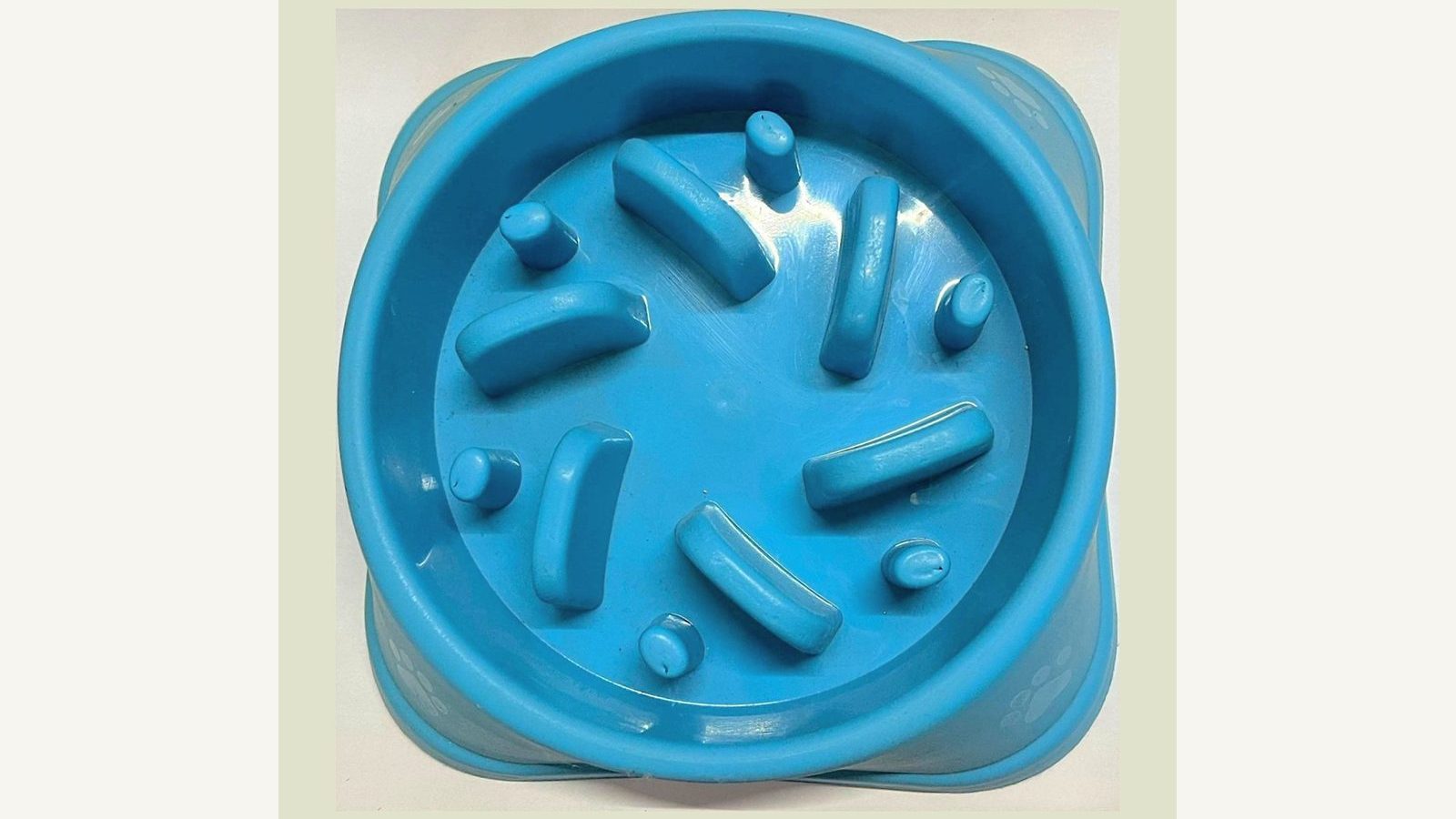
| Slow feeder bowl | Large maze, non-slip base — for fast eaters | See options → |
| Stainless steel bowls | Dishwasher safe, heavy base or rubber ring | See options → |
| Portion scoop set | Only useful after you have weighed once and marked it | See options → |
7 Mistakes (and the Fix for Each)
❌ 1. Buying on the front of the bag
Wolves, mountains and the word “ancestral” tell you about the marketing department, not the food.
✅ Fix: turn it around and run the four checks. Ninety seconds, every time.❌ 2. Assuming expensive means better
Price reflects ingredients, marketing and packaging. Some mid-priced foods are formulated by qualified nutritionists and backed by feeding trials; some very expensive ones are not.
✅ Fix: ask whether the company employs a nutritionist and runs feeding trials, and compare cost per day.❌ 3. Fearing grains by default
Grain-free became a marketing position rather than a nutritional one. Genuine grain allergies are uncommon; beef, dairy and chicken are more frequent triggers.
✅ Fix: if your dog does well on a food with grains, keep feeding it. Discuss any suspected allergy with your vet.❌ 4. Missing “complementary”
A dog fed mainly on toppers and pouches can end up short of things you would never notice for months.
✅ Fix: the base of the diet must say complete. Everything else is a garnish.❌ 5. Comparing wet and dry percentages directly
A tin at 10% protein looks poor next to kibble at 26% — until you account for 80% water.
✅ Fix: compare calories, or convert to dry matter before judging.❌ 6. Following the bag’s feeding guide exactly
Those figures are averages for an average dog, and they are usually generous.
✅ Fix: start there, then adjust by body condition — ribs easily felt, waist visible from above.❌ 7. Changing food every few weeks
Chasing perfect stools by switching brands is one of the main causes of unsettled stools.
✅ Fix: one good food, transitioned over 7–10 days, given six weeks before you judge it.📸 Photograph the label
Keep a photo of the composition panel on your phone. Invaluable at the vet and when a recipe quietly changes.
🔢 Work in cost per day
Not per bag, not per kilo. It regularly reverses which food is actually cheaper.
☎️ Ring the manufacturer
Ask who formulates their food and whether they run feeding trials. The answer is genuinely revealing.
📦 Check the recipe hasn’t changed
Manufacturers reformulate quietly. If stools change on a new bag, compare the label to your photo.
Frequently Asked Questions
What should be the first ingredient in dog food?
Ideally a named protein — “chicken”, “lamb”, “salmon” — rather than an unnamed “meat and animal derivatives”. Remember the wet-weight effect though: “fresh chicken” first can mean less actual chicken than “chicken meal” second, because fresh meat is mostly water before cooking.
Is grain-free better for German Shepherds?
Not as a rule. Very few dogs are grain-allergic, and there has been ongoing veterinary investigation into a possible association between some grain-free diets and heart disease in dogs. If your dog does well on a food containing grains, there is no reason to switch — and if you suspect a food allergy, get it investigated properly.
What does “meat and animal derivatives” actually mean?
Animal parts other than pure muscle meat, which can include nutritious organ meat. It is legal and often perfectly fine — the drawback is that it does not tell you the species, so you cannot track what your dog does or does not tolerate.
How do I compare a wet food to a dry food?
Use calories per 100 g, or convert both to a dry-matter basis by dividing each percentage by (100 − moisture) and multiplying by 100. Comparing the printed percentages directly will always make wet food look far worse than it is.
Does a higher protein percentage mean better food?
Not on its own. The panel shows quantity, not quality or digestibility. A moderate protein level from good, digestible sources beats a high number from poor ones — and very high protein is not automatically desirable for an average pet dog.
How much should I feed based on the label?
Treat the feeding guide as a starting point for your dog’s ideal weight, then adjust by 10% at a time based on body condition. Bag guidelines are averages, and an average German Shepherd does not exist.
✅ Your Label-Reading Checklist
- Bag says “complete” for dogs
- States the right life stage — large-breed growth for puppies
- A named protein high in the ingredient list
- Percentages given where possible
- No obvious ingredient splitting of the same grain
- No added sugars or colourings
- kcal per 100 g found and noted
- Cost per day calculated, not cost per bag
- Manufacturer employs a nutritionist / runs feeding trials
- Toppers and mixers checked for “complementary”
- Photo of the composition panel saved on your phone
- New food transitioned over 7–10 days
The Bottom Line
Dog food marketing is designed to make you stop thinking and start feeling. The antidote is ninety seconds on the back of the bag: is it complete, is it right for this life stage, what does the ingredient list really say, and what does it cost per day?
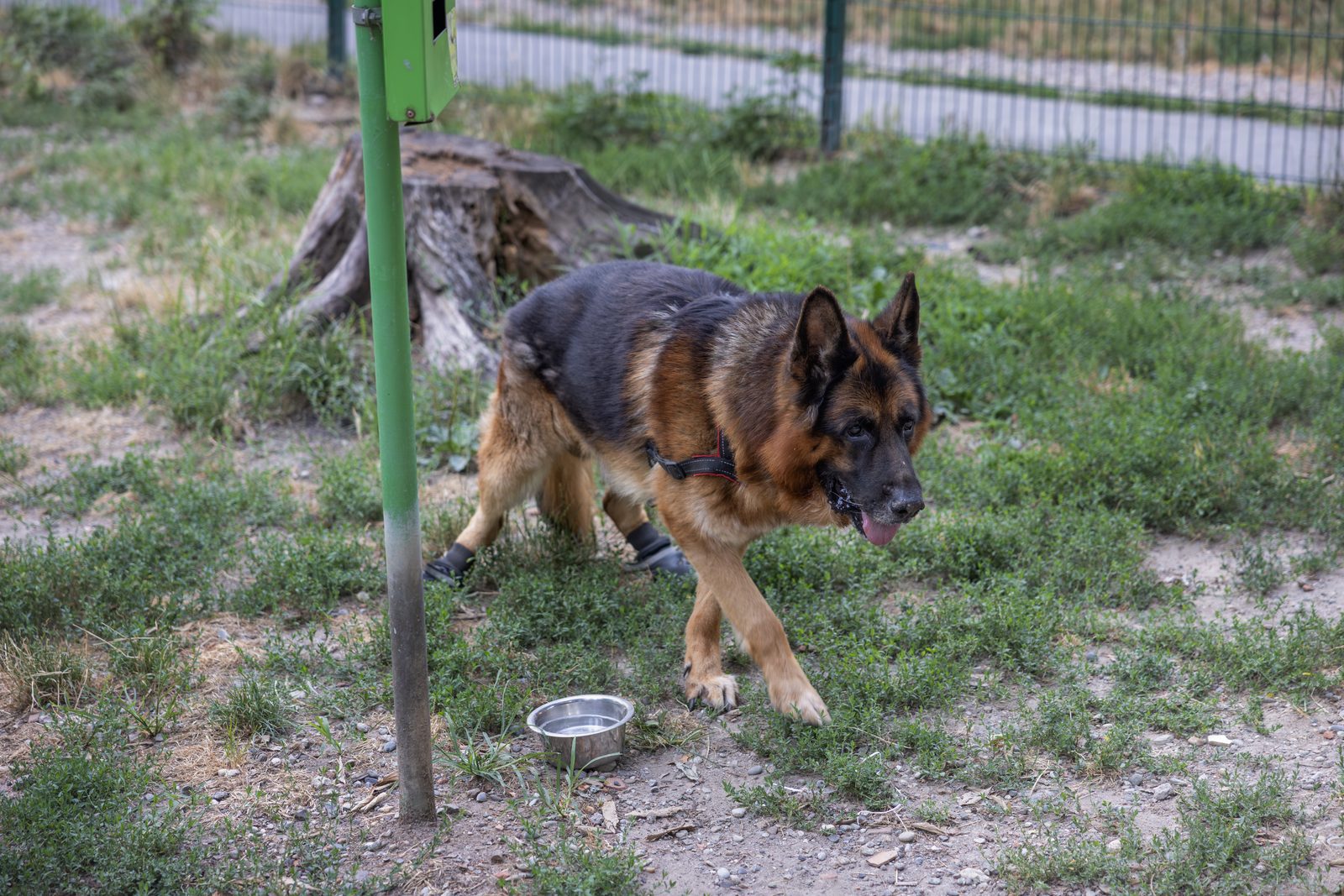
Run those four checks and you can walk past the wolf on the front with a clear head. Then weigh the portions, keep your German Shepherd lean, and stop changing brands every time a stool is slightly soft — which, between them, will do more for your dog’s health than any ingredient on any label.
- German Shepherd feeding guide — how much to feed at every life stage
- Food for your German Shepherd — choosing and switching without drama
- Raw diets for dogs — the honest version, risks included
- Free feeding cost calculator — your real cost per day
Recommended German Shepherd gear for this guide
Slow feeder bowl
Best for: Slowing fast eaters and enrichment
- Slows gulping
- Dishwasher safe options
Affiliate link — we may earn a commission, at no cost to you.
Airtight food storage container
Best for: Keeping kibble fresh
- Airtight seal
- Wheels on large sizes
Affiliate link — we may earn a commission, at no cost to you.
Low-calorie training treats
Best for: High-frequency reward training
- Soft, easy to break
- Quick consumption
Affiliate link — we may earn a commission, at no cost to you.

Keep reading
More in Feeding & Nutrition →
Food for Your German Shepherd: Choosing, Switching and Feeding Well
How to choose a food for a German Shepherd, the food types compared honestly, the four signs a…
Raw Diets for Dogs: Honest Facts, Real Risks and Practical Tips
A balanced guide to raw feeding: the four types of raw diet, which claimed benefits hold up, the…
German Shepherd Feeding Guide (Puppy, Adult, Senior)
How owners think about feeding a German Shepherd at every life stage — without prescribing calories or pushing…