How to Stop a German Shepherd Puppy From Biting (Calm, Step-by-Step Guide)
German Shepherd puppy biting is normal teething and play behaviour, not aggression. Here is the calm 5-step routine that stops the land shark phase, the chew toys that actually help, and exactly when it ends.

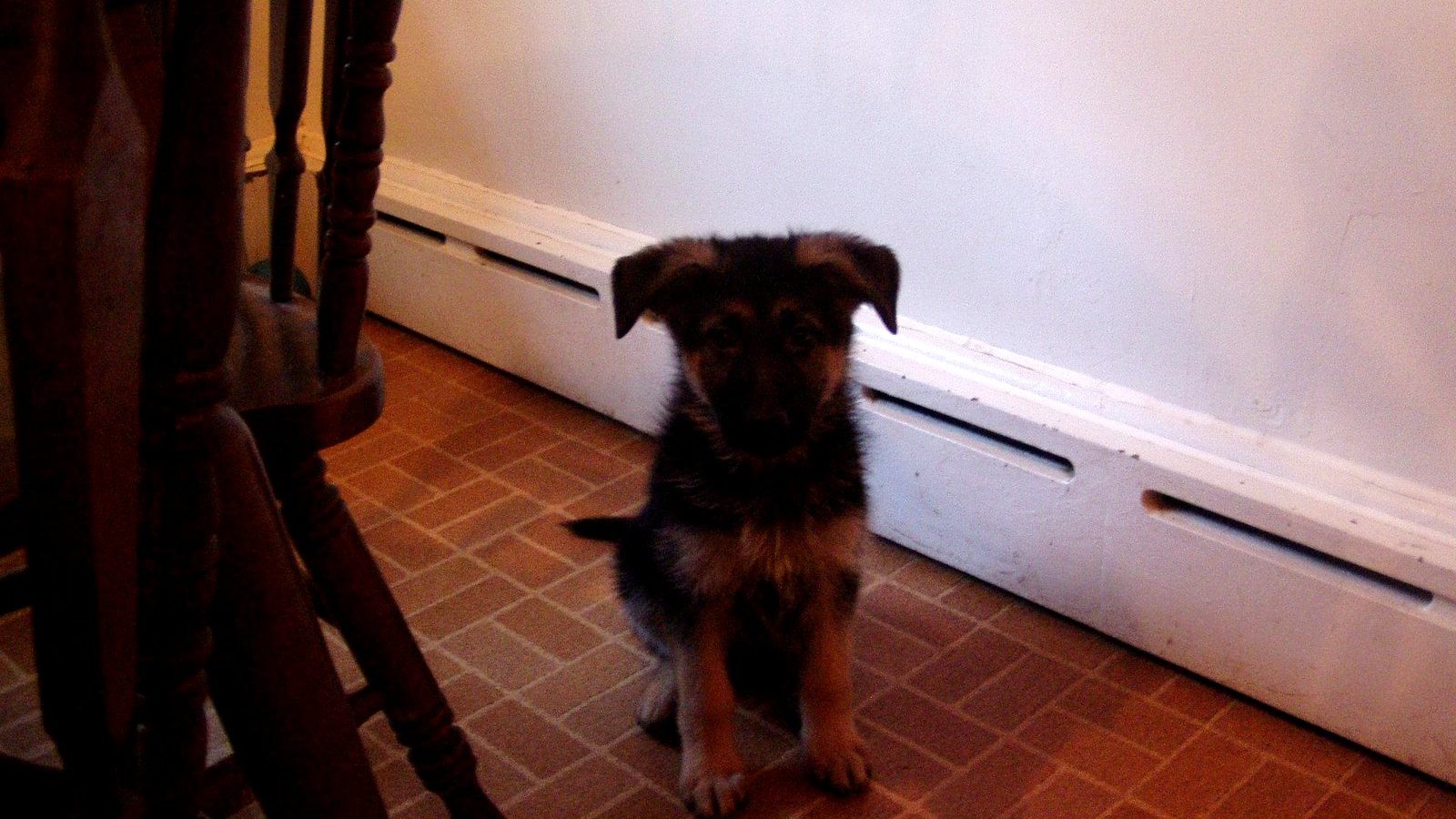
Short answer: your German Shepherd puppy is not aggressive
German Shepherd puppy biting is normal teething and play behaviour — not a warning sign. You fix it by giving the mouth a legal job, ending games the second teeth touch skin, and protecting sleep. Most puppies bite hardest between 8 and 16 weeks, and settle a lot once the adult teeth are in at around 6 to 7 months.
Let’s be honest about what is happening in your living room right now. You brought home a fluffy German Shepherd puppy. Two days later, your hands look like you lost a fight with a rose bush. Your sleeves have holes. Your kids are half in love and half terrified. And somewhere in the back of your head sits the scary question: “Is my puppy aggressive?”
Take a breath. Almost every German Shepherd owner goes through this. The biting stage even has a nickname among owners — the land shark phase. It feels personal, but it isn’t. Your puppy is using the only tool they have to explore the world, relieve sore gums, and invite you to play.
This guide is written the way one German Shepherd owner would explain it to another over a cup of tea. No jargon. No harsh methods. Just the routine that actually works, in plain English, step by step. By the end you will know why your puppy bites, when it stops, the five-step method to calm it down, the exact chew toys that redirect those needle teeth, the mistakes that make biting worse, and a 14-day plan you can start today.
New owners of German Shepherd puppies aged 7 weeks to 7 months — especially families with kids, first-time GSD owners, and anyone whose puppy bites hands, ankles, or clothes. Everything here uses positive, reward-based training. No scruffing, no muzzle grabbing, no shouting.
Why German Shepherd Puppies Bite So Much
Before you can fix biting, it helps to know what is driving it. A German Shepherd puppy usually bites for five reasons, and they often stack on top of each other in the same afternoon. Once you can spot which one you are dealing with, the right response becomes obvious.
1. Their mouth is their hands
Puppies have no fingers. If they want to know what something is — your sock, the rug, your wrist — they put it in their mouth. This is exploration, not attack. It looks rude to us because our skin is soft and their teeth are sharp as pins.
2. Teething hurts
Puppy teeth start falling out around 3 to 4 months, and adult teeth push through until roughly 6 to 7 months. Sore gums feel better with pressure, so your puppy chews harder and more often during this window. You may even find tiny teeth on the floor or notice a little blood on a chew toy. That part is normal.
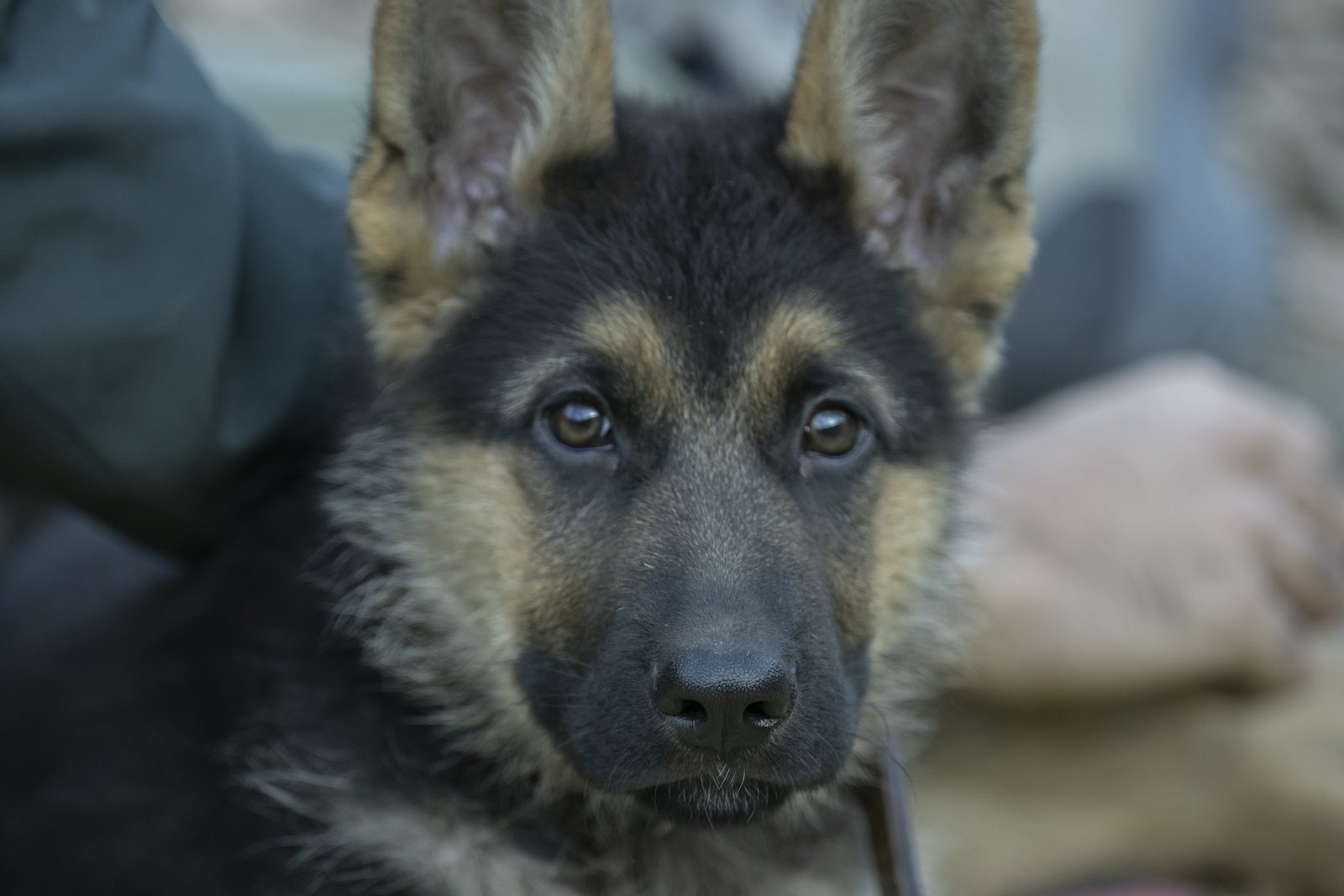
3. Herding genes are switched on
German Shepherds were bred to move livestock. Movement grabs their attention and the mouth follows. That is exactly why your puppy targets running children, swinging trouser legs, flapping dressing gowns and bare ankles — all of which move fast and unpredictably. It is not naughtiness. It is a working breed doing what the genes tell it to do, in a house with no sheep.
4. Play is how puppies learn
In the litter, puppies wrestle and bite each other. When a bite is too hard, the other puppy yelps and play stops. That feedback loop teaches bite inhibition — how to use the mouth gently. Your puppy left the litter early in that lesson, so now you are the teacher. The good news: the lesson is simple, and puppies learn it fast when we are consistent.
5. They are overtired (this is the big one)
Here is the fact most new owners never hear: puppies need roughly 18–20 hours of sleep a day. An overtired puppy does not get sleepy and quiet. It gets wild, grabby and loud — exactly like an overtired toddler. If your puppy turns into a piranha every evening around the same time, you are almost certainly looking at a sleep problem, not a training problem.
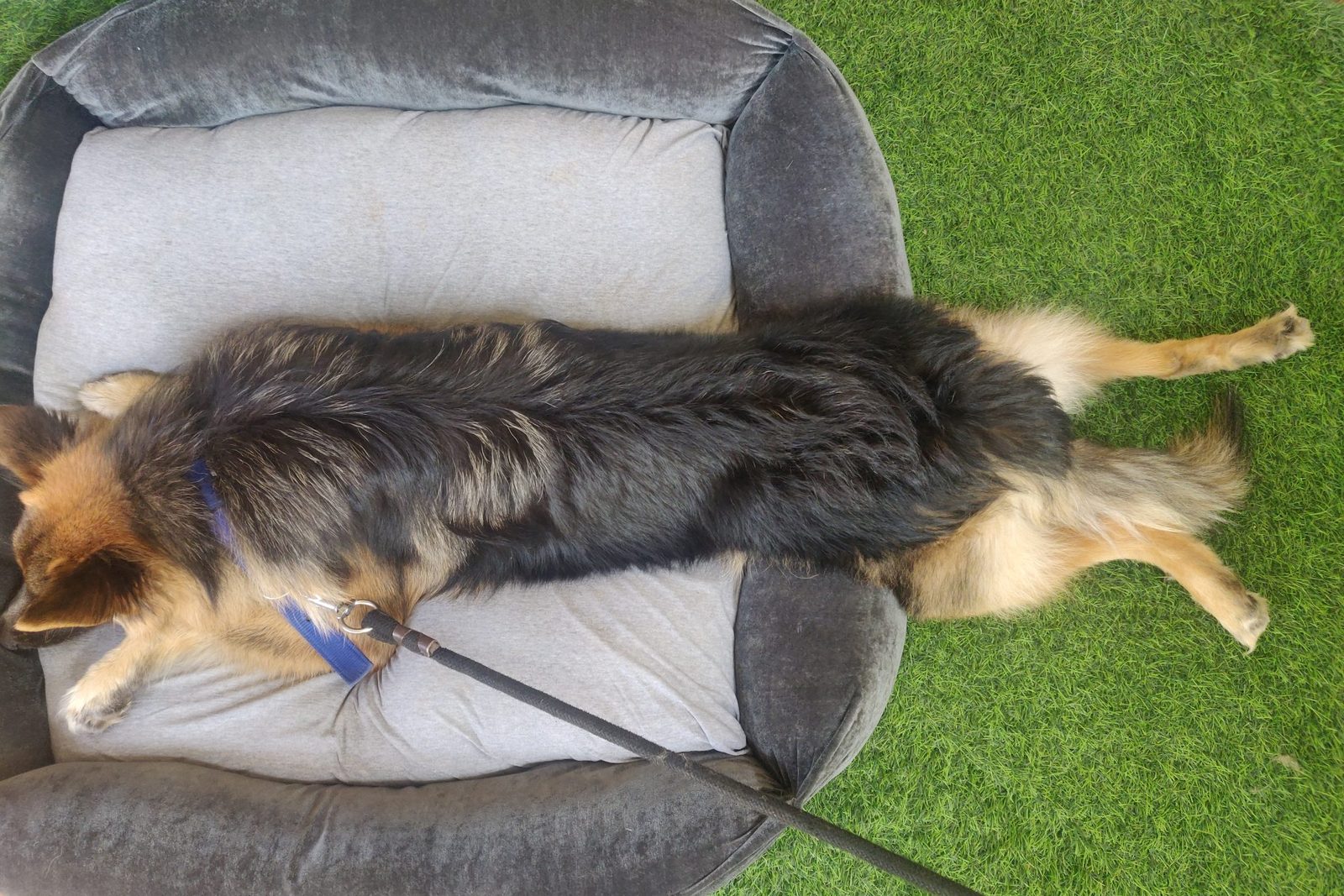
If the biting explodes at the same time every day, stop training and start counting naps. Nine times out of ten, the “bad” puppy is just a knackered one.
Ask yourself three questions when the teeth come out: Has my puppy slept in the last 90 minutes? Has the mouth had a proper chew today? Am I moving in a way that looks like a game? The answer usually tells you what to fix.
When Do German Shepherd Puppies Stop Biting?
This is the question every tired owner types into Google at 11pm. Here is the honest answer: biting fades gradually, not overnight. Most German Shepherd puppies bite hardest from 8 to 16 weeks. Things ease as the adult teeth settle at around 6 to 7 months. Light mouthing during excitement can linger to about a year, especially in high-drive working lines.
What changes the timeline is not luck — it is practice. A puppy who gets 20 chances a day to chew the right things learns faster than a puppy who is told off 20 times a day for chewing the wrong things. Use this table to see where you are and what to focus on right now.
| Puppy age | What biting looks like | Your main job | Realistic goal |
|---|---|---|---|
| 7–10 weeks | Constant soft mouthing. Grabs hands, hair, sleeves. No control at all. | Protect naps. Redirect every single time. Never punish. | Puppy learns hands are boring, toys are fun. |
| 10–16 weeks 🦈 | Peak “land shark”. Harder bites, jumping, grabbing trousers, evening zoomies. | Manage energy, use tethers and pens, end games early. | Fewer bites per hour; puppy pauses when you stop moving. |
| 4–6 months | Teething chewing. Seeks pressure. Bites are softer but the dog is bigger. | Frozen chews, dental chews, structured training reps. | Puppy goes to a chew toy on their own. |
| 6–9 months | Occasional mouthing when excited or overstimulated. | Impulse-control games, calm greetings, steady routine. | Mouthing only in play, and it stops on cue. |
| 9–12 months | Rare. Usually tug that gets too keen, or overexcitement with guests. | Clear rules for tug and greetings. | Adult manners with a soft mouth. |
Normal puppy biting is loose, wiggly and playful — bouncy body, wagging tail, back for more. What is not normal: a stiff body, a hard stare, a low growl over food or a resting spot, or biting that leaves deep puncture wounds. That is a different conversation, and it belongs with a certified positive-reinforcement trainer. See when to call for help below.
The 5-Step Method That Calms the Biting
This is the core of the guide. Five steps, in order of impact. Do not cherry-pick step four and skip step three — the magic is in the combination. Most owners see a real difference within 7 to 14 days of doing all five consistently.
Give the mouth a legal job (the 2-second swap)
Every time teeth touch skin, calmly slide a chew toy into that mouth within about two seconds. Not after a lecture. Not after you pull your hand away and squeal. Straight away, so the puppy learns: “the fun thing to bite is this, not that.”
How to do it: keep toys in every room — a basket by the sofa, one by the back door, one where you make coffee. If you have to walk across the house to find a toy, the moment is gone. Rotate three or four toys out each week so they stay interesting.
Why it works: you are not asking the puppy to stop being a puppy. You are moving the behaviour to a target you approve of, which is far easier for a young brain than “do nothing at all”.
End the game the instant it hurts
This is how puppies teach each other. When a bite is too hard, the fun stops. You copy that. Teeth on skin means: say nothing, stand up, fold your arms, and be boring for 10–20 seconds. Then carry on as normal.
Some owners use a soft “ouch” or “oops” first. That is fine — but keep it calm. A loud, high squeal often excites a German Shepherd puppy and makes the biting worse. If your puppy ramps up when you yelp, drop the sound and just leave.
The bit people get wrong: consistency beats intensity. Twenty calm exits teach far more than one dramatic telling-off. Everyone in the house has to do the same thing, including the kids.
Fix the sleep before you fix anything else
If your puppy is awake for hours at a time, no training on earth will hold. Aim for a nap after every 60–90 minutes of being awake. Many owners set a phone timer for the first two weeks — it feels silly and it works.
Use a crate, a pen, or a quiet room with a chew. Cover the crate lightly to dim the light. If your puppy fights the nap and screams, that is normal at first; a calm routine and a long-lasting chew make it easier. Our step-by-step crate training guide for German Shepherd puppies walks through the whole 14-day process.
Real talk: the classic “evil hour” between 5pm and 8pm is almost always missed sleep. Move a nap into the late afternoon and watch the evening change.
Pay for the behaviour you actually want
Puppies repeat what pays. If the only time your puppy gets attention is when teeth land, biting becomes a very effective way to start a conversation with you. Flip it around.
- Four paws on the floor — drop a treat between the front feet when all four are down.
- Chewing a toy — quietly praise while the toy is in the mouth. Do not interrupt a good choice.
- Hand target — teach a nose-to-palm touch. It gives the puppy something polite to do with your hand.
- Settle on a mat — reward lying down near you, not on you.
Use small, soft treats so you can do 15–20 quick reps without filling your puppy up. If you want a ready-made structure, the free Training Plan Generator builds a day-by-day plan for the first weeks.
Manage the room so mistakes cannot happen
Training teaches the future. Management protects today. Both matter.
- Use a puppy pen or baby gate when you cannot supervise — that is 80% of chewing problems solved.
- Keep a light house line (a short leash on a harness, indoors, supervised only) so you can guide instead of grabbing.
- Teach children to stand still like a tree instead of running and screaming.
- Feed part of the daily food from a stuffed toy so chewing has a built-in outlet.
Why it works: every bite that never happens is a habit that never forms. Management is not cheating — it is the fastest, kindest shortcut you have.
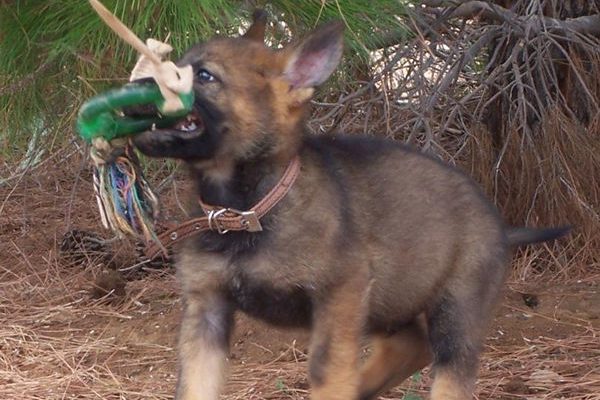
When your puppy is spiralling: 1) stop talking, 2) scatter 10 pieces of kibble on the floor or a snuffle mat, 3) when the sniffing is done, guide them to a crate or pen with a frozen chew. Sniffing lowers arousal fast, and the chew turns the switch off. Total time: three minutes.
Chew Toys and Gear That Do the Heavy Lifting
You cannot train a sore mouth into being comfortable. You can only give it something better to work on. That is why the right chew toys are not a luxury during the biting stage — they are the tool that makes step one of the method possible.
What you want for a German Shepherd puppy is simple: tough enough to survive strong jaws, soft enough for baby teeth, and stuffable so you can freeze it. Frozen is the secret word here. Cold soothes swollen gums the same way a teething ring helps a baby, and a frozen stuffed toy buys you 20–40 minutes of quiet.
We only suggest gear that suits a large, strong, double-coated working breed. We do not invent prices or star ratings — check the current details on Amazon before you buy. As an Amazon Associate, GermanShepherdPlace.com may earn from qualifying purchases at no extra cost to you.
KONG Classic Stuffable Dog Toy — Natural Rubber Chew (Large)
The one toy most German Shepherd owners keep buying again. Hollow inside, so you can stuff it with your puppy’s own food, freeze it, and turn a biting session into a nap.
- Turns chewing into calm. Stuff with soaked kibble or plain yoghurt, freeze overnight, hand it over when the shark appears.
- Built for real jaws. The red rubber formula is made for average chewers and bounces unpredictably, so it stays interesting.
- Solves more than biting. KONG lists it for teething, boredom, crate training, digging and barking — the whole puppy starter-pack of problems.
- Grows with your dog. Move up a size as your Shepherd matures instead of rebuying a whole toy box.
- Easy to keep clean. Straight in the dishwasher, which matters when you are stuffing it daily.
Good to know: KONG also makes a softer Puppy version for baby teeth. Many owners use the puppy version under 6 months, then keep the red Classic for life. Always check the size guide against your dog’s weight, and bin any toy that starts to tear.
One toy is rarely enough. Puppies get bored, and different jobs need different textures. Here is the small kit that covers a German Shepherd puppy’s whole biting stage without filling your house with plastic.
| Product | What it is for | Best for | Why it works | Link |
|---|---|---|---|---|
| KONG Classic (Large) | Stuff-and-freeze chew | Nap time, crate time, the 5pm meltdown | Cold soothes gums; the food inside keeps the mouth busy for ages | View |
| Benebone Puppy 2-Pack (Dental Chew & Wishbone) | Softer dental chew, bacon flavour | Puppies with fresh baby teeth | Designed to be gentle on emerging teeth, so they chew it instead of you | View |
| N-Bone Puppy Teething Rings | Edible teething ring | The worst teething days (3–5 months) | Chewable and digestible, so heavy chewers get relief without wrecking a toy | View |
| Wellness Soft Puppy Bites | Soft training treats with DHA | Rewarding calm behaviour, 20 reps a day | Small and soft, so you can pay for good choices fast without overfeeding | View |
| KONG Tug Toy | Two-handled rubber tug | Redirecting rough play into a game with rules | Puts distance between teeth and hands, and gives the herding brain a real outlet | View |
Always supervise a new chew. Match the size to your dog, not their age — Shepherds grow fast. Throw away anything cracked or small enough to swallow. Skip cooked bones and very hard items that do not give at all. If you are unsure whether a chew suits your puppy’s teeth or tummy, ask your vet first.
Want the full kit for the first three months? Our German Shepherd puppy supplies guide lists everything worth buying (and what to skip), and the best toys for German Shepherds page covers heavy-chewer options for when your puppy grows into a teenager.
Biting Kids, Ankles, Clothes and Hands
General advice is fine, but biting shows up in very specific moments. Here is what to do in the four situations that drive owners mad.
In every situation below the pattern is the same: make the human boring, and make the toy interesting. Change what your puppy is chasing before you try to change your puppy.
When your puppy bites the kids
Children move fast, squeal, and flap their arms — which is basically a flashing “chase me” sign to a herding puppy. The fix is mostly about the humans.
- Teach kids to stand still like a tree and fold their arms if the puppy grabs. Boring humans end the game.
- Give children a tug toy or a long soft toy so there is always something between hands and teeth.
- Use a baby gate at busy times such as homework, dinner and the after-school rush.
- Never let a child be the one to “tell the puppy off”. Adults handle the exits; kids handle the fun.
When your puppy bites ankles and trousers
Classic herding behaviour. Walking away fast usually makes it worse, because moving legs are the trigger.
- Stop walking. Stand completely still. Movement is the reward, so remove it.
- Wait for the puppy to let go — they almost always do within a few seconds when nothing happens.
- Drop a toy or a couple of treats on the floor and carry on walking calmly.
- If it happens on every trip to the kitchen, carry a toy in your pocket during that time of day.
When your puppy bites hands during cuddles
Petting on top of the head and around the face invites mouthing. Try stroking along the chest or shoulder instead, in slow strokes, and pause every few seconds. If the mouth comes on, the hands go away. Many puppies are also asking for a nap at this point, not more fuss.
When your puppy grabs the lead on walks
Lead-biting usually means over-excitement or frustration. Keep first walks short, take a toy for the puppy to carry, and stop moving whenever the lead goes in the mouth. It also helps to practise calm walking at home first — our guide on loose-leash walking with a German Shepherd covers the pattern step by step.
7 Common Mistakes (and the Fix for Each)
Most biting problems that “won’t go away” are being fed by accident. See if any of these look familiar — there is no shame in it, nearly everyone does at least two.
❌ 1. Pulling your hand away fast
A hand that whips away looks exactly like prey. It sharpens the grab and makes the next bite quicker.
✅ Fix: go still, then slowly slide your hand out while offering a toy with the other hand.❌ 2. Shouting, scruffing or holding the muzzle
These break trust and often make biting worse, because a scared puppy gets more frantic, not calmer. They can also teach a dog that hands near the face are threatening.
✅ Fix: remove the fun instead of adding fear. Stand up, be boring, reset in 20 seconds.❌ 3. Playing rough with bare hands
Wrestling teaches your puppy that human skin is a toy. It is fun at 9kg and frightening at 35kg.
✅ Fix: always put an object between you — tug, ball, long toy. Same energy, better lesson.❌ 4. Trying to tire the puppy out with more exercise
Long walks and endless fetch build stamina and wind a young dog up. Forced repetition also stresses growing joints.
✅ Fix: swap some walking for sniffing, chewing and short training bursts. See how much exercise a German Shepherd really needs.❌ 5. Only reacting when things go wrong
If attention only arrives after teeth, biting becomes your puppy’s doorbell.
✅ Fix: feed treats for calm, quiet moments — especially when the puppy chooses a toy without being asked.❌ 6. Everyone in the house doing something different
One person leaves the room, one shouts, one keeps wrestling. The puppy learns nothing except that people are confusing.
✅ Fix: agree one rule and stick it on the fridge: “Teeth on skin = game over, toy offered.”❌ 7. Expecting it to be finished by 4 months
Unrealistic timelines make owners feel like failures and lead to harsher methods.
✅ Fix: measure progress in softer, shorter, fewer bites — not zero bites. Zero comes later, on its own.Pro Tips From Experienced German Shepherd Owners
These are the small habits that separate a stressful month from a manageable one. None of them take extra time — they just replace something you are already doing.
🧊 Keep a “shark drawer” in the freezer
Stuff three toys at once and freeze them. A frozen chew ready to grab is the difference between fixing a moment and losing an hour.
⏱️ Set a nap timer for 90 minutes
Do not wait for signs of tiredness — by then you are already in the storm. Nap first, play second.
🥣 Feed meals from toys
Use part of the daily food in a stuffed toy or scattered on a snuffle mat. Chewing and sniffing both lower arousal.
👕 Wear the “puppy uniform”
Old jeans and long sleeves for two months. You will stay calmer if you are not worried about your good clothes.
🎯 Teach “get your toy” early
Point at a toy, praise when they grab it. Within a week many puppies start fetching a toy instead of your hand when excited.
📓 Keep a two-line diary
Note the time and the trigger of the worst bites for a week. The pattern (usually late afternoon) tells you exactly what to change.
The owners who get through this stage fastest are rarely the strictest. They are the ones who protect sleep, keep a toy in every room, and stay boringly consistent for two weeks.
Real-Life Examples That Sound Like Your Week
You are convinced your puppy is the worst one on the internet. These four stories come up in owner groups every single week — yours is almost certainly one of them.
These are the patterns that come up again and again in owner groups, forums and comment sections. Chances are one of them is playing out in your home right now.
“The 6pm werewolf”
A 12-week-old puppy is sweet all day, then turns into a biting tornado every evening. The owner assumes the puppy needs a longer walk, so they add one — and it gets worse. The real cause was a missing afternoon nap. Adding a quiet crate nap at 4pm with a frozen stuffed toy fixed most of it in under a week. This is the single most common story in German Shepherd puppy groups.
“He only bites me, not my husband”
Nine times out of ten, this is not a bond problem — it is a behaviour history. One person plays with bare hands or squeals; the other stands up and walks off. The puppy learns that one human is a squeaky toy and the other is furniture. Once both adults use the same rule, the difference shrinks within days.
“She grabs my daughter’s leggings every single day at 4pm”
School run home, kids excited, puppy has been alone and bored. Movement plus excitement plus no outlet equals ankle grabbing. The fix was a baby gate for the first ten minutes, a scatter feed of kibble while the kids settle, then supervised toy play. Boring solution, brilliant results.
“We tried the yelp thing and he went wild”
Very common with confident Shepherd puppies. A high-pitched yelp sounds like another puppy playing, so it turns the volume up. Switching to a silent stand-up-and-leave got a calmer result within two days. If a tip does not work for your dog, change the tip, not the dog.
Your 14-Day Biting Turnaround Plan
Do not try to change everything at once. Follow this two-week plan and give each stage a fair go. Most families notice calmer evenings by day 5 and a real drop in biting by day 14.
| Days | Focus | What you do | What “working” looks like |
|---|---|---|---|
| Days 1–3 | Sleep first 😴 | Nap after every 60–90 minutes awake. Toys in every room. Frozen chew ready. | Evenings feel shorter and less wild. |
| Days 4–6 | One house rule | Everyone does the same thing: teeth on skin = stand up, be boring, offer a toy. | Puppy pauses and looks at you when you stand. |
| Days 7–9 | Pay for calm | 15–20 tiny treat reps a day for four-paws-down, settling, and choosing a toy. | Puppy starts offering calm behaviour on their own. |
| Days 10–12 | Better outlets | Add tug with rules, scatter feeding, short sniffy walks instead of long ones. | Fewer grabs, and they stop faster when they happen. |
| Days 13–14 | Proof it | Practise with visitors, kids and the doorway — the hardest moments. | Mouthing appears only when very excited. |
When to Call a Trainer or Your Vet
The vast majority of German Shepherd puppy biting is completely normal and improves with the routine above. But there are moments when a second pair of eyes is the right call — and asking for help early is a strength, not a failure.
- A stiff, frozen body, hard stare, or a low growl that is not part of play
- Guarding of food, toys or resting spots with teeth or growling
- Bites that break skin deeply or leave punctures rather than scratches
- Biting that comes with fear — tucked tail, flat ears, backing away, or hiding
- A sudden change in behaviour, or biting linked to being touched in one spot (this can mean pain)
- Anyone in the home feeling genuinely unsafe or unable to cope
Choose a trainer who uses positive, reward-based methods and is happy to explain their approach. This site does not cover protection or bite-work training, and pain-related behaviour is always a job for your veterinarian first.
Frequently Asked Questions
Is my German Shepherd puppy biting aggressive?
Almost certainly not. Playful biting comes with a loose, wiggly body, a wagging tail and a puppy who comes straight back for more. Aggression looks stiff and still, often with a hard stare or a low growl, and usually involves guarding something. If you see that pattern, work with a certified positive-reinforcement trainer rather than trying to fix it alone.
When do German Shepherd puppies stop biting?
Biting peaks between 8 and 16 weeks, then fades as adult teeth come in at around 6 to 7 months. Light mouthing when excited can hang around until roughly a year old. Consistent redirecting and good sleep make this timeline noticeably shorter.
Should I say “no” or yelp when my puppy bites?
A calm “oops” is fine, but the part that teaches is what happens next: the game stops. Loud shouting or a high-pitched yelp often excites German Shepherd puppies and speeds the biting up. If your puppy gets wilder when you make a noise, go silent and simply stand up and step away.
What is the best chew toy for a teething German Shepherd puppy?
A stuffable rubber toy you can freeze — such as a KONG Classic in Large — plus a softer dental chew designed for puppy teeth. Cold gives gum relief, and the food inside keeps the mouth busy long enough for your puppy to settle. Always supervise and check the size guide.
My puppy bites more in the evening. Why?
That is the classic overtired pattern. Puppies need roughly 18–20 hours of sleep a day, and a puppy who misses naps becomes hyper rather than sleepy. Add a proper crate or pen nap in the late afternoon with a frozen chew and watch the evenings change within a few days.
Can I play tug with a German Shepherd puppy?
Yes — tug is a great outlet when it has rules. Keep the toy long so hands stay away from teeth, let your puppy win often, and stop the game the moment teeth touch skin. Tug does not make dogs aggressive; it gives a herding brain a legal way to grab and pull.
✅ Your Final Checklist
- Chew toys within arm’s reach in every room you use
- Two or three toys stuffed and frozen at all times
- A nap after every 60–90 minutes awake — timer set
- One house rule agreed by everyone: teeth on skin = game over
- Calm exits instead of shouting, scruffing or muzzle grabbing
- 15–20 tiny reward reps a day for calm, four-paws-down behaviour
- A pen or baby gate for the busy times of day
- Tug and long toys instead of bare-hand wrestling
- Sniffing and chewing in place of extra-long walks
- Progress measured in softer, shorter, fewer — not perfection
The Bottom Line
Your German Shepherd puppy is not broken, and you are not doing a bad job. You are living with a clever, mouthy working breed at the exact age when biting is normal. Give that mouth a legal job, end the game when it hurts, guard those naps like gold, and reward the calm you want to see more of.
Two weeks of boring consistency beats two months of frustration. And one day soon — usually without you noticing the exact moment — you will realise your hands have healed, your sleeves are intact, and the land shark has quietly become a German Shepherd.
Next steps: set up the routine with our new German Shepherd puppy checklist, build calm nap habits with the crate training guide, and give that busy brain a job using our enrichment ideas for German Shepherds.
Recommended German Shepherd gear for this guide
Durable rubber chew toy
Best for: Power chewers and chew redirection
- Long lifespan
- Treat-stuffable
Affiliate link — we may earn a commission, at no cost to you.
Low-calorie training treats
Best for: High-frequency reward training
- Soft, easy to break
- Quick consumption
Affiliate link — we may earn a commission, at no cost to you.
Heavy-duty puzzle feeder
Best for: Mental stimulation and slow feeding
- Builds focus
- Slows fast eaters
Affiliate link — we may earn a commission, at no cost to you.
Go deeper
Related articles
Shop the picks

Keep reading
More in Puppy Care →
How to Crate Train a German Shepherd Puppy (Step-by-Step)
A calm, positive crate-training plan that turns the crate into a den your German Shepherd actually likes.
The New German Shepherd Puppy Checklist (First 30 Days)
Exactly what to buy, what to skip, and what to do day-by-day with a new German Shepherd puppy…
German Shepherd Enrichment Ideas (Indoor + Outdoor)
Brain games, scent work, and calm chew rituals that give a German Shepherd real work — not just…