Freeze Dried Raw Dog Food: Gimmick or Genuinely Useful?
What freeze-drying actually does, how it compares with frozen raw and kibble, the safety picture stated plainly, what it costs for a large dog, where it genuinely earns its place, and the marketing claims that do not hold up.

Short answer: genuinely useful as a topper or treat, expensive as a full diet for a big dog
Freeze-dried raw is real raw food with the water removed — no freezer needed, no thawing, minimal mess. That convenience is real. What it does not do is remove the pathogen risk: freeze-drying preserves bacteria rather than killing them, so Salmonella and Listeria survive the process. For a 35 kg German Shepherd the cost of feeding it exclusively is substantial, which is why most owners who use it use it as a topper.
Freeze-dried raw sits in an odd position on the pet food shelf. It costs more per kilogram than almost anything else in the shop, it looks like beige polystyrene, and dogs — almost without exception — go completely mad for it. Which naturally raises the question of whether you are buying nutrition or buying packaging.
The honest answer is that it is a real product doing a real job, sold with claims that frequently outrun the evidence. It is raw food, genuinely. It is extremely convenient. It is not sterile, it is not magic, and for a large breed it is expensive enough that how you use it matters more than whether you use it.
This guide covers what freeze-drying actually does, how it compares with frozen raw, air-dried and kibble, the safety picture stated plainly, the cost for a German Shepherd-sized dog, where it genuinely earns its place, and how to introduce it without ruining a week.
This is not an anti-raw or pro-raw article. Raw feeding is a legitimate choice that a great many owners make successfully, and it is also a choice with documented risks that the major veterinary bodies take seriously. What follows sets out the trade-offs so you can decide — and flags the situations where raw is genuinely not appropriate.
What Freeze-Drying Actually Does
Freeze-drying — lyophilisation, properly — is an elegant bit of physics. The food is frozen solid, then placed under a strong vacuum. Under those conditions the ice does not melt: it sublimates, turning straight from solid to vapour and leaving the structure of the food behind.
The result is food with roughly ninety-eight per cent of its moisture gone, at low temperature throughout. Nothing is cooked. The shape and cell structure survive, which is why a freeze-dried chunk of chicken still looks like chicken and rehydrates back into something close to its original form.
What that means practically
- Shelf stable — no freezer, no fridge until opened. This is the whole selling point.
- Very light — you are not paying to ship water, which is why it travels well.
- Heat-sensitive nutrients largely preserved, because nothing was heated.
- Bacteria are preserved too. Removing water stops microbes multiplying; it does not kill them. This is the point most marketing skates over.
- Concentrated calories — dry weight for dry weight it is dense, so portion by the feeding guide rather than by eye.
Freeze-drying is a preservation method, not a pasteurisation method. It solves storage and convenience brilliantly. It does nothing whatsoever about the food safety question, and any product implying otherwise is overselling.
Freeze-Dried vs Frozen Raw vs Air-Dried vs Kibble
| Freeze-dried raw | Frozen raw | Air-dried | Kibble | |
|---|---|---|---|---|
| Processing | Frozen, then vacuum-dried. No heat | None beyond freezing | Slow drying with gentle warmth and airflow | Extruded at high heat and pressure |
| Storage | Cupboard, months to years | Freezer; thaw before use | Cupboard | Cupboard |
| Prep | Serve dry or rehydrate — 2 minutes | Plan a day ahead to thaw | None | None |
| Pathogen risk | Present — bacteria survive drying | Present | Reduced but variable | Low — heat processing kills pathogens |
| Cost per day, 35 kg dog | Very high | Moderate to high | High | Low to moderate |
| Palatability | Exceptional | Exceptional | Very good | Variable |
| Best used as | Topper, training treat, travel food | A full diet, if you commit properly | Full diet or topper | A full, balanced, affordable base |
Read across that table and the picture is fairly clear. Freeze-dried is the convenience version of frozen raw — same food, same safety profile, none of the freezer logistics, at a considerably higher price. Whether that trade is worth it depends entirely on how much of it you are buying.
The Safety Picture, Stated Plainly
This is the section that matters most, and it is the one most product pages leave out.
Testing programmes run by food safety authorities have repeatedly found Salmonella and Listeria monocytogenes in raw pet food products, and there have been product recalls as a result. Freeze-drying does not change this — bacteria survive dehydration in a dormant state and become active again when the food is rehydrated or reaches a moist environment.
The risk is not only to the dog. A dog eating contaminated food can shed bacteria in their saliva and faeces for days afterwards, which is how these organisms reach a kitchen floor, a child’s hands or a hospital ward.
Do not feed raw — freeze-dried or frozen — if your household includes infants or very young children, anyone who is pregnant, anyone elderly and frail, or anyone who is immunocompromised — including people on chemotherapy, transplant recipients and those on immunosuppressive medication. Also avoid it for dogs who are themselves immunocompromised or being treated for serious illness. In these situations the risk is not theoretical, and cooked or heat-processed food is the appropriate choice.
Handling it safely if you do use it
- Wash hands thoroughly after handling — every time
- Use a dedicated bowl and utensils, washed at high temperature
- Rehydrate in the fridge, never on the worktop
- Clean the feeding area and the bowl after every meal
- Store opened packets sealed and cool
- Discard uneaten rehydrated food after 30 minutes
- Wash hands after picking up faeces for several days after any raw meal
- Prepare it on a surface you use for human food without disinfecting
- Let dogs lick faces, especially children’s, after a raw meal
- Leave rehydrated food down all day
- Assume freeze-dried is “sterile” — it is not
- Feed it in a household with the vulnerable people listed above
- Use it for a dog on immunosuppressive treatment
Does It Keep More Nutrients?
Partly, and this is one of the more defensible claims made for it.
High-heat extrusion — how kibble is made — does degrade some heat-sensitive nutrients, which is why manufacturers add vitamins back after cooking. Freeze-drying, with no heat, avoids that degradation. Naturally occurring enzymes and some vitamins survive better.
Whether that produces a measurably healthier dog is a much bigger claim, and the evidence there is thin. Good kibble is formulated to meet established nutritional standards after processing, and dogs live long healthy lives on it. Better nutrient retention on paper is not the same as better outcomes in dogs.
“Live enzymes” appears constantly in raw marketing. The claim runs into a simple problem: enzymes are proteins, and proteins are broken down by stomach acid and digestive enzymes like any other protein. There is little evidence that plant or meat enzymes survive to do anything useful further down. It is one of the weakest arguments in the category, and one of the most repeated.
What It Costs for a 35 kg Dog
This is where the decision usually gets made, and where large-breed owners have a very different experience from people with a terrier.
| Approach | Roughly what it means daily | Rough monthly cost | Verdict for a Shepherd |
|---|---|---|---|
| Good kibble alone | 350–450 g of dry food | $45–$90 | The affordable, balanced baseline |
| Kibble plus a freeze-dried topper | Kibble base plus 10% of calories as topper | $70–$130 | The sweet spot for most owners |
| Frozen raw, complete | Around 700–900 g of fresh raw | $110–$220 | Workable if you have freezer space and commitment |
| Freeze-dried raw, complete | Around 250–350 g of dry product | $250–$500+ | Rarely realistic at this size |
| Freeze-dried as training treats | A handful, broken small | $15–$30 | Excellent value for what it does |
Figures are indicative and vary a great deal by brand and region — but the shape holds everywhere. Feeding a large dog exclusively on freeze-dried raw typically costs several times what a good complete kibble does, and the same money spread differently buys better insurance, better joint monitoring, or simply stays in your account.
Where It Genuinely Earns Its Place
🍽️ Getting a fussy dog eating
Crumbled over kibble, it is close to a guaranteed appetite. Genuinely useful for a convalescing dog, a stressed rescue settling in, or a Shepherd who has decided this week’s food is beneath them.
🎯 Very high value training treats
Single-ingredient, no fillers, breaks into tiny pieces, does not crumble in a pouch. For recall around distractions it outperforms almost anything else you can carry.
🎒 Travel and camping
Light, shelf stable, no cool bag needed. This is where it beats frozen raw outright — a weekend away with no freezer becomes straightforward.
🧩 Enrichment and puzzle feeding
Rehydrates into something that stuffs a rubber chew beautifully and freezes well, turning ten minutes of licking into forty.
Notice the pattern: every one of those uses is small quantities for high impact. That is the honest case for freeze-dried raw, and it is a good one. The case for it as the daily base diet of a large dog is considerably weaker, and it is mostly a case about money.
Complete or Complementary? Read the Label
This distinction matters more than any other on the packet, and a great many owners miss it entirely.
- Complete means the product is formulated to meet a recognised nutritional standard and can be fed as the sole diet. In the US, look for a statement referencing AAFCO nutrient profiles or feeding trials.
- Complementary, “topper”, “mixer” or “treat” means it is not balanced and must not be the whole diet. Many single-protein freeze-dried products are exactly this — pure chicken, pure beef, nothing else.
- Feeding a complementary product as a full diet for weeks or months causes real nutritional deficiency — calcium and phosphorus imbalance in particular, which matters enormously in a growing large-breed puppy.
- Check for a life stage statement too. “Adult maintenance” is not appropriate for a growing puppy.
A bag of pure freeze-dried chicken is an excellent treat and a nutritionally incomplete diet. The packet usually says so, in the smallest type on it.
How to Introduce It
Start with a tiny amount
A teaspoon crumbled over the normal meal for a couple of days. German Shepherds have famously sensitive digestion, and a large first serving is how you end up cleaning the kitchen at midnight.
Rehydrate it, at least at first
Warm water, a couple of minutes, until it softens. It is easier on the gut, adds useful moisture, and releases the smell — which is most of why dogs like it.
Take the calories off the main meal
A topper is a substitution, not an addition. Reduce the kibble by roughly the calories you are adding, or you will have a leaner wallet and a heavier dog.
Build over 7–10 days if going further
The standard gradual transition. If stools loosen, go back a step and hold there for several days rather than pushing on.
Change one thing at a time
New food, new topper and a new treat in the same week tells you nothing when something disagrees. One variable, then wait.
German Shepherd Specifics
- Sensitive digestion is a breed trait. Introduce anything new slowly, and be prepared for this breed to react where another would not.
- Rule out EPI before blaming the food. Chronic loose stools with weight loss and a large appetite needs a TLI blood test, not another diet change. This breed is heavily over-represented, and owners routinely lose months to food experiments first.
- Growing puppies need calcium and phosphorus right. Large-breed growth is genuinely sensitive to getting this wrong, and it is the most common problem with home-assembled raw diets. Use a complete product formulated for large-breed growth, or take proper nutritional advice.
- Keep them lean. Body condition affects hips and elbows over a lifetime far more than the brand of food. Weigh portions.
- Bloat risk means feeding style matters. Two or three smaller meals, a slow feeder, and no hard exercise immediately around mealtimes.
Marketing Claims, Checked
| The claim | The honest verdict |
|---|---|
| “All the benefits of raw, none of the hassle” | Half true. The convenience is genuine. The safety profile is unchanged — bacteria survive freeze-drying |
| “Retains live enzymes” | Weak. Enzymes are proteins and are digested like any other. Little evidence of downstream benefit |
| “Biologically appropriate” | Marketing language. Dogs have adapted to digest starch far better than wolves; the ancestral-diet framing is oversold |
| “No preservatives needed” | True. Removing water is the preservation. A fair point |
| “Better nutrient retention than kibble” | Plausible for heat-sensitive nutrients. Whether it produces healthier dogs is unproven |
| “Improves coat and reduces allergies” | Unproven as a category claim. A protein change may help an individual dog with an intolerance — but that is the protein, not the processing |
| “Safe because freeze-drying kills bacteria” | False, and the one to watch for. It does not. Treat this claim as a reason to distrust the rest of the packet |
Kit That Helps
Digital kitchen scales
The least exciting item on this page and comfortably the most valuable. Freeze-dried food is calorie-dense by dry weight, so a “handful” over the bowl adds far more than it looks like — and the commonest outcome of adding a topper is a dog who quietly gains three kilograms over a year. Weighing both the base food and the topper takes ten seconds a day and is genuinely the cheapest joint-health intervention available to a German Shepherd owner, given what body condition does to hips and elbows over a lifetime.
- Stops topper calories quietly becoming weight gain
- Makes the swap arithmetic simple — remove what you add
- Keeping a Shepherd lean is the best thing you can do for their joints
- Costs less than one bag of freeze-dried food
See kitchen scales on Amazon →
Good to know: wipe the scales down after weighing any raw product, and keep a separate bowl and utensils for raw food that go through the dishwasher on a hot cycle. Cross-contamination in the kitchen is the part of raw feeding that affects people rather than dogs.
| Item | Why it earns its place | What to look for | Find it |
|---|---|---|---|
| Digital scales | Stops topper calories becoming weight gain | Grams, tare button, wipe-clean | See options → |
| Stainless steel bowls | Non-porous and dishwasher safe — important with raw | Heavy base or rubber ring | See options → |
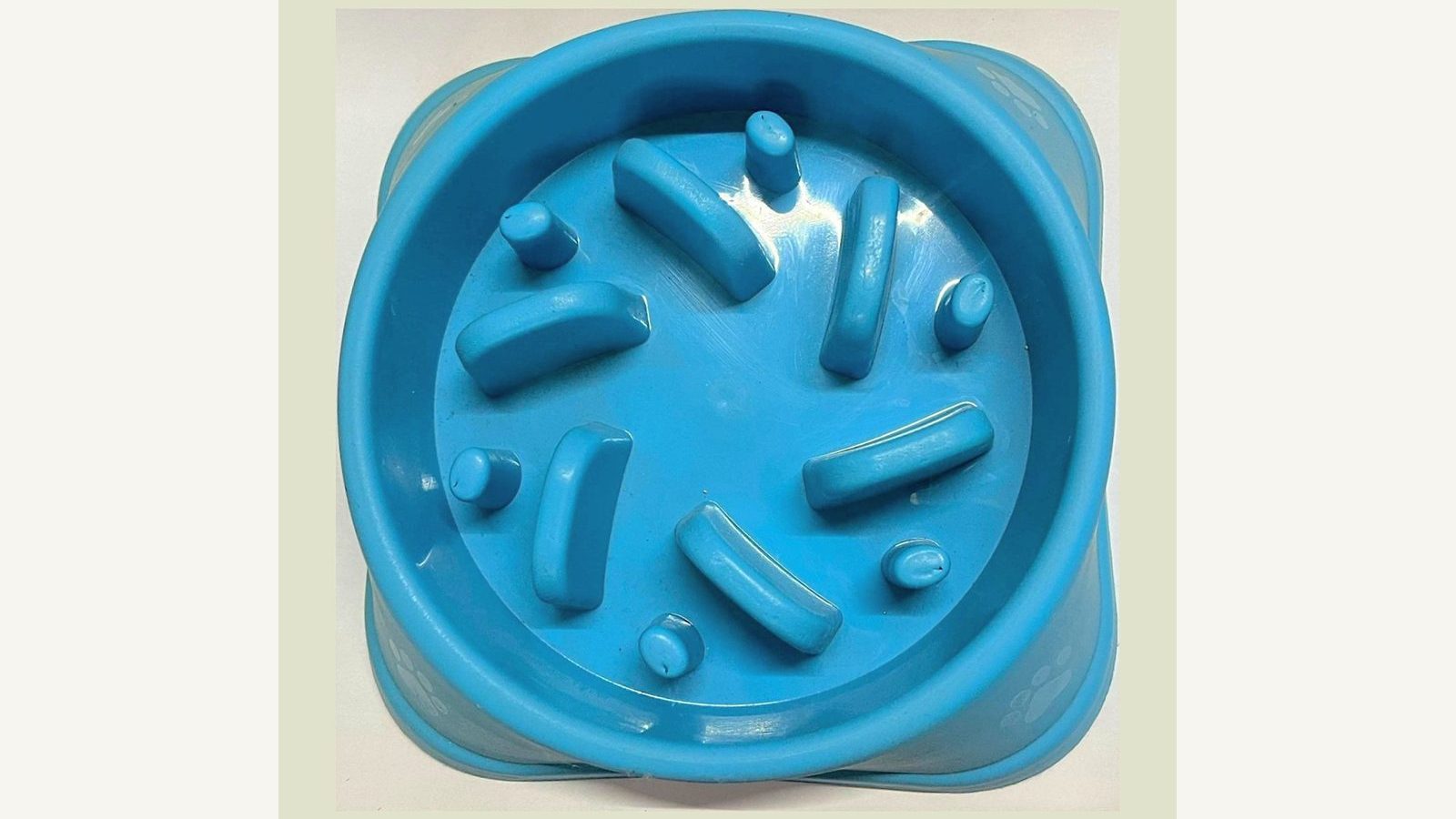
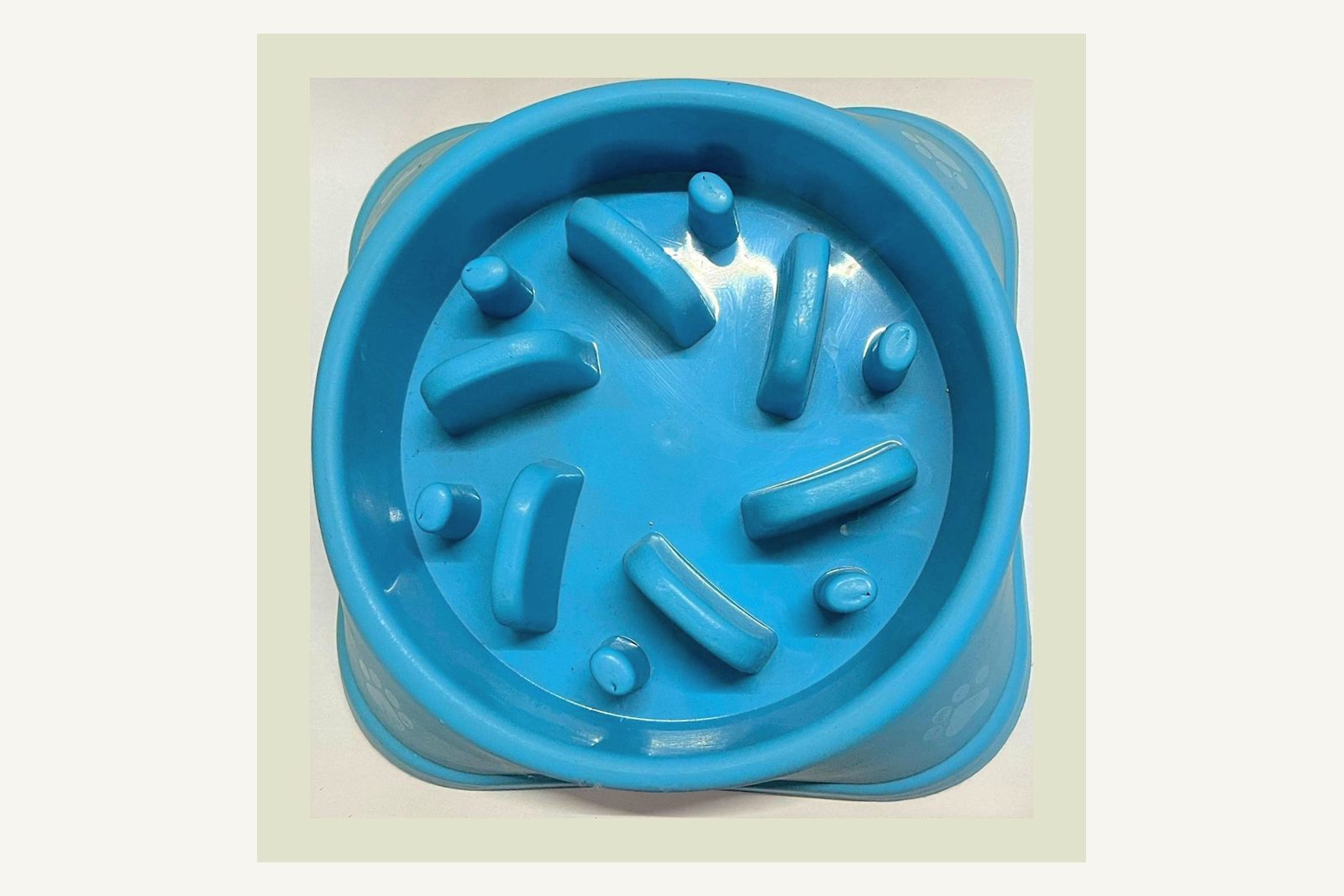
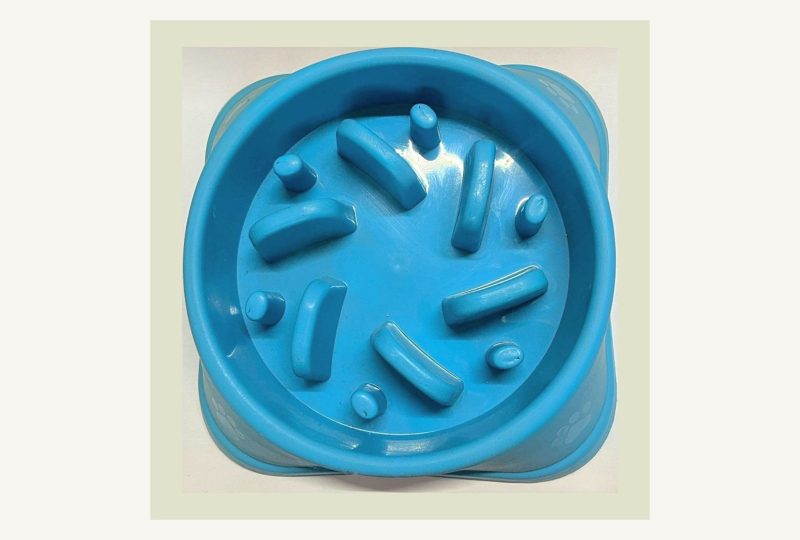
| Slow feeder | Slows a fast eater — matters in a bloat-prone breed | Large breed maze | See options → |
| Treat pouch | Freeze-dried makes excellent training treats | Magnetic close, wipe-clean lining | See options → |
| Stuffable rubber chew | Rehydrated topper stuffs and freezes beautifully | Large or extra large | Check price → |
7 Mistakes (and the Fix for Each)
The fix: handle it as raw meat, because it is. Wash hands, use a dedicated bowl, and clean the feeding area after every meal.
The fix: read the packet for a complete-and-balanced statement and a life stage. Single-protein products are treats, not diets.
The fix: weigh both and reduce the base meal. This is how enthusiastic owners produce overweight dogs with sore hips.
The fix: a teaspoon for two days, then build over a week or more. This breed’s digestion punishes sudden change harder than most.
The fix: if anyone at home is very young, pregnant, elderly and frail, or immunocompromised, choose cooked or heat-processed food instead. This one is not a judgement call.
The fix: get a TLI test for EPI if there is weight loss with a big appetite. Months of food experiments are the classic route to a late diagnosis in this breed.
The fix: treat that claim as a warning about the brand. Freeze-drying preserves bacteria; a company saying otherwise is either wrong or hoping you are.
Frequently Asked Questions
Is freeze-dried raw dog food safe?
It carries the same pathogen risk as any raw food. Freeze-drying removes water, which stops bacteria multiplying, but does not kill them — Salmonella and Listeria survive the process and reactivate on rehydration. Handle it as raw meat, and avoid it entirely in households with infants, pregnant people, frail elderly people or anyone immunocompromised.
Is freeze-dried raw better than kibble?
Better at some things, not universally better. It retains heat-sensitive nutrients that extrusion degrades and is far more palatable. Good kibble is formulated to meet established nutritional standards, costs a fraction as much, and carries a much lower pathogen risk. For a large dog, a kibble base with a freeze-dried topper is the practical compromise.
How much does it cost to feed a German Shepherd freeze-dried raw?
Feeding it exclusively to a 35 kg dog typically runs into the hundreds of dollars a month — often several times the cost of good kibble. Used as a topper at around ten per cent of calories, or as training treats, it is far more manageable and delivers most of the practical benefit.
Do I need to rehydrate freeze-dried dog food?
Not always, but it is worth doing. Warm water for a couple of minutes softens it, adds useful moisture, and releases the aroma that makes it appealing. It is also gentler on a sensitive digestive system, which matters with this breed. Discard uneaten rehydrated food after about thirty minutes.
Can freeze-dried raw be a complete diet?
Only if the packet says so. Products labelled complete are formulated to meet a recognised nutrient standard; those labelled complementary, topper or treat are not balanced and cause real deficiencies if fed alone — particularly calcium and phosphorus imbalance in a growing large-breed puppy. Always check for a life stage statement too.
Will freeze-dried raw fix my dog’s loose stools?
It might, if the underlying issue is an intolerance to a protein in the current food — but that is the protein change, not the freeze-drying. If loose stools come with weight loss and a large appetite in a German Shepherd, ask your vet for a TLI test for exocrine pancreatic insufficiency before trying another food.
✅ Your Freeze-Dried Checklist
- Packet checked for complete vs complementary
- Life stage statement checked — adult or growth
- Household screened: no infants, pregnancy, frailty or immunosuppression
- Handled as raw meat — hands, bowls, surfaces
- Rehydrated in the fridge, not on the worktop
- Uneaten rehydrated food discarded after 30 minutes
- Introduced with a teaspoon, built up over 7–10 days
- Calories removed from the base meal when adding a topper
- Both base and topper weighed in grams
- Only one dietary change at a time
- Fed as 2–3 smaller meals; slow feeder for a fast eater
- No hard exercise immediately around meals
- EPI ruled out before chasing loose stools through diet
- “Freeze-drying kills bacteria” claims treated as a red flag
The Bottom Line
Gimmick or godsend? Neither, quite. Freeze-dried raw is a legitimately clever product that solves the single most annoying thing about raw feeding — the freezer, the thawing, the planning — and solves it completely.
What it does not solve is safety, and the claim that it does is the one thing on a packet that should make you put it back. It is raw food. Handle it accordingly, and keep it out of households with vulnerable people entirely.
For a German Shepherd, the sensible answer is almost always the same: a good complete food as the base, a small amount of freeze-dried crumbled on top when it helps, and the rest of the bag broken into training treats for recall practice. That gets you the enthusiasm, the convenience and the genuinely useful part — without the monthly bill of a small car payment.
- Raw diets for dogs — the full picture on raw feeding
- Feeding guide — portions, meals and body condition
- Understanding the ingredient label — what the packet is telling you
- Food for your German Shepherd — choosing and switching well
Recommended German Shepherd gear for this guide
Slow feeder bowl
Best for: Slowing fast eaters and enrichment
- Slows gulping
- Dishwasher safe options
Affiliate link — we may earn a commission, at no cost to you.
Airtight food storage container
Best for: Keeping kibble fresh
- Airtight seal
- Wheels on large sizes
Affiliate link — we may earn a commission, at no cost to you.
Low-calorie training treats
Best for: High-frequency reward training
- Soft, easy to break
- Quick consumption
Affiliate link — we may earn a commission, at no cost to you.

Keep reading
More in Feeding & Nutrition →
Food for Your German Shepherd: Choosing, Switching and Feeding Well
How to choose a food for a German Shepherd, the food types compared honestly, the four signs a…
Dog Food Labels Explained: How to Read the Ingredient List Properly
Decode any dog food bag in ninety seconds: complete vs complementary, how ingredient lists really work, what meat…
Raw Diets for Dogs: Honest Facts, Real Risks and Practical Tips
A balanced guide to raw feeding: the four types of raw diet, which claimed benefits hold up, the…