Why Is My Dog Eating Grass? The Real Reasons and When to Worry
What the research says about grass eating, six explanations that hold up, why the upset stomach theory is mostly wrong, the real risks from chemicals and grass seeds, and how to reduce it if it has become excessive.

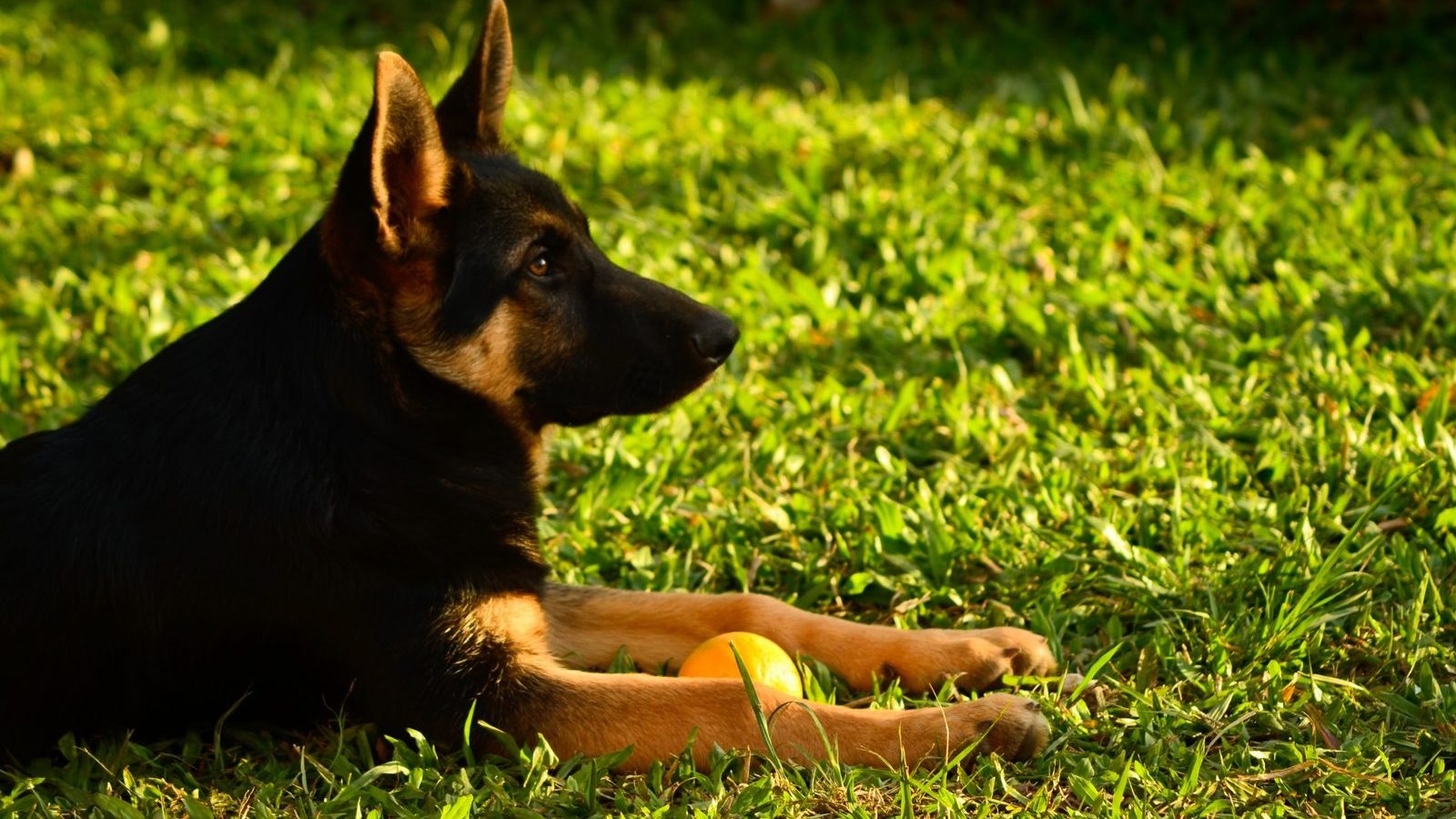
Short answer: it is normal, and the old “they’re sick” explanation is mostly wrong
Grass eating is ordinary dog behaviour. Surveys have found that most dogs do it, that the large majority show no signs of illness beforehand, and that most do not vomit afterwards. It is far more likely to be foraging, boredom or simple enjoyment than self-medication. What matters is not the grass — it is what has been sprayed on it, and whether the behaviour has suddenly changed.
Your dog stops mid-walk, ignores you completely, and begins working through a patch of long grass with the focus of someone eating a very good sandwich. Somebody nearby says “oh, he must have an upset tummy” — and you spend the rest of the walk wondering whether you ought to be worried.
Almost certainly not. Grass eating is one of the most-discussed and least-alarming things dogs do. The idea that it means illness has been repeated so often that it feels like established fact, and the research that has actually looked at it points fairly firmly the other way.
This guide covers what the evidence says, the six explanations that hold up, the two situations where it genuinely does warrant a vet visit, the real risks on the grass itself, and how to reduce it if it has become excessive — which for a German Shepherd usually means solving a different problem entirely.
Occasional, relaxed grazing on a walk is normal and needs no action. Frantic, sudden, repeated grass eating — a dog bolting mouthfuls, pacing, lip-licking, gulping — is a different picture and deserves a vet appointment. It is the change in pattern, not the behaviour itself, that carries the information.
What the Research Actually Found
Grass eating has been studied more than you might expect, and the findings are consistent enough to be worth stating plainly.
Owner surveys of large numbers of dogs have found that the great majority eat plants, and that this is a routine, everyday behaviour rather than an occasional oddity. When owners were asked whether their dog appeared unwell before eating grass, only a small minority said yes. When asked whether the dog vomited afterwards, roughly a quarter did.
That pattern matters. If grass eating were a deliberate strategy to induce vomiting when unwell, you would expect most dogs to look ill first and most to vomit after. Neither is what the data shows. The most reasonable reading is that grass eating is normal foraging behaviour, and that occasional vomiting is a side effect rather than the goal.
The self-medication story got the causation backwards. Dogs do not eat grass because they are sick — a minority are sick because they ate a lot of grass. For the majority it is simply something dogs do, in the same category as sniffing lamp posts.
Six Explanations That Hold Up
🌾 It is inherited foraging behaviour
Wolves and free-ranging dogs eat plant material routinely, and it turns up in their droppings. Dogs are omnivorous scavengers, not obligate carnivores, and eating vegetation is part of the ancestral toolkit.
😐 Boredom and under-stimulation
The commonest reason in a German Shepherd. A working dog with nothing to do will find a job, and methodically grazing a lawn is a perfectly good one.
👅 They like it
Fresh spring grass after rain is sweet and has an appealing texture. Plenty of dogs are selective about which patch they eat, which points to taste rather than medicine.
🍽️ Fibre and gut feel
Grass adds indigestible bulk. Some dogs on low-fibre diets do seem to seek it out more, and a fibre adjustment occasionally reduces it.
👀 It gets a reaction
If every mouthful produces shouting and a chase, some dogs learn that grass reliably summons an entertaining human. Attention is a reward even when it is disapproving.
😬 Anxiety and displacement
Repetitive eating can be a displacement behaviour in a stressed dog, in the same family as excessive licking or pacing. Look at the wider context if it appears alongside other signs.
For most dogs it is some mixture of the first three. For a bored, under-exercised German Shepherd left in a garden, the second one accounts for a great deal of it — and that is the version worth acting on, because the grass is a symptom of an unmet need rather than the problem itself.
Does It Mean They Feel Sick?
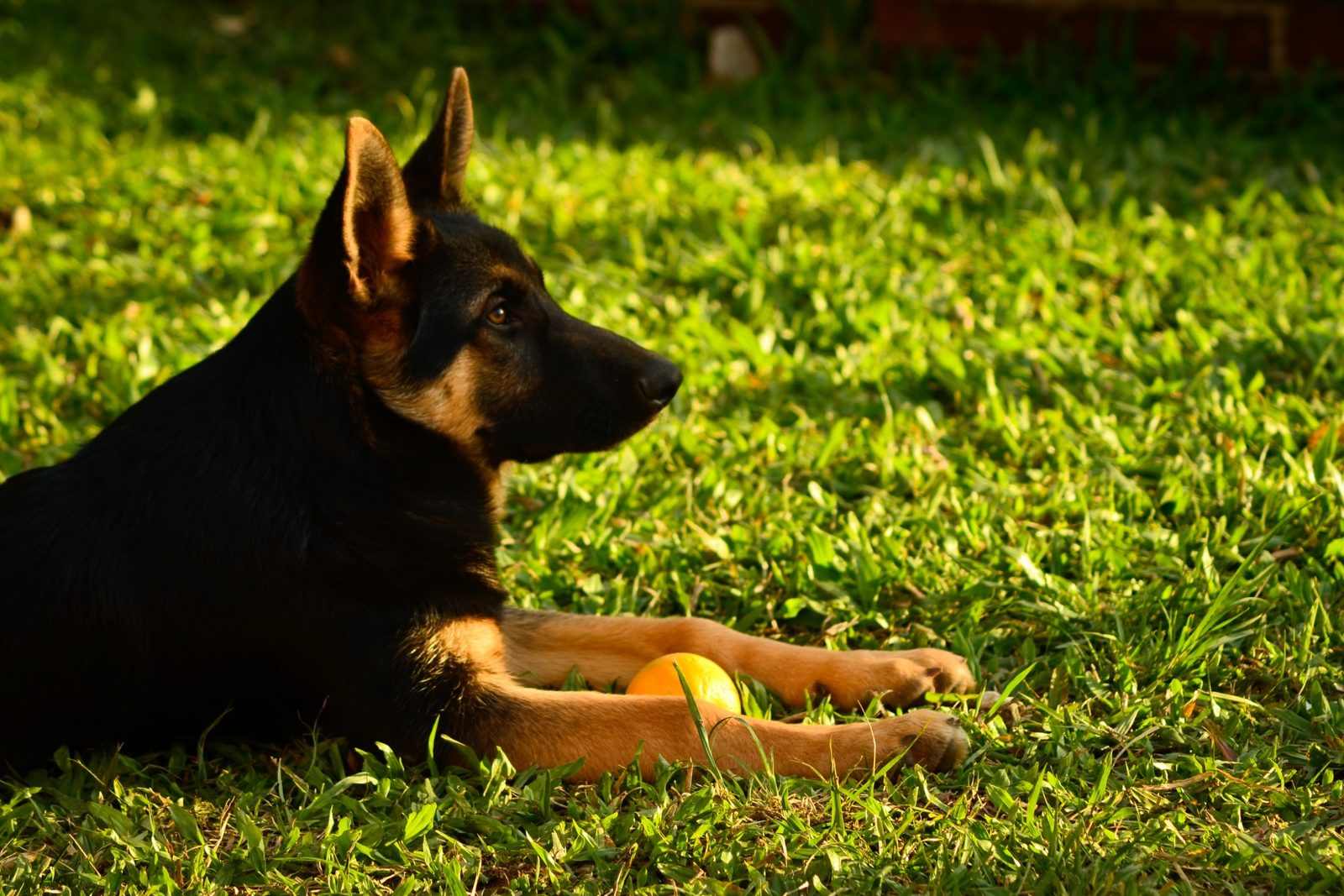
Sometimes — but far less often than the folklore suggests, and the pattern looks quite different when it is genuinely nausea.
| Normal grazing | Nausea-related eating | |
|---|---|---|
| Pace | Slow, selective, relaxed | Fast, frantic, indiscriminate |
| Choosiness | Picks particular patches, sniffs first | Takes whatever is nearest, in mouthfuls |
| Body language | Loose, comfortable, easily interrupted | Tense, pacing, lip licking, repeated swallowing |
| Other signs | None | Drooling, gulping, stretching, restlessness |
| Afterwards | Carries on with the walk | Often vomits, then may do it again |
| Timing | Anywhere, anytime | Frequently first thing in the morning, on an empty stomach |
| Action | None needed | Vet appointment |
The early-morning version has a name owners find useful: bilious vomiting syndrome, where a dog with an empty stomach overnight brings up yellow bile, often after eating grass. It is common, benign, and frequently fixed by a small late-evening meal — but get it confirmed rather than assumed.
When to Actually Worry
The behaviour has changed suddenly or increased sharply · your dog eats grass frantically rather than casually · it is accompanied by lip licking, drooling, gulping or repeated swallowing · there is vomiting more than occasionally, or any blood · weight loss, or a change in appetite · diarrhoea or changes in stool · lethargy · repeated unproductive retching with a swollen abdomen, which in a deep-chested breed is a bloat emergency and needs a same-hour call.
Behind a genuine increase in grass eating, vets most often find gastrointestinal problems: acid reflux, gastritis, inflammatory bowel disease, dietary intolerance, or in this breed exocrine pancreatic insufficiency. EPI is worth naming because German Shepherds are heavily over-represented for it, it is diagnosed with a simple TLI blood test, and owners frequently spend months changing foods before anyone runs it.
The Real Risks on the Grass
Here is the part that actually deserves your attention. The grass itself is harmless. What is on it frequently is not.
| Hazard | Why it matters | What to do |
|---|---|---|
| Herbicides and weedkillers | Public parks, verges and neighbours’ lawns are treated routinely, often without notice | Avoid recently treated ground; keep dogs off until fully dry, and longer if you can |
| Fertilisers | Some cause significant gut irritation; bone-meal products are especially attractive to dogs | Keep off treated lawns; water in thoroughly on your own |
| Slug pellets (metaldehyde) | Rapid tremors and seizures; frequently fatal | Emergency if eaten. Use iron phosphate alternatives at home |
| Lungworm | Carried by slugs and snails, which travel across grass and leave trails on it | Discuss a preventive wormer with your vet — not all products cover it |
| Other dogs’ faeces | Parasites and infectious disease transmitted through contaminated ground | Keep worming up to date; avoid heavily fouled areas |
| Grass seeds (foxtails) | Barbed seed heads burrow into skin, paws, ears and eyes | See below — this is the summer one that ends in surgery |
Nobody has ever needed treatment for eating grass. Plenty of dogs have needed treatment for what somebody sprayed on it three days earlier.
Grass Seeds: the Summer Emergency
This deserves its own section because it is the grass-related problem that most often ends with a general anaesthetic, and it has nothing to do with eating.
Certain grass seed heads — foxtails and similar barbed types — are shaped to travel one way only. Once one lodges in fur it works inward, and it can penetrate skin and then migrate through tissue. They are picked up mainly from May to September in long, dry grass, which is exactly where a grazing dog puts their face.
🐾 Paws
Sudden limping, a swollen and weeping spot between the toes, and obsessive licking of one foot. The commonest site by a distance.
👂 Ears
Violent head shaking that starts abruptly, pawing at one ear, tilting the head. A seed in the canal is intensely painful and needs removing promptly.
👁️ Eyes
Squinting, a suddenly weeping eye, holding it closed. This is an emergency — corneal damage happens quickly.
👃 Nose
Sudden, violent, repeated sneezing that begins on a walk and does not stop, sometimes with a nosebleed from one nostril.
The prevention is simple and takes two minutes: after every summer walk in long grass, run your hands over your dog and check between every toe, inside the ear flaps, in the armpits and around the groin. Caught on the surface, a seed is picked off with fingers. Left overnight, it may need surgery to find.
How to Reduce It
If your dog is otherwise healthy and you simply want less of it, the answer is almost never about the grass.
Rule out the medical causes first
A vet check before you try to train anything, especially if this is new or increasing. Treating a gut problem as a behaviour problem wastes months.
Add mental work, not more running
Scentwork, snuffle mats, puzzle feeders, a long sniffy decompression walk. For a bored Shepherd this is the actual fix, and it usually shows within a fortnight.
Look at the fibre in the diet
Some dogs graze less on a slightly higher-fibre food, or with a little pumpkin or green beans added. Change food gradually over a week, and ask your vet first.
Stop making it interesting
No shouting, no chasing. Call your dog to you, pay well, and carry on walking. Any drama attached to grass makes grass more appealing, not less.
Teach a solid “leave it”
Genuinely useful here and for everything else on the ground. Build it indoors first, add the cue late, and always pay better than what you asked them to give up.
Grow a safe patch of your own
A tray of cat grass or wheatgrass on the patio gives a determined grazer somewhere untreated to do it. Cheap, and it removes the chemical risk entirely.
Safe Greens You Can Offer Instead
- Green beans, raw or steamed, no salt
- Plain cooked pumpkin or butternut squash
- Carrot sticks — also useful for a busy mouth
- Courgette and cucumber
- Broccoli in small amounts
- Cat grass or wheatgrass grown at home
- Onion, garlic, leek and chives — damage red blood cells
- Grapes and raisins — kidney injury, no safe dose
- Any lawn treated with herbicide or fertiliser
- Long dry grass in seed, from May to September
- Anything from a verge sprayed by the council
- Mushrooms of any kind found outdoors
Keep vegetables to a small proportion of the diet — treats and extras together should stay under roughly a tenth of daily calories. And introduce anything new one item at a time, so that if it does disagree with your dog you know which one to blame.
Kit That Helps
Large snuffle mat for foraging
If your dog grazes because there is nothing else to do, the fix is giving the foraging instinct somewhere better to go. A snuffle mat scatters dry food through fabric strips so your dog has to work for every piece with their nose — which is exactly the behaviour they were doing on the lawn, redirected onto something safe and indoors. Ten minutes of snuffling settles a German Shepherd more thoroughly than twenty minutes of ball throwing, and it costs you nothing beyond scattering the food.
- Redirects the foraging drive onto something safe
- Slows fast eaters, which matters in a bloat-prone breed
- Genuine mental tiredness without more physical exercise
- Useful for settling a dog before you leave the house
Good to know: use part of the normal daily food rather than adding extra, or you will solve a grazing problem and create a weight problem. Keeping a German Shepherd lean is one of the most useful things you can do for their hips over a lifetime.
| Item | Why it earns its place | What to look for | Find it |
|---|---|---|---|
| Snuffle mat | Redirects foraging; the fix for boredom grazing | Large, machine washable | See options → |
| Puzzle feeder | Mental work that actually tires a working breed | Adjustable difficulty, large breed | See options → |
| Stuffable rubber chew | Gives a busy mouth a job; freeze it to last longer | Large or extra large | Check price → |
| Cat grass seed kit | An untreated patch a determined grazer can safely use | Wheatgrass or cat grass, tray kit | See options → |
| Treat pouch | “Leave it” only works if payment is instant | Magnetic close, belt clip | See options → |
7 Mistakes (and the Fix for Each)
The fix: watch the manner instead. Most dogs eating grass are not unwell — relaxed, selective grazing needs no action at all.
The fix: worry about herbicides, fertiliser and slug pellets. That is where the actual harm comes from, and it is the part you can control.
The fix: call them to you and pay well. Drama makes grass more interesting, and chasing teaches a dog to swallow before you arrive.
The fix: book a vet appointment if it is suddenly frantic or much more frequent. That change is the useful signal, not the behaviour itself.
The fix: two minutes after every walk from May to September — between the toes, in the ears, armpits and groin. This is the one that ends in surgery.
The fix: add sniffing and problem-solving, not distance. A fitter Shepherd with an unoccupied brain grazes just as much.
The fix: say it at the annual check. Alongside weight loss or a big appetite it can point at EPI, which this breed is heavily over-represented for.
Frequently Asked Questions
Why does my dog eat grass?
Most likely because it is normal dog behaviour — inherited foraging, boredom, or simply liking the taste and texture. Surveys find most dogs eat plants, very few appear unwell beforehand, and only about a quarter vomit afterwards, which argues strongly against the old self-medication explanation.
Does eating grass mean my dog has an upset stomach?
Usually not. The evidence suggests the majority of dogs show no signs of illness before grazing. Nausea-related grass eating looks different: fast and frantic rather than slow and selective, with lip licking, drooling, gulping and repeated swallowing, often followed by vomiting. That version warrants a vet appointment.
Is it safe for my dog to eat grass?
The grass itself is harmless. The risks are what is on it: herbicides, fertilisers, slug pellets, lungworm carried by slugs and snails, and other dogs’ faeces. Avoid recently treated ground and public verges, keep parasite prevention current, and grow an untreated patch at home if your dog is a determined grazer.
When should I take my dog to the vet for eating grass?
If the behaviour has started suddenly or increased sharply, if it is frantic rather than casual, or if it comes with vomiting, drooling, weight loss, appetite change, diarrhoea or lethargy. Repeated unproductive retching with a swollen abdomen in a deep-chested breed is a bloat emergency needing an immediate call.
How do I stop my dog eating grass?
Rule out medical causes first, then treat it as an enrichment problem: snuffle mats, puzzle feeders, scentwork and long sniffy walks. Stop reacting dramatically, teach a solid “leave it”, consider a slightly higher-fibre diet with your vet, and grow a safe untreated patch for a dog who is determined.
Are grass seeds dangerous for dogs?
Yes, and this is the grass risk most worth taking seriously. Barbed seed heads travel one way and can penetrate skin, then migrate through tissue, most often via the paws, ears, eyes and nose. Check your dog thoroughly after every summer walk in long grass — a seed found on the surface comes off with your fingers.
✅ Your Grass Eating Checklist
- Manner assessed — relaxed grazing or frantic bolting?
- Any sudden change in pattern noted and reported
- Vet check booked if new, frantic or increasing
- EPI considered if there is weight loss with a big appetite
- Treated lawns and verges avoided
- Slug pellets replaced with iron phosphate at home
- Lungworm cover confirmed with your vet
- Grass seed check after every summer walk — toes, ears, armpits, groin
- Mental enrichment added: snuffle mat, puzzles, scentwork
- Sniffy decompression walks in the weekly routine
- No shouting or chasing over grass
- “Leave it” trained and paid generously
- Safe untreated cat grass patch if grazing persists
- Bloat signs known by everyone in the house
The Bottom Line
Your dog is almost certainly fine. Grass eating is ordinary, most dogs do it, and the old story about self-medication does not survive contact with the research. If your German Shepherd stops on a walk and grazes contentedly for a minute, that is a dog being a dog.
Put your attention on the two things that genuinely matter instead. Avoid treated ground, because herbicides and slug pellets do real harm. And check for grass seeds after every summer walk, because that two-minute habit prevents the operations.
Then, if it has become excessive, ask what your dog has to do all day. In this breed, methodically eating a lawn is very often the answer to a question about employment — and a snuffle mat solves more grass problems than any change of diet ever will.
- Enrichment ideas — the actual fix for boredom grazing
- Toxic things to keep away from your dog — including what gets sprayed on lawns
- My dog ate acorns — the autumn version of the same problem
- Feeding guide — fibre, portions and what goes in the bowl
Recommended German Shepherd gear for this guide
Orthopedic large dog bed (memory foam)
Best for: Joint comfort and stretch-out sleep
- Pressure relief
- Washable cover
- Non-slip base
Affiliate link — we may earn a commission, at no cost to you.
Folding dog ramp for SUVs
Best for: Senior or post-injury vehicle access
- Folds flat
- Non-slip surface
Affiliate link — we may earn a commission, at no cost to you.
Quiet nail grinder
Best for: Smooth nail maintenance
- Quiet motor
- Multiple speeds
Affiliate link — we may earn a commission, at no cost to you.

Keep reading
More in Health & Senior Care →
Dog Shaker Syndrome: Why a Dog Trembles and What It Means
What generalised tremor syndrome is and how it is treated, ten other causes of trembling, the emergencies that…
Yeast Infections in Dogs: Ears, Paws and Skin Explained
What Malassezia overgrowth is and why it recurs, the signs by location, conditions that look identical, treating ears,…

How to Massage a Senior Dog: A Gentle At Home Routine
What massage genuinely does for an older dog, when not to do it at all, a consent-based ten-minute…