Shock Collars for Large Dogs: What the Evidence Says and Safer Alternatives
What controlled studies actually found about electronic collars, why they appear to work, the specific risks, where the law stands, and what to do instead for recall, reactivity, livestock chasing and containment.


Short answer: we do not recommend any, and here is the evidence for that
This page does not contain a list of shock collars to buy. Controlled studies comparing electronic collars with reward-based training have found more stress signalling and no better obedience outcomes — they cost the dog more and deliver no advantage. They are banned or restricted in a growing number of countries, and every major veterinary behaviour body advises against them. Below: what the research actually says, and what works instead for the four problems people buy them for.
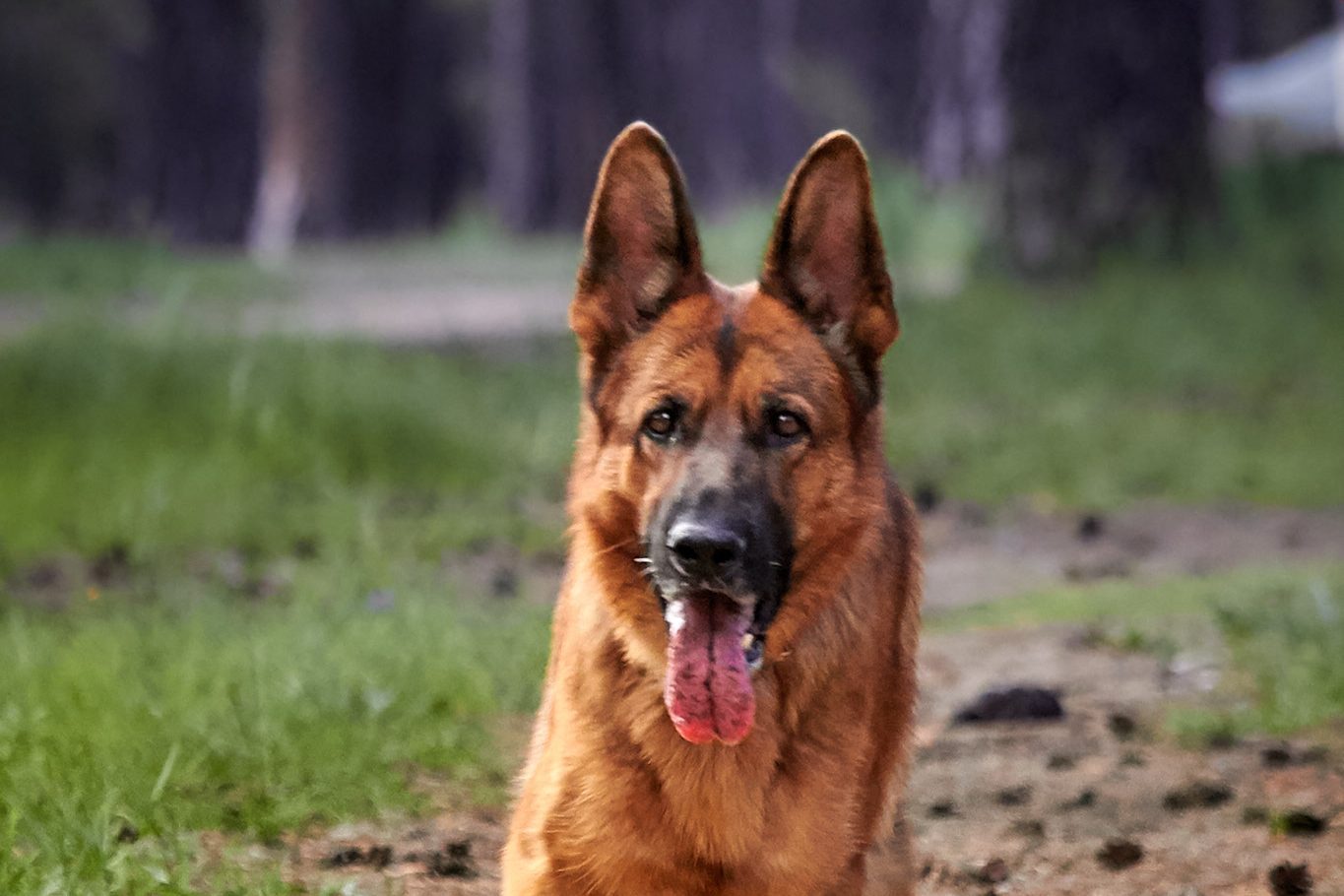
If you have arrived here searching for the best shock collar for a large dog, you are almost certainly not a bad owner. You are far more likely to be someone with a strong, fast German Shepherd whose recall has collapsed, or who lunges at other dogs, and who has been told by somebody confident that this is what finally works.
That advice is common, it is sincerely given, and the evidence does not support it. This page sets out what the research found, why the argument for e-collars is weaker than it sounds, where the law now stands, and — the useful part — what to do instead for each specific problem people buy them to solve.
No moralising, and no assumption about your motives. Just the evidence and four practical alternatives.
“E-collar”, “static collar”, “stim collar”, “remote trainer” and “shock collar” all describe the same device: one that delivers an electric stimulus to the neck by remote control. Marketing language varies; the mechanism does not. Everything below applies regardless of which term a manufacturer prefers.
What the Research Actually Found
This is not a matter of competing opinions between trainers. There is a reasonably consistent body of controlled research, and the findings point the same way.
| What was studied | What was found |
|---|---|
| Stress behaviour during training | Dogs trained with electronic collars showed more stress signalling — lip licking, yawning, lowered body posture, tail tucking — than dogs trained with reward-based methods |
| Obedience outcomes | Studies comparing e-collar training with reward-based training on the same tasks found no advantage in results for the e-collar groups |
| Effects outside training | Some studies found altered behaviour and stress indicators persisting in contexts unrelated to the training itself |
| Aggression risk | Survey work associates confrontational and aversive methods generally with a substantially higher rate of aggressive responses from dogs |
| Owner use in practice | Real-world use frequently involves poor timing and higher settings than trainers recommend, which widens the gap between best case and typical case |
Put plainly: the studies did not find that e-collars fail to change behaviour. They found that they change behaviour no better than the gentler alternative, while producing measurably more stress. That is the whole case, and it does not require any ethical premise to follow.
If two methods produce the same result and one of them causes more stress, the choice is straightforward — and it stays straightforward even if you have no ethical objection to aversives in principle. There is no outcome an e-collar achieves that reward-based training and management cannot.
Why They Appear to Work
The testimonials are real, and it is worth being honest about why.
- Suppression is fast. A dog who receives an unpleasant stimulus stops what they were doing within seconds. That looks like a fix, and it happens immediately — which is far more convincing than eight weeks of gradual progress.
- The handler changes too. People who buy an e-collar usually also start training properly, going out more, and paying attention. Some of the improvement belongs to that.
- Nobody reports the failures. A dog whose reactivity got worse rarely produces a testimonial. The visible cases are self-selected.
- Suppression is not learning. A behaviour that has been suppressed frequently returns when the collar comes off, or reappears in a different form.
The Specific Risks
🎯 The dog decides what it means
You cannot control what your dog associates the stimulus with. A dog corrected while looking at another dog can conclude that other dogs cause pain — which manufactures reactivity rather than curing it.
🤐 It removes the warning
Suppressing growling and barking does not remove the underlying fear. It removes the signal, leaving a dog who appears to escalate without warning — a well-documented history behind serious bites.
😰 Fear generalises
Stress signalling has been observed in contexts unrelated to the training. A dog who becomes anxious about the garden, the park or you is a much bigger problem than the one you started with.
⚡ Skin damage and malfunction
Pressure necrosis from prolonged wear is documented. Cheap units can also fire spuriously — triggered by another remote, a fault, or a flat battery — which is a correction your dog receives for nothing.
E-collars are most often reached for with the hardest cases — a large dog who lunges, growls or has snapped. That is precisely where the risk is highest, because these behaviours are usually driven by fear or frustration, and adding an aversive to a frightened animal in the presence of their trigger increases the emotion while removing the warning. For any aggression, the route is a veterinary check followed by a qualified veterinary or clinical animal behaviourist.
Where the Law Stands
The legal position has moved considerably and continues to. Electronic training collars are banned or restricted in a growing list of countries and regions — much of Europe and parts of Australasia among them — and further restrictions have been introduced or proposed elsewhere.
Rules differ by jurisdiction and change over time, so check what applies where you live rather than relying on what a retailer says. There is also a practical dimension: if your dog is ever involved in an incident, the equipment you were using may be relevant to how that is viewed.
What the Professional Bodies Say
The veterinary and behaviour professions have converged on this. The American Veterinary Society of Animal Behavior has published position statements advising against punishment-based methods and rejecting dominance theory as a basis for training. Comparable positions have come from veterinary and behaviour organisations across Europe and Australasia, and from most accrediting bodies for dog trainers.
The standard now taught is LIMA — least intrusive, minimally aversive — which requires practitioners to exhaust gentler options before escalating. Under that framework an e-collar sits at the far end of a ladder that, in practice, almost never needs climbing.
The Arguments For Them, Addressed Fairly
| The argument | The response |
|---|---|
| “It’s just a tap, like a tap on the shoulder” | If it were neutral it would not change behaviour. It works because the dog wants to avoid it — that is the mechanism, whatever the intensity |
| “It’s better than the dog being hit by a car” | Agreed that safety comes first — which is why a long line is the answer. It guarantees safety immediately, with no training required |
| “It’s the only thing that works for high-drive dogs” | Controlled studies did not find better outcomes. Working, detection and assistance dogs are trained to a very high standard without them |
| “Modern ones are low-level and used properly” | Best-case professional use is not typical use. Owner surveys consistently find poor timing and higher settings than recommended |
| “My trainer recommends it” | Dog training is unregulated in most places. Check accreditation, and ask what happens if your dog gets something wrong |
| “Positive-only training doesn’t work in the real world” | Modern reward-based training uses management and consequences too — it simply avoids pain. It is what guide dog and detection programmes use |
The strongest argument for an e-collar is always safety. And safety is exactly the thing a fifteen-metre line delivers immediately, reliably, and without any risk of teaching your dog that other dogs are dangerous.

Instead: Recall That Holds Up
The single most common reason people buy an e-collar. Here is the approach that works, and it is genuinely reliable when it is built properly.
Long line first, always
Fifteen metres of biothane on a Y-front harness. Your dog gets to range and sniff, and recall stops being a gamble. Safety is solved from day one, which is what you actually wanted.
Start with a fresh cue
If “come” has been shouted across a field a hundred times, it now means “the fun is ending”. Pick a new word, or a whistle, and protect it.
Pay extraordinarily
Roast chicken, cheese, a game of tug. Recall has to beat a rabbit — kibble does not. Build a reward history so strong the cue itself becomes exciting.
Release them back
Call, pay, then send them off again. If recall only ever ends the walk, your dog is being punished for coming — which is how most recalls are destroyed.
Build distraction gradually
Garden, then quiet field, then somewhere with dogs at a distance. A hundred easy repetitions before one hard one, and never test what you have not trained.
Instead: Lead Reactivity
This is where e-collars carry the greatest risk of making things worse, because a correction delivered in the presence of another dog can teach exactly the association you are trying to remove.
- Find the threshold — the distance at which your dog can see another dog and still eat, breathe and look away.
- Work below it, without exception. Cross the road, turn early, use parked cars. Every over-threshold encounter is a setback.
- Play “look at that” — dog appears, you mark and pay. Over weeks the trigger comes to predict food rather than tension.
- Keep the lead loose. Tension travels down it and makes reactivity measurably worse.
- Get a behaviourist involved. This is the problem most worth paying someone to see in person.
Instead: Livestock and Wildlife Chasing
Genuinely serious — livestock chasing can end with a dog being legally shot in some jurisdictions, and it is the case where owners feel most justified reaching for something drastic.
- Keep your dog on a lead near livestock — legally required in many places
- Long line in any field or open country with stock or deer
- Build a recall and an emergency stop somewhere safe first
- Provide a legitimate outlet — flirt pole, chase games, scentwork
- Walk elsewhere during lambing and ground-nesting season
- Get professional help with a strong predatory response
- Test an unproven recall around livestock — the stakes are far too high
- Assume a collar makes off-lead safe near stock; equipment fails
- Rely on suppression in the one situation where a failure is catastrophic
- Punish near livestock and risk your dog associating the field with pain
- Let a dog with a strong chase drive off-lead in open country at all
The honest position on this one: some German Shepherds with a very strong predatory response should simply not be off-lead in stock country, ever. That is not a training failure. It is a sensible risk assessment, and a long line means the dog still gets a full walk.
Instead: Boundaries and Containment
Invisible fences use the same technology and carry an additional problem: they stop a dog leaving but do nothing to stop anything coming in — children, other dogs, wildlife — and a dog who does bolt through the boundary is then trapped outside it.
- Physical fencing, six feet. A German Shepherd can clear four without much effort.
- Bury wire or paving slabs at the fence line for a digger.
- Check the gates — self-closing latches and a bolt. Most escapes are gates, not fences.
- Do not leave them out there unsupervised for long periods; boredom is what drives most escape attempts.
- A GPS tracker for peace of mind, which tells you where your dog is rather than punishing them for going.
The Kit That Actually Does This Job
15 m biothane long line and Y-front harness
Almost everybody buying an e-collar is buying safety — a guarantee that their dog cannot run into a road, chase a sheep or reach another dog. A long line delivers that guarantee immediately, with no training period, no risk of a mis-timed correction, and no chance of teaching your dog that other dogs predict pain. Meanwhile your dog still gets to range, sniff and cover ground, which meets the need underneath a great many of these problems. Biothane sheds water and mud instead of absorbing it, and wipes clean in seconds.
- Guarantees safety from the first walk, with no learning curve
- Cannot mis-fire, cannot be mis-timed, cannot create a bad association
- Lets you build a real recall with a hundred safe repetitions
- Keeps a reactive dog under threshold while you work
- Legal everywhere, and costs a fraction of an e-collar
Safety: attach to a well-fitted Y-front harness, never a collar — a German Shepherd hitting the end of fifteen metres at speed can injure their neck. Wear gloves with a strong dog, let the line trail rather than holding it tight, and avoid dense woodland where it can snag.
| Item | What it replaces | What to look for | Find it |
|---|---|---|---|
| Long line | The safety function of an e-collar, immediately | 10–15 m biothane, harness clip | See options → |
| Y-front harness | Neck pressure of any kind | Dual clip, sized on chest girth | See options → |
| Whistle | Shouting a spoiled recall cue | Fixed tone, with a lanyard | See options → |
| Treat pouch | The reward history that beats a rabbit | Magnetic close, belt clip | See options → |
| GPS tracker | Invisible fencing | Collar-mounted, live tracking | See options → |
If You Are Already Using One
No lecture. If you want to move away from it, this is the practical route.
- Do not simply remove it and hope. If your dog’s safety currently depends on it, put a long line on first so nothing is lost in the transition.
- Build a fresh recall cue from scratch with very high value rewards, on the line, in easy environments.
- Check the neck where the contact points sat — pressure sores are easily missed under a double coat.
- Expect a wobble. Behaviour that was suppressed may resurface. That is information, not failure, and it tells you what still needs training.
- Get a behaviourist if there is any history of aggression, and mention the collar honestly — it genuinely changes the plan.
Frequently Asked Questions
What is the best shock collar for a large dog?
We do not recommend any. Controlled studies comparing electronic collars with reward-based training found more stress signalling and no better obedience outcomes, they are banned or restricted in a growing number of countries, and every major veterinary behaviour body advises against them. A long line and a Y-front harness deliver the safety people buy them for, immediately.
Do shock collars actually work?
They suppress behaviour, which looks like working. The research question is whether they work better, and studies say no — the same outcomes were achieved by reward-based training with less stress. Suppressed behaviour also frequently returns when the collar comes off, because nothing was learned about what to do instead.
Are shock collars legal?
It depends entirely where you live. They are banned or restricted across much of Europe and parts of Australasia, with further restrictions introduced or proposed elsewhere. Rules change, so check what currently applies in your jurisdiction rather than relying on a retailer’s claim.
My dog runs off and I am worried about roads. What should I use?
A fifteen-metre biothane long line on a Y-front harness. It guarantees safety from the first walk with no training period and no chance of a mis-timed correction, while your dog still gets to range and sniff. Then build a fresh recall cue with very high value rewards, releasing them back to their fun after every successful recall.
Will a shock collar stop my dog chasing sheep?
It may suppress it while worn, but this is the situation where a failure is catastrophic and where equipment failure, a flat battery or poor timing has the highest cost. Keep your dog on a lead or long line near livestock — legally required in many places — and accept that some dogs with a strong predatory response should not be off-lead in stock country at all.
Are vibration or citronella collars a better compromise?
Milder, but the same logic applies: they respond to a symptom and ignore the reason for it. A dog barking from fear who is then punished becomes more frightened, and one barking from boredom finds another outlet. Identify what the behaviour achieves for your dog and address that instead.
✅ What to Do Instead
- Vet check first for any sudden behaviour change
- Long line on a Y-front harness — safety solved immediately
- Fresh recall cue, protected and never used to end fun
- Very high value rewards — chicken and cheese, not kibble
- Dog released back to their activity after every recall
- A hundred easy repetitions before one hard one
- Reactivity worked under threshold, lead loose
- Lead or long line near livestock and wildlife, always
- A legitimate chase outlet — flirt pole, scentwork
- Physical fencing to six feet, gates latched
- GPS tracker instead of an invisible fence
- Local law checked on training equipment
- Accredited, transparent trainer — ask what happens on a mistake
- Behaviourist referral for any aggression
The Bottom Line
This page cannot give you a list of shock collars to buy, because the evidence does not support recommending one. Controlled studies found more stress and no better results. The professional bodies advise against them. A growing number of countries have banned them.
What it can give you is the thing you were actually looking for. If the worry is your German Shepherd running into a road, chasing sheep or reaching another dog, a long line solves that today — with certainty, with no learning curve, and with no risk that the training itself creates a worse problem than the one you started with.
Then build the recall properly, over months, with food good enough to compete with a rabbit. It is slower. It holds up under pressure, and it keeps working on the day you leave the collar at home.
- Recall training — the full method, step by step
- Harness vs collar — what goes on the neck and what does not
- The Dog Whisperer method — where the correction-based approach came from
- Solving behaviour problems — the eight most common issues
Recommended German Shepherd gear for this guide
Training treat pouch with clip
Best for: Hands-free training sessions
- Magnetic close
- Clip-on belt
Affiliate link — we may earn a commission, at no cost to you.
Low-calorie training treats
Best for: High-frequency reward training
- Soft, easy to break
- Quick consumption
Affiliate link — we may earn a commission, at no cost to you.
Long training line (30ft)
Best for: Recall practice in safe open areas
- Builds recall
- Lightweight options
Affiliate link — we may earn a commission, at no cost to you.

Keep reading
More in Training →
Why Do Dogs Bark? The 7 Types of Barking and How to Reduce Each
Seven distinct types of barking and the different fix each one needs, how to identify which you have,…

Treating Separation Anxiety in Dogs: A Step by Step Plan
How to tell separation anxiety from boredom, why a camera is essential, finding your dog's threshold, the graduated…
Solving German Shepherd Behaviour Problems: The 8 Most Common Issues
The diagnostic method that works for every behaviour problem, why the vet comes first, and practical fixes for…