German Shepherd Teeth and Gums: Cleaning, Problems and What Vets Look For
How to keep a German Shepherd's teeth healthy: what a healthy mouth looks like, the ten-second weekly check, teaching brushing, which chews break teeth, the puppy teething timeline and when to see a vet.

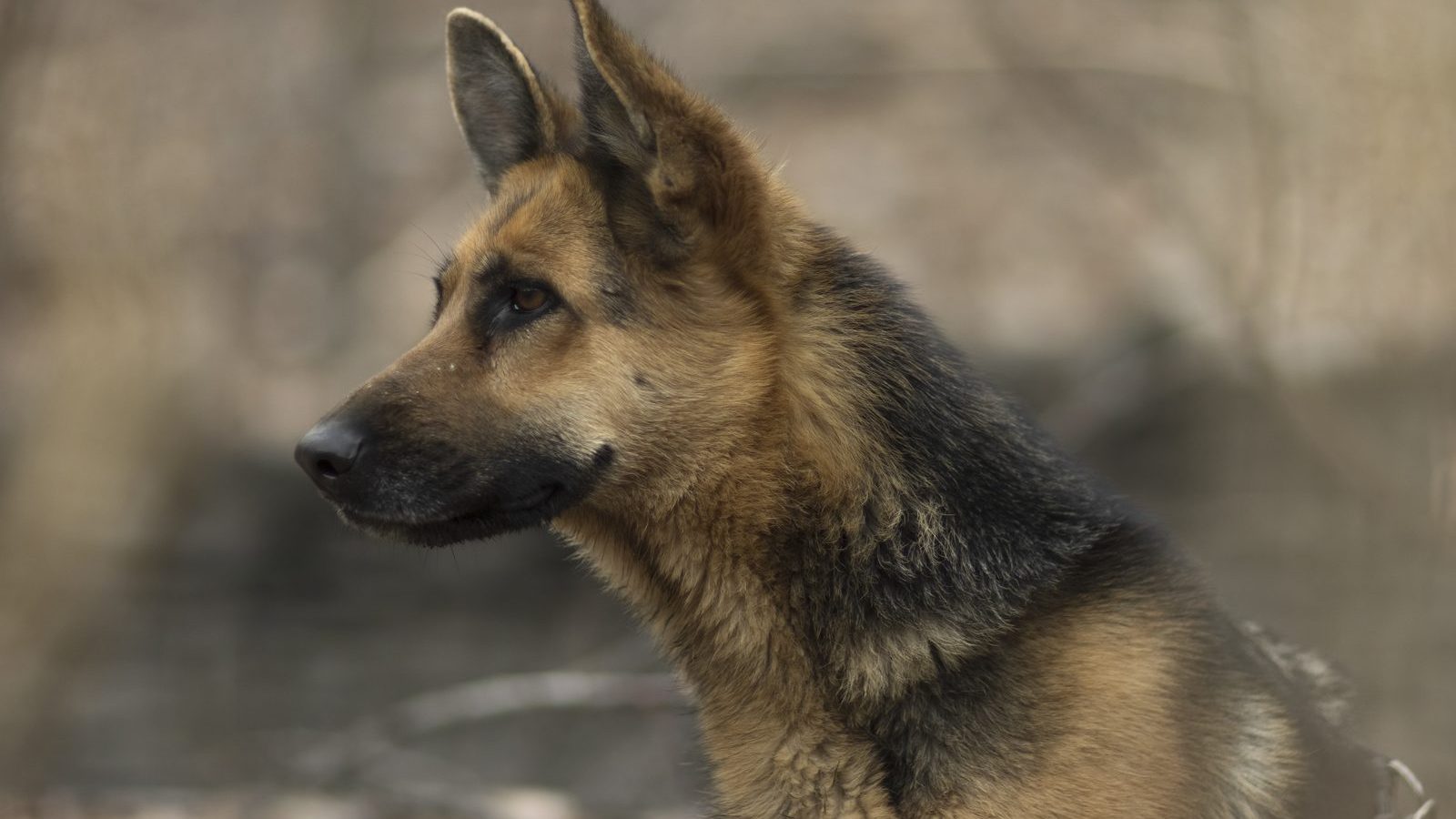
Short answer: thirty seconds of brushing a day prevents most of it
Dental disease is one of the most common — and most preventable — health problems in adult dogs. A German Shepherd has 42 adult teeth, and the plaque that hardens into tartar starts forming within 24 to 48 hours. Daily brushing with a dog toothpaste beats every chew, additive and spray on the market. Healthy gums are pale pink, not red, and bad breath is a symptom, not a personality trait.
Your dog yawns next to you on the sofa and you flinch. Everyone jokes about dog breath, and almost everyone assumes it is normal. It is not. Bad breath in a dog is nearly always a sign of something happening in the mouth — plaque, tartar, inflamed gums, or an infected tooth quietly causing pain your dog has never once complained about.
Dogs are extraordinarily good at hiding dental pain. They keep eating. They keep playing. They chew on one side and nobody notices for two years. By the time an owner spots a problem, it is often at the stage where teeth have to come out under anaesthetic.
This guide covers what healthy looks like, how to check a mouth in ten seconds, teaching brushing to a dog who has never had it done, the truth about dental chews, the puppy teething timeline, the problems that need a vet, and what actually happens at a professional dental.
This is general owner information, not veterinary advice. Only a vet can diagnose dental disease — much of the damage happens below the gum line where you cannot see it, which is why dental x-rays exist. If your dog has bad breath, red gums, visible tartar or is off their food, book an appointment rather than buying a product.
What a Healthy Mouth Looks Like
An adult German Shepherd has 42 teeth: twelve incisors at the front, four canines, sixteen premolars and ten molars. The big upper fourth premolar and the lower first molar — the carnassials — do the heavy shearing work, and they are also the teeth most often found fractured or heavily tartared.
| What you see | Healthy | Not healthy |
|---|---|---|
| Gums | Pale pink, smooth, firm against the teeth | Red, swollen, bleeding, or a red line along the tooth edge |
| Teeth | White to cream, no build-up at the gum line | Yellow-brown crust, especially on the big upper back teeth |
| Breath | Neutral, or faintly doggy | Genuinely offensive, or sweet and unusual |
| Eating | Chews on both sides, takes food normally | Chewing on one side, dropping food, turning away from hard food |
| Face | Symmetrical, no swelling | Swelling under an eye or along the jaw — often an abscessed tooth |
| Drool | Normal for the dog | Sudden increase, or blood-tinged saliva |
Plaque is soft and you can brush it off. Give it 24 to 48 hours and it hardens into tartar, which no brush, chew or additive will remove — only a vet can, under anaesthetic. That short window is the entire argument for brushing daily rather than weekly.
The Ten-Second Mouth Check
Do this once a week, ideally as part of your grooming session so it is never a separate event.
Gently lift the upper lip on one side without opening the mouth. You are looking at the gum line along the big back teeth — the place tartar always starts.
Gums should be pale pink and the join with the tooth should look clean. A red band along the gum line is gingivitis, and it is the earliest visible stage.
Press a fingertip on the gum until it blanches, then let go. Colour should return in under two seconds. Slower than that, or gums that are pale, blue, yellow or brick red, is a same-day vet call.
Repeat on the other side and check the incisors and canines. Look for chips, a tooth that sits at a different angle, or one that looks grey or discoloured.
Not glamorous, but it is the most sensitive test you have. A change in breath is often the first sign that something has started.
Teaching Your Dog to Accept Brushing
Almost every owner who “cannot brush their dog’s teeth” started by trying to brush their dog’s teeth. Spend a week building up instead and most German Shepherds accept it happily for the rest of their lives.
Days 1–3: just the taste
Let your dog lick a smear of dog toothpaste off your finger once a day. That is the entire exercise. Most dog pastes are poultry or malt flavoured and dogs treat them as a treat.
Why it works: the paste becomes something to look forward to before it is ever associated with having your hands in their mouth.
Days 4–6: finger on the gums
Paste on your finger, lift the lip, rub the outside of the big back teeth for three seconds, then stop and give a treat. One side per session is plenty.
Why it works: you are teaching the position and the handling, not cleaning anything yet. Ending early is what keeps them relaxed.
Days 7–10: introduce the brush
A long-handled dog toothbrush or a finger brush. Ten seconds per side, outside surfaces only, angled towards the gum line at about 45 degrees.
Why it works: the outside surfaces are where plaque builds up. The tongue keeps the inner surfaces relatively clean, so trying to reach them is effort for very little return.
Ongoing: thirty seconds, same time daily
Attach it to an existing habit — most owners do it just before the evening meal, so dinner is the reward. Small circles along the gum line, both sides, done.
Why it works: habits beat willpower. Brushing that happens at a fixed time every day survives; brushing “when you remember” quietly stops within a fortnight.
Many contain xylitol, which is highly toxic to dogs, and the fluoride and foaming agents are not meant to be swallowed. Dog toothpaste is designed to be eaten. Also skip baking soda, which is unpleasantly salty and can upset the stomach in quantity.
Dental Chews: What Works, What Doesn’t
Chewing does have a mechanical cleaning effect. The problem is that the products with the best cleaning action are often the ones most likely to break a tooth — and a German Shepherd’s jaw generates serious force.
- Chews you can dent with a thumbnail
- Products carrying a recognised veterinary dental seal
- Rubber chew toys with ridges, stuffed and frozen
- Raw carrot batons for low-calorie chewing
- Water additives or dental gels your vet recommends
- Anything used alongside brushing, not instead
- Antlers — a very frequent cause of fractures
- Hooves and hard nylon bones
- Weight-bearing bones such as marrow and knuckle bones
- Cooked bones of any kind — they splinter
- Ice cubes given habitually to a determined chewer
- Tennis balls as an all-day chew — the fuzz is abrasive on enamel
The fracture that vets see most often in large breeds is a slab fracture of the upper fourth premolar — the big shearing tooth near the back. It usually needs extraction or root canal treatment under general anaesthetic, and it is almost always caused by something too hard to chew.
Puppy Teething, Week by Week
| Age | What is happening | What you will notice |
|---|---|---|
| 2–4 weeks | 28 needle-sharp milk teeth erupt | Before you get the puppy — the reason weaning starts |
| 8–12 weeks | Full set of milk teeth | The peak of the “land shark” biting stage |
| 3–4 months | Incisors start being replaced | Tiny teeth on the floor, a little blood on toys, gums may look sore |
| 4–6 months | Canines and premolars come through | Heavy chewing, possible dip in appetite, ears may wobble temporarily |
| 6–7 months | Molars finish; 42 adult teeth in place | Chewing settles noticeably. Check nothing has been retained |
Retained puppy teeth — if an adult canine comes through while the baby tooth is still there, you get two teeth side by side. It traps food and can shift the bite, and your vet may recommend removing it. And bite alignment, which should be a scissor bite. Both are things to raise at the neutering or six-month check while your dog is already being examined.
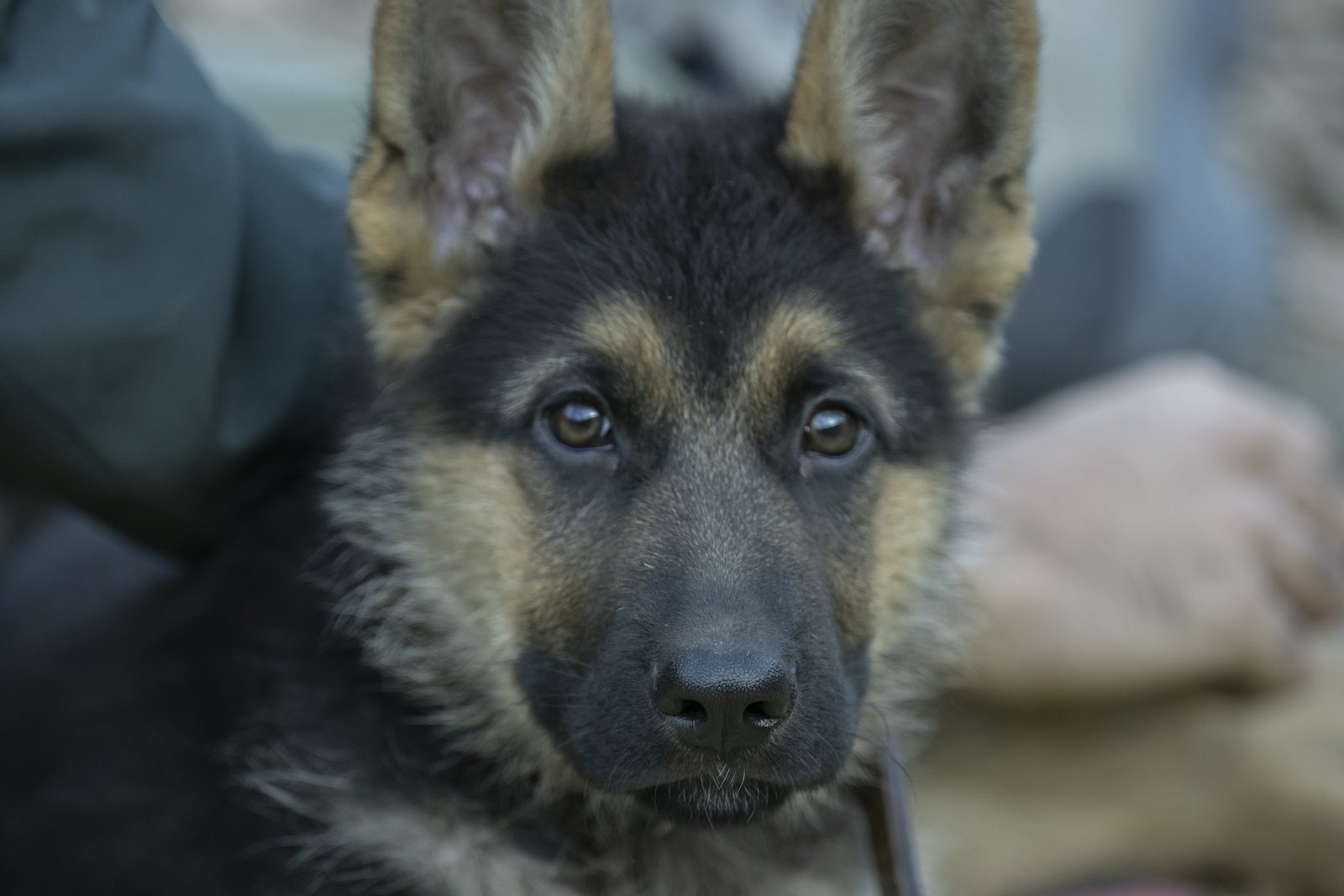
Teething is also why the biting stage feels endless — sore gums want pressure. Frozen chews are the single most useful thing you can hand over; our puppy biting guide covers the rest of the method.
The Problems That Need a Vet
Book an appointment if you see any of these. None of them improve on their own, and all of them are more comfortable and cheaper to treat early.
- Gingivitis — a red, inflamed line where gum meets tooth. The earliest stage, and the only one that is fully reversible.
- Periodontal disease — tartar under the gum line destroying the attachment that holds teeth in. Extremely common by middle age and largely invisible from outside.
- Fractured teeth — a chipped or broken tooth, especially with a dark spot in the middle, exposes the pulp and is painful and prone to infection.
- Tooth root abscess — often shows as a swelling below the eye or along the jaw, sometimes bursting and discharging.
- Retained puppy teeth — double teeth at around six months, trapping food and affecting the bite.
- Growths or ulcers — any lump, sore or colour change in the mouth needs checking rather than watching.
- Sudden reluctance to eat hard food or chewing on one side only — one of the clearest behavioural signs of dental pain.
The most common thing owners say after a dental is that their dog seems years younger. That is not the anaesthetic wearing off — it is what a dog looks like when chronic pain stops.
What Happens at a Professional Dental
The word “dental” covers a proper veterinary procedure, and knowing what it involves makes the cost and the anaesthetic much less alarming.
Your dog is given a general anaesthetic, usually with pre-anaesthetic blood tests and a drip. The vet charts every tooth, probes the pockets around them, and takes dental x-rays — because most disease is below the gum line and invisible otherwise. Teeth are scaled above and below the gum, then polished, because a scaled-but-unpolished tooth attracts plaque faster. Anything diseased or fractured is extracted or referred, and your dog goes home with pain relief.
Scraping visible tartar off a conscious dog looks impressive and addresses almost nothing. It cannot clean below the gum line, where the actual disease is, cannot take x-rays, cannot treat what it finds, and can leave a smooth-looking tooth over a diseased root. Veterinary dental organisations advise against it.
The Dental Kit Worth Owning
We recommend product types and the features that matter rather than sponsored placements, and we link to live Amazon results instead of quoting prices that go stale. As an Amazon Associate we may earn from qualifying purchases — at no extra cost to you.
A dog toothbrush and enzymatic dog toothpaste
The only thing on this page proven to remove plaque before it hardens. A long-handled brush reaches the big back teeth on a large dog without you having to put your hand inside the mouth, and enzymatic pastes keep working chemically for a while after brushing.
- Removes plaque inside the 24–48 hour window that matters
- Long handle suits a large breed’s back teeth
- Dog paste is designed to be swallowed — no rinsing needed
- A finger brush is a good stepping stone for nervous dogs
Good to know: brush the outside surfaces only, at the gum line, in small circles. Build up over a week rather than starting on day one, and stop while your dog is still relaxed.
| Item | What to look for | Find it |
|---|---|---|
| Dog toothbrush | Long handle, soft bristles; finger brush as a backup | See options → |
| Enzymatic toothpaste | Made for dogs, flavoured, xylitol free | See options → |
| Rubber chew toy | Natural rubber with ridges — stuff and freeze | Check price → |
| Vet-approved dental chews | Dentable with a thumbnail; recognised dental seal | See options → |
| Lick mat | Distraction that makes handling sessions easier | See options → |
7 Mistakes (and the Fix for Each)
❌ 1. Assuming dog breath is normal
It is the most commonly ignored symptom in dogs, and it usually means bacteria are already at work.
✅ Fix: treat a change in breath as a prompt to look in the mouth and, if anything looks off, book a check.❌ 2. Relying on chews instead of brushing
Chews help a little. Nothing removes plaque as reliably as a brush, and tartar cannot be chewed off at all.
✅ Fix: brush daily, use chews as a bonus rather than a substitute.❌ 3. Antlers and hard bones
Excellent at scraping tartar, excellent at fracturing the big carnassial teeth.
✅ Fix: the thumbnail test — if you cannot dent it, it can break a tooth.❌ 4. Starting with the brush
Going straight in with a brush on day one is how most dogs learn to avoid the whole business.
✅ Fix: a week of taste, then finger, then brush. Ten seconds at a time.❌ 5. Using human toothpaste
Xylitol is toxic to dogs, and fluoride is not meant to be swallowed.
✅ Fix: dog paste only. It is cheap, flavoured, and safe to swallow.❌ 6. Skipping the mouth at the annual check
Ten seconds of a vet’s attention can catch a problem two years before you would.
✅ Fix: ask specifically about teeth at every appointment, and take a photo if something looks new.❌ 7. Delaying a dental because of the anaesthetic
Understandable, but leaving infected teeth in place has its own risks and means more extractions later.
✅ Fix: talk through pre-anaesthetic bloods and monitoring with your vet. Modern protocols are safer than most owners assume.🕕 Brush before dinner
The meal becomes the reward and the habit sticks. Owners who brush “before bed” tend to stop within a month.
📸 Photograph the gum line
A photo every few months makes gradual tartar build-up obvious in a way daily looking never does.
🐕 Start at nine weeks
There is nothing to clean on a puppy. Do it anyway, so the routine is completely normal by adulthood.
🧊 Freeze the chew toys
Stuffed and frozen gives sore teething gums the pressure they want, with none of the fracture risk.
Frequently Asked Questions
How often should I brush my German Shepherd’s teeth?
Daily is the goal, because plaque hardens into tartar within 24 to 48 hours. If daily is genuinely impossible, three or four times a week is far better than nothing — but the more often you do it, the less there is for a vet to remove later.
Why does my dog’s breath smell so bad?
Most often bacteria associated with plaque, tartar and gum disease. Occasionally it points to something else — kidney disease, diabetes and gut problems can all change breath — so persistent bad breath, especially with any change in drinking, appetite or weight, deserves a vet visit rather than a breath spray.
Are dental chews enough on their own?
No. Some chews with recognised veterinary approval do reduce plaque and tartar measurably, but none match brushing, and none remove tartar that has already hardened. Use them alongside a brush, not instead of one.
When do German Shepherd puppies lose their baby teeth?
Milk teeth start being replaced at around three to four months, with the full set of 42 adult teeth usually in place by six or seven months. Finding tiny teeth on the floor, or a little blood on a toy, is normal during that window.
My dog broke a tooth — is it urgent?
Book an appointment promptly. A fracture that exposes the pulp is painful and will become infected, even though most dogs carry on eating as though nothing happened. Your vet will decide between extraction, root canal treatment or referral.
Is anaesthesia-free teeth cleaning a good option?
Veterinary dental bodies advise against it. It only addresses the visible surfaces, cannot clean below the gum line where disease actually happens, cannot take x-rays or treat what it finds, and can leave a tooth looking clean while the root is diseased.
✅ Your Dental Checklist
- 30 seconds of brushing daily, outside surfaces, at the gum line
- Dog toothpaste only — never human toothpaste
- Weekly ten-second mouth check as part of grooming
- Gums pale pink, no red line, refill under two seconds
- Nothing chewed that you cannot dent with a thumbnail
- No antlers, hooves, cooked bones or weight-bearing bones
- Teeth checked by your vet at every appointment
- Retained puppy teeth checked at around six to seven months
- Bad breath treated as a symptom, not a joke
- Chewing on one side or dropping food → vet
- Professional dental done when advised, not delayed
- Anaesthesia-free scaling avoided
The Bottom Line
Teeth are the part of a German Shepherd’s health that owners most often leave alone until it becomes a bill. They are also the easiest to protect: thirty seconds a day with a brush and a flavoured paste, a weekly look under the lip, and chews that cannot break a tooth.
Do that from puppyhood and there is a very good chance your dog reaches old age with a mouth that has never needed anything more than a check-up — which, for a breed that hides pain as well as this one does, is a genuinely valuable thing to be able to say.
- Grooming your German Shepherd — where the weekly mouth check fits in
- Healthcare for your German Shepherd — checks, vaccines and warning signs
- Senior German Shepherd care — why dental pain matters even more later
- Puppy biting and teething — surviving the sore-gum months
Recommended German Shepherd gear for this guide
Orthopedic large dog bed (memory foam)
Best for: Joint comfort and stretch-out sleep
- Pressure relief
- Washable cover
- Non-slip base
Affiliate link — we may earn a commission, at no cost to you.
Folding dog ramp for SUVs
Best for: Senior or post-injury vehicle access
- Folds flat
- Non-slip surface
Affiliate link — we may earn a commission, at no cost to you.
Quiet nail grinder
Best for: Smooth nail maintenance
- Quiet motor
- Multiple speeds
Affiliate link — we may earn a commission, at no cost to you.

Keep reading
More in Health & Senior Care →
Senior German Shepherd Care: Comfort, Mobility, Daily Setup
Practical changes that keep a senior German Shepherd comfortable — bedding, traction, routine adjustments, and when to call…
Showing Your German Shepherd in Competition: A Beginner Guide
How dog showing works for German Shepherds: what judges assess, eligibility, classes, the three ring skills, grooming, kit,…
Raw Diets for Dogs: Honest Facts, Real Risks and Practical Tips
A balanced guide to raw feeding: the four types of raw diet, which claimed benefits hold up, the…