Should You Shave Your German Shepherd? The Straight Answer
Why shaving a double coat makes a dog hotter rather than cooler, what happens to the coat afterwards, clipper alopecia and the permanent risk, when clipping genuinely is appropriate, and the deshedding routine that actually works.

Short answer: no — and it makes them hotter, not cooler
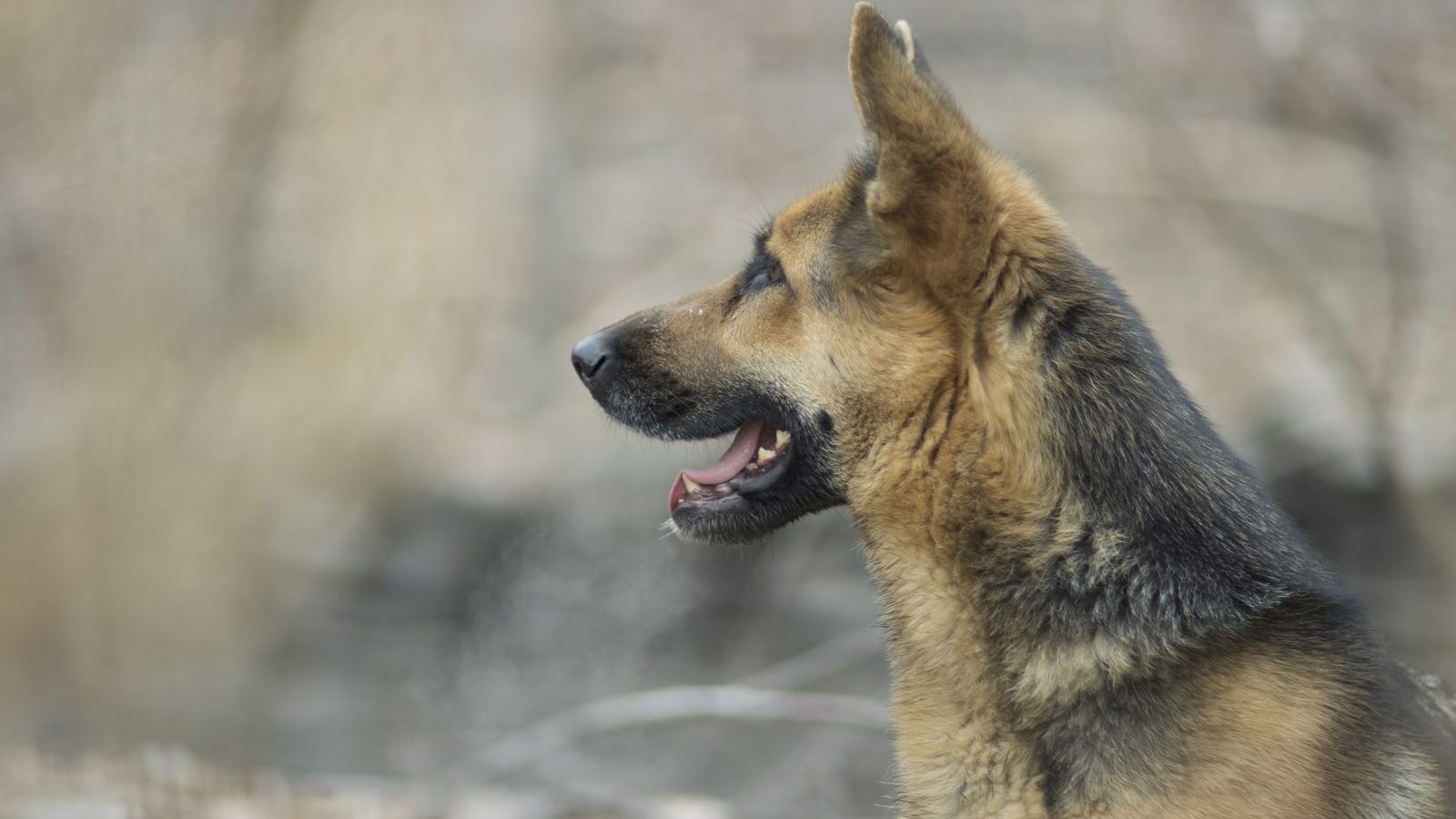
A German Shepherd’s double coat is insulation that works in both directions. It keeps heat out in summer just as it keeps warmth in during winter, and it shields the skin from sun. Shave it and you remove the cooling system, expose pale skin to burning, and risk clipper alopecia — patchy, woolly regrowth that in some dogs never fully recovers. The only good reasons are medical: surgery, severe matting, or a vet’s instruction.
It is late June, the house is filling with tumbleweeds of grey fluff, your dog is lying flat on the kitchen tiles looking like a bearskin rug, and somebody at the park has just told you their groomer does a lovely summer shave. It is one of the most understandable impulses in dog ownership — and one of the few where the well-meaning instinct is precisely backwards.
The confusion is completely reasonable. If you wore a fur coat in August you would be miserable, so it follows that your dog must be. But dogs do not cool the way we do. They barely sweat through the skin at all — they cool by panting, and the coat is doing something entirely different from what a jumper does on a person.
This guide explains how the double coat actually works, exactly what happens when it is clipped off, the one condition that makes a shave permanent, when shaving genuinely is the right call, and what to do instead — because the underlying problem, a hot and heavily shedding dog, is real and there are good answers to it.
German Shepherds, Huskies, Malamutes, Golden Retrievers, Border Collies, Corgis, Pomeranians and Australian Shepherds all share this coat structure and this advice. It does not apply to single-coated breeds like Poodles, Bichons or Yorkshire Terriers, which genuinely do need regular clipping — which is a large part of why the confusion exists at all.
How the Double Coat Actually Works
Your dog is wearing two entirely different coats that do two entirely different jobs, and the mistake people make is treating them as one thick layer.
| Guard coat (topcoat) | Undercoat | |
|---|---|---|
| Texture | Long, coarse, straight, slightly oily | Short, soft, dense, woolly |
| Job | Repels water, dirt and debris; blocks UV; protects skin from scrapes and bites | Traps a layer of air next to the skin for temperature regulation |
| Shedding | Slowly and continuously, all year | Continuously, plus two dramatic seasonal blows |
| In summer | Reflects sun and shields skin from burning | Thins naturally; the trapped air insulates against heat |
| Regrows after clipping | Slowly, often unevenly, sometimes never fully | Fast — and it grows back first, which is the whole problem |
That last row is the crux of the entire argument. When you clip a double coat, the soft undercoat grows back quickly and the coarse guard hairs do not. The result is a dog whose protective outer layer has been replaced by dense wool — worse at repelling water, worse at blocking sun, worse at regulating temperature and considerably harder to groom.
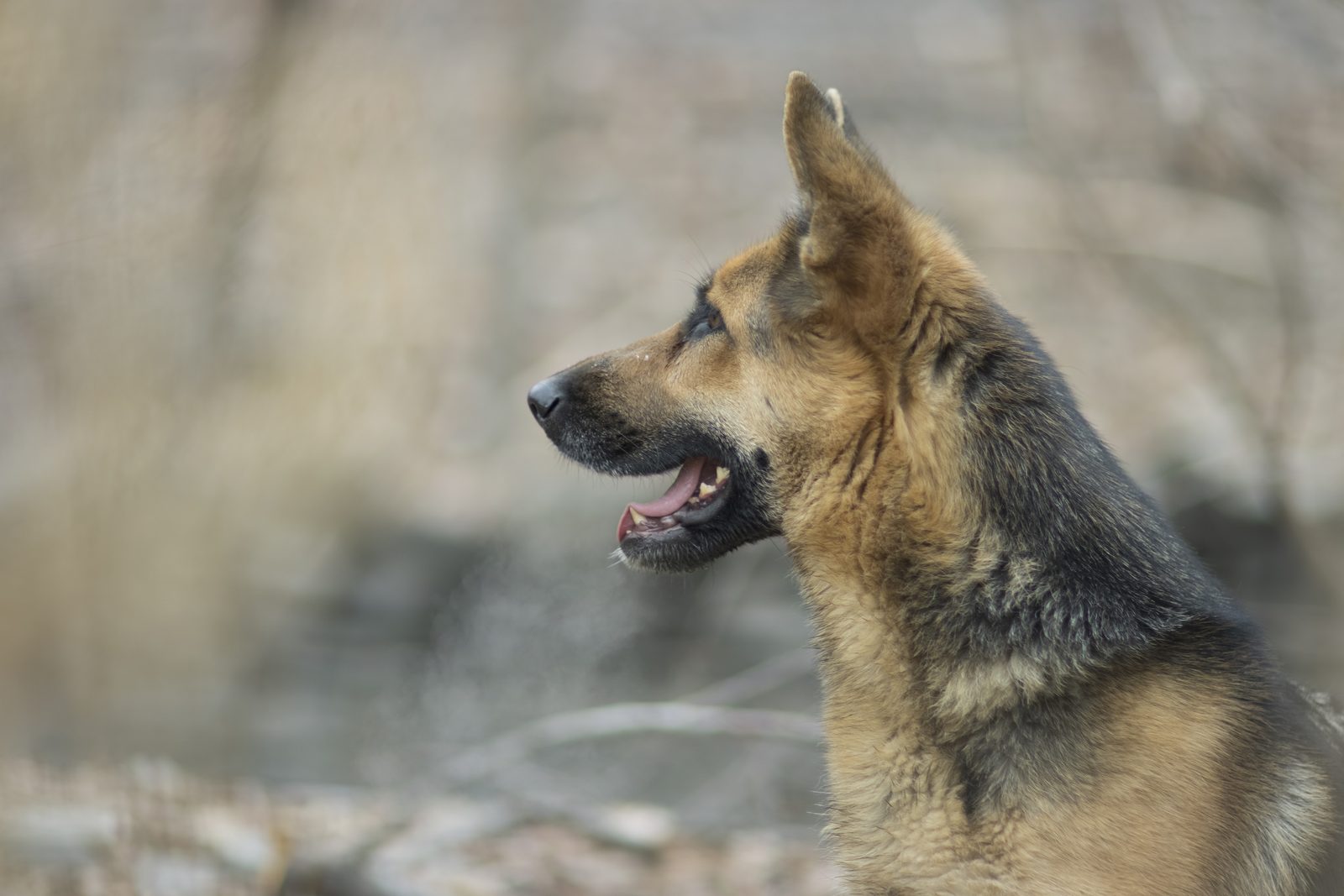
The undercoat is not a jumper — it is insulation, and insulation works in both directions. The same trapped air that keeps cold out in January keeps heat out in July. Removing it does not open a window; it removes the wall.
Why Shaving Makes a Dog Hotter
Dogs have sweat glands only in their paw pads, and those contribute almost nothing to cooling. Essentially all of a dog’s heat loss happens through panting — moving air over the wet surfaces of the tongue, mouth and upper airway so that evaporation carries heat away.
Notice what is missing from that description: the skin. Because dogs do not cool through the skin, exposing more skin does not help them cool. What it does do is let radiant heat reach the skin directly.
The three things a shave actually changes
- Sun reaches the skin. The guard coat is a UV barrier. Underneath it, most Shepherds have pale, thin, sun-naive skin that burns easily — and repeated burning raises the long-term risk of skin cancer.
- The insulating air layer is gone. On a 35 °C day, ambient air is hotter than your dog. That trapped layer was slowing heat transfer inwards; without it, heat reaches the skin faster.
- Nothing improves about panting. The actual cooling mechanism is completely unaffected by how much hair is on the dog’s back.
Two things are usually happening. First, the groom included a proper deshed, which removes dead undercoat — and that genuinely does help. Second, air moving over bare skin feels different to the dog and to your hand, without changing core temperature. You got the real benefit from the deshedding, and paid for it by losing the guard coat.
What Actually Happens When You Shave
Working through it in order, from the day of the groom onwards.
Week one: sunburn risk
Pale skin that has never seen direct sun is suddenly exposed. Burning happens fast, particularly on the back, flanks and the bridge of the nose, and it is genuinely painful for the dog.
Weeks two to six: itching and irritation
Clipped guard hairs regrow with blunt cut ends rather than tapered tips, which is prickly. Many dogs scratch and rub, and some develop folliculitis or hot spots from the irritation.
Months two to four: the undercoat wins
Undercoat regrows fast; guard hairs are slow. The dog develops a dense, woolly, cotton-wool texture that mats more easily and holds water and dirt instead of shedding them.
Six months to two years: patchy recovery
Most dogs eventually recover a reasonable coat. Some end up permanently patchy, with bald or thin areas over the back and flanks and a texture that never returns to the original.
Two other practical consequences are worth naming. A shaved dog loses the coat’s protection against insect bites, which matters more than people expect in summer. And they lose protection against scrapes, brambles and rough ground — the guard coat is genuinely armour for a working breed.
Clipper Alopecia: The Permanent Risk
This is the outcome that turns a bad haircut into a lasting problem. Post-clipping alopecia — often called clipper alopecia or, informally, “coat funk” — is a failure of the hair to regrow properly after clipping, and it is documented specifically in double-coated northern and working breeds.
The clipped area simply does not come back. Regrowth may take a year or more, may return only as undercoat, or may never fully return at all, leaving a bald or downy patch with a visible border where the clippers ran.
🎲 It is unpredictable
Nobody can tell you in advance whether your dog will be affected. Plenty of shaved Shepherds regrow fine; some do not, and there is no way to identify which is which beforehand.
🩺 There is no reliable treatment
Melatonin is sometimes tried and results are inconsistent. Mostly the advice is to wait, protect the skin, and hope. That is a thin plan for a cosmetic decision.
📈 Risk rises with repetition
Dogs shaved every summer are at higher cumulative risk, and each cycle gives the guard coat less chance to fully re-establish before it is removed again.
🔍 Get bald patches checked
Symmetrical hair loss can also indicate hypothyroidism or Cushing’s disease. Do not assume every patch is clipper-related — a blood test rules the alternatives out.
The coat took your dog’s whole life to grow. It takes twenty minutes to remove and, for an unlucky minority, it never properly comes back.
Five Myths, Answered
| The claim | What is actually true |
|---|---|
| “It will keep him cooler in summer” | Dogs cool by panting, not through the skin. The coat insulates against incoming heat and blocks UV. Shaving removes both and improves nothing |
| “It will stop the shedding” | Shaving cuts hair; it does not stop the follicle cycling. You get shorter hairs, in the same quantity, that now weave into fabric more stubbornly |
| “It’s more hygienic” | A shaved double coat holds water and dirt against the skin instead of shedding them, and damp skin under dense undercoat is where hot spots start |
| “It will grow back the same” | Usually, eventually, imperfectly. Sometimes not at all. Guard hairs regrow far more slowly than undercoat and the texture is frequently permanently altered |
| “My groomer does it all the time” | Many do, on request. That reflects customer demand rather than coat science — a good groomer will explain why they would rather deshed instead |
When Shaving Is Genuinely Appropriate
There are real exceptions, and it is worth being clear about them so nobody refuses a necessary clip on principle.
- Surgery or a medical procedure. Surgical sites, ultrasound windows and IV catheter sites all need clipping. This is non-negotiable and entirely appropriate.
- Severe, pelt-like matting. Mats pull the skin, hide sores and cause real pain. If the coat cannot be safely brushed out, clipping is the kinder option — and the priority then is preventing it recurring.
- Skin disease needing topical treatment. Some conditions require medication reaching the skin directly, or a wound needing daily monitoring.
- Severe hot spots. Clipping around an acute moist dermatitis lesion is standard veterinary practice — it lets the area dry and be treated.
- Hygiene trims for an incontinent or immobile senior. A sanitary trim around the rear is not a full-body shave and is often genuinely necessary.
- Explicit veterinary instruction. If your vet says clip, clip. They are weighing a specific clinical problem against a cosmetic risk.
Excessive panting that will not settle, thick ropey drool, bright red or very pale gums, wobbling, vomiting, collapse. Move to shade, wet the coat with cool — not ice-cold — water, get air moving, and ring a vet immediately. Heatstroke kills fit young dogs, and it kills shaved dogs just as readily as unshaved ones. Prevention is about time of day, water, shade and never leaving a dog in a car.
What to Do Instead
The impulse behind shaving is legitimate: your dog is hot and your house is full of hair. Both problems have better answers.
Deshed properly — this is the actual solution
Removing dead undercoat is what people think shaving does, except it works and does no damage. A thorough deshed pulls out the loose, packed wool that is genuinely trapping heat and holding moisture, while leaving the guard coat intact to do its job.
The difference in a heavily shedding Shepherd is dramatic — you can fill a carrier bag with undercoat from one session during a coat blow, and the dog is visibly more comfortable afterwards. That is where the “he seems cooler” impression comes from, and you can have it without the clippers.
The three-tool routine
- Undercoat rake — the workhorse. Pulls dead undercoat from the dense areas: ruff, trousers, tail base, flanks.
- Slicker brush — finishes the topcoat, lifts remaining loose hair, smooths everything down.
- A bath and a proper blow-dry during a coat blow — a high-velocity dryer blasts out more loose undercoat in fifteen minutes than a week of brushing.
Undercoat rake with rotating teeth
This is the single most useful grooming tool a German Shepherd owner can own, and it is the honest alternative to the clippers. Long, widely spaced pins reach through the guard coat to pull dead undercoat out from underneath, without cutting or damaging the topcoat. Rotating teeth turn as they pass through, which reduces pulling on the skin — worth having on a dog who is not keen on being groomed. Ten minutes a day through a coat blow will fill a bag and transform how much hair ends up on your floor.
- Removes the dead undercoat that actually traps heat
- Leaves the guard coat completely intact and doing its job
- No clipper alopecia risk, no sunburn risk, no regrowth gamble
- Cuts household hair dramatically during a coat blow
- Rotating teeth are far more comfortable on sensitive dogs
See undercoat rakes on Amazon →
Technique note: work in the direction of the coat, in short sections, with light pressure — let the pins do the work rather than dragging. Concentrate on the ruff, behind the ears, the trousers and the tail base, which is where the undercoat packs hardest. If you hit a mat, tease it apart with your fingers rather than forcing the rake through it.
A Grooming Schedule That Works
| Period | Brushing | Bathing | Notes |
|---|---|---|---|
| Normal weeks | 2–3× weekly, 10 min | Every 6–12 weeks | Slicker plus a quick rake through the dense areas |
| Spring coat blow (Mar–May) | Daily, 15–20 min | Every 3–4 weeks | The heavy one. Rake is doing most of the work |
| Summer | 2–3× weekly | As needed | Check for hot spots under the dense areas after swimming |
| Autumn coat blow (Sep–Nov) | Daily, 15–20 min | Every 3–4 weeks | Growing in the winter undercoat as well as dropping summer coat |
| Winter | 2× weekly | Every 8–12 weeks | Dry thoroughly after wet walks — damp undercoat is the enemy |
Over-bathing is its own mistake. Frequent shampooing strips the natural oils that make the guard coat water-repellent, and a Shepherd who is bathed every fortnight often ends up with a duller coat and drier skin. Between baths, a rinse with plain water is usually enough.
Keeping a Shepherd Cool in Summer
Everything that genuinely helps a hot dog has nothing to do with the coat.
- Walk early morning and late evening; skip the middle of the day entirely
- Test the pavement with the back of your hand for seven seconds
- Shade and constant fresh water, indoors and out
- A cooling mat, damp towel to lie on, or a fan indoors
- Wet the coat with cool water — evaporation from a wet coat genuinely cools
- Frozen enrichment: stuffed toys, ice blocks with treats inside
- A paddling pool for standing and lying in
- Deshed thoroughly so dead undercoat is not trapping heat
- Shaving the coat
- Leaving a dog in a car, ever, for any length of time
- Exercising in the heat because “he wants to” — he will not stop himself
- Ice-cold water immersion in a heatstroke emergency; use cool water
- Assuming a dog in shade is safe on a very humid day
- Cooling coats left on until they dry — they then trap heat
Talking to Your Groomer
Most groomers know all of this. Some will still shave a double coat because the customer insisted, and a booking is a booking. Be clear about what you want.
- Ask for a “deshedding treatment” or “full deshed and blow-out” — that is the industry term for what you actually want.
- Say explicitly: no clippers on the body. Sanitary trim, feet and hocks tidied is fine.
- A good groomer will push back if you ask for a shave, and explain why. That is a sign of a good groomer, not an obstructive one.
- If a groomer offers a summer shave for a double-coated breed without any discussion, consider going elsewhere.
- Book deshedding appointments for March and September — the start of each coat blow, when they do the most good.
The Tools That Actually Help
| Tool | What it does | How often | Find it |
|---|---|---|---|
| Undercoat rake | Pulls dead undercoat from beneath the guard coat | Daily in a coat blow, weekly otherwise | See options → |
| Slicker brush | Finishes the topcoat and lifts remaining loose hair | 2–3× weekly | See options → |
| Wide-tooth comb | Checks for mats behind ears, in the ruff and trousers | Weekly | See options → |
| High-velocity dryer | Blows loose undercoat out after a bath — the fastest deshed there is | Bath days during a coat blow | See options → |
| Deshedding shampoo | Loosens dead undercoat before brushing | Coat-blow baths only | See options → |
7 Mistakes (and the Fix for Each)
The fix: deshed instead. It delivers the comfort you were after, keeps the sun and heat barrier intact, and carries no regrowth risk.
The fix: a rake and ten minutes a day. Shaving does not slow the follicle cycle — it just produces shorter hairs that stick to fabric harder.
The fix: the undercoat packs hardest in the ruff, behind the ears, the trousers and the tail base. Those areas need the most work and get the least.
The fix: comb the friction areas weekly — behind the ears, armpits, the ruff. A mat caught at day three brushes out; at week three it does not.
The fix: every six to twelve weeks outside a coat blow. Over-bathing strips the oils that make the guard coat repel water in the first place.
The fix: towel down to the skin in the dense areas. Damp undercoat held against warm skin is exactly how hot spots start.
The fix: get symmetrical or spreading hair loss checked. Hypothyroidism and Cushing’s disease both cause it, and both are treatable once identified.
Frequently Asked Questions
Should I shave my German Shepherd in summer?
No. The double coat insulates against incoming heat and shields the skin from UV, and dogs cool by panting rather than through the skin — so shaving removes protection without improving cooling. It also risks sunburn and clipper alopecia. Deshed thoroughly instead, which delivers the comfort you are actually after.
Will my German Shepherd’s coat grow back after shaving?
Usually, but slowly and often imperfectly. Undercoat regrows fast while coarse guard hairs take six months to two years, producing a woolly texture in the meantime. A minority of double-coated dogs develop post-clipping alopecia and never regrow a normal coat in the clipped area.
Does shaving stop a German Shepherd shedding?
No. Shaving cuts existing hairs; it does not change how the follicles cycle. You shed the same volume of hair, just in shorter pieces that weave into carpet and clothing more stubbornly. Regular undercoat raking is what genuinely reduces the hair in your house.
Is it ever okay to shave a German Shepherd?
Yes, for medical reasons: surgery, ultrasound, IV sites, severe pelt-like matting that cannot be brushed out safely, skin disease needing topical treatment, hot spots, or hygiene trims for an immobile senior. If your vet advises clipping, follow that advice — a clinical need outweighs a cosmetic risk.
What is clipper alopecia in dogs?
Post-clipping alopecia is a failure of hair to regrow normally after clipping, documented in double-coated breeds. The area may take a year or more to recover, may return as undercoat only, or may stay bald. There is no reliable treatment, and nobody can predict which dogs will be affected.
How do I keep my German Shepherd cool without shaving?
Walk early and late, test the pavement with your hand, provide constant shade and water, use a cooling mat or damp towel, wet the coat with cool water, freeze enrichment toys, and offer a paddling pool. Then deshed properly — removing dead undercoat is the one grooming change that genuinely helps.
✅ Your Coat Care Checklist
- No clippers on the body unless a vet has advised it
- Undercoat rake used daily through spring and autumn
- Ruff, behind ears, trousers and tail base worked properly
- Slicker brush 2–3× weekly year round
- Friction areas combed weekly to catch mats early
- Bathing kept to every 6–12 weeks outside a coat blow
- Coat dried to the skin after swimming or wet walks
- Deshedding appointments booked for March and September
- Groomer told explicitly: deshed, no body clipping
- Summer walks moved to early and late
- Shade, water and a cooling mat available
- Heatstroke signs known by everyone in the house
- Any bald or thinning patch checked by a vet
The Bottom Line
Your German Shepherd’s coat is not the problem. It is a two-layer system that blocks sun, insulates against heat as well as cold, repels water and protects the skin — and it took their whole life to grow.
Shaving it removes all of that, gives nothing back in cooling, risks sunburn and irritation, and carries a real chance of permanently altering the coat. The thing you actually wanted — a more comfortable dog and less hair in the house — comes from an undercoat rake, ten minutes a day, and a proper deshed twice a year.
Keep the clippers for the vet. Buy the rake, put a fan on in the kitchen, walk at seven in the evening instead of two in the afternoon, and your dog will be considerably better off than any shaved Shepherd on the street.
- The shedding guide — why they blow coat and what to do about it
- Grooming schedule — week by week through the year
- Grooming your German Shepherd — the full routine and tools
- Dog swimming — including how to dry a double coat properly
Recommended German Shepherd gear for this guide
Deshedding brush for double coats
Best for: Undercoat removal during shedding season
- Reduces loose hair
- Easy clean release
Affiliate link — we may earn a commission, at no cost to you.
Slicker brush for double coats
Best for: Daily maintenance brushing
- Self-cleaning options
- Gentle pins
Affiliate link — we may earn a commission, at no cost to you.
Gentle dog shampoo
Best for: Routine baths
- Gentle formula
- Rinses clean
Affiliate link — we may earn a commission, at no cost to you.

Keep reading
More in Grooming & Shedding →
Grooming Your German Shepherd: The Complete Home Routine
The full home grooming routine: understanding the double coat, the five tools that cover everything, the ten-minute brushing…
German Shepherd Shedding Guide: How Much, When, and What to Do
German Shepherds shed daily and blow coat twice a year. Here's what to expect and the brush routine…
German Shepherd Grooming Schedule (Weekly + Monthly)
A simple, sustainable grooming schedule for a German Shepherd: brushing, baths, nails, ears, dental, parasite check, and seasonal…