Best Dog Houses for German Shepherds: Sizing, Warmth and Safety
The sizing formula and why bigger is colder, what actually keeps a dog warm, insulation and raised floors, straw instead of blankets, summer heat, temperature limits, and the honest answer on whether this breed should live outside.

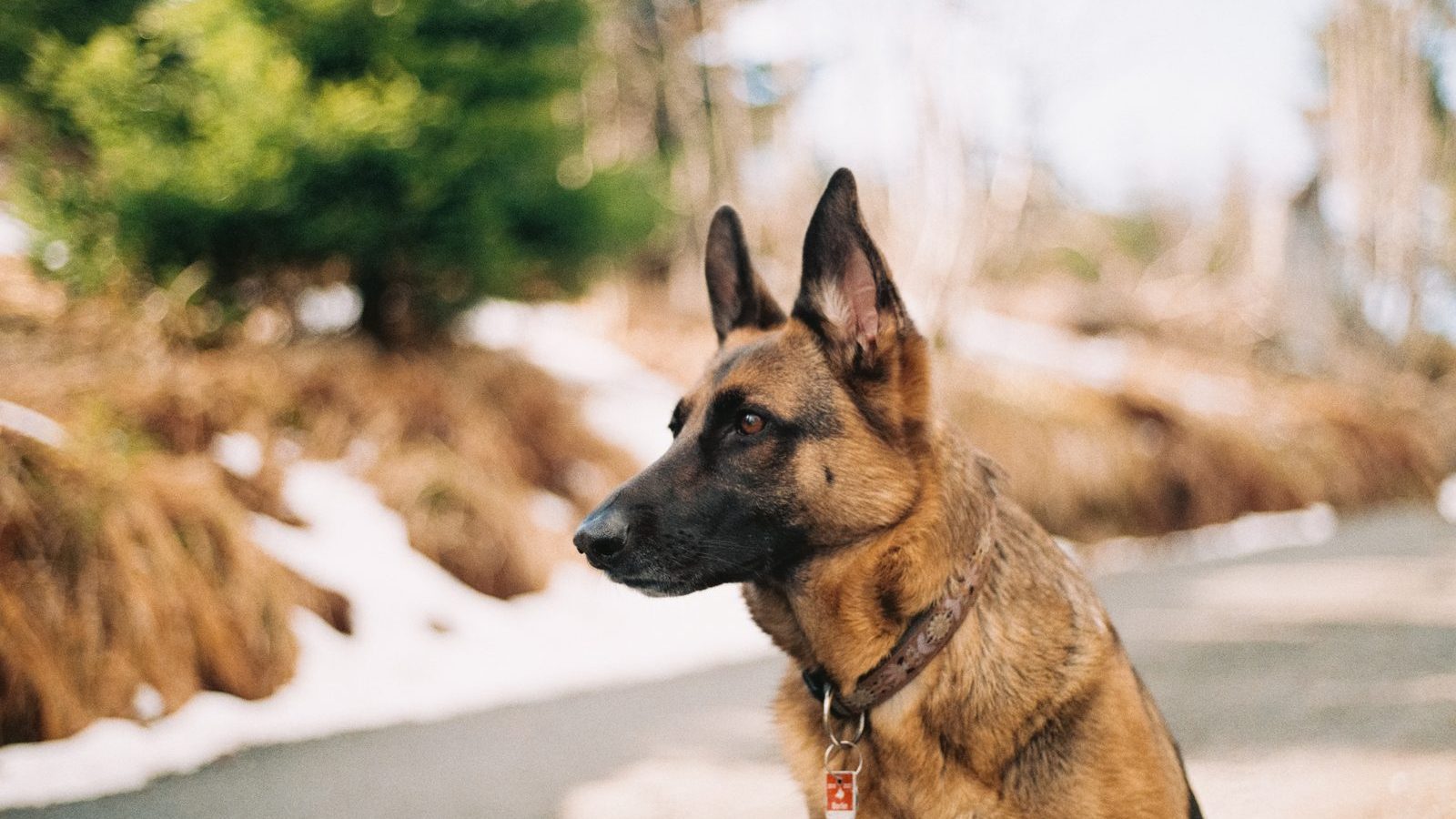
Short answer: a kennel is daytime shelter, not accommodation — and smaller than you think
A German Shepherd needs a kennel roughly 25% longer and taller than the dog, with a raised floor, insulated walls, a door out of the prevailing wind and straw rather than blankets. Counter-intuitively, oversized is worse — a dog cannot warm a large air space with body heat. And the honest part: this breed is bred to live with people, and a dog housed permanently outdoors is a dog with a behaviour problem waiting to happen.
Search for a German Shepherd dog house and you will be shown enormous wooden structures with pitched roofs, little porches and a plaque above the door. They look wonderful in the photographs. Most of them are the wrong size, the wrong height off the ground, and lined with exactly the wrong bedding.
Getting an outdoor shelter right is genuinely a matter of physics rather than taste — thermal mass, air volume, ground contact and moisture. And the biggest single mistake owners make is buying something far too large, on the reasonable but incorrect assumption that a big dog needs a big house.
This guide covers the sizing formula, what actually keeps a dog warm, insulation, placement, bedding, safety, temperature limits — and, first, the more important question of whether your dog should be out there at all.
German Shepherds were developed to work in close partnership with a person, and they are strongly predisposed to separation-related distress. A dog kept permanently outside, away from the household, is at real risk of becoming anxious, barky, destructive or withdrawn — and outdoor-only dogs are heavily represented among the behaviour cases behaviourists see. A kennel is shelter for time spent in the garden. It is not a place to live.
Should a German Shepherd Live Outside?
Physically, this breed handles cold well. A dense double coat, a substantial body and a working heritage in northern European winters mean a healthy adult copes with weather that would be unreasonable for many dogs.
The problem is not thermal. It is social.
👥 They are built around a person
Centuries of selection for close handler partnership produced a dog who needs to be near their people. Isolation is a genuine welfare issue for this breed specifically, not a sentimental one.
🗣️ Isolation produces noise
Barking, howling, fence-running and digging are the standard outcomes of a Shepherd left alone in a garden. Every one of them is a symptom of the same unmet need.
🔍 Problems go unnoticed
Lameness, weight loss, a lump, changes in drinking or toileting — all of it is spotted weeks later in a dog you only see for walks and feeding.
⚖️ There may be legal limits
Many jurisdictions have welfare requirements about shelter, tethering and time left outdoors. Check what applies where you live before making any permanent arrangement.
The right use of a dog house is shade, shelter and a dry place to lie while your dog is in the garden with you or for a few hours in the day. Used that way it is genuinely valuable. Used as a bedroom, it produces exactly the problems people then look for training advice about.
Sizing: the Formula, and Why Bigger Is Worse
This is the part that gets bought wrong most often, so it is worth doing with a tape measure.
| Dimension | How to work it out | Typical for an adult German Shepherd |
|---|---|---|
| Length | Nose to base of tail, plus 25% | Around 100–115 cm (40–45 in) |
| Width | Enough to turn around and lie stretched on the side | Around 70–80 cm (28–32 in) |
| Height | Floor to top of head when sitting, plus 25% | Around 85–95 cm (34–38 in) |
| Door height | About 75% of shoulder height — they duck to enter | Around 45–55 cm (18–22 in) |
| Door width | Chest width plus a little | Around 30–35 cm (12–14 in) |
| Floor height | Off the ground, on feet or a pallet | At least 10 cm (4 in) |
Now the counter-intuitive bit. A dog house is heated by one radiator: the dog. Body heat warms the air inside, and the smaller that volume of air, the warmer it gets. Double the internal space and your dog is trying to heat twice as much air with the same output — which is why an oversized kennel is genuinely colder than a correctly sized one.
The rule is simply: big enough to stand up, turn around and lie fully stretched out on the side. Not one centimetre more.
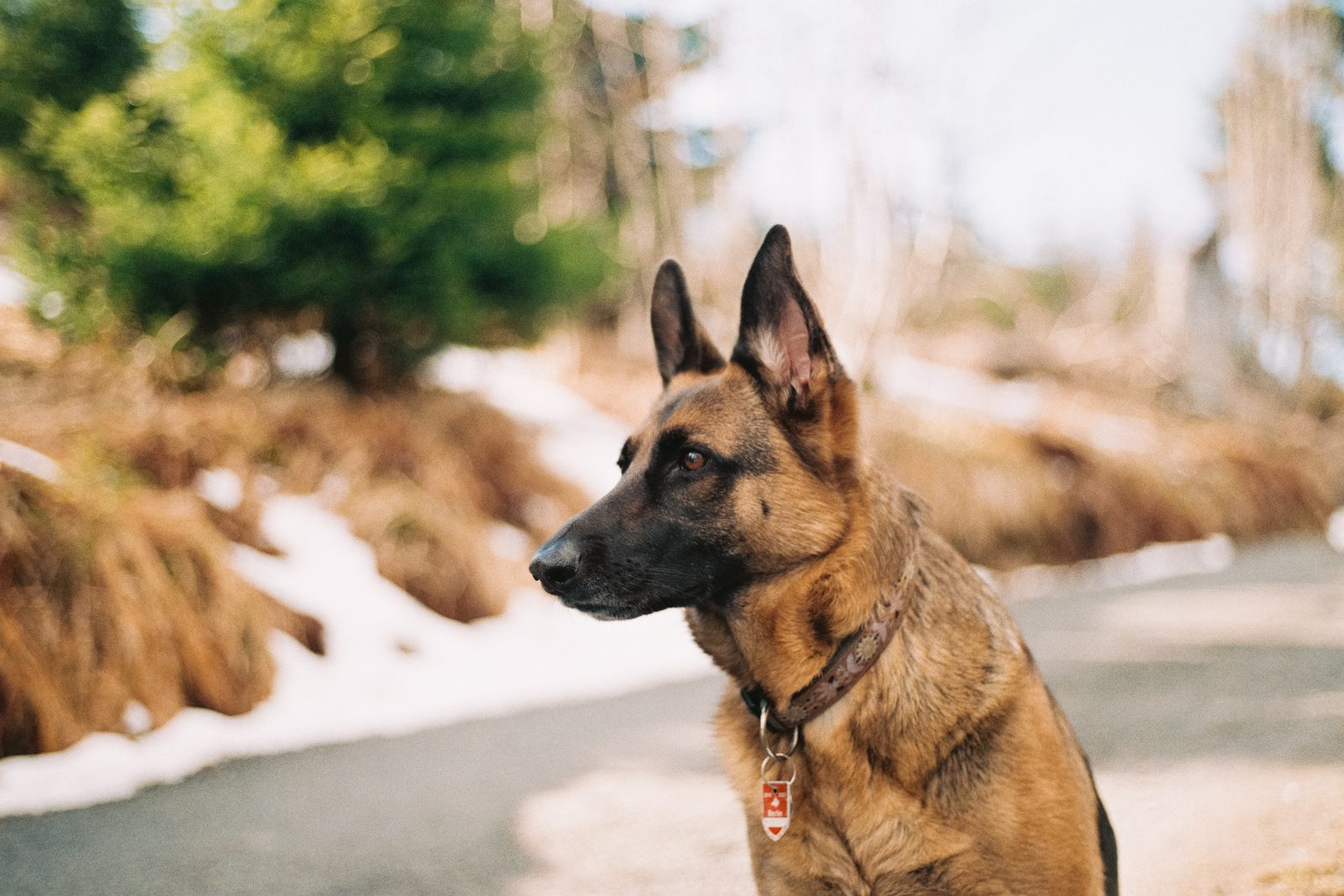
What Actually Keeps a Dog Warm
Four things, in order of how much they matter.
- Staying dry. A wet double coat loses most of its insulating value. Rain coming in, or condensation, undoes everything else.
- Getting off the ground. Cold, damp earth or concrete pulls heat out of a lying dog continuously. A raised floor is the single highest-value feature.
- Blocking wind. Wind chill through a draughty structure is worse than the ambient temperature suggests. An offset doorway or a baffle wall solves this cheaply.
- Trapping body heat. Correct size, insulated walls and deep bedding your dog can nest into.
Notice that three of the four are about keeping something out rather than adding warmth. That is why heaters are rarely the answer and a well-built dry box usually is.
Materials Compared
| Material | Strengths | Weaknesses |
|---|---|---|
| Solid timber | Naturally insulating, sturdy, easy to modify and insulate further | Needs annual treatment; can rot; heavy; chewable at the doorway |
| Insulated panel / composite | Best thermal performance; no rot; easy to clean | Most expensive; less attractive |
| Moulded plastic | Cheap, waterproof, very easy to disinfect, light | Poor insulation on its own; can become an oven in sun; often too light and blows about |
| Metal | Durable, chew-proof | Avoid. Conducts heat and cold badly; freezing in winter, dangerous in summer |
| Thin plywood flat-pack | Cheap | Delaminates within a season or two outdoors; almost no insulation value |
For most people, solid timber with an asphalt or felt roof, insulated and raised, is the right balance of cost, warmth and durability. If you buy plastic for the ease of cleaning, plan to line it and to weight it down.
Insulation Done Properly
Insulation only works if the dog cannot reach it — and a German Shepherd will reach anything reachable.
- Sandwich it. Rigid foam board between the outer wall and an inner plywood lining. Never exposed inside.
- Insulate the floor and roof too. Heat leaves upward and is drawn downward. Walls alone do half a job.
- Avoid fibreglass wool anywhere a dog could access it — the fibres are an irritant and a serious problem if eaten.
- Leave a small vent high on the back wall. Sealing it completely traps moisture, and damp bedding is worse than a slightly cooler box.
- Use a reflective barrier under the roof if summer heat is your bigger problem.
The Raised Floor, and Why It Matters Most
If you change one thing, change this. A kennel sitting directly on soil, paving or concrete is in permanent thermal contact with the ground and wicks moisture up through the base.
Raise it at least ten centimetres on feet, bricks or a pallet. That creates an air gap that insulates, lets the base dry out, keeps rainwater from pooling underneath, and stops the floor rotting. It also makes the whole structure far less attractive to rodents.
A one to two centimetre fall from back to front means any water that gets in runs out rather than sitting under the bedding. Combined with a raised base and a slight roof overhang, that keeps the inside dry through a wet winter with no other intervention.
Door Design and Placement
- Offset the doorway to one side rather than centring it. That lets your dog lie in a corner out of the direct line of wind and rain.
- Face it away from the prevailing wind — in much of the northern hemisphere that means avoiding a south-westerly aspect.
- Keep it smaller than you would guess. Around three-quarters of shoulder height. Dogs duck; a big opening is just a hole for weather.
- Add a roof overhang of ten to fifteen centimetres above the door to keep rain off the entrance.
- Consider an internal baffle wall — a short partition inside creating an L-shaped entry. Excellent for wind, and cheap to add.
- Door flaps are optional and many dogs dislike them. If you fit one, introduce it gradually rather than expecting immediate use.
- Line the door edge with metal trim if your dog chews the frame — a common problem with an anxious dog left outside.
Bedding: Straw, Not Blankets
This is the most common and most consequential mistake. Blankets and duvets feel like kindness and are the wrong choice outdoors.
| Bedding | Verdict | Why |
|---|---|---|
| Straw | Best | Hollow stems trap air, repels moisture, dogs can burrow and nest in it, cheap to replace |
| Wood shavings (dust-extracted) | Good | Insulating and absorbent. Avoid cedar with sensitive dogs |
| Blankets and duvets | Avoid outdoors | Absorb moisture, stay damp for days, freeze, and a wet blanket actively draws heat out |
| Hay | Avoid | Not the same as straw — holds moisture, moulds quickly, and mould is a genuine health risk |
| Raised camp bed alone | Summer only | Excellent airflow in heat; offers no insulation in winter |
| Nothing | Never | Bare floor conducts heat away continuously, whatever it is made of |
Fill the kennel with a deep layer of straw your dog can push into a nest — deeper than looks necessary, because they will compress it. Check it weekly, top it up, and replace it entirely when it is damp, flattened or starting to smell. That is usually monthly in winter.
Where to Put It
- Sheltered from the prevailing wind — against a wall or fence
- Shade over it during the hottest part of the day
- Where your dog can see the house and the back door
- On free-draining ground, never a spot that puddles
- Away from a boundary fence with a pavement or neighbouring dog
- Close enough that you pass it regularly
- Full sun with no shade — a kennel becomes an oven quickly
- The bottom of a slope where water collects
- Right against a boundary where passers-by trigger barking
- Out of sight of the house entirely
- Under a tree that drips for hours after rain
- Anywhere your dog cannot also reach shade and water
That fourth point on the left matters more than it sounds. A Shepherd who can see the back door settles far better than one facing a fence — being able to watch for you is most of what makes an outdoor space tolerable to this breed.
Summer, and the Heat Problem
Everyone designs a dog house for winter. Far more dogs come to harm in it in July.
An enclosed box in direct sun heats up exactly like a parked car, and a dark plastic kennel is the worst offender. A dog who goes inside for shade can end up somewhere considerably hotter than the garden.
Frantic panting that will not settle · thick ropey drool · bright red or very pale gums · wobbling, vomiting, collapse. Move to shade, wet the coat with cool — not ice-cold — water, get air moving over them, and ring a vet immediately. In hot weather a kennel is not adequate shade on its own: dogs need natural shade, moving air, constant water and, above all, access to the house.
- Provide separate natural shade — a tree, a sail, a covered area — as well as the kennel.
- Swap straw for a raised camp bed in summer so air flows underneath.
- Open extra vents, or remove a panel if the design allows.
- Two water bowls in shade, in case one is knocked over.
- A paddling pool beats every cooling gadget sold.
- Bring them in. On a hot day the correct place for a German Shepherd is a cool tiled floor indoors.
Temperature Limits
| Conditions | Healthy adult with proper shelter | Puppy, senior, ill or thin-coated |
|---|---|---|
| Above 25 °C | Shade, water, restrict activity; indoors preferred | Indoors |
| 10 to 25 °C | Comfortable | Comfortable |
| 0 to 10 °C | Fine with dry shelter and straw | Limited time; supervise |
| −5 to 0 °C | Short periods only, with excellent shelter | Indoors |
| Below −5 °C | Indoors | Indoors |
| Wet and windy, any temperature | Treat as considerably colder than the thermometer says | Indoors |
These are guides for time spent outdoors during the day, not for overnight housing. Check the local welfare rules where you live, and apply the simplest test there is: if your dog is shivering, lifting paws, reluctant to leave the kennel, or hunched, they have been out too long.
What to Buy
Extra-large insulated wooden kennel with a raised floor
For a German Shepherd, look for a solid timber kennel around 100–115 cm long with a raised, slightly sloping floor, an offset doorway and a felt or asphalt roof with a decent overhang. Resist the urge to go bigger — a dog heats the air inside with body heat alone, so an oversized kennel is genuinely colder. Solid timber insulates far better than moulded plastic and can be lined with rigid foam board later; check the panel thickness rather than the overall dimensions, because thin plywood flat-packs delaminate within a season or two outdoors.
- Timber insulates far better than plastic or metal
- Raised floor stops ground chill and damp wicking up
- Offset door lets your dog lie out of the wind
- Removable roof makes weekly bedding changes practical
- Easy to add rigid foam insulation and a plywood lining
See large dog houses on Amazon →
Remember what it is for: shade and shelter during garden time, not accommodation. A German Shepherd should sleep indoors with their people — this breed’s attachment to its household is the whole reason they are such good dogs to live with.
| Item | Why it earns its place | What to look for | Find it |
|---|---|---|---|
| XL wooden kennel | Shelter that is warm, dry and correctly sized | ~110 cm, raised floor, offset door | See options → |
| Raised camp bed | The summer bedding answer — airflow underneath | XL, chew-resistant frame, mesh top | See options → |
| Shade sail | Natural shade beats a hot box every time | UV-rated, 3 m or larger | See options → |
| Heavy water bowl | Two of them, in shade, that cannot be tipped | Stainless steel, weighted or rubber base | See options → |
| Paddling pool | The most effective cooling item you can buy | Rigid PVC, puncture resistant | See options → |
7 Mistakes (and the Fix for Each)
The fix: measure your dog and add 25%. An oversized kennel is colder, because your dog’s body heat has to warm all that extra air.
The fix: raise it at least ten centimetres. Ground contact draws heat out continuously and wicks damp up through the base.
The fix: deep straw. Blankets absorb moisture, stay damp for days, freeze, and then actively pull heat away from a lying dog.
The fix: shade over the kennel, extra ventilation, a raised bed instead of straw, and two water bowls. More dogs are harmed by heat in one than by cold.
The fix: leave a small high vent. Trapped moisture makes bedding damp and mouldy, which is worse than a marginally cooler box.
The fix: solid timber, insulated. Metal conducts heat and cold badly in both directions, and thin plywood delaminates within a season.
The fix: bring your dog inside. A kennel is shelter for garden time — a German Shepherd housed away from their people is the classic starting point for anxiety, barking and destruction.
Frequently Asked Questions
What size dog house does a German Shepherd need?
Roughly 110 cm long, 80 cm wide and 90 cm tall — measured as your dog’s length and sitting height plus about 25%. Big enough to stand, turn around and lie fully stretched on their side, and no bigger. An oversized kennel is genuinely colder because your dog heats the internal air with body heat alone.
Can a German Shepherd live outside?
Physically they tolerate cold well, but this breed was developed for close partnership with a handler and is strongly predisposed to separation-related distress. Dogs housed permanently outdoors commonly develop barking, digging, fence-running and anxiety. A kennel should provide shelter for time in the garden, not serve as accommodation.
What bedding is best for an outdoor dog house?
Straw. The hollow stems trap air, it repels moisture rather than absorbing it, and dogs can burrow into it to make a nest. Blankets and duvets soak up damp, stay wet for days and draw heat away. Avoid hay, which moulds quickly, and never leave a bare floor.
How do I insulate a dog house?
Sandwich rigid foam board between the outer wall and an inner plywood lining so your dog cannot reach it, and insulate the floor and roof as well as the walls. Avoid fibreglass wool anywhere accessible. Leave a small vent high on the back wall — sealing it completely traps moisture and gives you damp bedding.
How cold is too cold for a German Shepherd outside?
A healthy adult with dry shelter and deep straw copes down to around freezing for limited periods. Below about −5 °C, and in wet or windy conditions at any temperature, they should be indoors. Puppies, seniors, ill dogs and thin-coated dogs need indoors much sooner. Shivering or reluctance to leave the kennel means bring them in.
Should the dog house door have a flap?
Optional, and many dogs dislike them. An offset doorway with a roof overhang and an internal baffle wall blocks wind effectively without one. If you do fit a flap, introduce it gradually with food rather than expecting your dog to push through it straight away.
✅ Your Dog House Checklist
- Dog measured; kennel sized at length and height plus 25%
- Not oversized — stand, turn, stretch out and no more
- Floor raised at least 10 cm off the ground
- Floor sloped very slightly forward
- Walls, floor and roof insulated, lining over the insulation
- Small high vent left open
- Doorway offset, about 75% of shoulder height
- Roof overhang above the door
- Positioned out of the prevailing wind, in view of the back door
- Shade over it in summer, plus separate natural shade
- Deep straw bedding — never blankets or hay
- Bedding checked weekly, replaced when damp
- Two heavy water bowls in shade
- Local welfare rules checked
- Dog comes indoors to sleep, and in heat, cold, wind or rain
The Bottom Line
A good dog house is smaller than the ones in the photographs, raised off the ground, insulated on all six sides, entered through an offset door out of the wind, and filled with deep straw. Get those five things right and you have somewhere genuinely warm and dry for your dog to use during garden time.
Get the summer side right too, because more dogs come to harm from heat in an unventilated box than ever suffer from a cold one.
And keep the purpose clear. Your German Shepherd is a breed built around being with a person — that is the whole reason they are such extraordinary dogs to live with. Give them shelter in the garden by all means. Then let them come in and lie across your feet, which is what they were designed for.
- Treating separation anxiety — why isolation causes problems in this breed
- Should you shave a Shepherd? — how the double coat handles weather
- Can they live in apartments? — space, exercise and what really matters
- Senior care — bedding and warmth for an older dog
Recommended German Shepherd gear for this guide
Heavy-duty German Shepherd crate (42")
Best for: Crate training and safe rest
- Sturdy build
- Double-door access
- Removable tray
Affiliate link — we may earn a commission, at no cost to you.
Orthopedic large dog bed (memory foam)
Best for: Joint comfort and stretch-out sleep
- Pressure relief
- Washable cover
- Non-slip base
Affiliate link — we may earn a commission, at no cost to you.
No-pull German Shepherd harness
Best for: Calm leash walks for strong adult GSDs
- Front + back clip
- Padded chest plate
- Reflective trim
Affiliate link — we may earn a commission, at no cost to you.

Keep reading
More in Gear & Reviews →
Freeze Dried Raw Dog Food: Gimmick or Genuinely Useful?
What freeze-drying actually does, how it compares with frozen raw and kibble, the safety picture stated plainly, what…
Best Dog Jokes and Funny Dog Stories
Eighty dog jokes and puns, German Shepherd humour only owners get, the funny stories every household recognises, jokes…
My Dog’s Eyes Are Red: Causes and What to Do Next
How to tell an urgent red eye from a routine one, nine common causes, the three sight-threatening emergencies,…