Why Do Dogs Bark? The 7 Types of Barking and How to Reduce Each
Seven distinct types of barking and the different fix each one needs, how to identify which you have, teaching a quiet cue that actually works, why bark collars fail, and when barking is a medical sign.

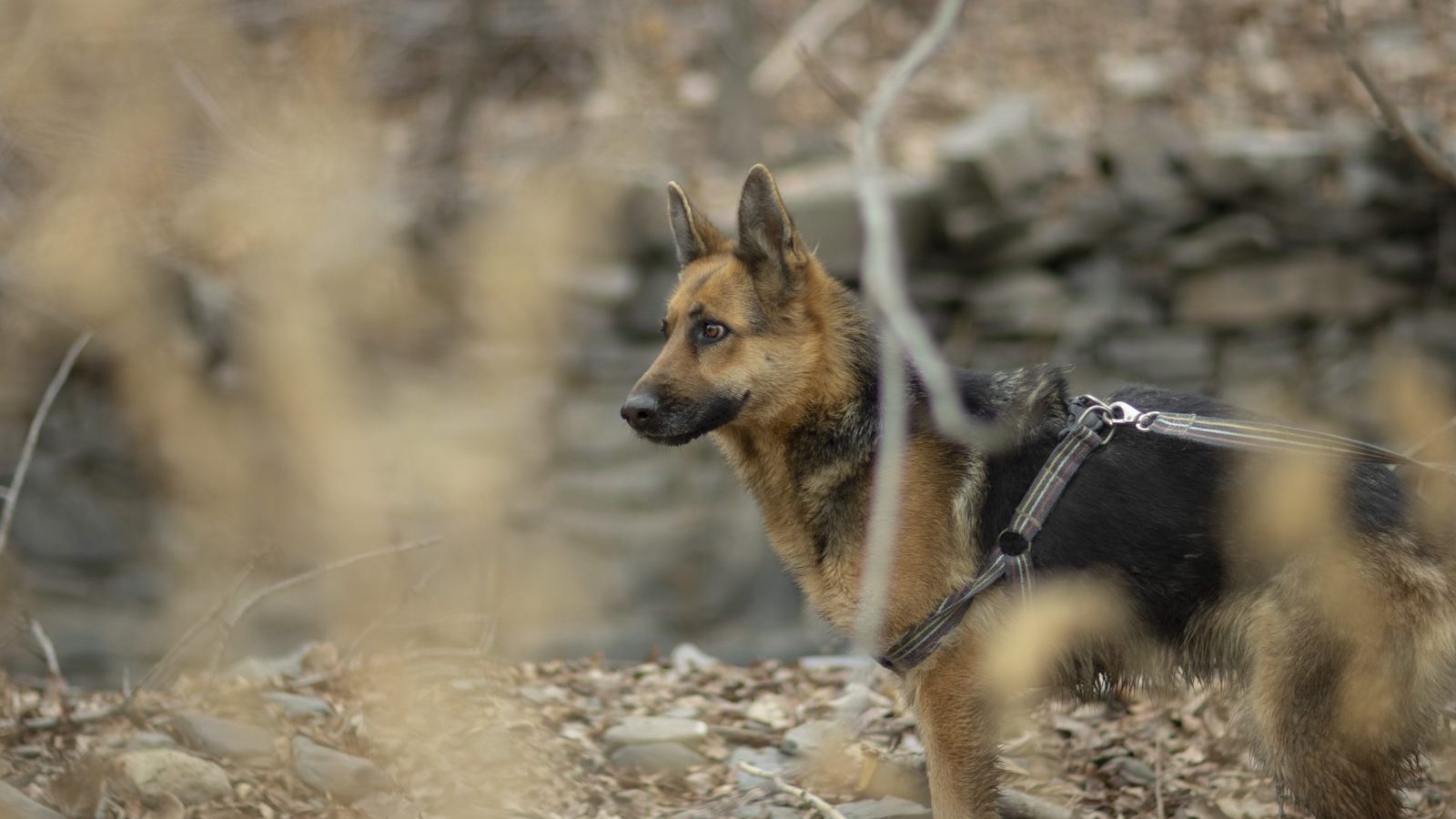
Short answer: there are seven kinds of barking and each needs a different fix
Barking is communication, not a fault. Alert barking, demand barking, frustration barking, fear barking, greeting barking, boredom barking and separation-related barking all sound similar and have completely different solutions — which is why generic advice fails. Work out what the barking achieves for your dog, and the right fix becomes obvious. German Shepherds were bred to alert, so the goal is fewer and shorter, never silent.
Your German Shepherd is at the window again, announcing a delivery van three doors down with the urgency of someone reporting a fire. You say “quiet” for the eleventh time this week. They pause, glance at you, and resume — and you begin to suspect that “quiet” has never once meant anything to either of you.
It probably has not, and the reason is that “stop barking” is not a plan. Barking is a category of behaviour, not a single behaviour, in the same way that “talking” is. A dog barking at a stranger and a dog barking at you for a biscuit are doing entirely unrelated things that happen to make a similar noise.
So this guide is organised by type. Identify which one you have — usually obvious once you know what to look for — and go straight to the fix for that one. There is also an honest section on why bark collars are the wrong answer and what the breed’s alerting instinct means for realistic goals.
A German Shepherd who never barks at anything is not a well-trained dog — they are a dog who has been shut down, or one bred a long way from the breed’s purpose. A reasonable goal is two or three barks, then quiet on cue, and no barking at all in the categories that are genuinely just noise.
Why Dogs Bark at All
Here is something that surprises most owners: adult wolves rarely bark. They howl, whimper and growl, but sustained barking is largely absent. It appears in domestic dogs and in juvenile wolves.
The leading explanation is that barking is a product of domestication — a retained juvenile trait that turned out to be extremely useful to humans. A dog who announces an approaching stranger earns their keep, and for thousands of years we selected accordingly.
Which lands you with a slightly awkward truth. Your German Shepherd’s barking at the window is not a malfunction. It is a feature, working exactly as intended, in a house where nobody needs it any more.
Every bark is doing a job for your dog — creating distance, summoning attention, releasing frustration, or expressing distress. Find the job, and you can either meet that need another way or remove the trigger. Attack the noise itself and you achieve very little.
Identifying Which Type You Have
| Type | When it happens | What the body says | The core fix |
|---|---|---|---|
| Alert / territorial | Someone approaches; a noise outside | Forward, alert, tall, tail high | Manage the view, then teach “thank you, that’s enough” |
| Demand | At you, for food, play or attention | Facing you, expectant, pausing to check | Stop rewarding it; reward quiet instead |
| Frustration / barrier | Behind a fence, window or lead, at something they want | Tense, straining forward, may be repetitive | Remove the barrier from the equation; work under threshold |
| Fear / defensive | At a person, dog or object that worries them | Body low or backing, ears back, may retreat | Add distance; counter-condition. Never punish |
| Greeting / excitement | Arrivals, lead coming out, visitors | Wiggly, loose, whole-body wagging | Lower the arousal; teach an incompatible job |
| Boredom | Alone in a garden, long unoccupied stretches | Rhythmic, monotonous, self-sustaining | More mental work — the fix is a schedule, not a cue |
| Separation-related | Only when left alone; starts within minutes | Panic — pacing, drooling, exit-focused | A full graduated absence protocol |
If you are unsure, ask two questions: what happens immediately before, and what does the dog get out of it. Those two answers place almost every case correctly.
1. Alert and Territorial Barking
The classic German Shepherd version, and the hardest to eliminate because you are working against the breed’s entire purpose.
The self-reinforcing trap is worth understanding: your dog barks at the postman, the postman leaves, and from the dog’s point of view the barking worked. It works every single day, several times a day, which makes it one of the most heavily rehearsed behaviours in the house.
Remove the view
Frosted window film at dog height, a closed curtain, moving the bed away from the front window, or blocking the gap in the fence. Unglamorous and by far the most effective single change.
Acknowledge, then release
Go and look. Say something calm and consistent — “thank you, I’ve got it” — then call your dog away and pay them. You are not arguing with the bark; you are ending the shift.
Teach a “go to mat” alternative
Doorbell rings, dog goes to a bed away from the door, gets paid. This gives them a job that is incompatible with barking at the door, which is far easier than asking for nothing.
Change what the doorbell predicts
For a fortnight, every doorbell sound is followed by scattered treats on the mat. The bell stops meaning “intruder” and starts meaning “food happens over there”.
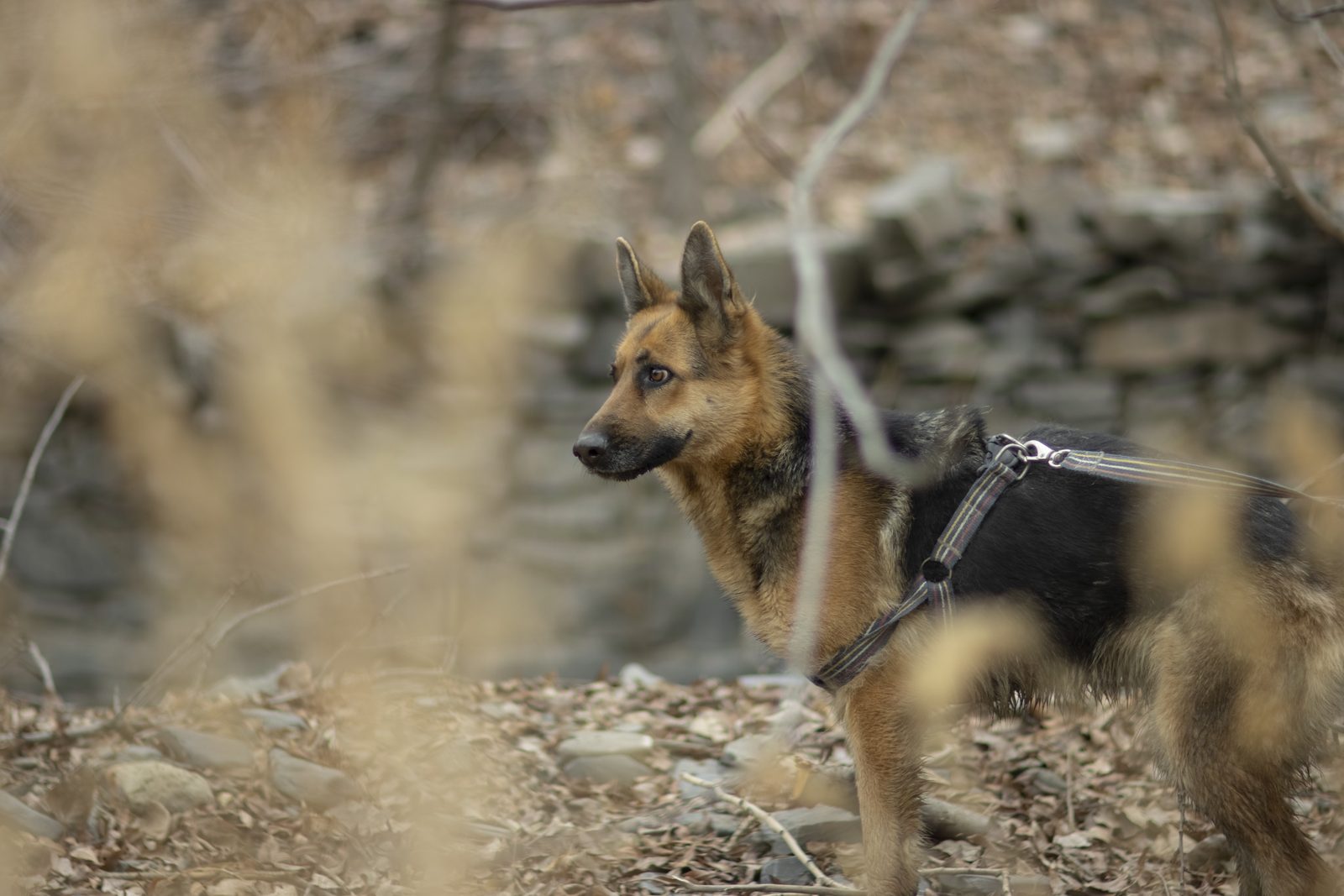
2. Demand Barking
Your dog barks at you, and something happens. Food appears, the ball gets thrown, you look up. This is the most straightforward type to fix and the hardest to fix consistently, because it only takes one person giving in to keep it alive.
- Become completely uninteresting during the bark — no eye contact, no words, turn away
- Reward the moment of quiet, even if it is half a second
- Pre-empt it: give attention before your dog asks
- Teach a polite alternative — a sit, a nose touch, a settle on a mat
- Get every person in the house doing the same thing
- Meet the underlying need with proper exercise and mental work
- Give in “just this once” — that produces the most persistent barking of all
- Say the dog’s name, shush, or make eye contact mid-bark
- Shout — to a dog that reads as joining in
- Expect it to improve before it gets worse (see below)
- Wait for a long silence to reward at first
- Assume it is only about attention if exercise is genuinely lacking
When a behaviour that always worked suddenly stops working, dogs try harder first — louder, longer, more insistent. This is a normal, well-documented pattern, and it is where most owners give in and accidentally teach their dog that extreme barking is what pays. Expect three to five days of escalation, and hold the line through it.
3. Frustration and Barrier Barking
The dog who screams at other dogs on the lead but plays happily with them off it. The dog who patrols the garden fence barking at the neighbour’s dog they have never actually met.
This is not aggression, and it matters enormously to get that right — it is a dog who desperately wants to get to something and cannot. The fix is not correction; it is reducing the frustration.
- Increase distance until your dog can look and still take food. That is your working threshold.
- Block the fence line — solid panels or screening. Barrier frustration at a fence rehearses many times a day.
- Teach a “look at that” game: dog sees the trigger, you mark and pay. The trigger comes to predict food rather than frustration.
- Give legitimate outlets — proper play with suitable dogs, so the drive has somewhere to go.
- Never punish it. Adding discomfort near another dog is precisely how frustration becomes genuine reactivity.
4. Fear and Defensive Barking
The barking that says go away. The body language separates it clearly: weight back rather than forward, ears flattened, possibly retreating between barks, tail low or tucked.
This is the type where getting it wrong causes lasting harm. A frightened dog who is punished for barking learns that the scary thing also predicts unpleasantness from you — which increases the fear while removing the warning.
Suppressing the bark does not remove the fear; it removes the warning. Dogs who have been punished for barking and growling are heavily represented in the histories behind serious bite incidents, because the escalation ladder has had its lower rungs taken away. If your dog is barking out of fear, add distance and get professional help — not a correction.
The approach is the same one used for all fear-based behaviour: find the distance at which your dog notices the trigger but can still eat and disengage, pair the trigger with something excellent, and close the gap over weeks. For anything beyond mild wariness, get a qualified behaviourist involved — this is not a video-tutorial problem.
5. Greeting and Excitement Barking
The happiest and most forgivable kind, and still exhausting at seven in the morning. A loose, wiggly, whole-body-wagging dog making a great deal of noise because you have come home, or because the lead has appeared.
😐 Be boring on arrival
Come in, hang your coat up, greet the dog calmly a minute later. Ecstatic reunions raise the arousal you are trying to lower.
🖐️ Give them something to hold
A toy in the mouth is genuinely incompatible with barking. Keep one by the door and hand it over as you come in.
⏸️ Pause the lead ritual
Lead comes out, barking starts, lead goes back on the hook. Repeat. The walk only proceeds from quiet — and dogs work this out fast.
🪑 Teach a station
Visitors arrive, dog goes to a mat and gets paid there. Greeting happens later, from a calmer starting point.
6. Boredom Barking
Rhythmic, monotonous, self-sustaining. A dog barking at nothing in particular in a garden for forty minutes is not communicating with anyone — the barking has become the activity.
No cue fixes this, because there is nothing to interrupt. What fixes it is giving a working dog something to work at, and for a German Shepherd that means mental effort rather than more distance.
- Scentwork — hide food around the house or garden. Twenty minutes of searching beats an hour of fetch for producing a settled dog.
- Snuffle mats and puzzle feeders — feed part of every meal as a problem to solve.
- Decompression walks — long line, quiet place, let them sniff for an hour without direction.
- Training sessions — three to five minutes, several times a day. Genuinely tiring for this breed.
- Do not leave them in the garden unsupervised for long periods. That is where the habit forms in the first place.
- Protect the sleep. An over-tired Shepherd is noisier, not quieter — adult dogs need a great deal of rest.
7. Separation-Related Barking
Barking or howling that happens only when your dog is alone, begins within minutes of your leaving, and does not settle. This is not a barking problem — it is a panic disorder that produces barking, and treating it as noise gets nowhere.
The distinguishing test is food: a bored dog will happily empty a stuffed toy while you are out; a panicking dog will not touch it. Set up a camera and watch. If you see pacing, drooling, exit-focused destruction and untouched food, you are dealing with separation distress and it needs its own protocol.
A dog howling in an empty house is not being naughty and is not making a point. They are frightened, and no bark collar has ever made a frightened animal feel safer.
Teaching a “Quiet” Cue That Works
Most “quiet” cues fail because they are trained during barking, when the dog is far too aroused to learn anything. The trick is counter-intuitive: teach the barking first.
- Get a bark on cue. Use whatever reliably produces one — knocking on a table, ringing the bell yourself. Mark and pay the bark, and add the word “speak”.
- Wait for the natural pause. Every dog stops to breathe. The instant they do, mark and pay.
- Name the pause “quiet” once you can predict it reliably — never before.
- Extend it gradually. One second of quiet, then two, then five. Vary the durations rather than always increasing.
- Pay generously and calmly. Cheese, not kibble, and delivered without excitement.
- Only then use it in real life, starting with the mildest trigger you have.
One caveat worth knowing: a “quiet” cue works for alert, demand and excitement barking. It does not work for fear or separation distress, because those dogs are not in a state where a cue can reach them. Trying to use it there is how owners conclude that training does not work.
Bark Collars: the Honest Answer
They exist, they are widely sold, and they are the wrong tool. Not merely on ethical grounds — on practical ones.
| Type | How it works | Why it fails |
|---|---|---|
| Static / shock | Electric stimulus on detecting a bark | Banned in several countries. Studies show worse welfare with no advantage over reward-based methods |
| Citronella spray | Sprays the face on detecting a bark | Frequently misfires on other dogs barking; effect fades; adds stress to an already stressed dog |
| Ultrasonic | High-frequency tone | Inconsistent and unreliable, and the noise reaches dogs who did nothing at all |
| Vibration | Buzzes on detecting a bark | Mildest of the four, still punishes a symptom without addressing any cause |
The fundamental problem is the same in every case: they respond to the sound and ignore the reason. A dog barking from fear who is then punished for it becomes a more frightened dog. A dog barking from boredom who is punished is still bored, and will find another outlet — usually chewing or digging.
Worse, they can suppress the warning signals that keep everyone safe. A dog who has learned that vocalising brings unpleasant consequences may skip straight past barking and growling to the next rung of the ladder.
When Barking Is a Medical Sign
A genuine change in barking — new, sudden, or markedly different in character — is a veterinary question before it is a training one.
- Pain. Hip, elbow and spinal pain make dogs more reactive and less tolerant. Extremely common in this breed and easy to miss.
- Hearing loss. A deafening dog barks more, and louder, because they cannot hear themselves or hear you approach.
- Failing sight. A dog who cannot see clearly startles more and barks at shapes they used to recognise.
- Cognitive dysfunction in older dogs — night-time barking, disorientation, staring at walls, disrupted sleep patterns.
- Any sudden onset in a previously quiet dog. Get it checked before you build a training plan on it.
Kit That Genuinely Helps
Frosted static-cling window film
The least glamorous item on this page and comfortably the most effective for the commonest problem. A German Shepherd who patrols a front window is rehearsing alert barking dozens of times a day, and every departing pedestrian confirms that it works. Static-cling film applied to the lower half of the window removes the trigger entirely while letting the light through — no adhesive, no tools, peels off cleanly when you move. It is not a substitute for training, but it stops the behaviour being practised while you train, which is most of the battle.
- Stops the trigger, so the habit is not rehearsed daily
- Keeps natural light while removing the view
- No adhesive — safe for rented homes, peels off cleanly
- Works immediately, unlike everything else on this page
Good to know: measure to the height of your dog’s eyes when standing, and remember a German Shepherd can put their front paws on a sill. Pair it with moving the bed away from the window, and give them a settled place to be elsewhere in the room.
| Item | Which barking it helps | What to look for | Find it |
|---|---|---|---|
| Window film | Alert and territorial | Static cling, frosted, cuts to size | See options → |
| Snuffle mat | Boredom, demand | Large, machine washable | See options → |
| Training mat | Greeting, doorbell, alert | Non-slip, washable, large | See options → |
| Long line | Frustration, fear — working under threshold | 10–15 m biothane, harness clip | See options → |
| Pet camera | Working out what happens when you are out | Live phone streaming | See options → |
7 Mistakes (and the Fix for Each)
The fix: identify the type first. Fear barking and demand barking need opposite approaches, and applying the wrong one makes things measurably worse.
The fix: be quiet and boring. Raising your voice reads to a dog as joining in, and it adds arousal to a situation that needs less of it.
The fix: expect three to five days of louder demand barking before it fades. Giving in at the peak teaches the loudest version.
The fix: add distance and counter-condition. Punishment near a trigger is exactly how frustration turns into genuine reactivity.
The fix: address the cause. Collars respond to the sound and ignore the reason, and can suppress the warnings that keep people safe.
The fix: teach “speak” first, then name the pause. A cue introduced mid-bark simply becomes background noise.
The fix: vet check. Pain, hearing loss, failing sight and canine cognitive dysfunction all present as new or increased barking.
Frequently Asked Questions
Why does my German Shepherd bark so much?
Most often alert barking, which the breed was specifically developed for, or boredom barking from insufficient mental work. Identify what happens immediately before the barking and what your dog gets out of it — that places it in one of seven categories, each with a different fix. Generic “stop barking” advice fails because it ignores the cause.
How do I stop my dog barking at the window?
Remove the view first — frosted static-cling film on the lower half of the window, or move their bed. That stops the behaviour being rehearsed dozens of times a day. Then teach a “go to mat” alternative for the doorbell, and change what the bell predicts by scattering treats on the mat every time it sounds.
Do anti-bark collars work?
They may suppress the sound, but they respond to the noise while ignoring the reason for it — so a frightened dog becomes more frightened and a bored dog finds another outlet. Static collars are banned in several countries, and studies show worse welfare outcomes with no advantage over reward-based methods. They can also suppress the warnings that prevent bites.
How do I teach my dog a “quiet” cue?
Counter-intuitively, teach “speak” first — get a bark on cue and reward it. Then wait for the natural pause every dog takes to breathe, mark and reward that, and only name it “quiet” once you can predict it. Extend the quiet gradually. It works for alert, demand and excitement barking, but not for fear or separation distress.
Is it possible to stop a German Shepherd barking completely?
Not realistically, and it is not a good goal. The breed was developed to alert, and a Shepherd who never makes a sound is usually a shut-down dog rather than a well-trained one. Aim for two or three barks followed by quiet on cue, and eliminate the categories that are simply noise — boredom, demand and frustration barking.
My dog only barks when I am out. What does that mean?
Set up a camera and leave a food toy down. If your dog eats it and is otherwise relaxed, it is boredom and the answer is enrichment. If they will not touch food, pace, drool and focus on the exit, that is separation distress — a panic response needing a graduated absence protocol, not a barking fix.
✅ Your Barking Checklist
- Barking type identified — what triggers it, what it achieves
- Vet check done for any sudden change
- Triggers managed: window film, curtains, fence screening
- Bed moved away from the front window
- Nobody in the house shouts at barking
- Demand barking gets zero response, from everyone
- Quiet rewarded, even half a second of it
- Escalation period expected and held through
- “Go to mat” taught for the door and doorbell
- Doorbell paired with treats for a fortnight
- Fear and frustration worked under threshold, never punished
- Daily mental work: scentwork, snuffle mat, puzzles
- Sleep and rest protected — over-tired dogs are noisier
- “Quiet” taught from “speak”, not mid-bark
- No bark collars of any kind
- Separation-related barking treated as its own problem
The Bottom Line
Your German Shepherd barks because barking works — it moves the postman on, it summons you, it releases frustration, or it fills an empty afternoon. Every one of those is a different problem wearing the same sound.
So stop trying to stop the noise and work out what the noise is for. Frost the window, give the brain a job, ignore the demands completely, add distance from the frightening things, and teach a “quiet” that means something because you taught “speak” first.
And keep the target honest. You did not get a breed developed to announce approaching strangers in the hope of silence. Two barks and a settle is a well-trained German Shepherd. Nothing at all would be a different dog altogether.
- Solving behaviour problems — the eight most common issues
- Treating separation anxiety — for barking that only happens alone
- Enrichment ideas — the fix for boredom barking
- Training your German Shepherd — the full method, age by age
Recommended German Shepherd gear for this guide
Training treat pouch with clip
Best for: Hands-free training sessions
- Magnetic close
- Clip-on belt
Affiliate link — we may earn a commission, at no cost to you.
Low-calorie training treats
Best for: High-frequency reward training
- Soft, easy to break
- Quick consumption
Affiliate link — we may earn a commission, at no cost to you.
Long training line (30ft)
Best for: Recall practice in safe open areas
- Builds recall
- Lightweight options
Affiliate link — we may earn a commission, at no cost to you.

Keep reading
More in Training →
Shock Collars for Large Dogs: What the Evidence Says and Safer Alternatives
What controlled studies actually found about electronic collars, why they appear to work, the specific risks, where the…

Treating Separation Anxiety in Dogs: A Step by Step Plan
How to tell separation anxiety from boredom, why a camera is essential, finding your dog's threshold, the graduated…
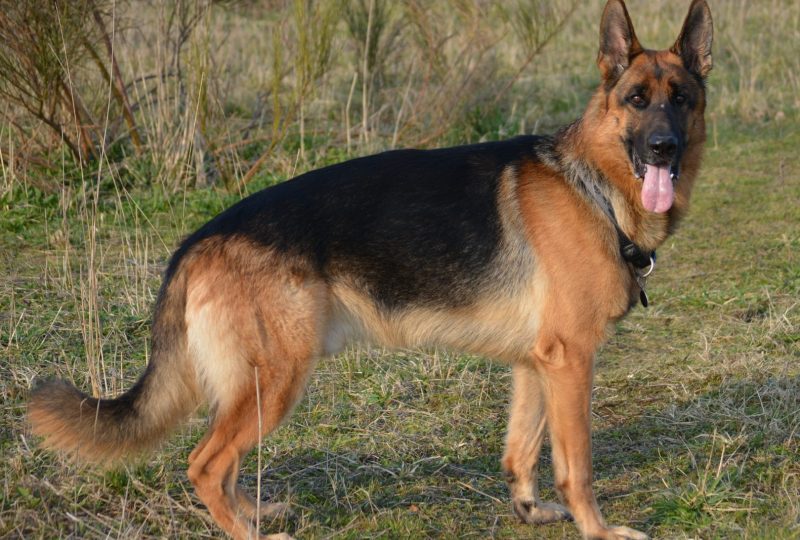
Solving German Shepherd Behaviour Problems: The 8 Most Common Issues
The diagnostic method that works for every behaviour problem, why the vet comes first, and practical fixes for…