German Shepherd Enrichment Ideas (Indoor + Outdoor)
Brain games, scent work, and calm chew rituals that give a German Shepherd real work — not just more miles.

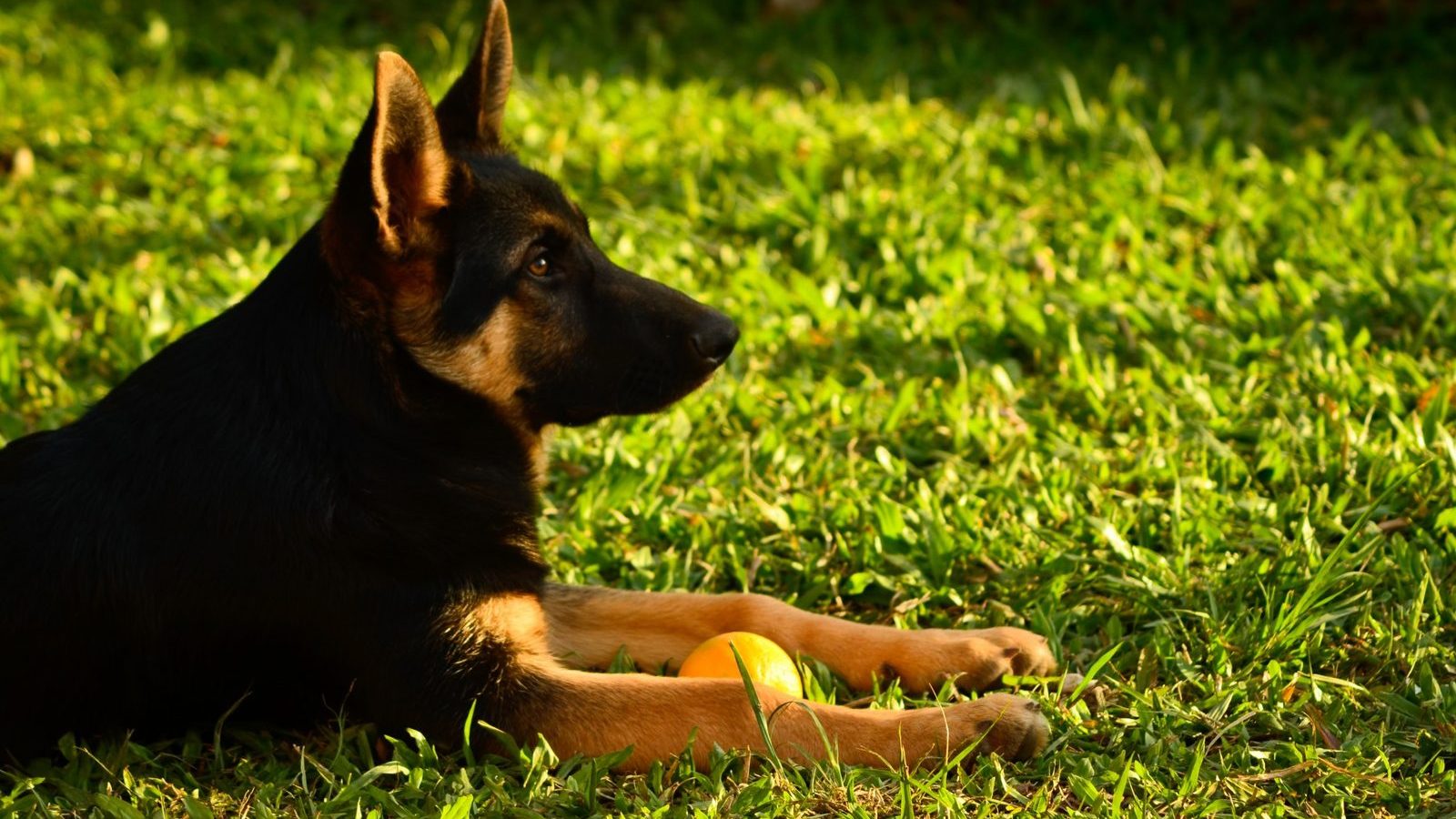
Short answer: give the brain a job and the body calms down
German Shepherds were bred to think for a living. Sniffing, chewing, licking, searching and problem-solving tire them in a way walking never will — and most of it costs nothing. Ten to twenty minutes of proper nose work often settles a dog more effectively than an extra hour on the lead. Below are 30 ideas, indoors and out, sorted by age and effort.
If you have ever come home from a long walk, taken off your boots, sat down with a cup of tea — and watched your German Shepherd immediately start pacing, whining and shoving a toy into your knee, you already know the problem. The legs are tired. The brain has not started work yet.
Enrichment is simply giving a dog a chance to do the things dogs are built to do — search, sniff, chew, dismantle, solve. For a breed developed to work all day using its head, that is not a luxury or a rainy-day activity. It is the missing half of the routine.
Everything here is cheap or free, most of it takes under ten minutes to set up, and none of it requires you to be a trainer. There are ideas for a nine-week-old puppy, a maniac adolescent, a busy adult and a stiff senior — plus the safety rules that stop enrichment turning into an emergency vet visit.
Anyone whose German Shepherd is restless, destructive, barky or hard to settle — and anyone who simply wants a more interesting life for their dog. It pairs directly with our exercise by age guide: that one covers the body, this one covers the brain.
The Five Types of Enrichment
Rotating between these five stops your dog getting bored of the same puzzle and covers all the different needs a working breed has.
| Type | What it means | Quick examples |
|---|---|---|
| Food | Making your dog work for calories they were getting anyway | Snuffle mat, scatter feed, stuffed chew, puzzle bowl |
| Scent | Using the nose — by far the most tiring for the brain | Find-it games, scent trails, sniffari walks |
| Cognitive | Problem-solving and learning | New tricks, shaping games, muffin-tin puzzles |
| Physical / sensory | Different textures, surfaces and safe novelty | Tunnels, wobble boards, paddling pools, new places |
| Social | Interaction with people and suitable dogs | Tug with rules, training games, a calm dog friend |
Enrichment is not a toy you buy. It is a chance to solve something — and the best ones use food your dog was going to eat anyway, so they cost nothing in calories or money.
10 Food and Scent Games
Start here. These are the highest-value, lowest-effort ideas in the whole guide, and every one of them can be fed from the daily ration rather than on top of it.
- Scatter feed. Throw a handful of kibble into the grass or a rug and let them hunt. Two minutes to set up, ten minutes of nose work.
- Snuffle mat. Fabric strips hiding food. Perfect for a rainy morning, and washable.
- Frozen stuffed chew. Soaked kibble, a little wet food or plain yoghurt, frozen overnight. Twenty minutes of licking, which is genuinely calming for dogs.
- Muffin tin puzzle. Food in the cups, tennis balls on top. A five-second setup that occupies most dogs for ten minutes.
- Towel roll. Sprinkle food along a towel, roll it up, let them unpick it. Supervise so nobody eats the towel.
- “Find it” around the room. Hide five pieces of food while your dog waits, then release them to search. Build up to hiding them in another room.
- Scent trail. Drag a smelly treat along the grass in a winding line and finish with a jackpot. Excellent for teenagers with too much energy.
- Which hand? Two fists, one treat, let them choose. Silly, thirty seconds, and dogs love it.
- Box hunt. Several cardboard boxes, food in one or two. Nose work plus permission to destroy something.
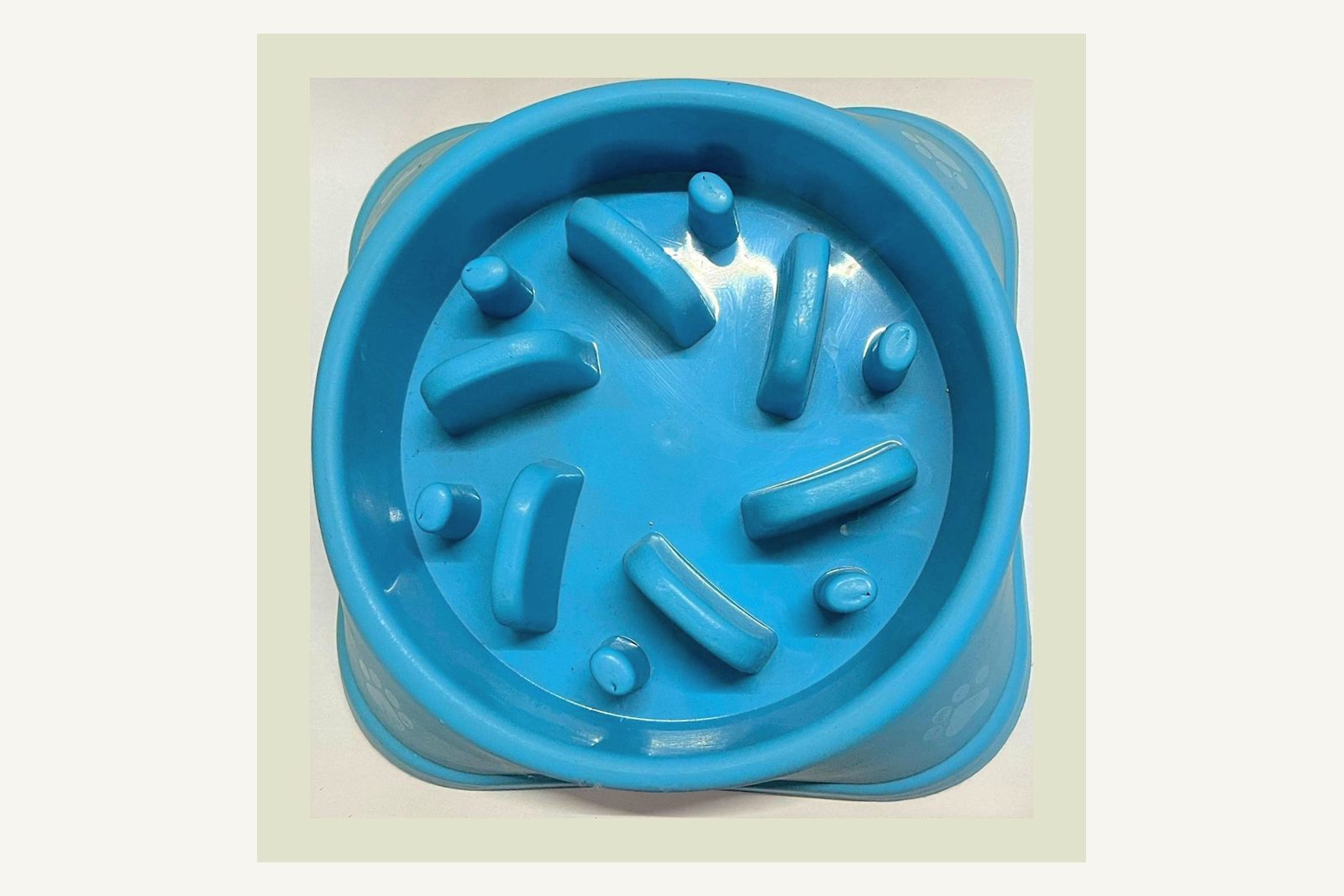
- Lick mat with the meal spread on it. Slower eating, calmer dog, and a great bathroom or nail-trim distraction.
10 Indoor Ideas for Bad Weather
For the days when it is pouring, you are ill, or the dog cannot go out. None of these need much space — a hallway is plenty.
- Teach one new trick. Spin, chin rest, paw targets, “go to mat”. Five minutes of learning beats twenty minutes of pacing.
- Stair recalls (adults only, no repeated stairs for puppies). One person at the top, one at the bottom, treats both ends.
- Name the toys. Teach two toys by name, then ask for one. Shepherds are very good at this and it is properly tiring.
- Hide and seek with you. Get someone to hold the dog while you hide, then call once. Rewards the recall as well.
- Cardboard demolition box. A box stuffed with paper and a few treats. Cheap, messy, glorious.
- Tidy-up game. Teach them to put toys into a basket. Genuinely useful and highly satisfying to a working breed.
- Obstacle course from cushions, chairs and a broom laid on the floor. Walk it slowly — this is balance work, not jumping.
- Massage and handling session. Doubles as grooming practice from our grooming schedule.
- Window watching with rules. Only for dogs who watch calmly — if yours barks at everything, close the curtains instead.
- Frozen towel or ice treats in summer. Soak a towel, freeze it, let them chew it under supervision.
10 Outdoor Ideas
- The sniffari. A walk with no destination where your dog picks every turn. Twenty minutes, long line, no agenda.
- New location once a week. A different field, a car park at dawn, a bit of woodland. Novelty is enrichment in itself.
- Paddling pool. Cheap, brilliant in summer, and low-impact fun for growing joints.
- Digging pit. A sandpit or corner of the garden where digging is allowed, with toys buried in it.
- Tug with rules. Take it, drop it, take it again. Great social enrichment and superb for impulse control.
- Balance and surfaces. Logs, low walls, gravel, wobbly ground. Slow, deliberate movement — no jumping for young dogs.
- Garden scent trail. Drag a piece of sausage in a loop and hide the prize at the end.
- Food tree. Tuck treats into hedge branches and bark at nose height and let them work along the line.
- Swimming in safe water. The best low-impact exercise there is, for teenagers and seniors alike.
- Watching the world from a bench. Sitting quietly somewhere busy, feeding calm behaviour, is real work for a watchful breed.
DIY Enrichment From Your Recycling
Cardboard boxes, egg cartons, kitchen roll tubes, old towels and plastic bottles make excellent, free puzzles. The dog does not care that it cost nothing. But this is also where enrichment can go wrong, so a short safety list is worth having.
- Plain cardboard boxes with the tape and staples removed
- Egg cartons with treats in the cups
- Kitchen roll tubes folded at both ends
- An old towel rolled with food inside
- Muffin tin + tennis balls
- Always supervise, and clear the debris afterwards
- Plastic bottles with lids or rings attached
- Anything with staples, tape, glue or string
- Cooked bones, corn cobs, or fruit stones
- Small parts that could be swallowed whole
- Toys a determined Shepherd can bite in half
- Leaving any DIY puzzle with an unsupervised dog
German Shepherds are strong, enthusiastic chewers and a surprising number of blockages start with a “harmless” cardboard box or a shredded toy. Watch the first few sessions with any new puzzle, take it away once the food is gone, and if your dog is a swallower rather than a shredder, stick to rubber puzzles you can supervise.
Enrichment by Age
| Age | Best options | Keep in mind |
|---|---|---|
| 8–16 weeks | Snuffle mat, scatter feed, soft puzzle toys, new surfaces, cardboard | Keep it short — an over-stimulated puppy bites. Nap after every session |
| 4–7 months | Frozen chews for teething, find-it games, first tricks | Teething means everything goes in the mouth. Supervise DIY puzzles closely |
| 7–18 months | Scent trails, sniffaris, tug with rules, shaping games | The stage where enrichment does the most work. Swap walking minutes for thinking minutes |
| Adult | Everything — rotate weekly to keep it novel | Boredom shows up as barking, digging and destruction long before it looks like boredom |
| Senior | Snuffle mats, gentle scent work, lick mats, slow new routes | Keep the brain busy as the body slows. Watch for stiffness and adapt |
Chewing: The Most Underrated One
Chewing and licking are self-soothing behaviours. A dog who has spent twenty minutes working at a frozen chew is usually calm afterwards in a way that a dog who has just run for twenty minutes is not. For a Shepherd who struggles to switch off in the evening, a chew at 7pm is often the whole solution.
Choose chews you can dent with a thumbnail — very hard items like antlers, hooves and hard nylon bones are a common cause of fractured teeth in large breeds. Supervise, take them away when they get small enough to swallow, and count them within the 10% treat allowance from our feeding guide.
Building a Weekly Plan
You do not need to do all thirty things. Rotate a few, keep them short, and let novelty do the work.
One meal fed as enrichment — snuffle mat, scatter feed, puzzle bowl or stuffed chew. Costs you nothing extra and takes thirty seconds to set up.
Five minutes of training or a new trick, plus one scent game. Short sessions, ended while the dog still wants more.
A sniffari — a long-line walk where the dog chooses the route and you follow. This is the single most calming activity on the list.
Somewhere new. A different field, a forest, a quiet beach, even a different housing estate at dusk.
Have three indoor games ready to go so a wet week never turns into a destroyed sofa.
The free exercise planner will build a balanced week that mixes walking and enrichment for your dog’s age, and the training plan generator turns the cognitive side into short daily sessions.
Gear Worth Buying
We recommend product types and the features that matter rather than sponsored placements, and we link to live Amazon results instead of quoting prices that go stale. As an Amazon Associate we may earn from qualifying purchases — at no extra cost to you.
A snuffle mat (plus a puzzle feeder)
A dense mat of fabric strips that hides a whole meal. Your dog has to work with their nose for ten to fifteen minutes to find it all — the closest thing to natural foraging you can set up in a kitchen, and it works on puppies, teenagers and arthritic seniors alike.
- Uses food your dog was eating anyway — no extra calories
- Slows fast eaters and adds nose work at the same time
- Works indoors, so bad weather stops being a problem
- Rotate with a puzzle feeder so neither becomes routine
Good to know: supervise the first few uses — a determined Shepherd may try to eat the mat rather than the food. Wash it regularly, and start with the food easy to find so your dog learns the game rather than gives up.
| Item | What to look for | Find it |
|---|---|---|
| Snuffle mat | Large, dense, machine washable | See options → |
| Puzzle feeder | Levels of difficulty, no small removable parts | See options → |
| Stuffable rubber chew | Natural rubber, large size, freezer safe | Check price → |
| Lick mat | Suction cups so it sticks to the wall or floor | See options → |
| Flirt pole | Long handle, strong bungee — short sessions only | See options → |
Our German Shepherd toys guide covers heavy-chewer options and puzzle toys in more detail.
7 Mistakes (and the Fix for Each)
❌ 1. Leaving all the toys out all the time
Twelve toys permanently on the floor is twelve boring toys. Novelty is most of the value.
✅ Fix: keep three or four out and rotate the rest weekly. The “new” toy is one they last saw a fortnight ago.❌ 2. Making the puzzle too hard
A dog who cannot solve it walks away or starts chewing the puzzle itself.
✅ Fix: start easy so they win quickly, then increase difficulty. Success is what keeps them trying.❌ 3. Adding enrichment on top of full meals
Puzzle treats plus normal dinner equals a slowly expanding dog.
✅ Fix: feed enrichment from the daily ration, not in addition to it.❌ 4. Only doing it on rainy days
Enrichment used as an emergency substitute never builds the calm habits that make a difference.
✅ Fix: one enrichment meal every day, whatever the weather. It takes thirty seconds.❌ 5. Over-arousing instead of settling
Flirt poles, ball launchers and wild tug can wind a dog up rather than tire them, especially before bedtime.
✅ Fix: finish every high-energy game with sniffing, a chew or a lick mat so the dog comes down properly.❌ 6. Unsupervised DIY puzzles
Cardboard, towels and plastic get eaten, and blockages are surgical emergencies.
✅ Fix: stay in the room, and clear away the wreckage as soon as the food is gone.❌ 7. Expecting it to replace the walk
Enrichment is the other half of the routine, not a substitute for going outside.
✅ Fix: aim for roughly equal amounts of body and brain work — see the exercise guide for the balance by age.🥶 Sunday freezer session
Fill six chews and freeze them. A week of instant twenty-minute quiet, ready to go.
📦 Keep a box of boxes
A stash of clean cardboard by the back door means a free puzzle is never more than a minute away.
🕕 Enrich before you need it
A chew at 6pm prevents the 8pm zoomies. Reactive enrichment always arrives too late.
🐾 Let them be slow
Resist tidying up the puzzle or helping. The struggle is the enrichment.
Frequently Asked Questions
How much enrichment does a German Shepherd need?
Aim for roughly as much brain work as physical exercise. In practice that usually means one enrichment meal a day plus ten to twenty minutes of scent work or training — more during adolescence, when it does the most good.
Does sniffing really tire a dog out?
Yes. Scent processing takes a huge amount of a dog’s brain, and owners consistently report that twenty minutes of sniffing settles a dog better than an hour of brisk walking. It also lowers arousal, which is why sniffing is such a good way to finish an excitable session.
My dog destroys every puzzle toy — what should I use?
Move to sturdier rubber options and supervise, and consider whether the puzzle is too hard or too easy — frustration and boredom both end in chewing. Snuffle mats, scatter feeding and stuffed rubber chews suit heavy chewers better than plastic puzzles.
Can enrichment stop destructive chewing and barking?
Often, yes — when the cause is boredom or unspent mental energy, which it frequently is in this breed. If the behaviour happens specifically when you leave the house, that may be separation-related distress instead, which needs a different plan and ideally a qualified behaviourist.
Is enrichment suitable for a senior dog?
Especially so. As physical exercise reduces, mental work keeps an older dog engaged and helps maintain cognitive function. Snuffle mats, lick mats, gentle scent games and slow walks in new places are ideal.
Do I need to buy expensive puzzle toys?
No. The most effective enrichment — scatter feeding, sniffaris, find-it games, cardboard boxes and a frozen stuffed chew — costs almost nothing. One good snuffle mat and one rubber chew covers the rest.
✅ Your Enrichment Checklist
- One meal a day fed as enrichment, not from a bowl
- Snuffle mat, puzzle feeder and a stuffable rubber chew in the cupboard
- Two or three chews stuffed and frozen at all times
- Toys rotated weekly, not all out at once
- A sniffari once or twice a week — dog chooses the route
- Somewhere new once a week
- Five minutes of training or a new trick, 3–4× a week
- Three indoor games ready for bad weather
- High-energy games always finished with sniffing or chewing
- DIY puzzles supervised, debris cleared away
- Enrichment food counted within the daily ration
- Hard chews avoided — nothing you cannot dent with a thumbnail
The Bottom Line
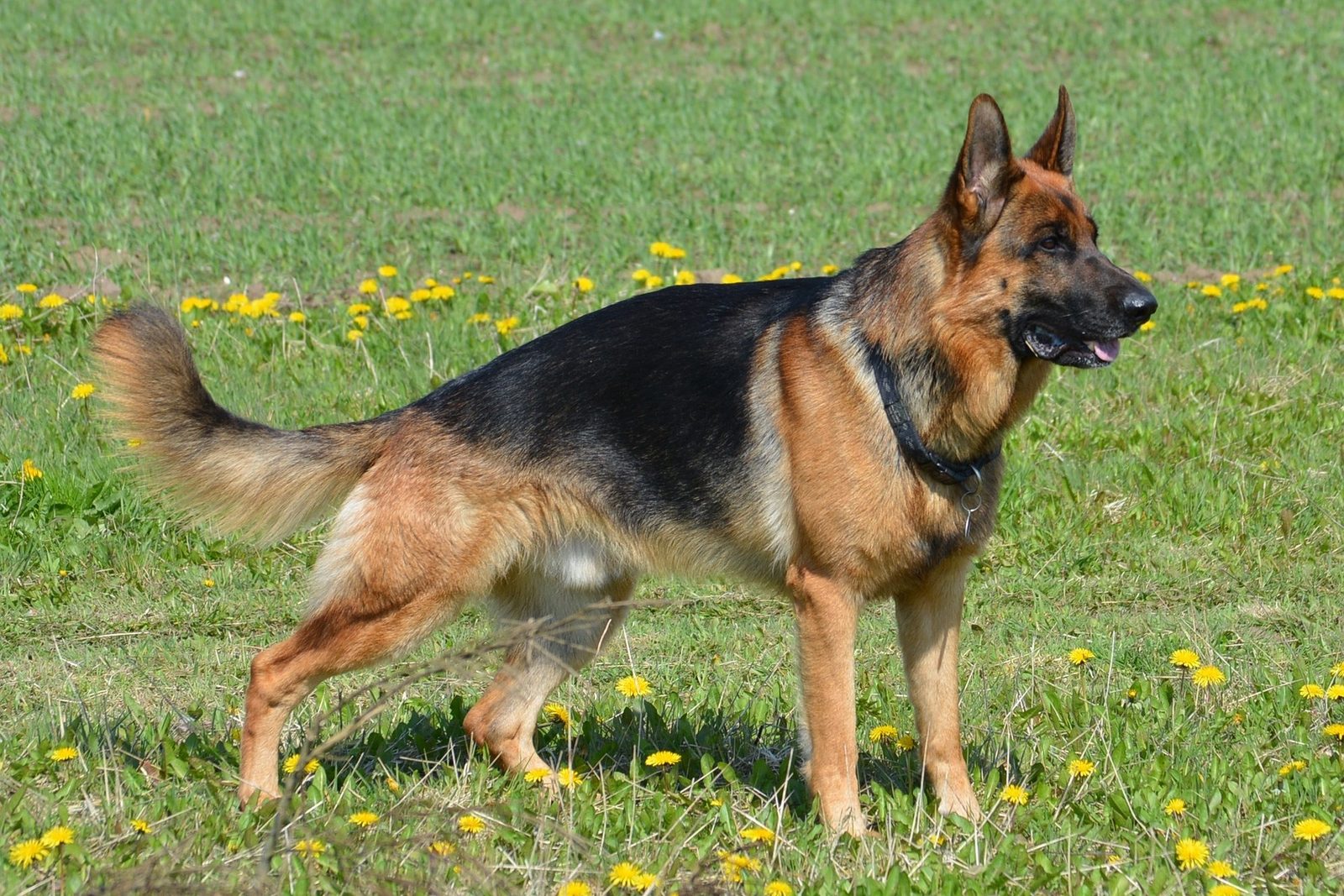
If your German Shepherd is restless, mouthy, noisy or destructive, the answer is rarely another mile. It is usually a job. Feed one meal from a snuffle mat, hide a few treats in the garden, teach a silly trick, and let them choose the route on a long line once a week.
None of it takes long, almost none of it costs anything, and the change in how your dog settles in the evening is usually obvious within a week. Give the brain the work it was bred for and the rest of the dog follows.
- How much exercise does a German Shepherd need? — the physical half of the plan
- Best German Shepherd toys — heavy chewers and puzzle feeders
- German Shepherd feeding guide — how to feed enrichment without overfeeding
- Free exercise planner — build a week that balances both
Recommended German Shepherd gear for this guide
Heavy-duty puzzle feeder
Best for: Mental stimulation and slow feeding
- Builds focus
- Slows fast eaters
Affiliate link — we may earn a commission, at no cost to you.
Durable rubber chew toy
Best for: Power chewers and chew redirection
- Long lifespan
- Treat-stuffable
Affiliate link — we may earn a commission, at no cost to you.
Slow feeder bowl
Best for: Slowing fast eaters and enrichment
- Slows gulping
- Dishwasher safe options
Affiliate link — we may earn a commission, at no cost to you.
Go deeper

Keep reading
More in Exercise & Enrichment →
How Much Exercise Does a German Shepherd Need? (By Age)
A realistic look at how much exercise a German Shepherd needs at each life stage — and why…
Can a German Shepherd Live in an Apartment? (Honest Answer)
Yes — if you commit to the routine. Here's what apartment-dwelling German Shepherd owners actually do.
Dog Swimming: Teaching a German Shepherd to Love Water Safely
Whether German Shepherds can swim, the right age to start, a five-step introduction that does not frighten them,…