Showing Your German Shepherd in Competition: A Beginner Guide
How dog showing works for German Shepherds: what judges assess, eligibility, classes, the three ring skills, grooming, kit, costs, and the other competitions open to every dog.

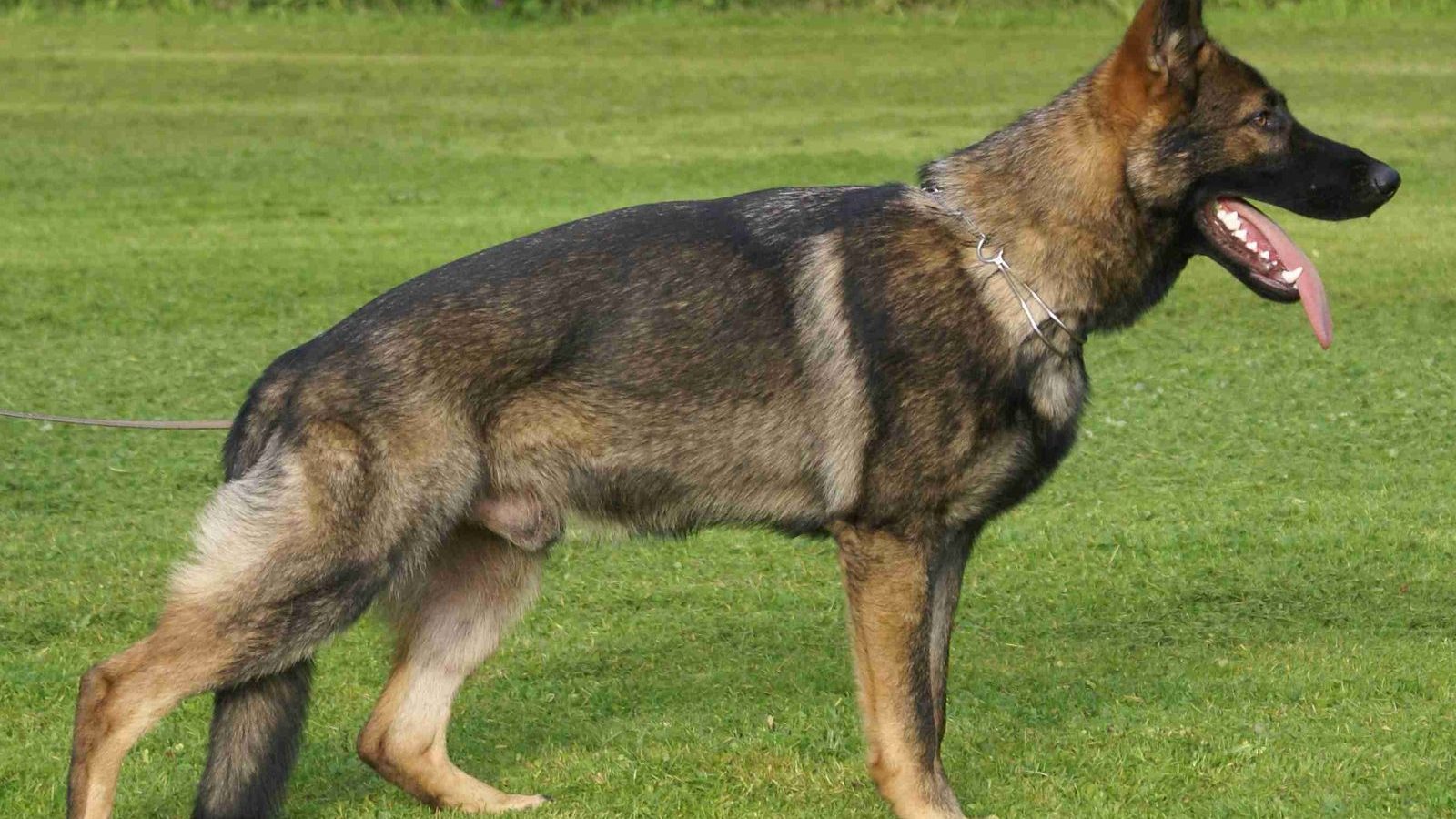
Short answer: go and watch two shows before you enter one
Showing a German Shepherd means being judged against the breed standard — structure, movement, coat and temperament — not against other breeds. To start you need a registered dog, a show lead, a dog who is happy being handled by a stranger, and the confidence to trot in a straight line. Entry costs are modest. The learning curve is not. Spend two weekends spectating first and you will save yourself a miserable debut.
You have a beautiful dog. Someone at the park said “you should show him”. And now you are on a kennel club website looking at a form that asks for a registration number, a class you have never heard of, and something called a “stud book number”, wondering whether this world is closed to ordinary owners.
It is not. Dog showing is mostly ordinary people with a hobby, a folding chair and a flask. The jargon is thick and the etiquette is real, but the barrier to entry is far lower than it looks — and the German Shepherd ring is one of the most welcoming places to learn if you turn up willing to listen.
This guide covers what showing actually involves, what judges are looking at, the classes and how they work, how to train the three ring skills, grooming and kit, entering your first show, what it costs, and the honest ethical questions worth thinking about before you start.
Owners curious about conformation showing with a German Shepherd, at any level from “someone suggested it” to “I have entered and I am terrified”. Rules, class names and titles vary by country and by kennel club — always check your own national club’s current regulations. This site does not cover protection or bite-work disciplines.
What Showing Actually Is
Conformation showing is an assessment of how closely a dog matches the written breed standard — the description of the ideal German Shepherd published by the national kennel club or breed council. The judge is not picking their favourite dog. They are ranking the dogs in front of them against a document.
Originally the point was practical: shows were a way of identifying which dogs were built to work all day, and therefore which were worth breeding from. That is still the theory. The breed standard describes a dog that can trot for hours — balanced angles, strong back, effortless gait, correct temperament.
What actually happens in the ring
- All the dogs in your class walk into the ring and line up.
- The judge looks at the line as a whole, then calls each dog forward in turn.
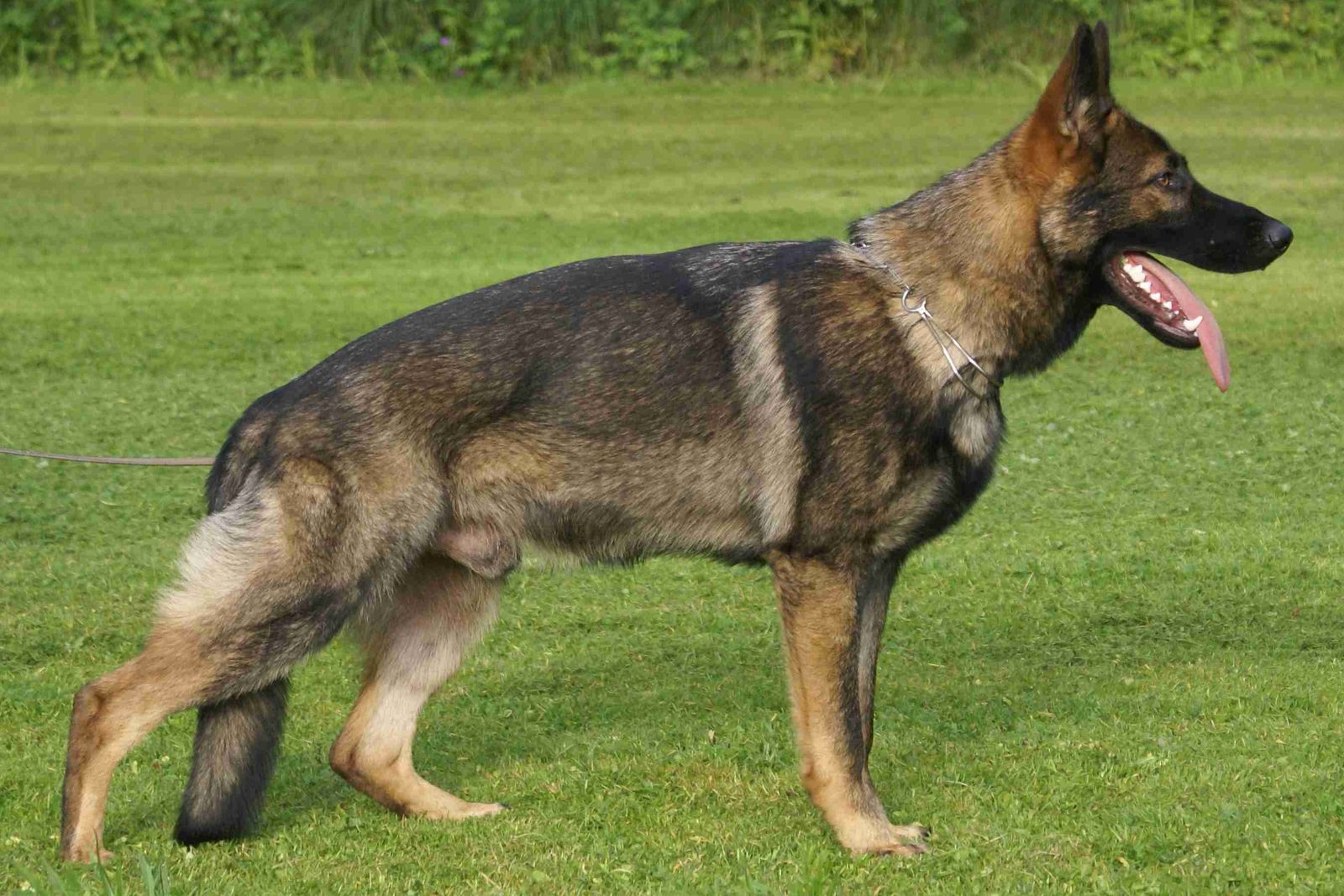
- You stack your dog — set them in the standing pose that shows their structure.
- The judge goes over the dog with their hands: head, teeth, shoulders, back, hindquarters. They will also check that a male dog has two descended testicles.
- You move the dog — usually a triangle and a straight up-and-back — so the judge sees the gait from the side, front and rear.
- Everyone lines up again, the judge places the top dogs in order, and hands out cards.
The whole thing takes a couple of minutes per dog. You will have travelled two hours for it, and you will do it again next month, because that is the hobby.
Judges are assessing the dog, but they can only assess what you show them. A well-presented average dog frequently beats a better dog who is badly handled, out of condition, or worried about being touched.
What the Judge Is Looking At
Standards differ in wording between countries, but the same qualities come up everywhere.
| Area | What they want | What loses marks |
|---|---|---|
| Overall balance | Slightly longer than tall, everything in proportion | Exaggeration anywhere — too long, too short, over-angled |
| Head and expression | Clean, in proportion, alert and intelligent expression, correct ear set | Coarse or narrow head, soft or worried expression |
| Teeth and bite | Full dentition, correct scissor bite | Missing teeth, overshot or undershot bite |
| Topline and back | Firm, level in motion, strong through the loin | Roached, dipping or weak backs; excessive slope |
| Front and rear angles | Matched front and back so the dog is balanced | Over-angulated rears, straight or upright shoulders |
| Movement | Far-reaching, effortless, ground-covering trot; correct coming and going | Short steps, hocks that wobble, feet crossing or paddling |
| Coat and condition | Correct double coat, muscled and lean, in good health | Coat out of condition, overweight or under-muscled |
| Temperament | Confident, steady, happy to be examined | Shyness, fear or aggression — a serious fault in this breed |
In the German Shepherd, nervousness or aggression in the ring is treated as a serious fault, not a quirk. A dog who cannot tolerate a stranger running hands over them will not do well — and, more importantly, will have a horrible day. This is why handling practice matters more than any grooming tip in this guide.
Is Your Dog Eligible?
Four practical checks before you get attached to the idea.
- Your dog is registered with your national kennel club
- They meet the minimum age (commonly six months)
- They are entire — most conformation classes exclude neutered dogs, though rules vary
- Vaccinations are up to date per the show’s rules
- Your dog is comfortable being touched by strangers
- Your dog is unregistered or of unknown breeding
- They are neutered and your club excludes neutered dogs
- They are fearful or reactive with strangers or dogs
- They have a disqualifying fault under your standard
- You want a class where training, not structure, is judged
None of that closes the door on competing. Rally, obedience, agility, scent work and companion classes are open to any dog, registered or not, neutered or not — see other competitions further down.
Classes and How the Day Works
Class names differ by country, but the structure is broadly the same: classes are divided by age and previous wins, so a beginner is not put straight up against champions.
Usually organised by age — minor puppy, puppy, junior — and by inexperience, such as “maiden” or “novice” for dogs who have not won much. This is where everyone starts.
Small local or open shows are relaxed, cheap and ideal for learning. Championship-level shows are where titles are earned and where the competition is serious. Start small — always.
Arrive early, find your ring, collect your number, and give your dog time to settle and toilet. Watch a class or two before yours so you know the pattern the judge is using.
Follow the steward’s instructions, keep half an eye on the judge at all times, and do not block another handler’s view. Move at the pace that shows your dog best, not as fast as you can.
Thank the judge, congratulate the winner, and if you get the chance later, politely ask what they would like to see improved. Most judges are generous with beginners who ask properly.
The Three Ring Skills
Ring training is not obedience. A show dog does not need a sit — in fact, a dog who sits when you stop is a nuisance in the ring. There are three things to teach, and ten minutes a few times a week is enough.
Stand still and be examined
Teach a standing position you can hold for thirty seconds, then have friends and family run their hands over your dog — head, mouth, back, legs, tail — paying well throughout. Build up to strangers doing it.
Why it works: the physical examination is the part that unsettles most first-timers. A dog who has been paid a hundred times for standing still while someone checks their teeth finds the judge completely unremarkable.
Stack — set up the pose
Either hand-stacked (you place each foot) or free-stacked (the dog sets themselves up and holds it, often watching a treat). Practise in front of a mirror or film yourself so you can see the outline the judge will see.
Why it works: a well-stacked dog looks like the standard; the same dog standing crookedly looks unbalanced. This is the single biggest presentation gain available to a beginner.
Trot on a loose lead, in a straight line
The gait the judge wants is a steady, ground-covering trot — not a canter and not a jog on a tight lead. Practise straight lines, triangles and an up-and-back on grass, at the speed that makes your dog look their best.
Why it works: movement is where the German Shepherd standard puts most of its emphasis, and a dog being throttled on a tight lead cannot move correctly. Our loose lead guide is the foundation here.
Then add the environment
Ringcraft classes exist for exactly this. A hall full of dogs, strangers, tannoys and clapping is a completely different skill from your back garden.
Why it works: almost every debut goes wrong because of the atmosphere rather than the training. Ringcraft is the cheapest insurance you can buy.
The dogs who win as youngsters are rarely the best-bred ones in the ring. They are the ones who think the whole day is brilliant fun — and that is entirely down to how their owner prepared them.
Grooming and Presentation
Good news: the German Shepherd is a natural coat breed. There is no trimming, no scissoring, no sculpting. Presentation is about condition, cleanliness and timing.
- Bath about a week before, not the night before — a freshly washed coat can be too soft and fly-away to lie correctly.
- Rake out the dead undercoat thoroughly in the weeks beforehand. A dog mid-coat-blow will not look their best, and there is no fixing that on the day.
- Nails short. Long nails change how the foot sits and are an easy avoidable criticism.
- Teeth clean. The judge will look at them, and tartar is noticed — see teeth and gums.
- Tidy the paw hair level with the pads and clean the ears — small details, easy marks.
- Condition beats products. Muscle tone from regular, varied exercise does more for how a Shepherd looks than any coat spray.
Our grooming guide covers the routine, and the shedding guide explains how to time the coat cycle around show dates.
Kit You Need on the Day
We recommend product types and the features that matter rather than sponsored placements, and we link to live Amazon results instead of quoting prices that go stale. As an Amazon Associate we may earn from qualifying purchases — at no extra cost to you.
A proper show lead (not your walking lead)
A fine, lightweight slip lead that sits high on the neck and all but disappears in photographs. Beginners turn up with a wide walking harness and a chunky clip lead, and the judge’s eye goes straight to the equipment instead of the dog’s outline.
- Keeps the dog’s outline clean and unobstructed
- Light enough that the dog can move naturally
- Buy two — one lives permanently in the show bag
- Practise at home first; it feels different to a normal lead
Good to know: a show lead is for the ring, not for walking a strong dog to the car park. Keep a normal harness and lead for everywhere else — a slip lead on a lunging Shepherd is uncomfortable and unsafe.
| Item | Why you need it | Find it |
|---|---|---|
| Number clip or armband | To display your ring number without pinning it to your jacket | See options → |
| Slicker brush and comb | Last-minute tidy at the ringside | See options → |
| Bait pouch and soft treats | For free-stacking and keeping ears up | See options → |
| Water bottle and bowl | Show halls and car parks get hot | See options → |
| Crate or mat for the car | Somewhere your dog can switch off between classes | See options → |
Entering Your First Show
Two shows, no dog, notebook in hand. Watch which handlers look calm, how fast they move, where they stand. Nobody minds a spectator asking polite questions between classes.
Find a local ringcraft class. It is the single most useful thing you will do, and it is where you meet the people who will help you for years.
Entries usually close weeks in advance. Check the class definitions carefully — entering the wrong class is the classic beginner error and cannot be fixed on the day.
Keep the routine normal. No new food, no big changes, no exhausting hikes the day before. A tired or unsettled dog shows badly.
Your goal for show one is simple: your dog enjoys it and stands to be examined. Placings are not the objective, and the judge will not remember you either way.
Find one experienced person in your breed and ask if you can watch how they prepare. Almost everyone in the German Shepherd ring started out being helped by someone, and most are pleased to pass it on. A mentor is worth more than a year of reading.
What It Costs
Entry fees are usually modest, especially at local shows. The costs that surprise people are the ones around the edges.
| Cost | Frequency | Notes |
|---|---|---|
| Kennel club registration | One-off | Usually done by the breeder; transfer of ownership may cost extra |
| Entry fees | Per show, per class | Local and open shows are considerably cheaper than championship shows |
| Ringcraft classes | Weekly | Small fee, enormous value. The best money you will spend |
| Travel and fuel | Per show | Usually the biggest single cost — shows are rarely local |
| Overnight stays | Bigger shows | Dog-friendly accommodation or sleeping in the van, as many do |
| Kit | Mostly one-off | Leads, grooming kit, crate, trolley, chair, gazebo if you get keen |
| Health testing | If you plan to breed | Hip and elbow scoring and DNA tests — essential before any breeding decision |
Other Competitions Worth Considering
If your dog is neutered, unregistered, a rescue of unknown breeding, or simply not built to the standard, there is a whole world of competition open to you — and honestly, most German Shepherds enjoy these more than standing still.
👃 Scent work
Searching for a target odour. Suits almost every Shepherd, including nervous, elderly and reactive dogs, because it is done one dog at a time.
🎯 Rally and obedience
Handler-and-dog teamwork through a set of exercises. Rally is the friendlier entry point and is genuinely good fun.
🏃 Agility
Fast, athletic and enormously popular — but wait until growth plates have closed, usually 12–18 months, and get your vet’s view first.
🐑 Herding
The job the breed was actually built for. Herding tests and trials exist in many countries and are a revelation to watch.
🥾 Working trials and tracking
Nosework over distance, with control and agility elements. Deeply satisfying for a dog who likes a long problem to solve.
🎓 Good citizen schemes
Graded everyday-manners awards. A brilliant first goal for any owner and open to every dog.
You will also hear about IGP/Schutzhund, a three-phase sport of tracking, obedience and protection work. The tracking and obedience phases are genuinely impressive; the protection phase is specialist sport work that this site does not cover. If it interests you, work only with an established, welfare-focused club — and be honest about whether it suits your dog and your life.
The Honest Ethical Bit
Showing has an ongoing argument attached to it, and a good guide should not pretend otherwise. Critics point out that decades of selection for a particular ring “look” — especially extreme rear angulation and a sloping topline in some show lines — have been associated with movement problems and welfare concerns. Defenders point out that the written standard has always called for a functional, working dog, and that responsible breeders are actively moving away from exaggeration.
You do not have to resolve that debate to enjoy the hobby. What you can do is take a position with your own dog: favour soundness over extremes, health-test before you breed anything, and walk away from anyone who dismisses hip and elbow scores as unnecessary. The people doing that are the reason the breed will be in better shape in twenty years.
A show placing is not a health clearance. Hip and elbow scoring, DNA testing where available for your lines, and a frank conversation with your vet come first — always. Showing a dog and breeding from a dog are two completely separate decisions.
Frequently Asked Questions
Can I show a neutered German Shepherd?
Usually not in conformation classes, since those are ultimately about breeding stock — though rules vary by country and some clubs now offer classes for neutered dogs. Every other discipline — rally, obedience, agility, scent work, good citizen schemes — is fully open to neutered dogs.
What age can a German Shepherd start showing?
Commonly six months for the youngest classes, with the exact minimum set by your kennel club. Ringcraft training can start well before that, as soon as your vet is happy with your puppy’s vaccination status.
Do I need a professional handler?
No. Plenty of owner-handlers do very well, and learning to present your own dog is most of the fun. Professional handlers exist mainly at the top competitive level.
Is showing stressful for the dog?
It should not be. A well-prepared dog treats it as a day out with their favourite person. It becomes stressful when a dog is unsure about strangers handling them, when the environment is overwhelming, or when the handler is tense. If your dog is not enjoying it after a fair trial, that is your answer.
Can rescue German Shepherds compete?
Not in conformation without registration and known breeding — but absolutely everywhere else. Some of the most successful scent work and rally dogs you will meet are rescues, and those sports do not care about pedigree at all.
What do the titles and letters mean?
They vary hugely by country and club — championship titles, junior warrants, working qualifications and breed-survey gradings all use different systems. Ask your national breed club for their current guide rather than relying on forum explanations, which are often out of date.
✅ Your First Show Checklist
- Watched at least two shows as a spectator
- Attended ringcraft classes for a few weeks
- Dog registered, vaccinations current, entry class double-checked
- Practised stand, stack and trot at home and with strangers
- Someone your dog does not know has examined them, several times
- Bath about a week before; dead undercoat raked out
- Nails short, teeth clean, paw hair tidy, ears clean
- Show lead practised at home — not first used in the ring
- Bag packed: number clip, brush, bait, water, bowl, towel
- Crate or mat so your dog can switch off between classes
- Normal food, normal routine the week before
- Goal for the day: your dog enjoys it — nothing else
The Bottom Line
Showing a German Shepherd is a hobby you learn by turning up. The dogs who do well are fit, well-conditioned, comfortable being handled, and having a good time — and every one of those things is within your control regardless of how your dog is bred.
Go and watch, join a ringcraft class, buy a proper lead, and enter something small. If your dog loves it, you have found a hobby for the next decade. If they do not, there is a scent work class down the road that they will adore — and that counts as competing too.
- Grooming your German Shepherd — condition and coat timing
- Activities for your German Shepherd — sports and hobbies for every dog
- Training your German Shepherd — the foundation ring skills sit on
- Introducing the German Shepherd — the breed standard in plain English
Recommended German Shepherd gear for this guide
Waterproof car seat cover (hammock)
Best for: Protecting back seats on trips
- Waterproof
- Side flaps
Affiliate link — we may earn a commission, at no cost to you.
Heavy-duty puzzle feeder
Best for: Mental stimulation and slow feeding
- Builds focus
- Slows fast eaters
Affiliate link — we may earn a commission, at no cost to you.
Padded training leash 6ft
Best for: Daily walking and city control
- Padded handle
- Strong hardware
Affiliate link — we may earn a commission, at no cost to you.

Keep reading
More in Lifestyle & Travel →
The Most Popular Dog Breeds and Where the German Shepherd Ranks
Which breeds top the rankings and why, where the German Shepherd sits after a century in the top…
The History of the German Shepherd Dog: From Herding Fields to Family Homes
How the breed was created in 1899 by Max von Stephanitz, its move into police work, the world…
The Most Adorable Dog Breeds (and Where German Shepherds Fit)
Why we find certain dogs irresistible, fifteen genuinely adorable breeds with the honest version of living with each,…