Harness vs Collar for a German Shepherd: Which Should You Use?
What is in a dog's neck and why it matters, harness types compared, the truth about harnesses teaching pulling, how to fit one on a deep-chested dog, when a collar is right, and what to avoid entirely.

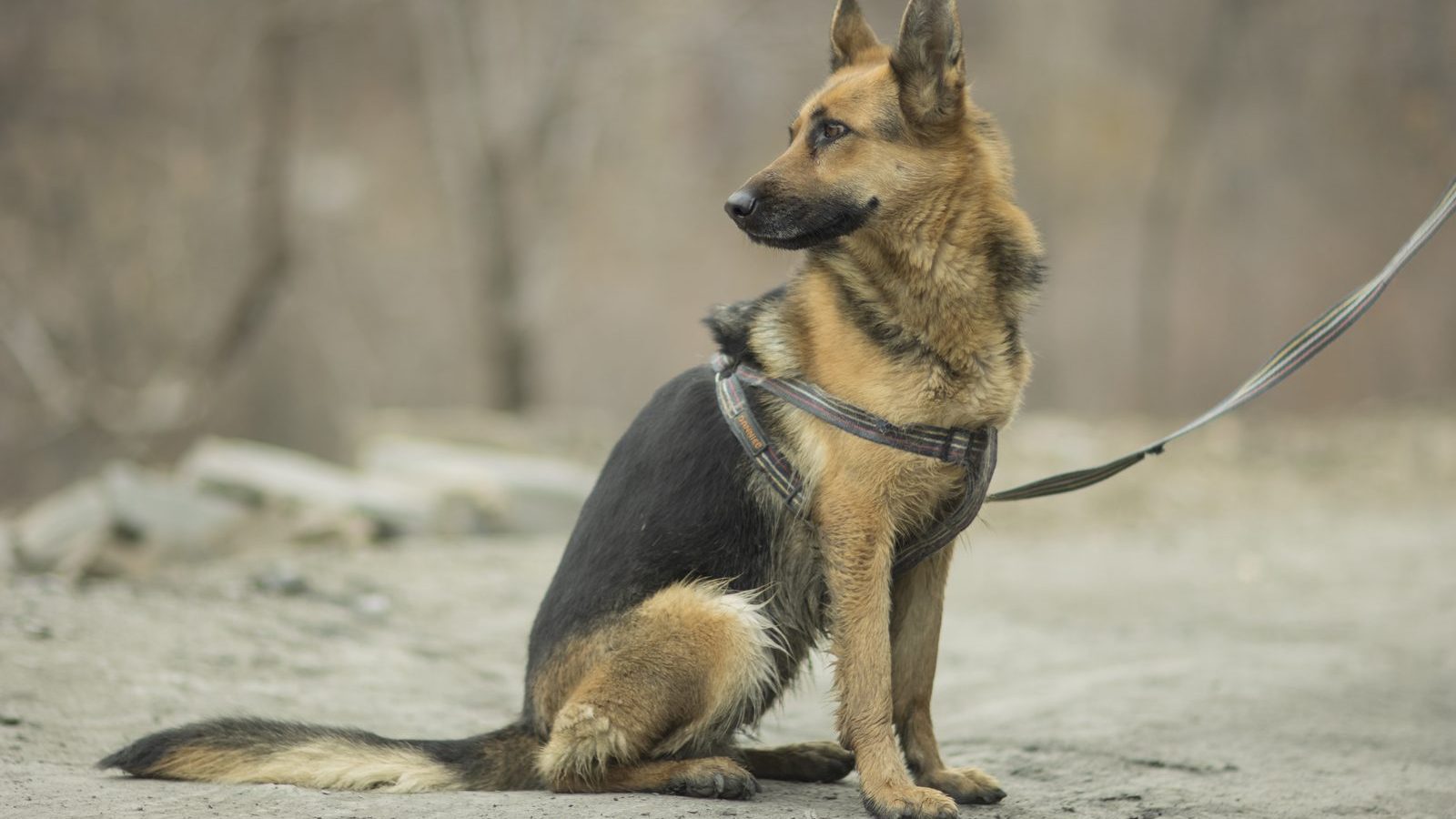
Short answer: harness for walking, collar for the ID tag — you need both
A German Shepherd who pulls can generate serious force through their own neck, and the neck contains the trachea, thyroid, cervical spine and the vessels serving the head. A well-fitted Y-front harness moves that load onto the chest and shoulders, where the dog is built to take it. Keep a flat collar on for identification, which is a legal requirement in many places — and never attach a long line to one.
There is a moment familiar to every German Shepherd owner: your dog spots a squirrel, hits the end of the lead at speed, and you hear a sound from their throat that makes you wince. Whatever you were planning to buy next, that noise is usually what decides it.
The harness-versus-collar debate is unusually noisy for something with a fairly clear answer. Part of the confusion comes from a persistent claim that harnesses “teach dogs to pull” — which is true of one specific design used one specific way, and not true as a general rule.
This guide sorts it out: what a neck actually contains, what the different harness designs do, how to fit one properly on a deep-chested dog, when a collar genuinely is the right tool, what to avoid entirely, and why the equipment question matters far less than the training question underneath it.
No harness stops pulling by itself, and any product claiming otherwise is selling you something. What good equipment does is make the pulling safe while you teach loose lead walking, and stop you damaging your dog in the meantime. That is a genuinely valuable job — it is just not the same as training.
What Is Actually in a Dog’s Neck
The argument becomes much simpler once you picture what sits under a collar.
🫁 The trachea
The windpipe runs down the front of the neck, held open by cartilage rings, directly under a collar. Repeated pressure here is what produces that coughing, retching sound at the end of a lead.
🦋 The thyroid gland
Sits just below the larynx, again right under a collar. Repeated trauma to this area has been raised as a concern in dogs who pull hard against a collar over years.
🦴 The cervical spine
Seven vertebrae with discs and nerve roots between them. A sudden jerk transmits force straight through this column and the soft tissue supporting it.
👁️ Vessels serving the head
Neck compression raises pressure inside the eye — a documented finding, and a real concern for any dog with existing eye disease such as glaucoma.
Now picture a chest. Broad, muscular, built around the ribcage, and — in a German Shepherd particularly — deep and strong. It contains nothing delicate near the surface. This is why a harness is not a fashion choice: it moves the load from the most vulnerable part of the dog to the most robust.
A collar is fine on a dog who never pulls. The problem is that almost every German Shepherd pulls sometimes — at a cat, at a jogger, at the end of a long day when a rabbit appears — and the damage from neck loading is cumulative rather than dramatic.
How Much Force a Shepherd Generates
The numbers make the case better than any argument. A 35 kg dog accelerating and hitting the end of a two-metre lead produces a shock load far greater than their body weight — the force depends on how fast they were moving and how abruptly they stop, and a Shepherd at a flat sprint stops very abruptly indeed.
All of that arrives through a strip of nylon two or three centimetres wide, across the trachea. On a harness, the same energy spreads across the chest, the sternum and the shoulders over a much larger area.
A dog reaching the end of a fifteen-metre line at full speed has had far longer to accelerate. That is why a long line should only ever attach to a harness, never a collar. It is the single most common serious equipment mistake owners make, and one hard hit can do real damage.
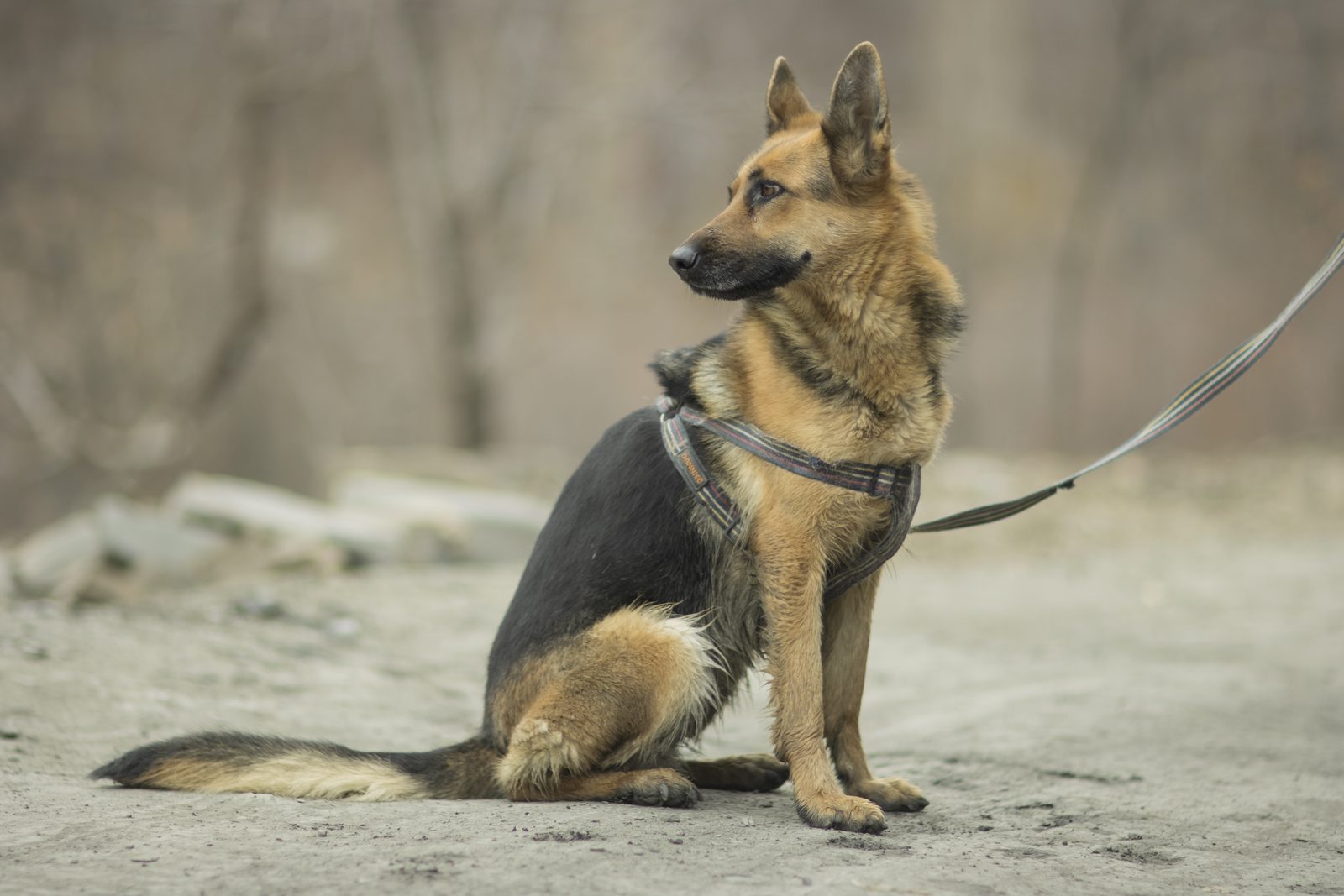
Harness Types Compared
| Type | How it works | Good for | Watch out for |
|---|---|---|---|
| Y-front, back clip | Straps form a Y over the sternum; lead attaches on the back | The default for most dogs. Comfortable, free shoulders, safe for long lines | Offers no steering help with a determined puller |
| Y-front, dual clip | Attachment points on the chest and the back | The best all-rounder. Front clip for steering while training, back clip once settled | Costs a little more; needs a double-ended lead to use properly |
| Front-clip only | Lead attaches at the chest; pulling turns the dog toward you | Managing a strong puller during training | Can restrict shoulders if the front strap is horizontal rather than Y-shaped |
| Norwegian / horizontal strap | A single strap straight across the front of the chest | Quick to put on | Sits across the shoulder joints and restricts the front stride. Not ideal for a working breed |
| Tightening / “no-pull” harness | Constricts under the legs or chest when the dog pulls | Nothing this article recommends | Works by causing discomfort. Can cause chafing and teaches avoidance rather than walking |
| Vest or step-in | Broad panels, wide coverage | Nervous dogs who dislike things going over the head | Can be hot under a double coat; check shoulder freedom |
For a German Shepherd the answer is usually the second row: a Y-front harness with both a chest and a back attachment, used with a double-ended lead. It gives you steering when you need it and a comfortable, unrestricted walk when you do not.
“Harnesses Teach Pulling” — the Truth
This claim gets repeated constantly, and it contains a real observation wrapped in a wrong conclusion.
The observation: sled dogs pull in harnesses. That is true, and the reason is opposition reflex — push against a dog and they push back. A back-clip harness on a dog who has never been taught otherwise does make pulling comfortable and therefore easy to keep doing.
The wrong conclusion: that a collar therefore prevents pulling. It does not. A collar makes pulling painful, and dogs pull through it anyway — every choking, gagging dog at the end of a flat collar is proof of that. You have not stopped the behaviour; you have added discomfort to it.
A harness does not teach pulling any more than a collar teaches walking nicely. Only training does that. The equipment decides who gets hurt while you are working on it.
Sled dogs also pull because they were selected for it, trained for it, and cued to do it — and the harness they wear is a specialised pulling design nothing like a walking harness. The comparison sounds convincing and falls apart on inspection.
Fitting a Harness Properly
A badly fitted harness can restrict movement, rub raw patches and cause long-term gait changes. Getting it right takes five minutes.
Measure the chest girth, not the weight
Around the deepest part of the chest, just behind the front legs. A deep-chested German Shepherd frequently needs a size up from what the weight chart suggests — go by the measurement every time.
Check the shoulder joints are free
The front straps should form a Y sitting over the sternum, well clear of the point of the shoulder. If a strap crosses the shoulder joint horizontally, the harness will shorten your dog’s stride.
Two flat fingers under every strap
Everywhere. Too loose and it rotates or slips over the head; too tight and it rubs the armpits raw within a fortnight.
Watch them walk and trot
The front legs should reach forward exactly as they do without it. Any shortening of the stride means the harness is interfering, whatever the packaging says.
Check the skin weekly
Look under the armpits and behind the elbows for rubbing, especially in the first month and during a coat blow when hair is matting under the straps.
Introduce it with food
Treats for putting the head through, treats for standing while you clip it, then a short happy walk. A harness a dog ducks away from is a harness you will stop using.
A German Shepherd changes shape dramatically between six and eighteen months, and again as they muscle up. Re-measure every couple of months through the first two years — a harness that fitted at eight months can be restricting the shoulders by twelve.
When a Collar Is the Right Tool
This is not an argument for abandoning collars. They do a job a harness cannot.
- Identification. In many countries a dog in a public place is legally required to wear a collar with the owner’s name and address on it. A harness does not satisfy that.
- A handle in an emergency — grabbing a collar to stop a dog stepping into a road is a real use.
- A dog who genuinely never pulls, walking on a short lead. A flat collar is perfectly fine here.
- Attaching lights and trackers without loading them onto the walking equipment.
- Around the house, if you prefer the harness off between walks — which is kinder in warm weather under a double coat.
The practical arrangement most experienced Shepherd owners land on: a flat collar with tags worn permanently, and a harness put on for walks with the lead attached to that. Two pieces of equipment, two clearly separate jobs.
What to Avoid Entirely
| Equipment | The problem |
|---|---|
| Choke chains | Work by restricting the airway. Associated with tracheal and cervical injury, and they teach nothing about where to walk |
| Prong collars | Work by causing discomfort or pain. Advised against by major veterinary behaviour bodies; restricted or banned in several countries |
| Electronic collars | Banned in a number of jurisdictions. Studies show worse welfare outcomes with no advantage over reward-based methods |
| Slip leads for everyday walking | Fine briefly at a vet or a show; unsuitable for a pulling dog because there is no stop preventing full constriction |
| Retractable leads | Encourage constant light tension, offer poor control, and cause a hard jolt at the end. Rope burns to handlers are common |
| Tightening “no-pull” harnesses | Function by making pulling uncomfortable. Chafing and gait interference are common, and a Y-front does the job without either |
Head Halters: a Fair Assessment
Head halters sit in an honest middle ground and deserve more than a dismissal.
- The handler cannot physically manage the dog otherwise — genuinely a safety question
- A large reactive dog needs redirecting quickly for everyone’s safety
- Used as a temporary management tool alongside real training
- Introduced slowly with food over one to two weeks
- Paired with a harness attachment on a double-ended lead as a safety backup
- Many dogs find them aversive and never fully accept them
- A hard jerk can twist the neck — never use one with a long line
- They rub the muzzle, especially on short-coated faces
- They are frequently used without any accompanying training
- They are mistaken for muzzles by the public, which brings its own problems
The reasonable position: a head halter is a legitimate management tool when the alternative is not being able to walk the dog safely — but it is a tool for buying time, and it must come with a training plan attached.
Long Lines and Why the Attachment Matters
A long line is one of the most useful pieces of equipment a German Shepherd owner can own — freedom to run and sniff without the recall being a gamble. It also carries the highest injury risk of anything discussed here if it is attached to the wrong thing.
- Harness only. Never a collar, never a head halter. This is the whole rule.
- Let it trail rather than holding it taut, so your dog rarely hits the end at speed.
- Biothane over rope — it does not absorb water, hold burrs or give you rope burns.
- Ten metres for control, fifteen for real freedom. Longer than that becomes unmanageable in cover.
- Wear gloves with a strong dog, and keep the line away from your own legs.
- Not in dense woodland where it can snag around a trunk while your dog is running.
The Bit the Equipment Cannot Do
Everything above manages the symptom. Loose lead walking is the cure, and it is slower and duller than any purchase.
- Reward position, constantly. Every few steps your dog spends beside you, pay them. You are building a habit, not correcting an error.
- Stop when the lead tightens. Not a jerk — simply stop, wait for slack, then move again. Pulling must never work.
- Start somewhere boring. A hallway, then the garden, then a quiet street. Not the park on a Saturday.
- Give them a separate sniffing walk on a long line where pulling does not matter. A dog who never gets to sniff will pull, whatever they are wearing.
- Expect months. Loose lead walking is one of the slowest skills there is. Film it occasionally, because the progress is real and invisible day to day.
What to Buy
Y-front dual-clip harness, large
The design that suits a German Shepherd best: straps meeting in a Y over the sternum so the shoulder joints stay completely free, with attachment points on both the chest and the back. Clip a double-ended lead to both and you have steering when your dog spots something across the park, and a comfortable neutral walk the rest of the time. Size on the chest girth measurement behind the front legs, not on the weight chart — a deep-chested Shepherd usually needs a size up.
- Moves the load off the trachea, thyroid and cervical spine
- Y-front leaves the front stride completely unrestricted
- Front clip gives steering while you train loose lead walking
- The only safe attachment point for a long line
- Reflective stitching for dark winter walks
See Y-front harnesses on Amazon →
Fitting rule: two flat fingers under every strap, the Y sitting on the sternum and clear of the shoulder joints, and watch your dog trot in it before you commit. Re-measure every couple of months through the first two years — this breed changes shape considerably.
| Item | Why it earns its place | What to look for | Find it |
|---|---|---|---|
| Y-front harness | Load off the neck, shoulders free | Dual clip, girth sizing, padded | See options → |
| Flat collar with tag | Identification — a legal requirement in many places | Wide, padded, quick-release or buckle | See options → |
| Double-ended lead | Uses both harness clips; adjustable length | 2 m, two trigger clips, padded handle | See options → |
| Long line | Freedom and recall practice — harness only | 10–15 m biothane, light clip | See options → |
| Treat pouch | Loose lead walking needs instant payment | Magnetic close, belt clip | See options → |
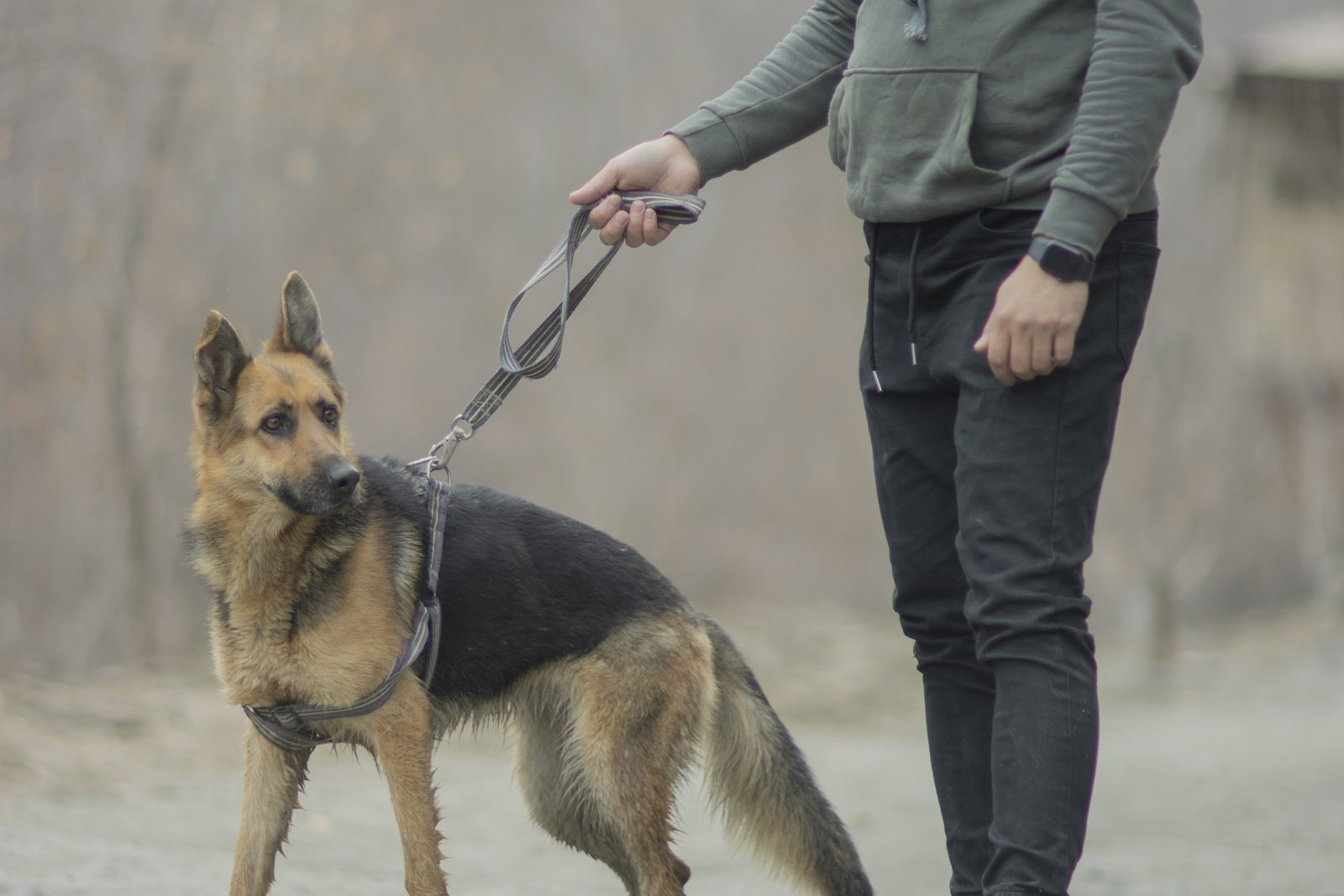
7 Mistakes (and the Fix for Each)
The fix: harness, always. A dog hitting the end of fifteen metres at speed through a collar can do serious neck damage in one incident.
The fix: measure behind the front legs and go up a size if in doubt. A deep-chested Shepherd rarely matches the weight chart.
The fix: look for the Y. A strap across the shoulder joints shortens the stride, which matters over years in a working breed.
The fix: train loose lead walking separately. Equipment makes pulling safe; only training makes it stop.
The fix: re-measure every couple of months to two years old, and check the armpits weekly for rubbing.
The fix: a fixed lead for walking, a long line for freedom. Retractables teach constant tension and deliver a hard jolt at the end.
The fix: keep the ID collar on. If your dog ever slips the harness, the tag is what gets them home.
Frequently Asked Questions
Is a harness better than a collar for a German Shepherd?
For walking, yes. A harness moves the load from the neck — which contains the trachea, thyroid, cervical spine and vessels serving the head — onto the chest and shoulders, which are built to take it. Keep a flat collar on for identification, since that is a legal requirement in many places, but attach the lead to the harness.
Do harnesses make dogs pull more?
Not inherently. A back-clip harness makes pulling comfortable, so an untrained dog keeps doing it — but a collar does not stop pulling either, it just makes it painful. Loose lead walking comes from training. A Y-front harness with both front and back clips gives you steering while you teach it.
What size harness does a German Shepherd need?
Measure the chest girth around the deepest part just behind the front legs, and buy on that figure rather than on weight. Deep-chested Shepherds frequently need a size up from what the weight chart suggests. Re-measure every couple of months until about two years old, as the shape changes considerably.
Can I attach a long line to my dog’s collar?
No — this is the one rule to be strict about. A dog reaching the end of a ten or fifteen metre line at full speed generates enough force through a collar to cause serious neck injury. Long lines attach to a well-fitted harness only, never a collar and never a head halter.
Are prong or choke collars ever appropriate?
They work by causing discomfort or restricting the airway, and major veterinary behaviour bodies advise against them. Several countries restrict or ban them. Studies comparing aversive and reward-based training find more stress signalling with no advantage in results, so there is no outcome they achieve that gentler equipment and training cannot.
What is a Y-front harness and why does it matter?
The front straps meet in a Y shape over the sternum rather than running horizontally across the chest, leaving the shoulder joints completely free. A horizontal strap sits across the point of the shoulder and shortens the front stride — a small daily restriction that matters over years in an active working breed.
✅ Your Walking Equipment Checklist
- Flat collar with ID tag worn at all times
- Y-front harness for every walk
- Harness sized on chest girth, not weight
- Y sits on the sternum, clear of the shoulder joints
- Two flat fingers under every strap
- Stride watched at a trot — no shortening
- Armpits and elbows checked weekly for rubbing
- Fit re-measured every couple of months to two years old
- Long line attached to the harness only
- Biothane long line, let to trail rather than held taut
- No choke, prong, electronic or tightening equipment
- No retractable leads
- Loose lead walking trained separately, starting somewhere boring
- A separate sniffing walk where pulling does not matter
The Bottom Line
Use both. A flat collar carries the identification tag your dog is legally required to wear, and a well-fitted Y-front harness carries the lead — because a German Shepherd hitting the end of one at speed puts real force through a neck that contains everything you would least like to compress.
Choose the Y shape, size on the chest measurement, check the shoulders are free and put two fingers under every strap. Attach long lines to the harness, always, without exceptions.
Then accept the part no purchase solves. Nothing you buy will teach your dog to walk beside you — that takes months of paying for position and stopping when the lead goes tight. The harness is not the solution. It is what makes the months of solving it safe.
- Loose lead walking — the training the equipment buys time for
- Recall training — and how to use a long line safely
- Shock collars — what the evidence says and safer alternatives
- Training your German Shepherd — the full method, age by age
Recommended German Shepherd gear for this guide
Heavy-duty German Shepherd crate (42")
Best for: Crate training and safe rest
- Sturdy build
- Double-door access
- Removable tray
Affiliate link — we may earn a commission, at no cost to you.
Orthopedic large dog bed (memory foam)
Best for: Joint comfort and stretch-out sleep
- Pressure relief
- Washable cover
- Non-slip base
Affiliate link — we may earn a commission, at no cost to you.
No-pull German Shepherd harness
Best for: Calm leash walks for strong adult GSDs
- Front + back clip
- Padded chest plate
- Reflective trim
Affiliate link — we may earn a commission, at no cost to you.

Keep reading
More in Gear & Reviews →
How to Make an Adjustable Martingale Collar (Step by Step)
A full pattern with measurements and formulas, materials and hardware, cutting and sealing webbing, box-X stitching, adding an…
Dog Collar Bells: Wildlife Safety, Noise and When They Help
Where collar bells genuinely work, why the wildlife protection claim does not transfer from cats to dogs, the…
Best Dog Houses for German Shepherds: Sizing, Warmth and Safety
The sizing formula and why bigger is colder, what actually keeps a dog warm, insulation and raised floors,…