Introducing the German Shepherd: Temperament, Size and Whether This Breed Suits You
An honest introduction to the German Shepherd: size, lifespan, working vs show lines, coats and colours, temperament, health, costs, and whether the breed suits your life.

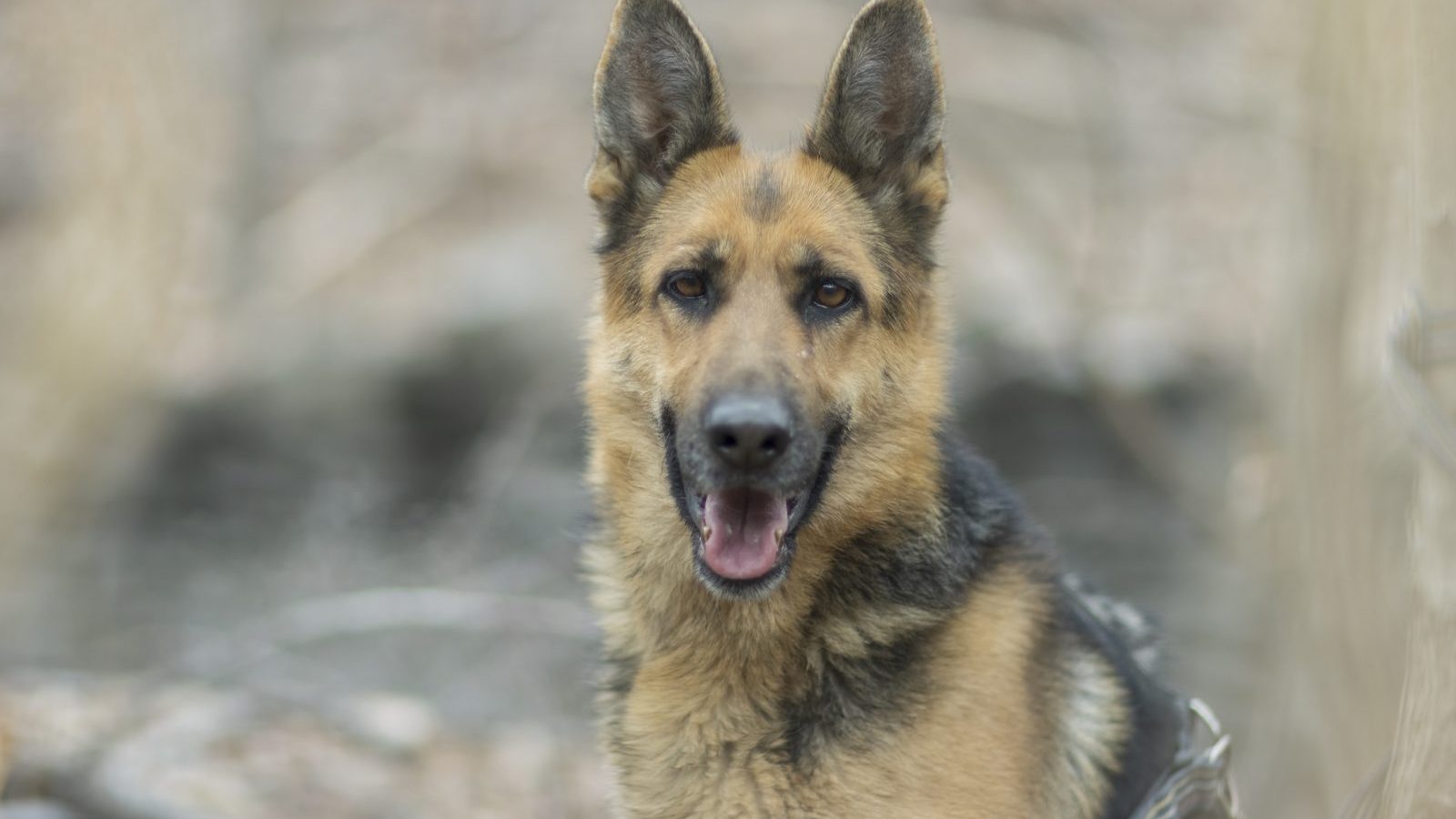
Short answer: brilliant dog, demanding dog — not a beginner’s easy option
A German Shepherd is a large, clever, deeply loyal working dog who needs a job, a routine and a person who is home a lot. Expect 22–40 kg, 9–13 years, hair on absolutely everything, and a dog who watches your every move. Give them exercise, brain work and calm handling and they are extraordinary. Leave them bored and alone and they will take your house apart.
Almost everyone falls for the same picture: the noble head, the confident stance, the dog from the films who always knows what to do. What nobody puts on the poster is the eleven-week-old land shark hanging off your sleeve, the tumbleweed of undercoat rolling past the sofa in April, or the fact that this dog will follow you to the bathroom every single day for the next decade.
Both versions are true. The German Shepherd is one of the most capable dogs on earth and one of the most demanding pets you can own. The people who love the breed are the ones who wanted a partner rather than an ornament — and who were honest with themselves about the time it takes.
This guide is the honest introduction: what they are actually like to live with, size and lifespan, the difference between working and show lines, coat types and colours, health issues to know about, what they cost, and a straight answer to whether this breed suits your life right now.
Anyone thinking about getting a German Shepherd, anyone who has just brought one home and is wondering what they have signed up for, and anyone whose friend keeps insisting these dogs are “aggressive”. Everything here is reward-based and pet-focused — this is a family breed guide, not protection or bite-work training.
What a German Shepherd Is Actually Like
Forget the film version for a moment. Day to day, a German Shepherd is a dog who wants to be involved. Not just present — involved. They will supervise the washing up, escort you to the bins, and position themselves in the doorway of whichever room contains the most family members.
They were developed in Germany in the late 1800s to herd and guard flocks, then moved into police, military, search and assistance work because they turned out to be extraordinary at learning tasks. Everything about the modern dog comes from that: they notice things, they think for themselves, they bond hard to one household, and they get restless without a purpose.
The five traits that define them
- Trainable to an unusual degree. They learn fast, remember for years, and enjoy the process. This cuts both ways — they learn the habits you did not mean to teach just as quickly.
- Watchful. A Shepherd notices the car door two streets away. Barking at things is not a fault to be trained out entirely; it is the breed doing its job, and it needs managing rather than punishing.
- Velcro-loyal. They attach powerfully to their people, which is lovely and is also why separation problems are common in the breed.
- Sensitive. Harsh handling does not produce a tougher Shepherd; it produces a worried one. The best-behaved dogs of this breed are almost always the ones trained with food and patience.
- Mouthy and physical as youngsters. Herding genes plus puppy teeth equals the “land shark” stage. It is normal, it peaks at 8–16 weeks, and it passes — see our puppy biting guide.
A German Shepherd is not a difficult dog. They are an employed dog with no job when things go wrong. Almost every behaviour problem in this breed traces back to unspent brain, unspent body, or too many hours alone.
Size, Weight and Lifespan
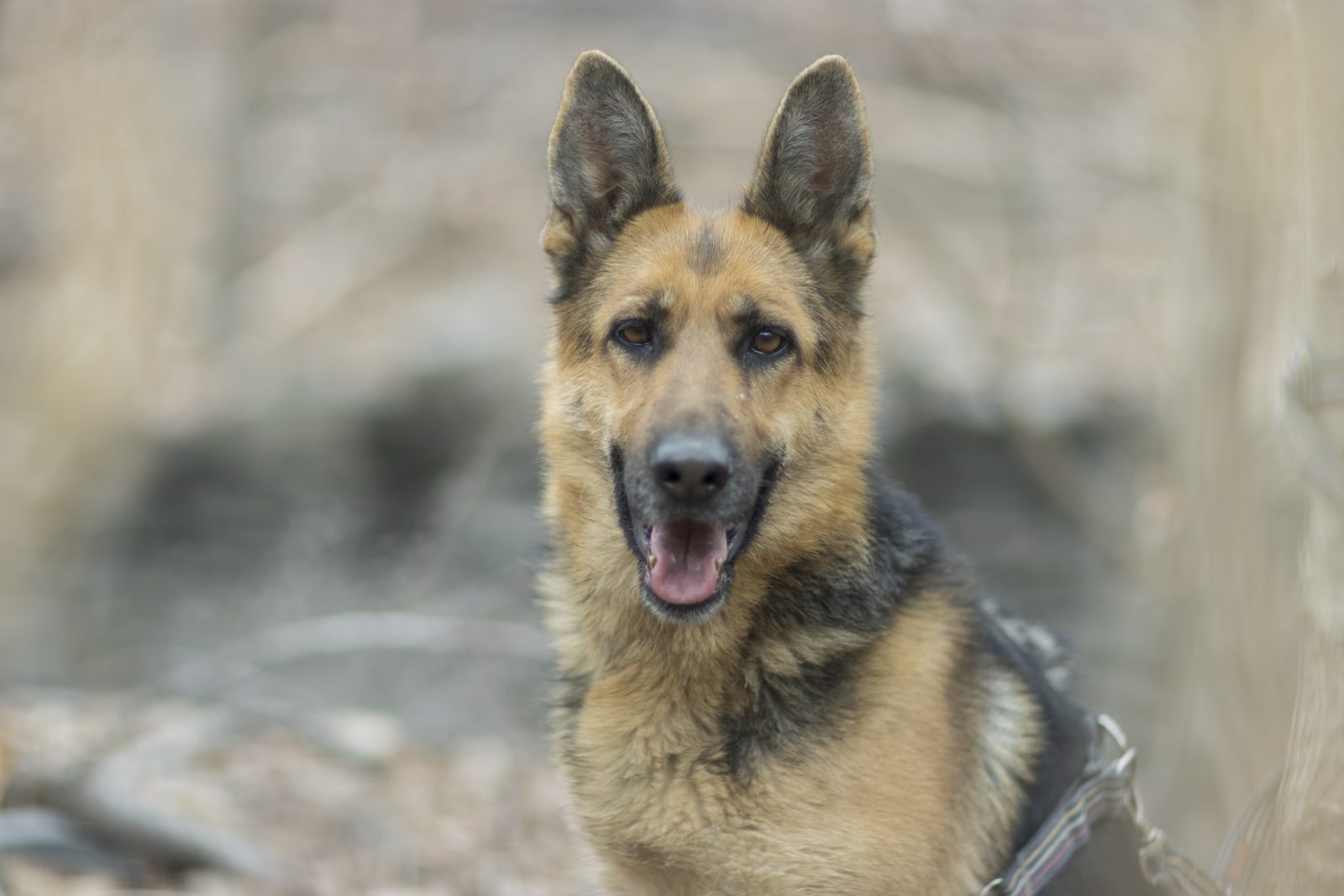
German Shepherds are a large breed with a clear difference between males and females — bigger than most people picture until one leans against their leg.
| Measure | Male | Female |
|---|---|---|
| Height at the shoulder | 60–65 cm (24–26 in) | 55–60 cm (22–24 in) |
| Adult weight | 30–40 kg (66–88 lb) | 22–32 kg (49–71 lb) |
| Full height reached | About 12 months | About 12 months |
| Filled out / mature | 2–3 years | 2 years |
| Typical lifespan | 9–13 years | 9–13 years |
Growth is fast and that matters more than the final number. A puppy goes from roughly 4 kg at eight weeks to over 30 kg within a year, which is why controlled growth and joint-friendly exercise are such a big deal in this breed — covered in our feeding guide and the exercise by age guide.
Working Lines vs Show Lines
This is the single most useful thing a new owner can understand, and almost nobody explains it before you buy. Two German Shepherds can be the same breed on paper and completely different dogs to live with.
| Working lines | Show lines | |
|---|---|---|
| Bred for | Police, military, sport, herding ability | Conformation to a breed standard, appearance |
| Typical drive | High — needs a real outlet daily | Moderate — usually calmer in the house |
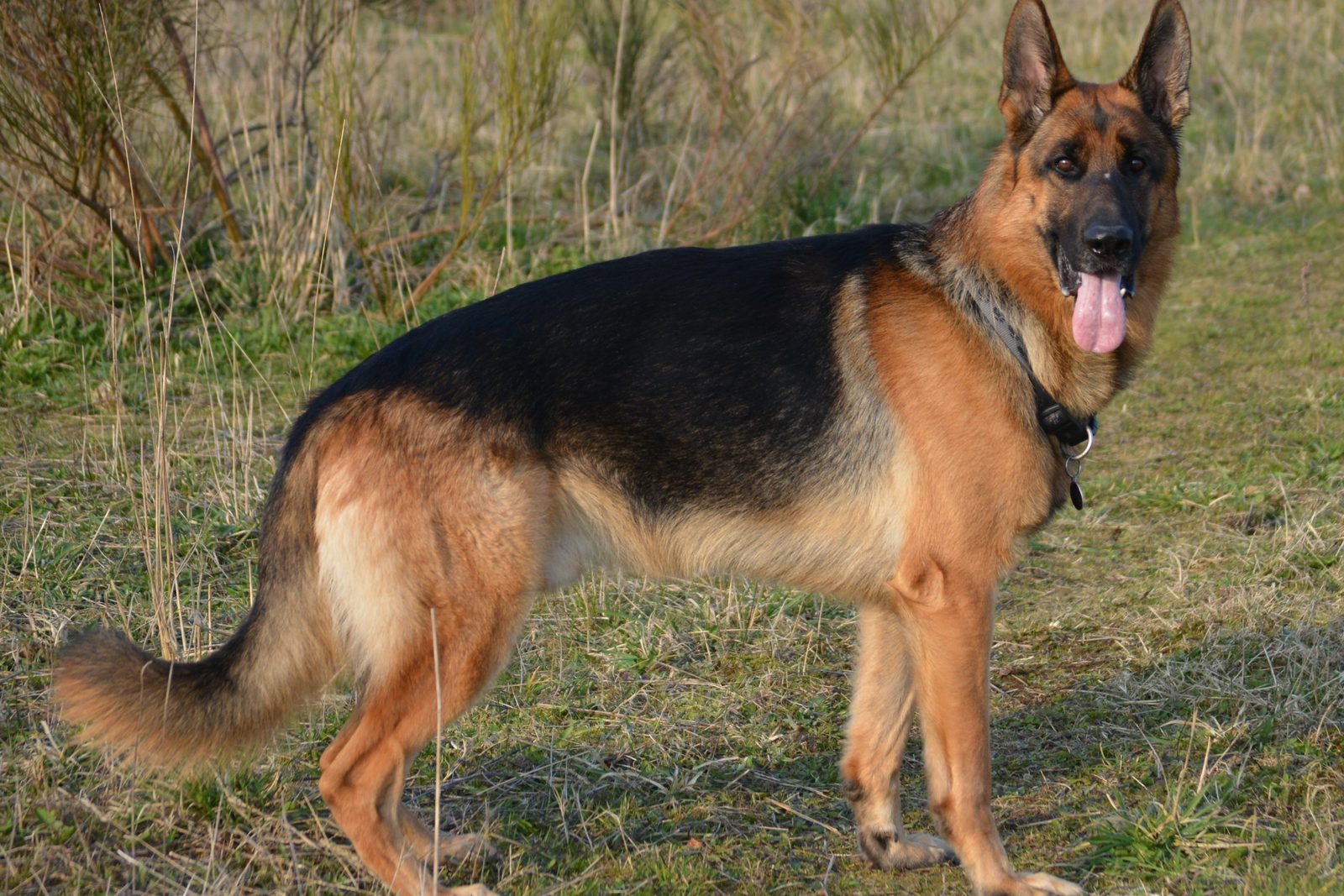
| Look | Straighter back, often sable or bicolour, athletic | More angled hindquarters, classic black-and-tan saddle |
| Best for | Sport homes, very active owners, experienced handlers | Active family homes wanting a companion |
| Common pitfall | Bought as a pet, then under-stimulated and destructive | Assumed to be low-energy — they are not; they still need real work |
“What do the parents do all day, and what do most of your puppies go on to do?” A breeder producing sport and police dogs is not the right source for a quiet family pet, and a good breeder will tell you so honestly. Ask to meet the mother, and see how she behaves with strangers in her own home.
Coats and Colours
All German Shepherds have a double coat — a weatherproof outer layer and a dense insulating undercoat — and all of them shed. There are two coat lengths and a surprisingly wide range of colours.
Stock coat vs long coat
Stock coat is the standard medium-length coat most people picture. Long coat dogs have longer feathering on the ears, legs, tail and trousers. Long coats look spectacular and need more combing to prevent mats; stock coats shed shorter hairs that embed themselves into fabric like tiny needles. Neither is easier overall — they are just messy in different ways. Our shedding guide covers both.
The colours you will see
- Black and tan — the classic saddle pattern most people picture.
- Sable — banded hairs giving a wolf-like, often darker overall look. Very common in working lines.
- Bicolour — mostly black with tan only on the legs and face.
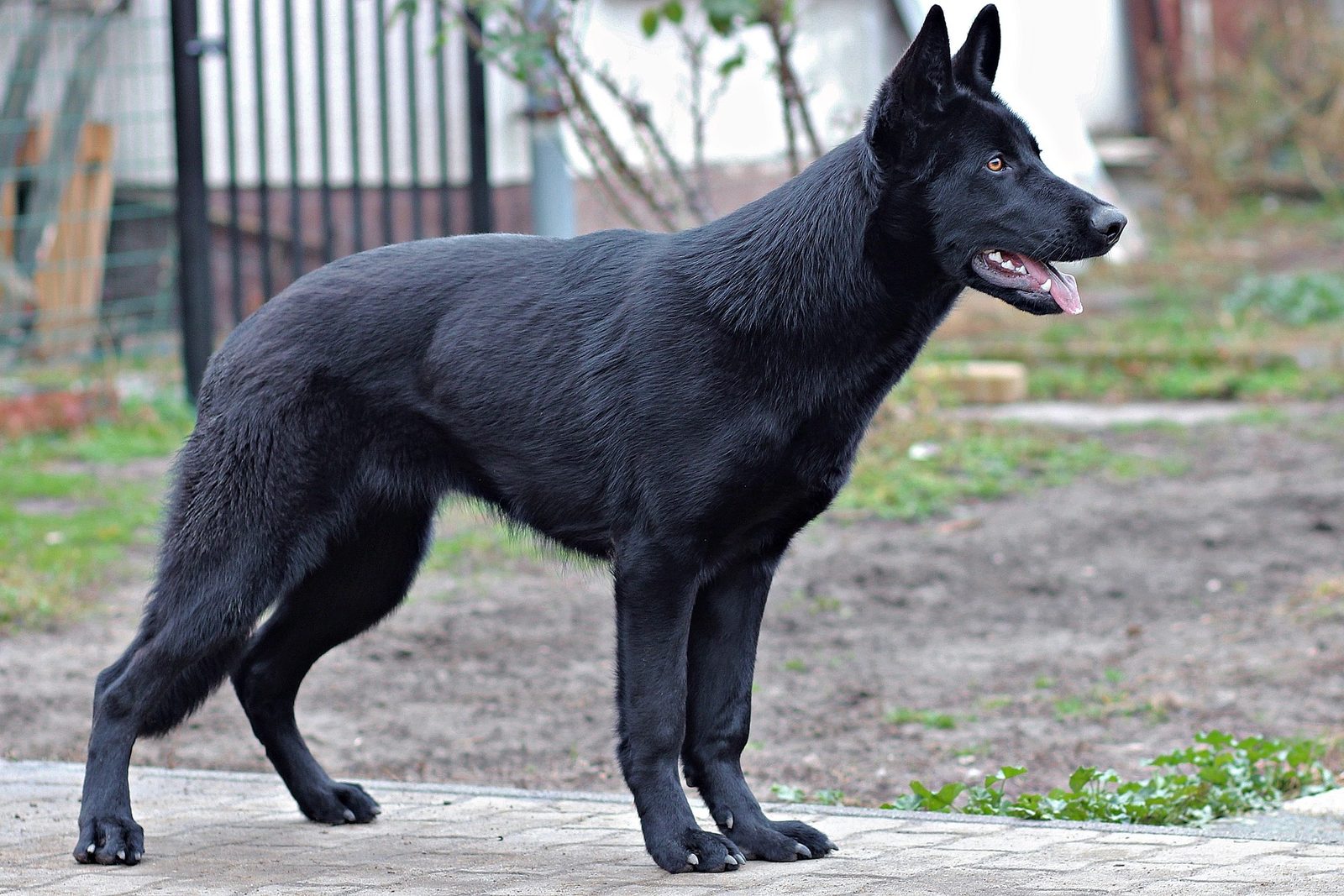
- Solid black — striking, and simply a colour rather than a separate breed.
- White — recognised as its own breed in some registries; see the White Shepherd.
- Panda, liver, blue, isabella — rare variants. Be wary of anyone charging a large premium for “rare” colours rather than health testing.
Colour has no bearing on temperament, health or working ability. A breeder marketing on colour rather than hip and elbow scores, health tests and temperament is telling you what they prioritise. Pay for the health testing, not the coat.
Temperament: The Good and the Demanding
A well-bred, well-socialised German Shepherd should be confident, steady and aloof with strangers but not aggressive. They are not a breed that greets everyone in the street like a Labrador, and that is normal — indifference to strangers is correct for the breed. What is not correct is fear or reactivity, and that usually comes from poor breeding, missed early socialisation, or both.
- A dog who genuinely wants to work with you
- Extraordinary trainability and memory
- Deep loyalty to the household
- Natural alertness — you will know when someone is at the gate
- An athletic companion for walking, hiking, sports and scent work
- A dog who is superb with a routine
- Hair. Everywhere. All year, twice as much in spring and autumn
- A mouthy, boisterous adolescence from 7 to 18 months
- Barking that needs managing, especially in flats
- Strong attachment — long days alone are genuinely hard for them
- Sensitivity to harsh handling and household tension
- A dog strong enough to pull you over if lead manners are ignored
People do not usually struggle with this breed because the dog is difficult. They struggle because nobody warned them that the first eighteen months are a part-time job.
German Shepherds With Children and Other Pets
German Shepherds are commonly kept as family dogs and many are wonderful with children they have grown up around. Two honest caveats matter more than the reassurance.
First, size and herding instinct. A young Shepherd who chases and nips at running, squealing children is not being aggressive — they are herding. It still hurts, and it still frightens a five-year-old. Manage it with gates, teach children to stand still like a tree, and give the dog a toy to hold instead of a trouser leg.
Second, supervision is not optional. No dog of any breed should be left unsupervised with young children, and a 35 kg dog can knock a toddler over without any intent at all. Build a routine where the dog has a safe space children never enter, and where nobody has to be the “no” person all day.
With other dogs, early, calm socialisation is everything. With cats and small pets, many Shepherds live happily alongside them when raised together — but the chase instinct is real, and introductions should be slow, on lead and never left to sort themselves out.
Health Issues to Know About
Every breed has known problems. Being aware of these lets you choose a breeder properly and spot trouble early — it does not mean your dog will get any of them.
| Condition | What it is | What helps |
|---|---|---|
| Hip & elbow dysplasia | Abnormal joint development, can lead to arthritis | Buy from parents with hip and elbow scores; keep your dog lean; joint-friendly exercise while growing |
| Bloat (GDV) | Stomach fills with gas and can twist — an emergency | Know the signs, split meals, avoid hard exercise around meals. See our feeding guide |
| Degenerative myelopathy | Progressive spinal cord disease in older dogs | DNA testing is available for breeding stock — ask about it |
| Digestive sensitivity | The breed is known for loose stools and food intolerances | One consistent good food, slow changes, vet investigation if it persists |
| Ear and skin issues | Allergies, yeast infections, hot spots | Weekly checks, prompt vet attention — see yeast infections in dogs |
| Arthritis in later life | Common in large breeds, often under-treated | Weight control, non-slip floors, and a proper pain assessment — see arthritis in dogs |
Ask any breeder for hip and elbow scores for both parents and what health testing they do beyond that. A breeder who cannot produce paperwork, or who says the tests are unnecessary, is not one to buy from. Pet insurance is also worth arranging before you collect a puppy, not after the first problem appears.
What They Cost to Own
Prices vary enormously by country, breeder and year, so exact figures date quickly. What does not change is the shape of the spending — and the fact that the purchase price is the smallest part of it.
| Cost | When | Notes |
|---|---|---|
| Puppy or adoption fee | One-off | Health-tested lines cost more up front and usually less later |
| Setup kit | One-off | Crate, pen, bed, bowls, harness, lead, toys, cleaning — see the setup calculator |
| Food | Monthly | Large breed, so a real line item. The feeding cost calculator gives your number |
| Insurance | Monthly | Large breeds cost more to insure; lifetime cover is worth understanding properly |
| Routine vet care | Annual | Vaccinations, worming, flea treatment, check-ups — twice yearly once senior |
| Training | First year mainly | Puppy classes then ongoing. Cheaper than fixing problems later |
| Dog walker / daycare | Ongoing, if you work | Often the biggest hidden cost for full-time workers |
Our planning guide goes through the time and money commitment in detail before you commit.
Is This Breed Right For You?
Answer these honestly. Nobody is marking you, and getting it wrong is far more painful for the dog than admitting it now.
How many hours will the dog be alone on a normal weekday? Over four or five hours routinely, without a walker or daycare, and this is the wrong breed for now. They are companion dogs with strong attachment.
Can you commit to 1–2 hours a day, every day, in all weather, for a decade? Not “most weeks” — every day, including the ones where you feel terrible.
Are you willing to do ten minutes of training or scent games most days? Physical exercise alone does not satisfy this breed.
Hair on your clothes, your sofa, your car and occasionally your dinner. If that would genuinely upset you, look at a different breed.
Can you keep your patience through 7 to 18 months of a strong, mouthy, opinionated teenager? This is where most Shepherds are given up.
Food, insurance, vet care and possibly daycare for ten-plus years — plus a buffer for the year something goes wrong.
If you said yes to most of that, this breed will probably be the best dog you ever have. If several were a no, that is useful information — not a failure. Our free owner match quiz walks through it in more detail.
Gear to Start With
We recommend product types and the features that matter rather than sponsored placements, and we link to live Amazon results instead of quoting prices that go stale. As an Amazon Associate we may earn from qualifying purchases — at no extra cost to you.
A 42-inch crate with a divider panel
The single most useful purchase for a new German Shepherd. Buy the adult size immediately and use the divider to shrink it while your puppy is small — it gives you faster toilet training, protected sleep, safe travel and a dog who copes with vet stays and house moves.
- One purchase covers puppyhood through to old age
- Speeds up toilet training dramatically
- Gives a watchful breed somewhere that is not their job to guard
- Folds flat for the car and for visits away
Good to know: keep the crate in the family room rather than a utility room, and never use it as a punishment. Our crate training guide has the seven-day introduction.
| Item | What to look for | Find it |
|---|---|---|
| Y-shaped harness | Shoulders free, four adjustment points | See options → |
| Undercoat rake | Rounded teeth, no cutting blades | See options → |
| Stuffable rubber chew | Natural rubber, freezer safe, large | Check price → |
| Enzyme cleaner | Enzymatic, pet safe, buy two bottles | See options → |
| Long line 10m | Biothane, clipped to a harness only | See options → |
7 Mistakes New Owners Make
❌ 1. Choosing on looks instead of lines
A high-drive working-line puppy in a quiet suburban home is a mismatch that shows up hard at nine months.
✅ Fix: ask the breeder what the parents do and where their puppies go. Match the dog to your actual life.❌ 2. Thinking exercise alone is enough
Two hours of walking produces a fitter dog with the same restless brain.
✅ Fix: pair the walk with scent games, chews and short training — see enrichment ideas.❌ 3. Punishing the barking
Alerting is what this breed was built to do. Telling a Shepherd off for noticing things creates conflict, not quiet.
✅ Fix: manage the triggers, reward the quiet, and teach a “go to mat” alternative.❌ 4. Skipping early socialisation
The window when a puppy learns the world is safe is short, and a wary adult Shepherd is a serious handful.
✅ Fix: calm exposure at a distance from week one — watching, not wading in. Follow your vet’s advice on timing.❌ 5. Using harsh methods on a sensitive breed
Alpha rolls, prong collars and shouting produce a worried dog, and worried big dogs are the ones who bite.
✅ Fix: reward-based training throughout. It is not soft — it is what actually works on this breed.❌ 6. Over-exercising a growing puppy
Long walks, stairs and endless ball throwing load joints that are still developing.
✅ Fix: short walks, free play on grass, and no jogging or jumping until 12–18 months.❌ 7. Underestimating adolescence
The lovely eight-month-old becomes a strong, mouthy, selectively deaf teenager. Many are rehomed at this exact point.
✅ Fix: expect it, keep training short and rewarding, use a long line, and know that it genuinely passes.🎓 Book class before the puppy
Good reward-based puppy classes fill months ahead. Book while you are still waiting.
🧊 Learn the freezer trick
Stuffed frozen chews are the single best tool for surviving the first six months.
📋 Agree house rules early
Sofa or not, kitchen or not, who does the night trips. Write it down before day one.
🧭 Find your trainer now
A certified, reward-based trainer you already know is worth ten forum threads at 2am.
Frequently Asked Questions
Are German Shepherds good family dogs?
Yes, in the right household. They are loyal, trainable and usually excellent with children they have grown up with. What they need is an active family with time — and adults who will supervise, manage the herding-and-nipping stage, and give the dog a routine.
Are German Shepherds aggressive?
No — the breed standard describes a confident, steady dog who is aloof rather than hostile with strangers. Aggression in this breed almost always traces back to poor breeding, missed socialisation, fear, pain, or harsh training. A well-bred, well-raised Shepherd should be calm in public and simply uninterested in strangers.
Do German Shepherds shed a lot?
Yes, constantly, plus two heavier “coat blows” a year lasting two to four weeks each. Ten minutes with an undercoat rake a few times a week makes an enormous difference. Never shave the coat — full detail in our shedding guide.
Is a German Shepherd a good first dog?
They can be, for someone who is genuinely committed and willing to learn — but they are a demanding first dog. If you are home a lot, ready to train daily and prepared for adolescence, it can work well. If your life is busy and unpredictable, a calmer breed will be fairer on both of you.
How long do German Shepherds live?
Typically 9 to 13 years. Keeping them lean, exercising joints sensibly while they grow, staying on top of dental care, and having twice-yearly check-ups from about seven all help — see our senior care guide.
Male or female — which is better?
Neither is better, they are just different. Males are bigger and often slower to mature; females are usually a little more independent and reach adulthood sooner. Individual temperament and breeding matter far more than sex. Discuss neutering timing with your vet — for large breeds the timing decision is genuinely worth a conversation.
✅ Before You Get One: The Honest Checklist
- Dog will not be alone more than about 4 hours routinely
- 1–2 hours of activity a day is realistic for you, every day
- You are ready to do ten minutes of brain work most days
- Hair on everything is genuinely fine with you
- You have budgeted food, insurance, vet care and possibly daycare
- You know adolescence lasts to about 18 months and you are ready for it
- Breeder can show hip and elbow scores for both parents
- You have met the mother in her own home
- You know whether the litter is working or show lines and which suits you
- Reward-based puppy class is booked
- Insurance arranged before collection day
- Everyone in the house agrees on the rules
The Bottom Line
The German Shepherd is a working dog who happens to live in houses. Everything people love about them — the intelligence, the loyalty, the sense that this dog is genuinely with you — comes from the same place as everything they find hard: a brain that needs a job and a heart that does not cope well alone.
Give them a routine, a proper outlet, kind and consistent training and a decade of your attention, and you get one of the finest dogs in the world. Go in expecting an easy pet and you will both have a difficult couple of years. Be honest about which of those you are signing up for, and the rest follows.
- Where to get a German Shepherd — breeder, rescue or rehome
- Planning for a German Shepherd — the real time and money commitment
- The new puppy checklist — your first 30 days, week by week
- Training your German Shepherd — the complete guide by age
Recommended German Shepherd gear for this guide
Heavy-duty German Shepherd crate (42")
Best for: Crate training and safe rest
- Sturdy build
- Double-door access
- Removable tray
Affiliate link — we may earn a commission, at no cost to you.
Low-calorie training treats
Best for: High-frequency reward training
- Soft, easy to break
- Quick consumption
Affiliate link — we may earn a commission, at no cost to you.
Durable rubber chew toy
Best for: Power chewers and chew redirection
- Long lifespan
- Treat-stuffable
Affiliate link — we may earn a commission, at no cost to you.

Keep reading
More in Puppy Care →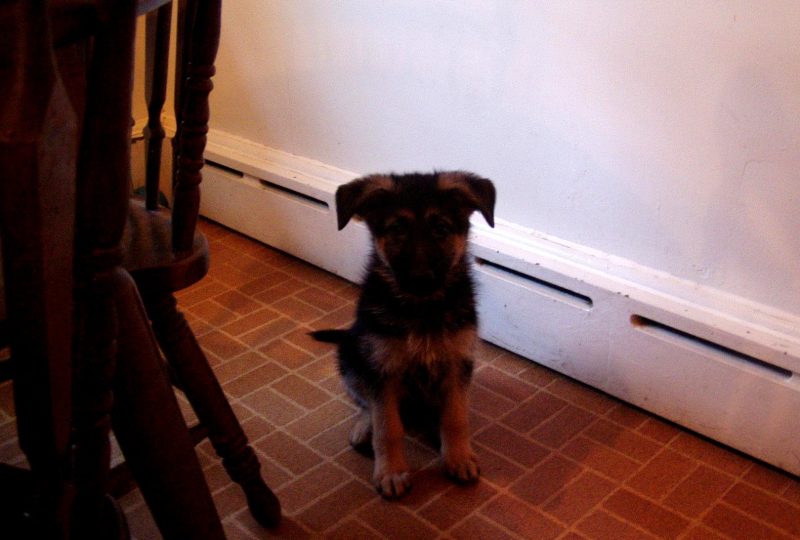
How to Stop a German Shepherd Puppy From Biting (Calm, Step-by-Step Guide)
German Shepherd puppy biting is normal teething and play behaviour, not aggression. Here is the calm 5-step routine…
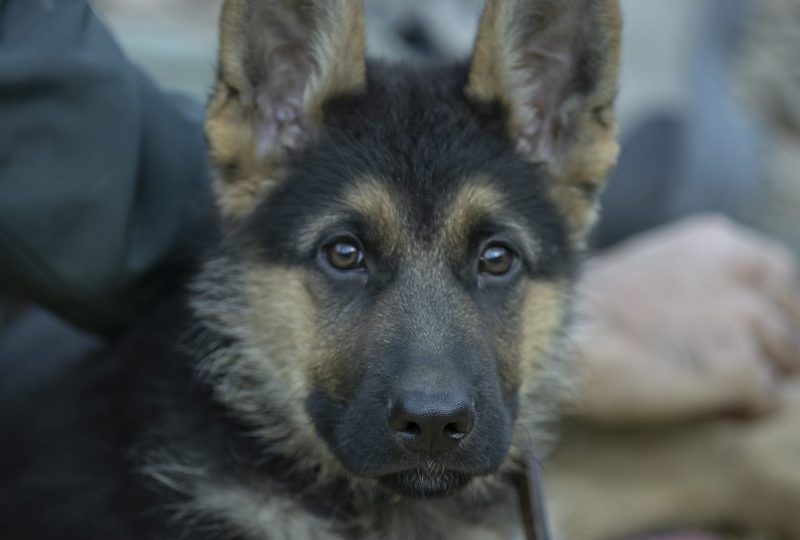
The New German Shepherd Puppy Checklist (First 30 Days)
Exactly what to buy, what to skip, and what to do day-by-day with a new German Shepherd puppy…
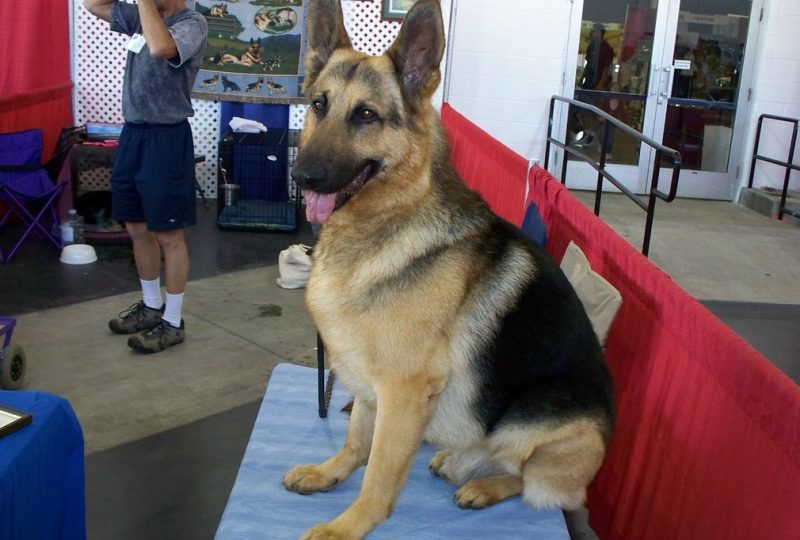
How to Crate Train a German Shepherd Puppy (Step-by-Step)
A calm, positive crate-training plan that turns the crate into a den your German Shepherd actually likes.